

99 Stories of Progress from the Year of the Wood Snake
A backwards glance to fuel our forward gallop.


Hi everyone, Gus here. Happy Lunar New Year to all who celebrate. To mark the occasion and bring a slightly different sensibility to our usual news, I invited my friend, musical-philosopher Will Tait, to dig through the archives here at Fix The News. His current focus is on developing transformative ways of gathering and co-learning, and he can be found, with his fellow musician and partner, at willandkate.com.au.
2026 may feel like it has already delivered a year’s worth of upheavals, but in the traditional Chinese calendar, the year has only just begun. To honour that turning, as the last skins of the ‘wood snake’ fall away, here are 99 stories from the year that was: inspirational trail-mix to pop in our saddlebags as we gallop forth into the Year of the Fire Horse. As you’ll see, these stories are gathered in nine themes, from improved human lives to the restoration of our living world, to cosmic revelations. May they offer uplifting sustenance with each bite.
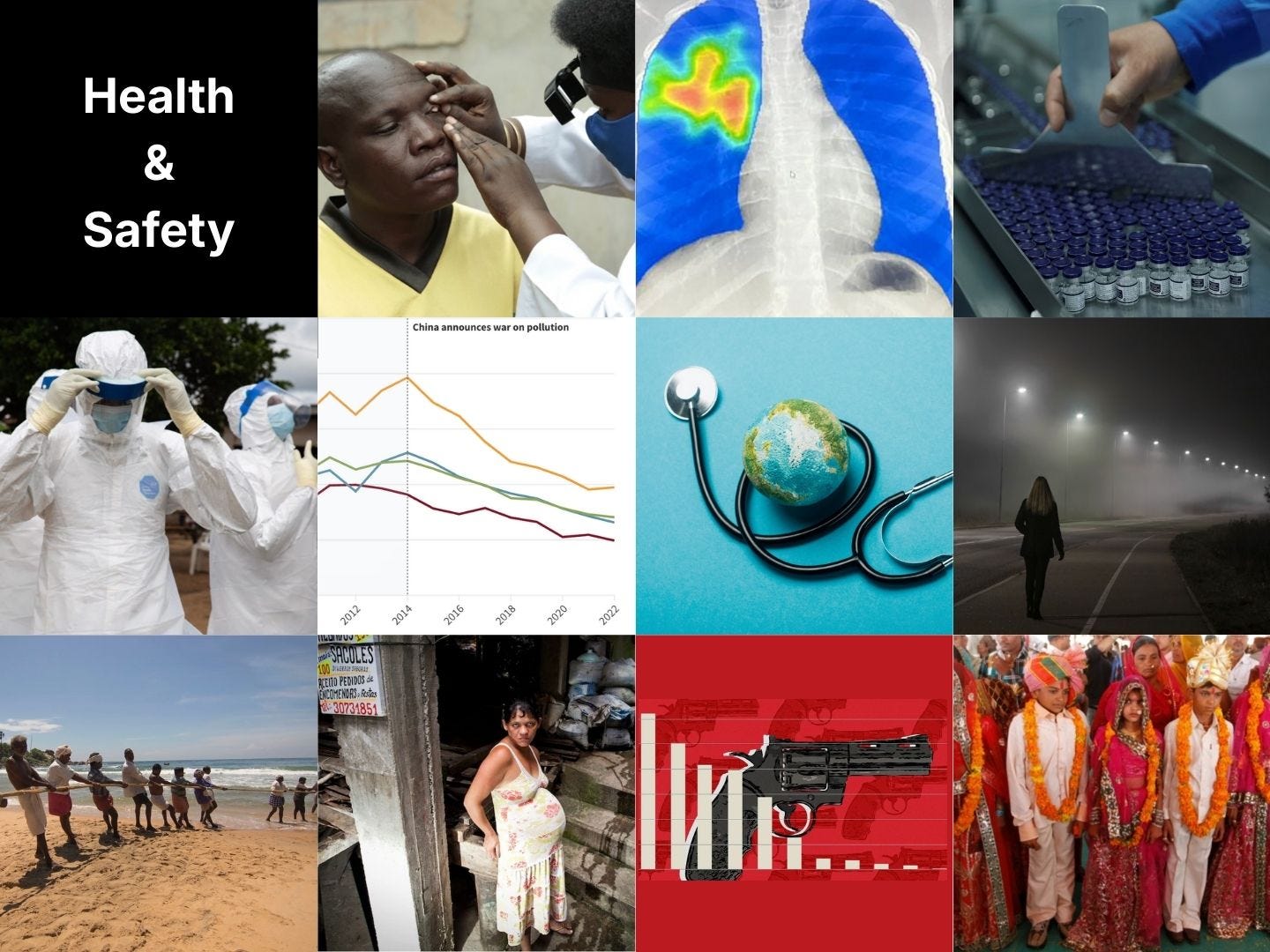
Obviously we’re not just talking health-and-safety box-ticking here. So many lives around the world are improving in lasting and fundamental ways. Safety (both real and perceived) is on the rise, and we saw the enactment of laws protecting the wellbeing of millions, particularly children.
1. Disease Elimination
It takes years of dedication and multi-agency coordination to eliminate a disease, and yet 17 countries hit that milestone in 2025 - the most in one year ever. Trachoma bit the dust in Egypt, Mauritania, Senegal, Burundi, Fiji. The first-ever ‘triple elimination’ by the Maldives. Brazil became the first country of over 100 million to stop mother-to-child transmission of HIV. The list goes on.
2. Disease Reduction
Deaths from the world's deadliest infectious disease, tuberculosis (down 29% since 2015) may be set for a continued decline with the introduction, in 80 countries, of mobile x-ray units linked to an AI program. Signs of tuberculosis are highlighted in vivid, heat map-like scans, revealing cases that would otherwise go unseen.
3. Disease Prevention
Having declared 2024 the 'highest-ever impact year for immunisation' The Gavi Alliance maintained impressive momentum throughout 2025: $9 billion secured to immunise 500 million children by 2030, and an extra $90 million freed up for their focus on malaria, with a negotiated 25% price cut in the R21 vaccine.
4. Disaster Response
What do Ebola outbreaks and natural disasters have in common? We're ready for them. In the first half of 2025, 94% fewer people died in weather-related disasters compared to the historical six-month average. And in September an Ebola outbreak in the Democratic Republic of the Congo was isolated and sequenced in just 24 hours.
5. Cleaner Air
Are we entering the clean-air-ocene? Global concentrations of sulphur dioxide, nitrogen oxides, carbon monoxide and organic carbon are all falling. The EU has been smashing clean-air pledges ahead of schedule. And the average citizen now lives 2.9 years longer in China thanks to air-quality reforms.
6. A New Era of Global Health
“For the first time in our species’ history, infectious disease is not the dominant threat," proclaimed The Lancet in October in a sweeping analysis revealing a new era of global health. Deaths from TB, diarrhoea and HIV have plunged by between 20% and 49% since 2010.
7. Feeling Safe
"Do you feel safe walking alone at night in the city or area where you live?" Gallup has asked globally since 2006. Their 2025 report cited the highest positive response yet. Yes: 73%. Asia-Pacific, Western Europe, Latin America, Caribbean and sub-Saharan Africa all showed an uptick.
8. Poverty Reduction
Millions of people across the world are escaping poverty. Last year UNICEF reported 95 million fewer children living in poverty since 2014, and India declared the 60-million-strong state of Kerala free of extreme poverty. Mexico, Nepal, Iraq - just three of 12+ other countries recording impressive drops.
9. Better Living in Brazil
33 million Brazilians went to bed hungry just three years ago - now it’s off the hunger map. Social cash transfers have played a decisive role in lifting 6.5 million out of poverty since 2022, and poverty reduction in turn has driven a 60% drop in teenage births in the country since 2000.
10. Less Violence
Last year World Bank data revealed a 25% fall in the global homicide rate since 2000. In the US the murder rate fell to its lowest level in 70 years. Nevertheless, media splurges coverage on terrorism and murder, leaving the real killers - heart disease and cancer - in the shadows.
11. Child Welfare
Laws banning child marriage have proliferated across Asia, Africa and Latin America over the past year, and the 70+ list of countries banning corporal punishment grew longer, with the addition of the Czech Republic and Thailand. Meanwhile the global under-five mortality rate has fallen by over 50% since 1990.
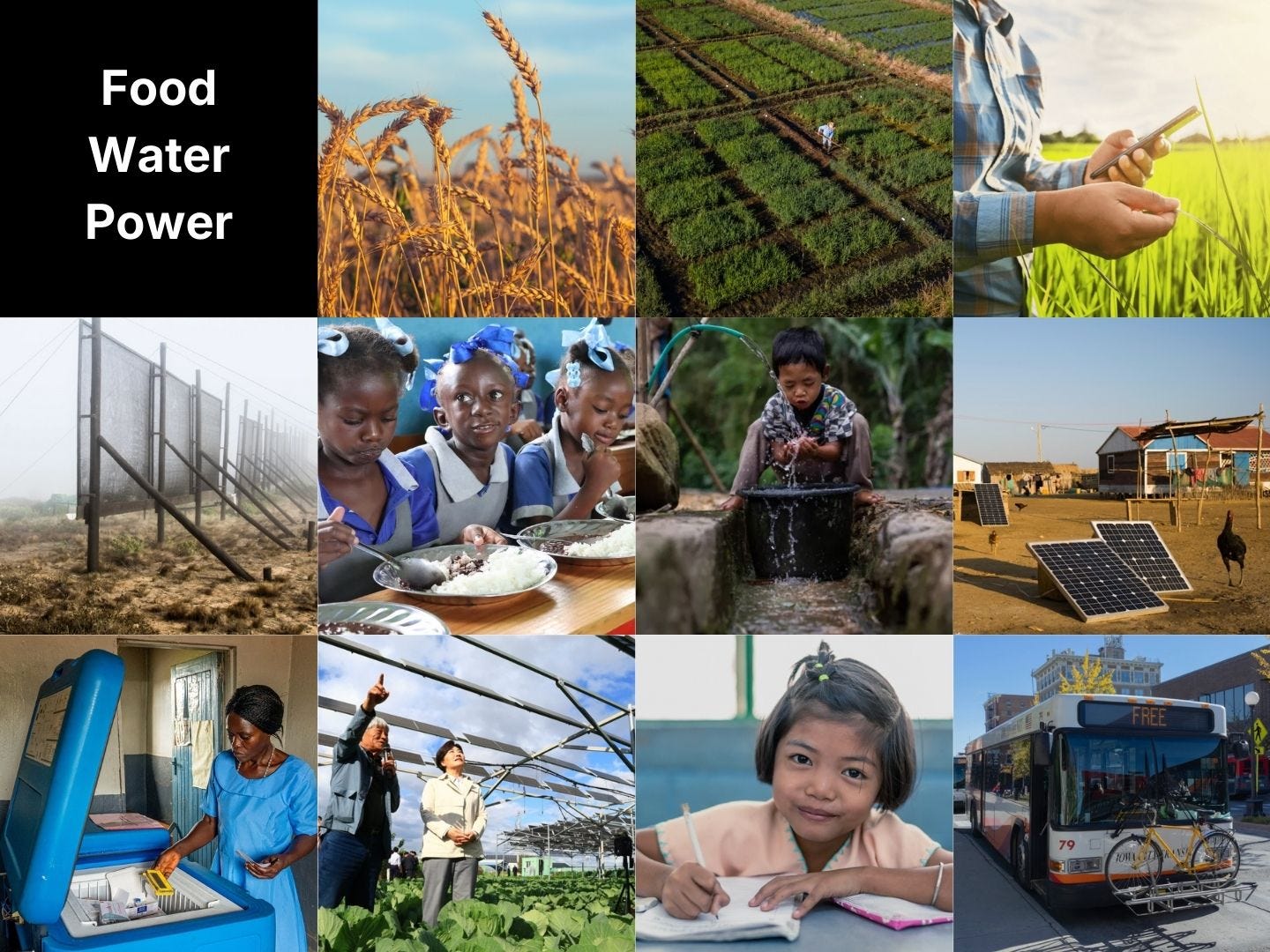
It’s all very well being healthy and safe, but we don’t stay that way without food, water and energy. Access to electricity, education, transport, and other modern day fundamentals is crucial for basic participation in the global economy. How have we been faring with all of this?
12. Record Harvests
Population growing, soil depleting, a gnawing sense that global famine is just a few failed harvests away. But what does the data say? Record levels of wheat, rice and soybean production. Same for pears and lemons. Coffee and corn set for record highs in 2025-26. The global larder is well-stocked.
13. Rice Breakthroughs
2025 gave us three rice production breakthroughs with huge potential impact for this primary global staple: a Chilean cultivation innovation that cuts water use in half; discovery of a gene in a hardy Indian variety that skyrockets heat tolerance; a new strain that reduces methane emissions by 70%.
14. Smart Tech
We're meeting the challenges of a changing climate in extraordinary ways. Last year, 38 million farmers across India received 30 days’ notice of the arrival of the monsoon, accurately predicted by machine learning. In Nigeria, smart irrigation is delivering consistent flows despite unpredictable rains.
15. Simple Tech
'Smart’ tech isn't always about algorithms. In Chile's Atacama - the planet’s driest desert - fog nets are harvesting coastal mist to supply 1,400 litres of water daily for production, and a simple mix of yeast, sugar and water that attracts predator insects is fast becoming cotton's low impact pesticide.
16. Free Meals for Kids
We’re seeing a growing global focus on nourishing young minds and bodies with national school meal programmes now serving 466 million children worldwide, up by 80 million since 2020. Most impressive? Indonesia’s plan to feed all 80 million of its schoolkids, which kicked off last year.
17. Water, Sanitation Access
In August the WHO and UNICEF served up a bucket of welfare wins. The decade from 2015 saw one of the fastest expansions of basic services ever recorded: 961 million people gained safe drinking water, 1.2 billion gained safe sanitation, 1.5 billion gained access to basic hygiene. Health and dignity on the rise.
18. Electricity Access
“Keeping the lights on” is tricky if you’ve never had access to electricity. Fortunately the number of humans in that category dropped by 292 million in the last decade, despite a corresponding global population rise of 760 million. Kenya, Nepal, Mozambique all significantly increased access in the last year.
19. Solar Health
Solar energy, a major facilitator of humanity's increased access to electricity, is also playing a pivotal role in remote health. Solarisation in Zambia, Ethiopia, Uganda, Malawi and Pakistan is enabling 24 hour patient care and providing the consistent 2 to 8 degrees Celsius required for vaccine storage.
20. Solar Food
As they soak up the sun, solar panels provide an unanticipated service to agriculture: shade. Strawberry growers taking advantage of 'agrivoltaics' are reporting 18% increase in yields, and South Korea has incorporated the growing of cabbages around solar arrays into their food security strategy.
21. Education Access
UNESCO reported a global surge in girls’ access to education. And support is growing for the Convention on the Rights of the Child - the most widely accepted human rights treaty globally - to expand its education guarantee to obligate free schooling from pre-primary through to secondary.
22. Free Transport
What’s the benefit of giving someone a free ride? Iowa City scrapped bus fares in 2023. The result: 2.9 million fewer kms driven by residents, 24,000-tonnes less CO₂ emitted, and an economic breather for all. Aiming for similar metrics, Ireland has introduced free public transport for under nines.
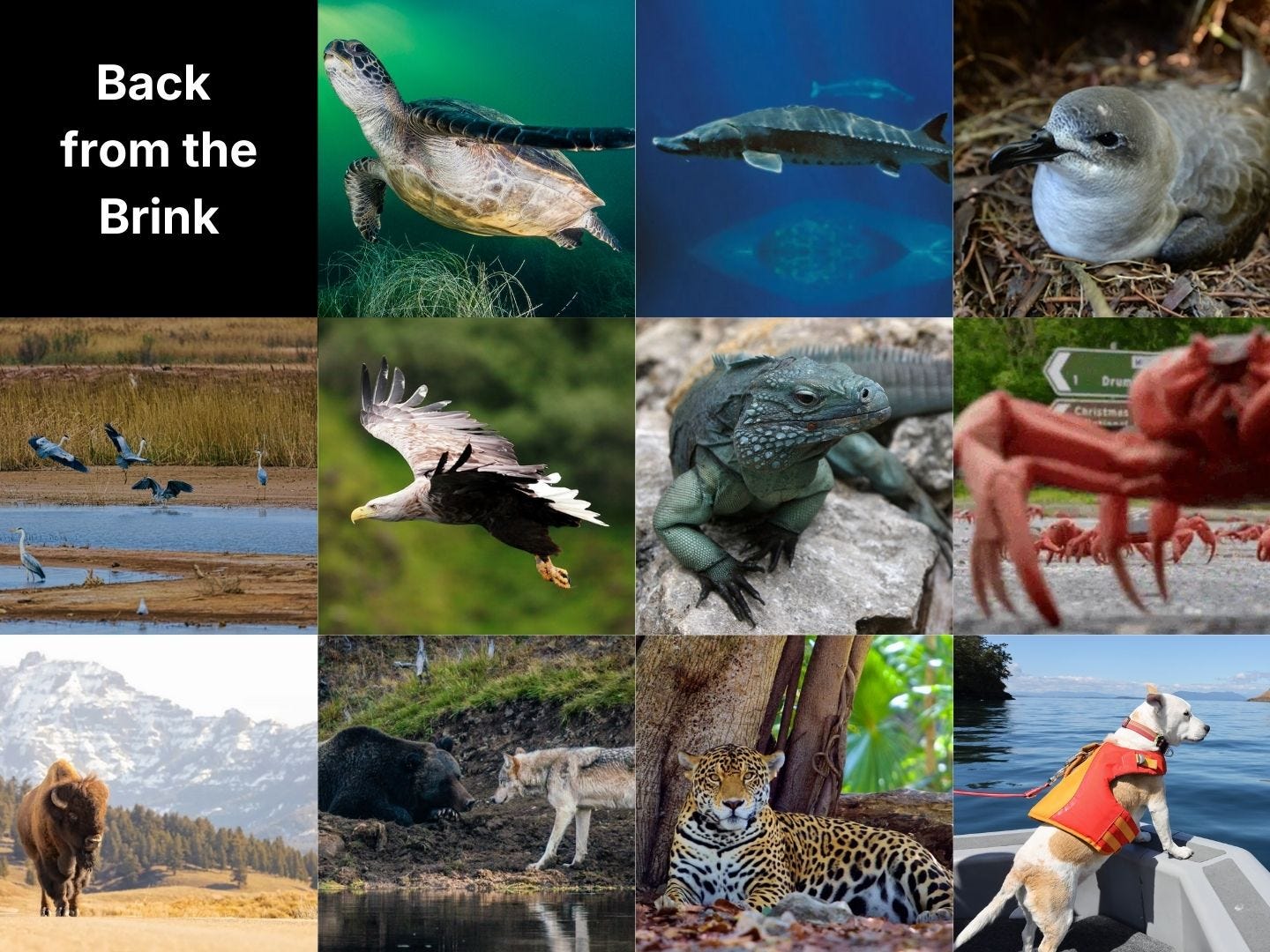
Nothing represents the alarming unravelling of life more poignantly than the loss of a species. Flip that around and you have an iconic symbol of hope. A major study released in March last year shows that we are reliably bringing many species back from the brink. Let's say hello to some returning heroes.
23. Teeming with Turtles
Northwest Africa Loggerheads, Mexican Kemp’s Ridleys, Indian Olive Ridleys, Pacific Green Turtles, all demonstrating exponential increase thanks to conservation efforts. And successful reintroduction of freshwater turtles to their former haunts in Brazil and Poland. It’s turtles all the way up.
24. Returning Fish
Waterways are welcoming back their former inhabitants: salmon swim in England's Don River and the headwaters of the Klamath for the first time in 100+ years. Bluefin tuna surge back to Cornish waters. Lake sturgeon evade extinction's net, resuming their keystone role in the Mississippi Basin.
25. Rat-Free Islands
There's no shortage of rats on Planet Earth, but some species need that shortage in order to take wing again. Endangered Palau Ground Doves and Tongan Herald Petrels are just two of countless bird species that are on the rise after successful rat eradication on islands and atolls across the Pacific.
26. Cranes vs Storks
Cranes and storks are fighting it out in the dramatic turnaround championships. Black-necked cranes, China, record numbers. White stork nestlings, Denmark, same. Common cranes return to Scotland after 300 years. Captive-bred adjutant storks revive wild colonies in Cambodia. Who's winning? Everyone.
27. Reviving Raptors
White-tailed Golden Harpy! Not a bizarre insult, but names of eagles that have returned to their former habitats in England, Scotland and Brazil. Like Cheshire's rebounding barn owl, and the revived Red Kite of northern Spain, they owe their resurrection to years of dedication by passionate humans.
28. Dragons & Frogs
25 Blue Dragons. 100 Dusky Gopher Frogs in a single pond. Macabre potion ingredients? Nope. The remaining members of these two species before conservation efforts turned their numbers around. 7 Red and Yellows? Captive-bred tree-frogs successfully making their way in Australia's Gondwana Rainforest.
29. Christmas Crabs
Return of the Red Crab - a Christmas Story. The famed march of the millions, an annual stream of red crabs across Christmas Island, was nearly eradicated by the invasive Yellow Crazy Ant. Now restored by the introduction of the Malaysian Micro-wasp. Is this conservation? Maybe not, but it worked.
30. Healthy Herds
Herds are returning to the great grasslands. Saiga antelope on Central Asia's Golden Steppe grew from just 30,000 in 2006 to nearly 4 million today. The 39 Milu deer reintroduced into China's Dafeng Milu Reserve in 1986 now number 8,500. European bison: from 54 in the 1920s to 10,000 roaming today.
31. Bears & Wolves
Golden Jackals 46%. Eurasian Wolves 35%. Brown Bears 17%. Wolverines 16%. Trumping them all - Iberian Lynx 1,900%. Sports team betting odds? No, increased numbers of Europe's wild predators since 2016, marking their stunning comeback. Wolves, bears and pumas are also steadily on the rise in the US.
32. Cats Bounce Back
Snow leopards in Himachal Pradesh, asiatic lions in Gujarat, jaguars in Mexico, Argentina, Brazil, tigers the world over. Populations of these big cats in the wild are all increasing. The 60% rise in tiger numbers since 2010 brings long hoped-for confirmation that global recovery is within reach.
33. Dogs to the Rescue
Dogs. Far from extinct, but due a special mention for their services to other animals. In South Africa and Zimbabwe Welsh-trained police dogs are successfully tracking Rhino-hunting poachers. And in the Pacific Northwest, sniffer dogs on boats are helping monitor endangered southern resident orcas.
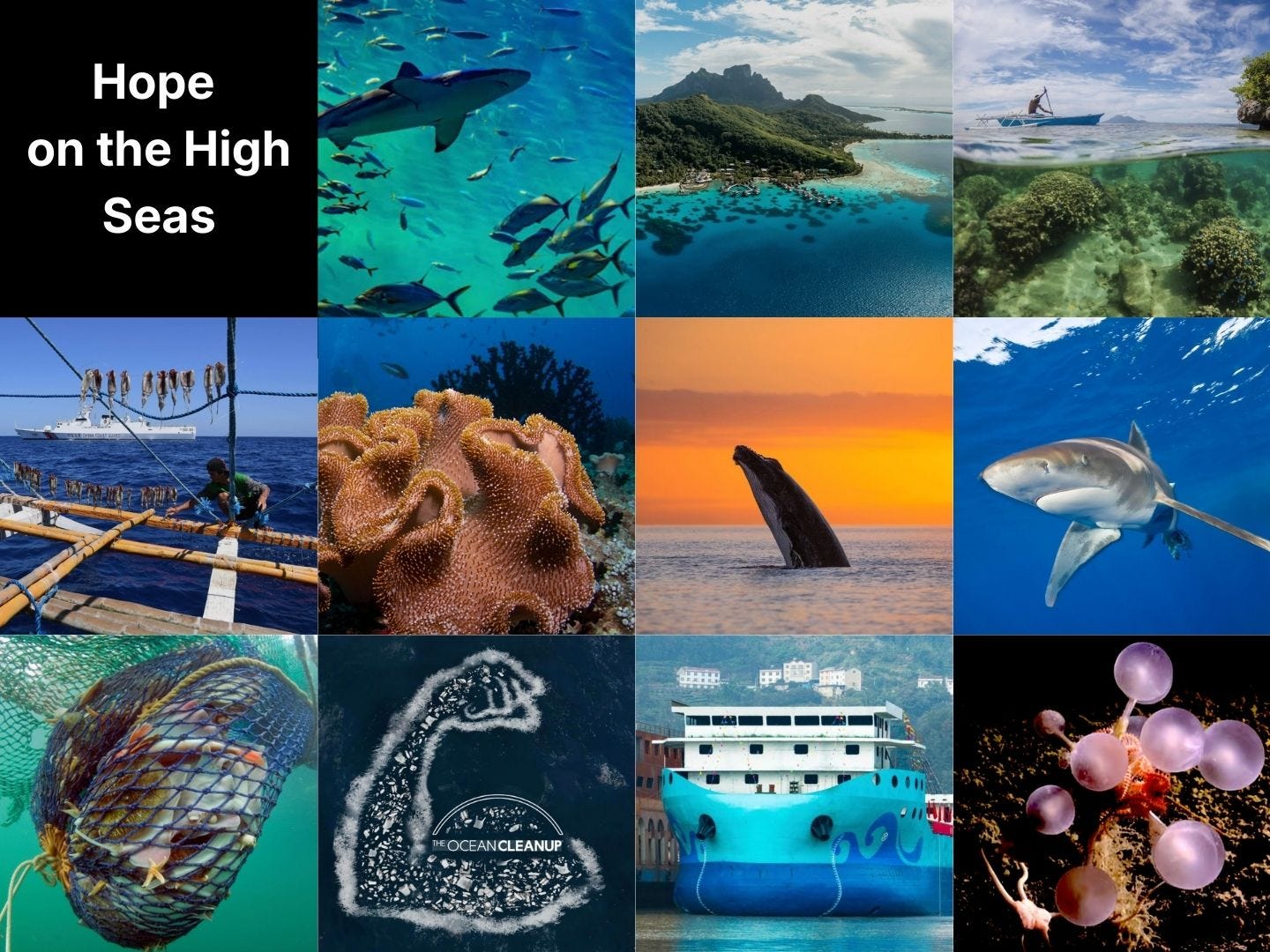
Such excitement on the high seas in 2025: a tangible shift in action from broad environmental goals to enforceable, specific legislation, and somehow amidst current crises of global trust we managed the diplomatic feat of binding ourselves to an agreement to care for our international waters.
34. High Seas Treaty
Uniting the world in protection of the oceans beyond national boundaries, the High Seas Treaty started last year with just 14 of the 60 ratifications needed to bring it into force. By May that number doubled. It hit 50 in June. The magic moment: September 19th, Morocco the 60th to ratify. Huzzah!
35. Marine Protected Areas
French Polynesia's 2025 announcement of 5 million km² of marine protection (the world's largest) was a big splash in a global shower of such agreements made by a roll call of countries from Spain to Samoa. A huge expansion of sanctuary for fragile reefs, seagrass meadows and all species of swimmers.
36. Indigenous Marine Protected Areas
In September plans were announced for the Melanesian Ocean Reserve, the world’s first Indigenous-led marine protected area stretching across the Solomon Islands, Papua New Guinea, Vanuatu and New Caledonia. It will bring a marine area the size of the Amazon rainforest under Indigenous governance.
37. Preventing Overfishing
Does marine protection actually prevent illegal fishing? A new global study tracked ships with advanced satellite technology has answered that question with a resounding 'Yes'. This aligns with news that marine agreements have all but eradicated overfishing in the territorial waters of the US.
38. Reef Relief
There's hope in the water for our planet's beleaguered reefs. A team in the Maldives has pioneered a portable coral hatchery, rearing more than 3 million larvae and successfully deploying more than 10,000 juvenile corals. The project offers exciting restorative promise for reefs across the Pacific.
39. Booming Stocks
England's coastline saw bottlenose dolphins calving last year for the first time in decades and grey seal populations hitting record numbers. Greece's Mediterranean monk seals have dived off the 'critically endangered' list. Humpback whales off Eastern Australia’s coast now exceed pre-whaling numbers.
40. Shark Protection
The movie Jaws may have locked the eternal terror of the shark in the human psyche, but these exquisite ancient fish have a lot more to fear from us humans. Fortunately 2025 saw the unveiling of a global shark “de-extinction” programme and extra protections in Mexico's waters and the Indian Ocean.
41. Bottom Trawling Bans
The unpleasant-sounding practice of bottom trawling is an unseen scourge of seafloor ecosystems. Happily 2025 saw a wave of bans in national protected waters from Sweden to Australia and an international resolution to end bottom trawling on the underwater biodiversity hotspots known as seamounts.
42. Less Litter
Ocean Cleanup has now removed 20 million kg of plastic from the world's waters since 2013. They also have a new goal: one third less plastic outflow from the world's 30 most polluted rivers by 2030. Meanwhile the EU and Australia reported a drop in marine litter of around 30% over the past decade.
43. Better Ships
The first ever binding targets for global shipping emissions were signed in April. They will no doubt be aided by vessels like China's Gezhouba, a fully electric 13,000 tonne cargo ship launched in October. And we have less to fear from oil tankers: data shows a 97% drop in spills since the 1970s.
44. Deep Sea Wonders
2025 revealed new wonders in the deep: first-ever footage of the elusive colossal squid; whole new ‘chemosynthetic' ecosystems that survive beyond the reach of sunlight; iridescent armoured worms and carnivorous "Death-ball" sponges - two of the 30 new species spotted in the Southern Ocean depths.
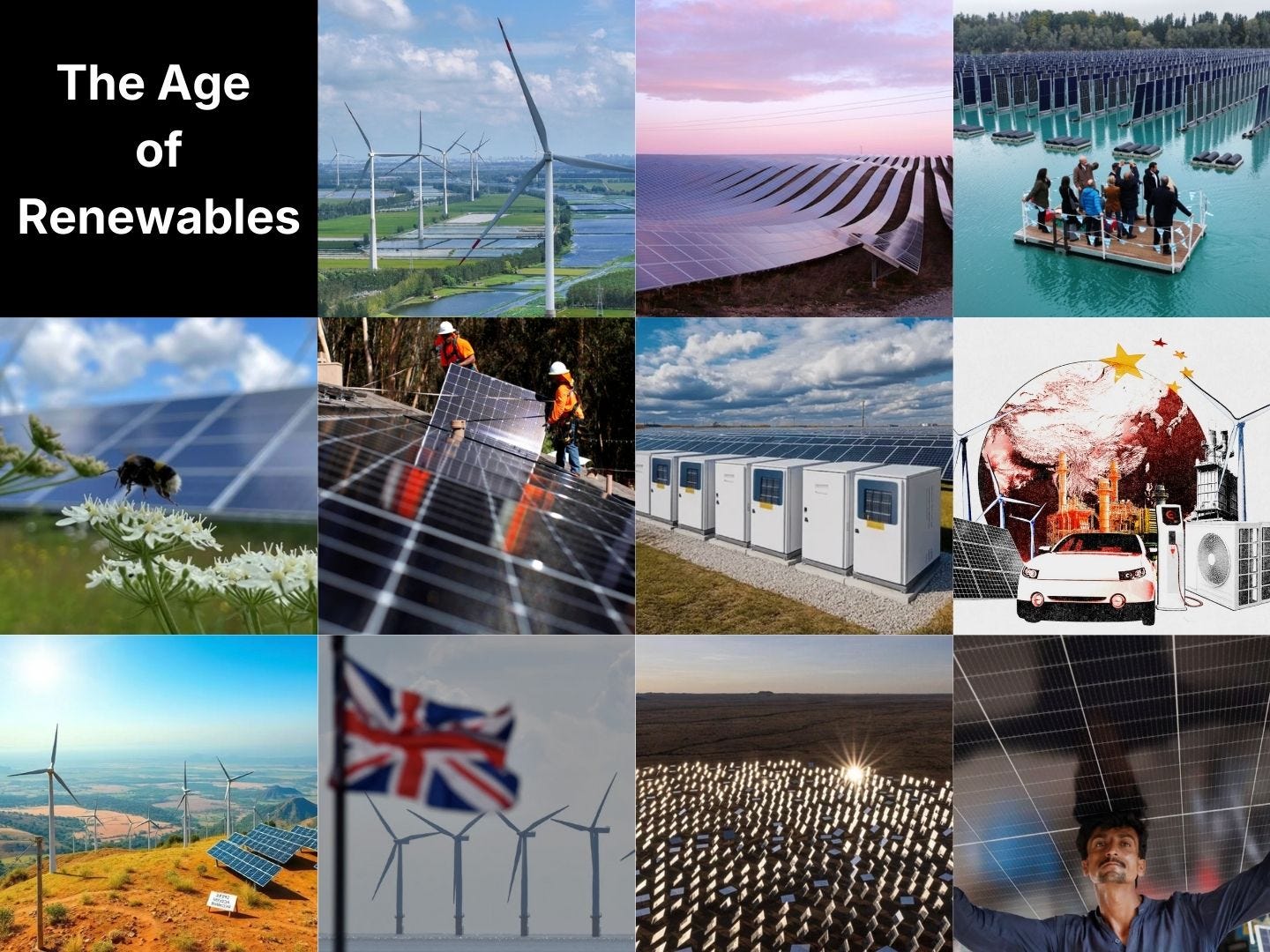
2025 was a pivotal year in the global climate story. With the passing of two crucial thresholds - China’s drop in emissions, and renewables surpassing coal - we find ourselves in an exciting new chapter of possibility. Let’s see where the Fire Horse takes us.
45. More Power than Coal
Remember this: history was made in 2025. Renewables produced more power than coal globally for the first time ever. Wait, what about the 603 TWh rise in global electricity demand? How are we keeping pace with that? Solar and wind surpassed it, generating 635 TWh in the first nine months of the year.
46. The Sun is the One
Renewables are winning as a team, but solar is definitely king. We are now putting up 1GW of solar panels every 15 hours (roughly the same GW as one coal-fired plant). 2025's first-half-of-year installations were up 64% on 2024. Alternative no more, solar is transforming the global energy system.
47. Solar Innovations
Solar is surfacing in all shapes and sizes: vertical solar floating on a Bavarian quarry lake, offering storm resistance and benefits to aquatic life; shade-giving solar now required by law over South Korean carparks; a solar park 7 times the size of Manhattan spanning the world's highest plateau.
48. Solar’s Other Benefits
As solar spreads, we're discovering the ecological benefits of the panels themselves: solar-over-canal systems combating drought in California; British bumblebees finding refuge in wildflower-sown solar farms; shade from solar arrays boosting soil and vegetation health in China's Talatan Desert.
49. Market Rules
Renewables are winning the money game. Solar and battery prices are on a joint downward spiral as the cost of fossil fuel generation continues to rise. Clean energy roles also accounted for 82% of all new American energy jobs last year, expanding three times faster than the overall workforce.
50. Transformative Batteries
Round-the-clock power was the fossil fuel trump card that solar could never beat. Today sun-soaked cities like Las Vegas and Muscat, Oman can hit that steady power mark year round. And with batteries rapidly improving as their prices plummet, the solar-battery combo is now reshaping grid planning.
51. China’s Historic First
In the global climate story, China is the main-stage event. For years they've been in a race to eclipse their titanic emissions with green energy proliferation, both at home and abroad. And then last year a historic first: China's carbon emissions began falling even as power demand grew. Hope.
52. India Surges Forward
Last year India surged from behind the pack to overtake Germany as the world's third-largest generator of wind and solar electricity. This year record installations of renewables and reductions in coal power secured their Paris pledge of 50% clean power capacity, five years ahead of schedule.
53. Less Fossils & Costs
Coal was surpassed by wind-plus-solar in the US in May, by solar alone in Australia five months later. The UK, having doubled solar energy generation in the first half of the year, then banned new oil and gas exploration, and reported wind power's £104 billion slice off UK energy costs since 2010.
54. Africa Soaks up the Sun
After 30 African heads of state agreed on expanded access to reliable, affordable, sustainable electricity, the first half of 2025 saw a record 15GW import of solar. The continent's green energy transition subsequently received a double boost: $4.2 billion in philanthropic funds; $15 billion from the EU.
55. Global South Gains
The Global South is now leading the clean-energy revolution as risks of fossil-fuel dependence increase. Alongside the rapid rise of renewables in Africa, 2025 saw Iran commit $2.3 billion to solar expansion, and Oman double its share of renewables in its bid to become a global green-steel hub.
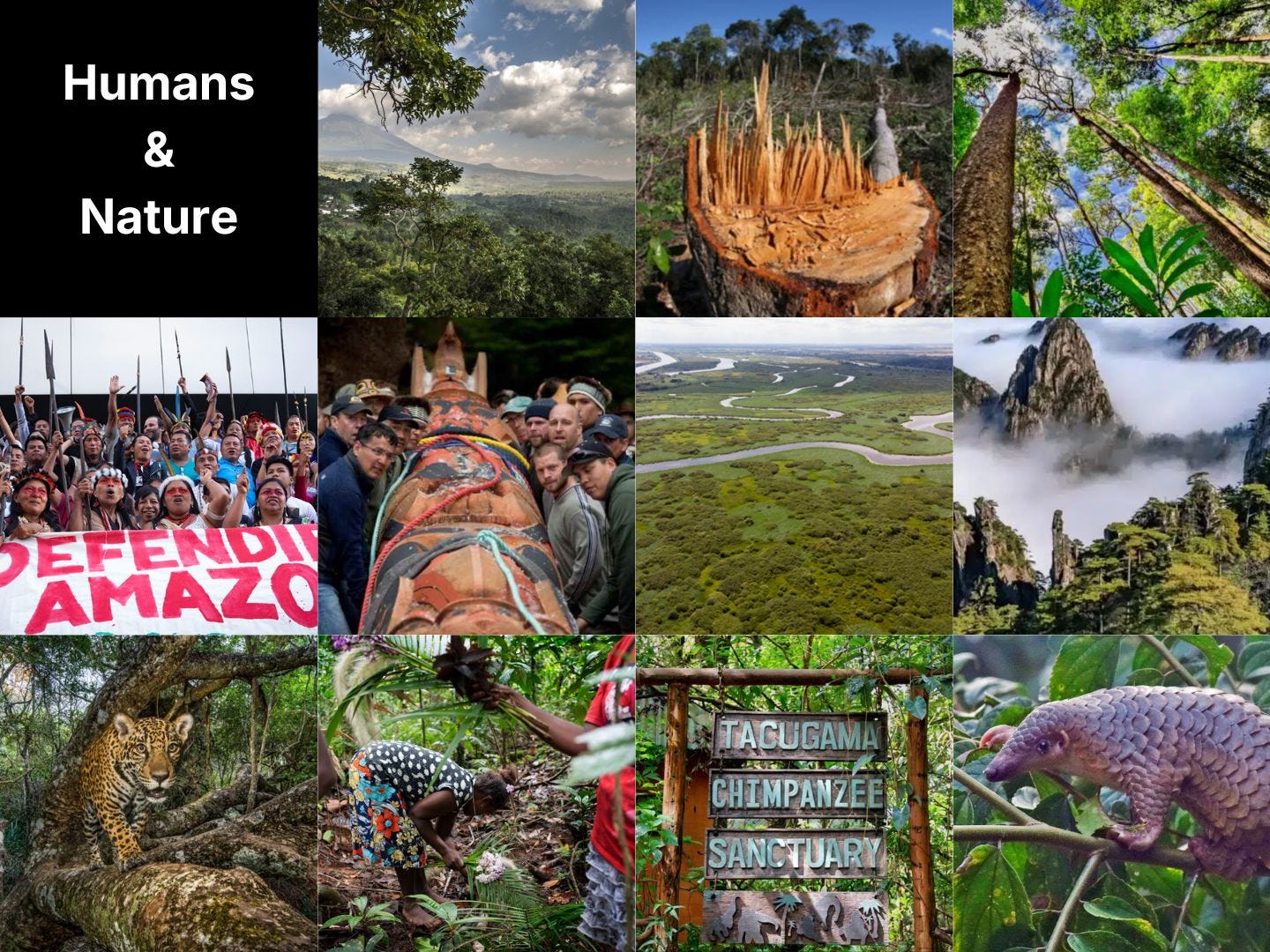
Despite COP30's failure to deliver on its big-ticket climate items, deals were struck in the margins on oceans, forests, land rights - triggering action and billions of dollars in funding. These wins echo the countless untold ways that humans keep stepping up to the plate as planet protectors.
56. Forest Protection
2025: a big year for forest protection - from the creation of "The World’s Largest Forest Reserve" (540,000 km² stretching across the Congo) to the $6.6 billion raised for November's launch of the Tropical Forest Forever Fund, a public-private purse that pays countries to protect their forests.
57. Declining Deforestation
The FAO released a new report showing that global deforestation has been declining for the last 30 years, and forest restoration is on the up. 49 countries now have 2030 forest-restoration targets covering 1.77 million km², including Brazil, whose plan funds Indigenous communities to restore 12 million hectares of the Amazon's "arc of deforestation".
58. Amazon Protections
Hope for the ‘Earth’s Lungs’ grew in 2025. Colombia declared its entire Amazon biome, 42% of its territory, a reserve for ‘renewable natural resources’. Peru protected half its northern Amazon carbon in a new reserve. Brazil, Bolivia, Columbia and Suriname all enacted bold new forest protections.
59. Indigenous Governance in the Amazon
Indigenous governance is becoming central to conservation across South America. For example, last year In Ecuador and Colombia land rights wins by the Kichwa secured thousands of hectares of primary rainforest from logging and mining, and landmark rulings protected the lands of uncontacted tribes.
60. Indigenous Governance in Canada
A milestone in returning governance of land to its original caretakers, Canada's deal with 21 Indigenous governments in July protected an area larger than Germany. And March saw British Columbia's Supreme Court side against a logging giant to grant authority over ancient forests to the Haida Nation.
61. New National Parks
So many new national parks in 2025, amongst them: Argentina's Patagonia Azul Provincial Park, Australia's Great Koala National Park, Chhayanath National Park (Nepal's 13th) and Poland's Lower Oder Valley National Park, a wetland-rich reserve hosting 237 bird species and more than 460 plant species.
62. Chinese Park Proliferation
Having created its first national park just four years ago, China announced a plan in June to achieve a network of 49 parks covering 1.1 million km² by 2035. Priorities of the plan include ecological connectivity, Indigenous rights, and protection for species like pandas, tigers, and snow leopards.
63. International Collaboration
When precious landscapes spread across national boundaries, conservation calls for next-level collaborations. Mexico, Guatemala and Belize responded to that call last year with the creation of the 57,000 km² Great Mayan Forest bio-cultural corridor, protecting habitat for jaguars and scarlet macaws.
64. Pangolin Reprieves
A double reprieve for the Pangolin last year: West Africa's strongest wildlife law to date passed in Nigeria; China's removal of the scaled marvel from their official medicine guide. Meanwhile new data shows China's 2018 ivory ban led to a roughly 50% fall in elephant poaching across 43 countries.
65. Humans in Nature
From Solomon Islanders' defence of their untouched forests to small farmers restoring land up to 20 times more effectively than NGOs, 2025 gave us further proof that - contrary to old top-down 'wilderness' ideologies - biodiversity improves where humans actively engage with the land as custodians.
66. Rewilding Revolution
2025 showed us that the rewilding revolution isn't just a boon for non-humans: we saw beavers providing flood-protection, a Sierra Leone chimpanzee reserve securing human water supply, ecosystem renewal reviving abandoned Spanish towns, and wetlands-restoration healing Ukraine's front-line fighters.
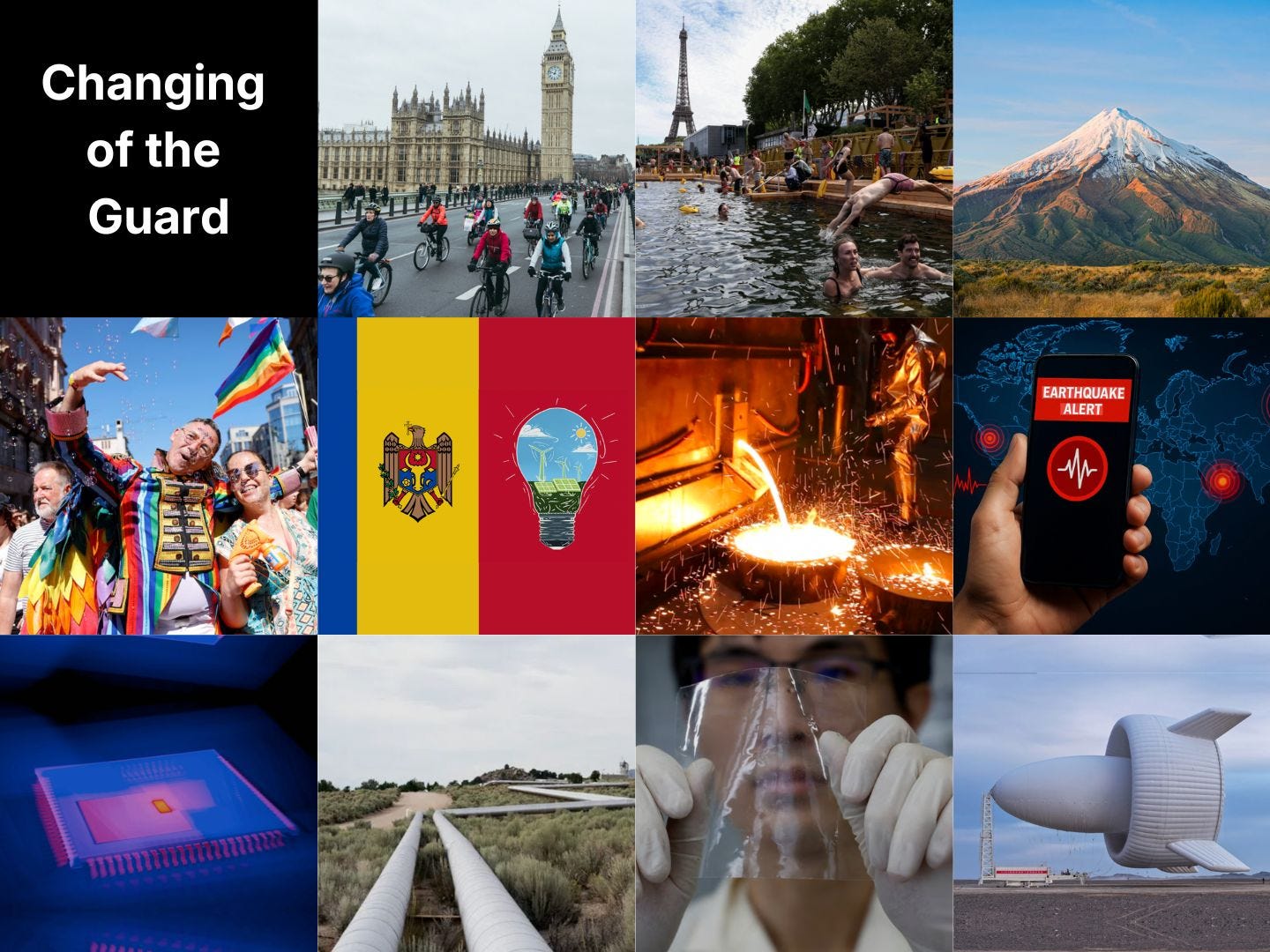
Last year gave us a fresh taste of what could become our new normal before we know it - swimmable city rivers, green energy sovereignty, advance earthquake alerts.
67. City Swimming
2025 saw swimmers in Chicago River and the Seine for the first time in a century. Similar scenes are now a feature in cities across Europe. City river clean-ups in Brazil are reducing disease and reviving biodiversity. The once "biologically dead" Thames is now one of the world’s cleanest rivers.
68. City Transport
How we move through our cities has seen a fundamental shift. Take the example of London, where walking, cycling, and wheeling now account for three-quarters of all observed travel activity. Cycling has increased six-fold since 1999, whilst motor vehicle usage dropped two thirds in that time.
69. Man Mountain
Last year a unanimous parliamentary vote granted legal personhood to Taranaki Maunga - a mountain in New Zealand - giving it rights to protection, preservation, and the ability to initiate legal action. This adds to the global list of natural entities whose right to flourish is recognised by law.
70. LGBTQ Milestones
When Hungary attempted to ban Budapest Pride in June more than 30 embassies expressed support for the march. The unstoppable crowd swelled into a 100,000 strong anti-government protest. Months later the Vatican made history, hosting its first officially recognised pilgrimage for LGBTQ+ Catholics.
71. Re-energising Moldova
Moldova will never be the same again. The tiny nation turned loss of access to Russian gas into a green energy revolution. Replacing gas with biomass, lining schools with solar, they've halved bills and boosted resilience. Part of a trend of soaring solar and battery capacity across Eastern Europe.
72. Green Steel
The ‘Steel = Emissions’ equation saw 2 big shifts in 2025: Boston Metal’s breakthrough production of a ton of steel using electricity instead of coal; a government-mandated retrofit that put two thirds of China’s steel plants on a race to meet “ultra-low emissions” standards by the end of the year.
73. Seismic Smarts
2025 gave us news of a huge advance in earthquake alerts thanks to two tweaks of existing tech: an android app turning millions of smartphones into a global seismic sensor grid, and a system for monitoring tiny tremors that could be deployed across the world's 4 billion kms of fibre-optic cabling.
74. AI Energy Efficiency
As AI transforms the world we're figuring out how to radically reduce its ecological impact. Efficiency gains saw a 33-fold cut in AI energy use in the year to August, gains that could be accelerated by a new light-powered AI chip using up to 100x less energy and motion-learning based on bee brains.
75. Repurposing Tech
Plenty of countries and jurisdictions have said “Frack Off” to perhaps the world’s most fraught means of fossil-fuel extraction but the contentious tech has now been repurposed to ignite a clean energy geothermal boom. What other troublesome tools will we reconfigure to bring about a greener future?
76. Zero-Waste Materials
Exciting breakthroughs this year from scientists wrestling with the problem of plastic: biodegradable plastic that completely dissolves in seawater within hours; plastic bottles turned into paracetamol using hacked E. coli bacteria; polyurethane turned into reusable chemicals by AI-created enzymes.
77. Floating Turbines
What transformations await the iconic "landscape dotted with turbines" as innovation advances our energy generation systems? Take last year's successful flight by China of the world’s largest and most powerful airborne turbine, a milestone that promises cheaper, more reliable green energy.
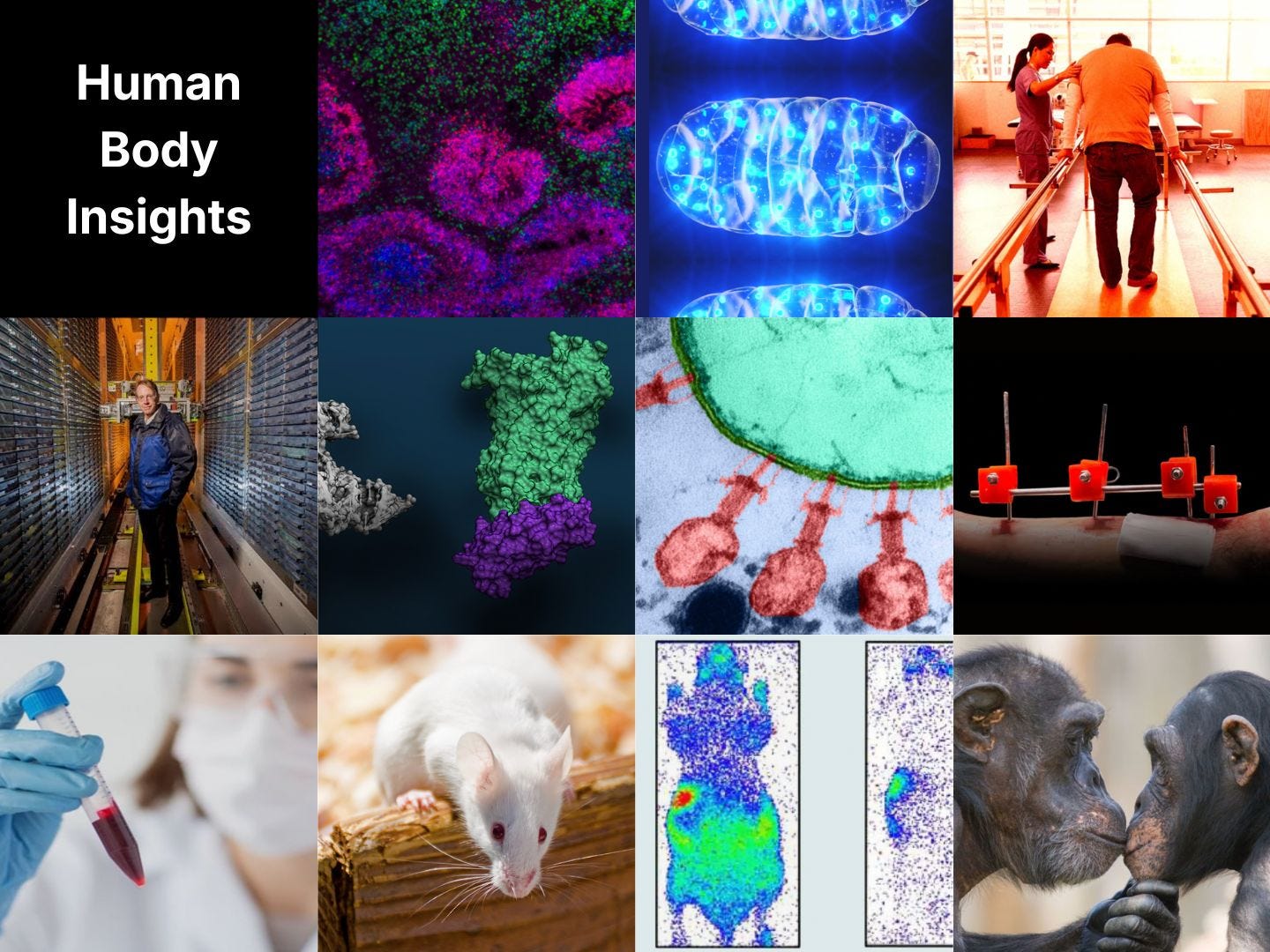
2025 saw a profound expansion in our understanding of brains, as we provided ourselves with paradigm shifting tools and interactive repositories of knowledge to help us in our quest to heal human bodies. We were also kissed by evolution and left with glowing skin.
78. Brain Insights
Last year we boosted our brain intel: the first-ever atlas of brain development showed how stem cells turn into neurons; analysis of 4,000 scans revealed 5 distinct 'ages' of the brain ('adolescence' lasts into our 30s); and a breakthrough mouse-brain study mapped an 'impossible' 523 million neural connections.
79. Recharging the Brain
Research released in August showed how memory can be restored in mice by recharging their brain’s "batteries", the mitocondria that power living cells. This study's success points to mitochondria as a powerful target in the design of new treatments for neurodegenerative diseases like Alzheimer’s.
80. Walking & Talking
2025 saw two world firsts in the restoration of fundamental human functions: an injection of reprogrammed neural stem cells enabled a paralysed man to stand once again on his own two feet; a brain implant granted expressive speech to a man with a severe speech disability, even allowing him to sing.
81. MRI Treasure Trove
In July UK Biobank celebrated the completion of the world's largest whole-body human imaging project, after scanning 100,000 volunteers for brain, heart and bone images. This transformative MRI treasure trove will allow health practitioners to flag dozens of diseases years before symptoms occur.
82. Gene Revelations
February's launch of Evo 2 allows us to speed through the evolution of genes to witness their harmful or beneficial effects on human health, and rapidly generate new genetic sequences for curing disease and solving environmental challenges. What's more, this all-access generative AI is open-source.
83. Resisting Antibiotic Resistance
2025 brought good news in the face of growing global antibiotic resistance: a familiar bacterium emerged as the source of an effective superbug-killer 100 times stronger than existing antibiotics; and an AI-designed virus outperformed existing 'bacteriophages' in killing resistant strains of E.coli.
84. Blood Boons
Three new blood-related breakthroughs in 2025: a new blood test that successfully detected over 50 types of cancer in a 25,000-person study; new enzymes designed to convert all donated blood into universal type O; an engineered floral-scented fungus that lures blood-hungry mosquitos to their death.
85. Accessible Design
Two innovative designs met real-world needs in 2025: the world's first fully 3D-printed, easy-assemble microscope capable of sub-cellular resolution, with a unit cost of only £50; an external fracture fixator made entirely inside the Gaza Strip, using recycled plastics and solar-powered 3D printers.
86. Organ Regrowth
Fantasy hero regrows severed limb. Jealous. But could that be us one day? With the flipping of a long-silenced metabolic switch a rodent fully repaired its ear tissue within 30 days last year, pointing to the possibility that all mammals may have ancient regenerative programmes awaiting activation.
87. Life Emits Light
Next time someone says "you're glowing with health" (hopefully any minute now), consider the fact that it might be true. This year an experiment on mice and two plant species documented an eerie 'biophoton' emission ceasing on death, suggesting that us humans may also emit light while we are alive.
88. A Deeper Kiss
Kissing received a vivid definition in a study of its evolutionary origins released in November. It turns out that "oral-oral contact with some movement of mouthparts and no food transfer" is a habit that we share with a wide range of mammals, and was probably started by apes 21.5 million years ago.
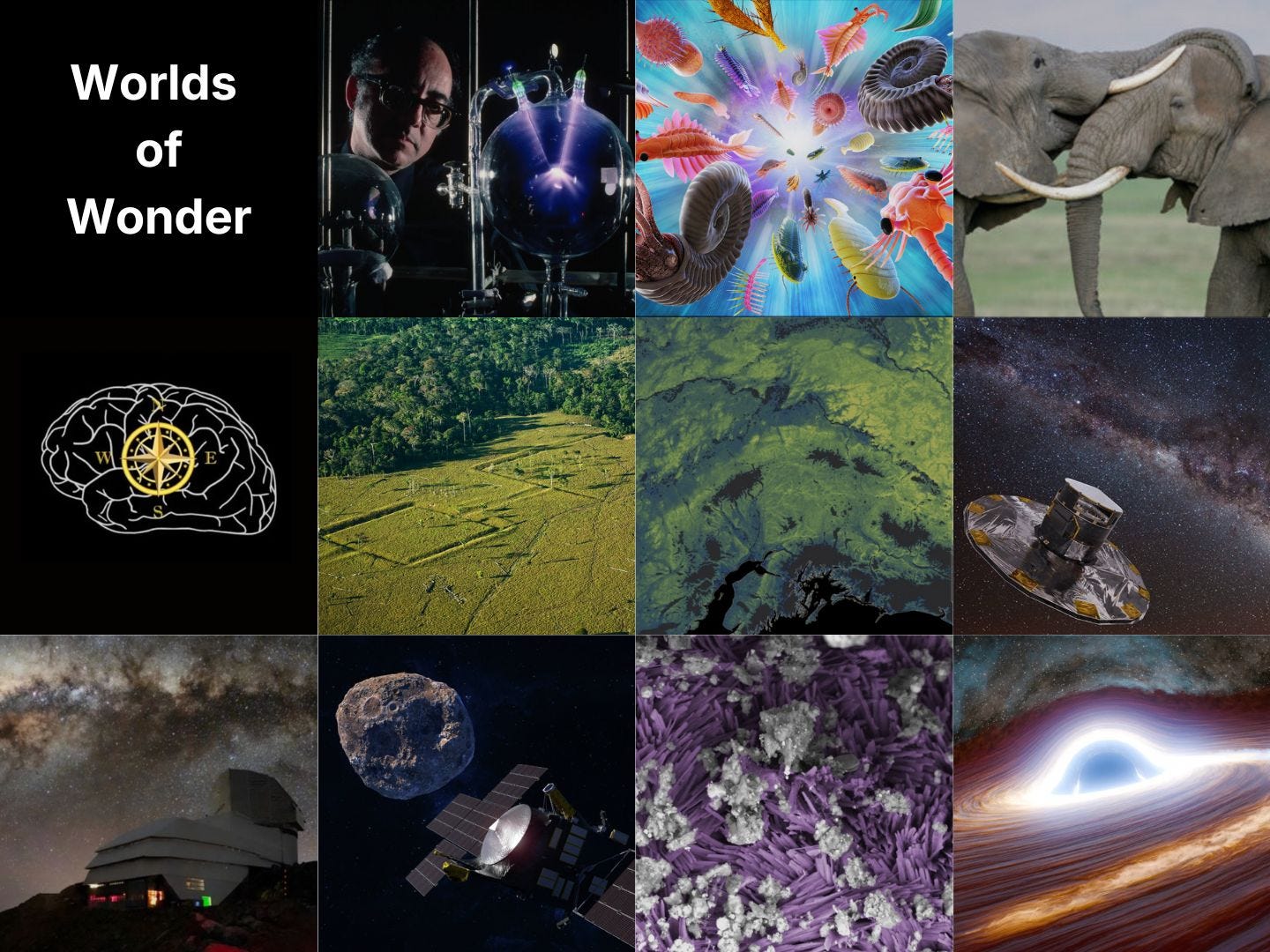
In 2025 we unearthed and mapped intimate marvels of life on Planet Earth, and cracked open whole new cosmic vistas, as our telescopes, satellites and radio arrays offered up more detailed imagery of the stars than ever before.
89. Originating Life
May gave us news that we're closer to recreating life’s first step. After a decades-long investigation into life's emergence from lifeless chemistry, synthetic chemists have created molecules that can self-replicate under conditions that mimic early Earth, demonstrating how biology may have begun.
90. Evolving Evolution
Our understanding of evolution evolved last year. February offered us the best evidence yet that birds and mammals evolved their intelligence independently, and in August we learnt that the majority of Earth’s species stem from a few evolutionary 'explosions' that sparked rapid diversification.
91. Animal Talk
We humans are not alone in our use of language. 2025 documented elephants inventing unique “names” for one another; bonobos combining calls to make complex phrases. And with this year's launch of DolphinGemma, an AI trained on 40 years of audio, we may soon know the structure of "dolphin language".
92. Uncanny Compass
Last year a study of bats revealed 'directional neurons' forming an inner mammalian compass unaffected by moon, stars or horizon, and a study of deep-diving Manta rays suggested these ocean greats build maps of vast, featureless stretches of open ocean by 'tasting' magnetic signals in the depths.
93. Lidar Reveals
Our ability to map built structures with airborne lasers is upending preconceptions of ancient human habitation in the Americas: a network of thousands of garden cities has surfaced in the "untouched" Amazon and in June a study revealed a vast network of ridged maize fields in precolonial Michigan.
94. Underground Atlas
Fungi's overlooked role in underpinning global ecosystem health was given a visibility boost in July with the launch of the Underground Atlas - a global project to map and protect mycorrhizal networks, and thereby preserve their much-needed capacity to boost worldwide biodiversity and food security.
95. 3D Milky Way
In 2025 we vastly expanded our capacity to view the Milky Way: the Murchison Widefield Array's latest radio image revealed star-forming regions and supernova remnants with 10x more fidelity, and Gaia completed its scan of 2 billion stars for the creation of our best ever dynamic 3D Milky Way map.
96. Car-sized Camera
In June Vera C. Rubin Observatory's car-sized 3,200-megapixel camera teased us with its first stunning views of galaxies, nebulae and newly catalogued asteroids. Its grand mission: to map billions of undiscovered celestial features via snaps taken of the entire night sky every few days for a decade.
97. Cosmic Catch
2025 marked two milestones in humanity's race to inhabit space. In March, the first fully successful commercial moon landing. And in September, a dramatic win for interplanetary comms: NASA’s Psyche spacecraft fired off a stream of laser-encoded data across 351 million kilometres, and Earth caught it.
98. Life’s Ingredients
Theories on life's extraterrestrial origins gained extra weight this year as signs of biological activity surfaced on a planet 124 light years from Earth, and NASA's sample of asteroid Bennu revealed 'life molecules' and a history of saltwater that could have served as their activating ‘broth’.
99. At least you’re not on Tylos!
Terrible day? At least you're not trapped on Tylos (a super-hot planet that we now know is whipped by winds of vaporised metal) or caught in a black hole feeding frenzy (like the one in November that belched the brightest star-munching flare ever recorded). Thank your lucky stars you're on boring, beautiful Earth!
So there we have it: just under a hundred servings of information nourishment that demonstrate humanity’s ability to care and collaborate, scrutinise and solve, imagine and improve. As usual the list could go on and on.
Despite the chaos and carnage that runs alongside them, inspirational stories like these are perennial and pervasive - proof that there’s no shortage of humans who choose service, driven by a sense of justice, wonder, or possibility, and follow through until they leave a positive mark on the world.
I have no doubt the team at Fix The News will keep bringing you such stories as we all navigate another year together. In the meantime, may these favourites from the past year find a spot in your saddlebag as snackable sustenance for the ride ahead.
Thank you for this round-up! I had missed many of these stories. I was a little disappointed that these summaries did not include sources, though. I went looking for more detail on a couple, but wasn't able to find them--for example, I can find articles about the Amazonian cities, but not why this article calls them "garden cities." I would be grateful if future guest authors could include their sources.
Really good! Thanks.