

345: First Scroll. Tuk-tuk. Labour standards. Whale nursery.
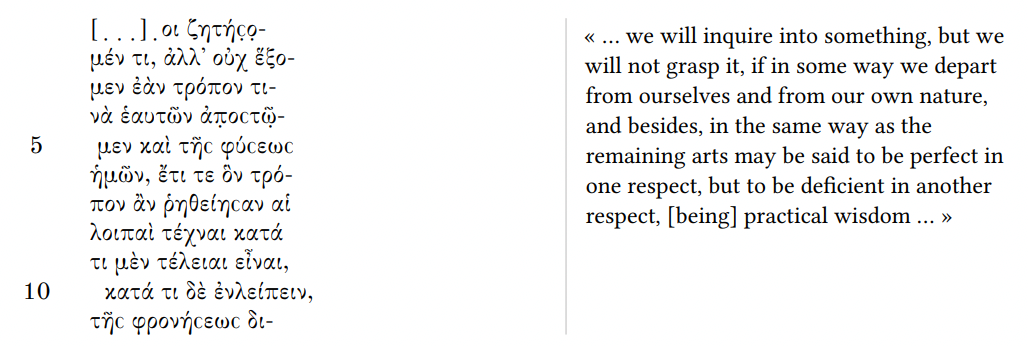
We will not grasp it, if in some way we depart from ourselves and from our own nature.
I just think goodness is more interesting. Evil is constant. You can think of different ways to murder people, but you can do that at age five. But you have to be an adult to consciously, deliberately be good – and that’s complicated.
Toni Morrison
The trouble is that we have a bad habit, encouraged by pedants and sophisticates, of considering happiness as something rather stupid. Only pain is intellectual, only evil is interesting. This is the treason of the artist; a refusal to admit the banality of evil and the terrible boredom of pain.
Ursula Le Guin
Imaginary evil is romantic and varied; real evil is gloomy, monotonous, barren, boring. Imaginary good is boring; real good is always new, marvellous, intoxicating.
Simone Weil

This week’s top stories
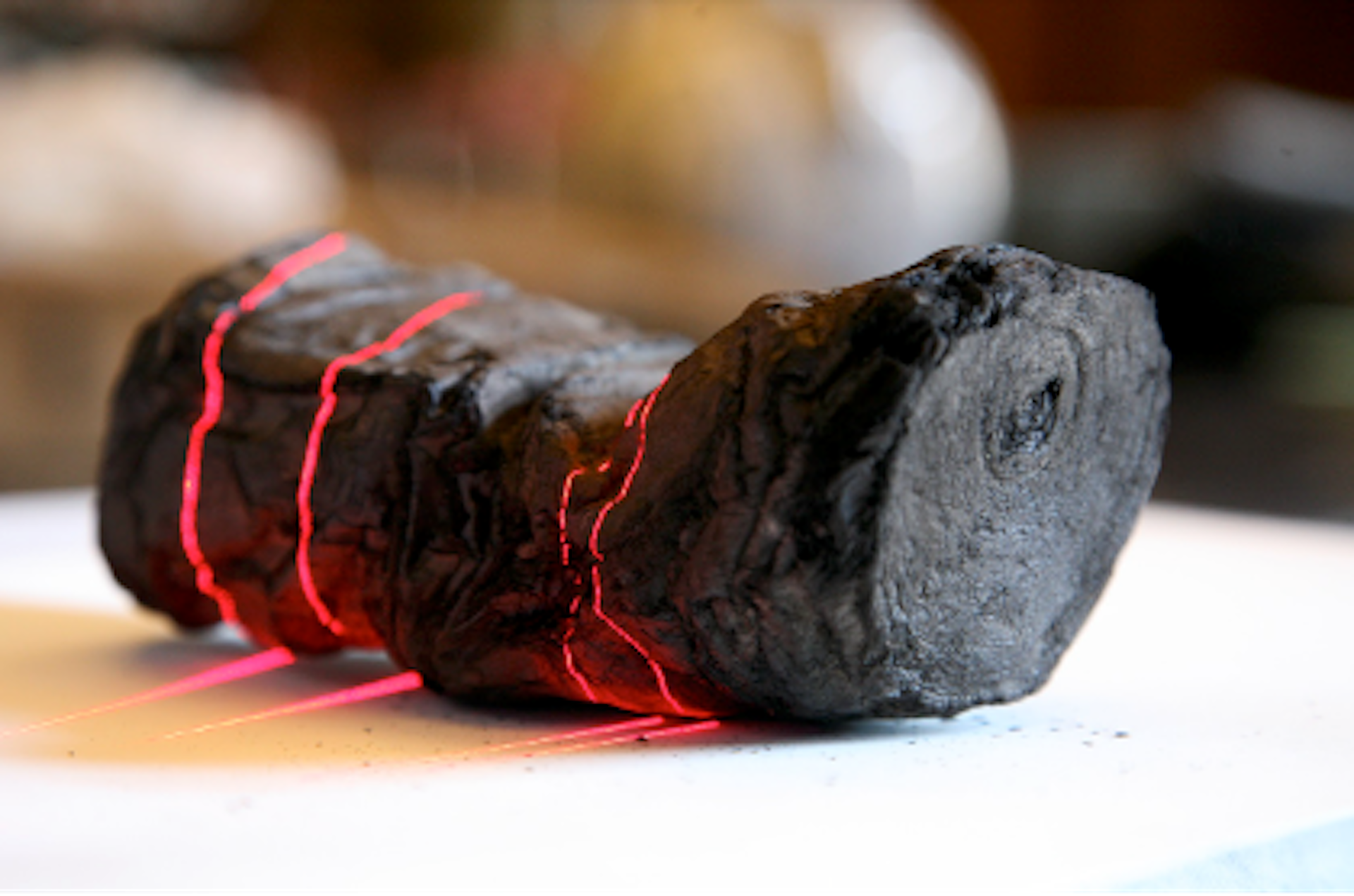
A Roman scroll that should be ash has just been read without ever being opened. In 79 AD, Mount Vesuvius buried the Roman town of Herculaneum under metres of ash. In one villa, a library of papyrus scrolls was buried too. The scrolls didn’t burn, but were charred: turned into fragile, cigar-shaped lumps of carbon. For 2,000 years they’ve been unreadable - because unrolling just crumbles them. Until now, because researchers with a project called the Vesuvius Challenge have just read an entire scroll without ever opening it.
How? First they scanned the scroll with a European synchrotron, a very powerful X-ray machine that can see the microscopic layers of papyrus curled up inside. Then machine-learning models trained to spot ink picked out the faint traces still on the page, nearly the same colour as the charred paper, but distinct enough. Then they gathered a bunch of classicists and ancient language experts to decipher the symbols.
The first scroll turns out to be (inevitably) a Stoic philosophy text about ethics. The author appears to be a philosopher called Aristocreon, which dates the writing to the 2nd century BC. Hundreds more sealed scrolls are waiting to be read — and all the data and code from the project are public, so anyone can get involved. First Scroll
The International Labour Organisation has adopted the first binding global labour standards for gig workers. Backed by 406 members, the new convention sets protections for platform workers in ride-hailing, food delivery and other app-based jobs, including measures on occupational safety, minimum pay and protection from unjustified termination. The standards will need ratification by individual countries before enforcement can begin. Reuters
A new species of ladybug was discovered on a pine tree at Kyushu University, proving that undiscovered wildlife can exist right under our noses. Science Daily
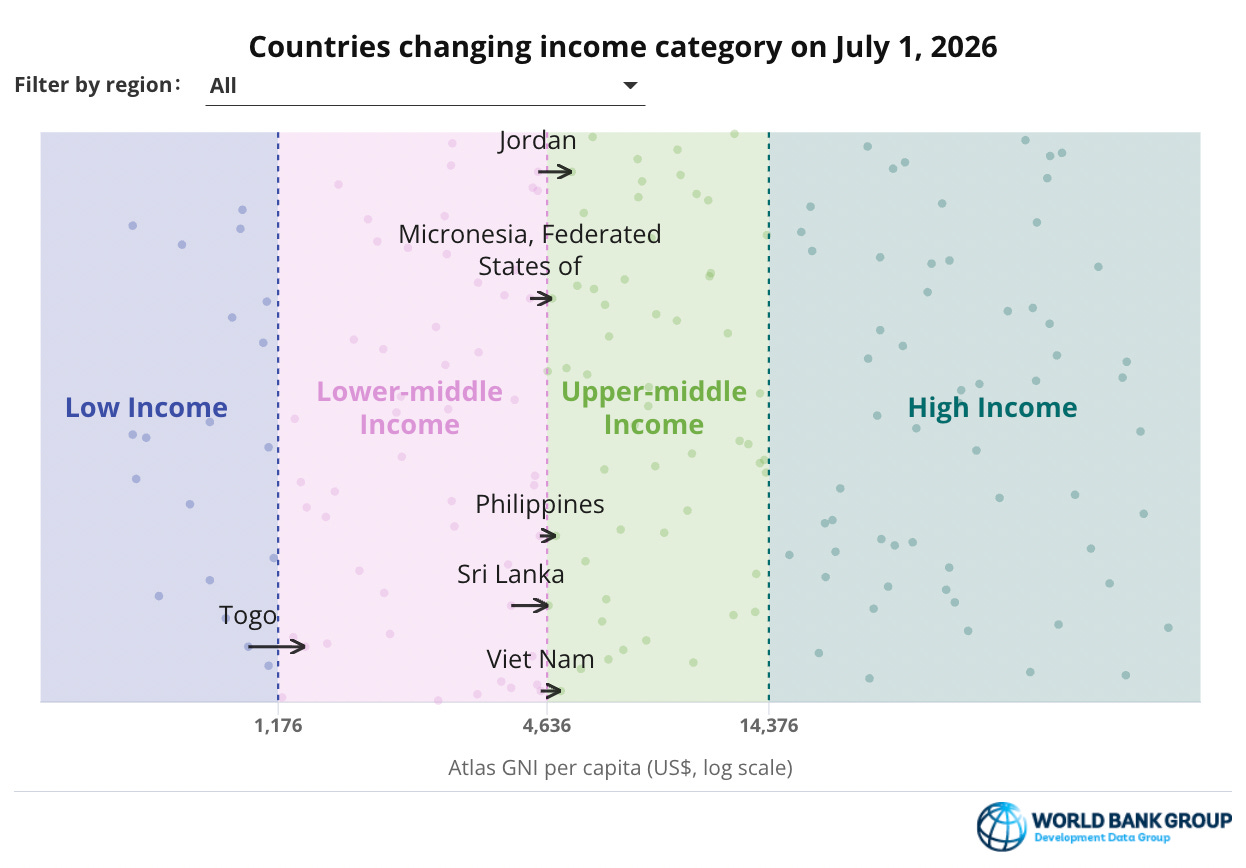
Five countries just graduated from lower-middle to upper-middle income, each by a different route. Vietnam rode an export surge (GNI up 10% a year since 2021); the Philippines saw GDP grow at an average of 5.8% per year over five years, reflecting gains across all major industries, instead of just one sector, Micronesia has achieved steady growth since the end of the pandemic, Sri Lanka has clawed back from its 2022 economic crisis, and Jordan discovered that its economy was almost 10% bigger after a statistical rebasing. World Bank
A 23-year-old New Orleans man has become Louisiana’s first patient functionally cured of sickle cell disease. Daniel Cressy underwent gene therapy at Manning Family Children’s Hospital, where doctors say the disease is no longer active in his system after a 2-year process that involved collecting his cells, genetically modifying them in Scotland, and infusing them back into his body. Cressy, who said his dream of becoming a pilot was almost taken away from him because of the blood disorder, has set up his own nonprofit, Privileged Pilots, to support others undergoing sickle cell treatment in Louisiana, which has more cases per capita than any other US state. WAFB
“Someone’s ability to access treatment and potentially cure should not be defined by their zip code. People in Louisiana deserve the same opportunity as people anywhere else in this country. The people living with sickle cell disease are here. They are neighbours, our friends, our families.”
A veteran car reviewer’s verdict: EVs have improved more in two years than petrol cars did in a decade. Mack Hogan tallies the gains: fast-charging times down from about 18 minutes to 11, the number of 300-mile models rising from 21 in 2023 to more than 60 this year, and the Lucid Air’s 516-mile range now $10,000 cheaper, while a $25,000 electric pickup nears launch. Petrol engines, he argues, are near the end of their development road. InsideEVs
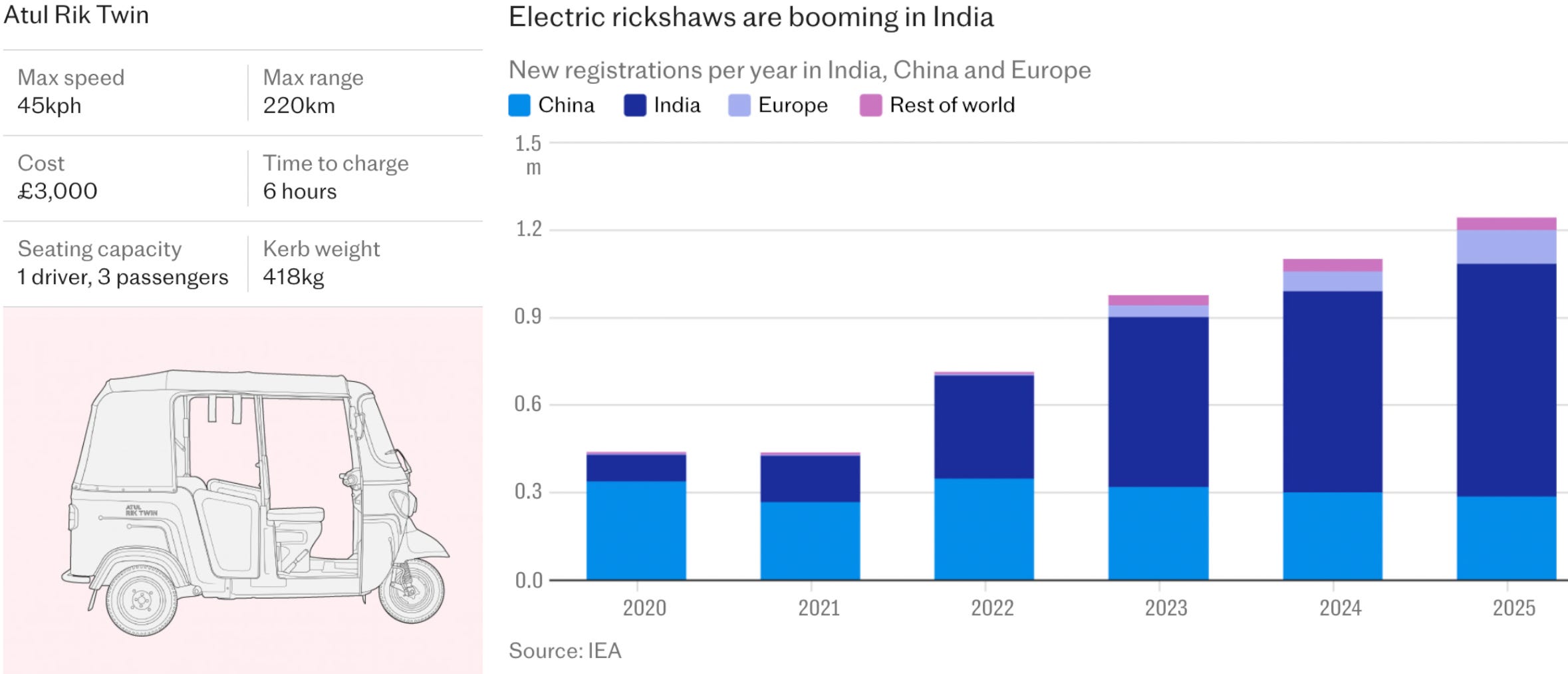
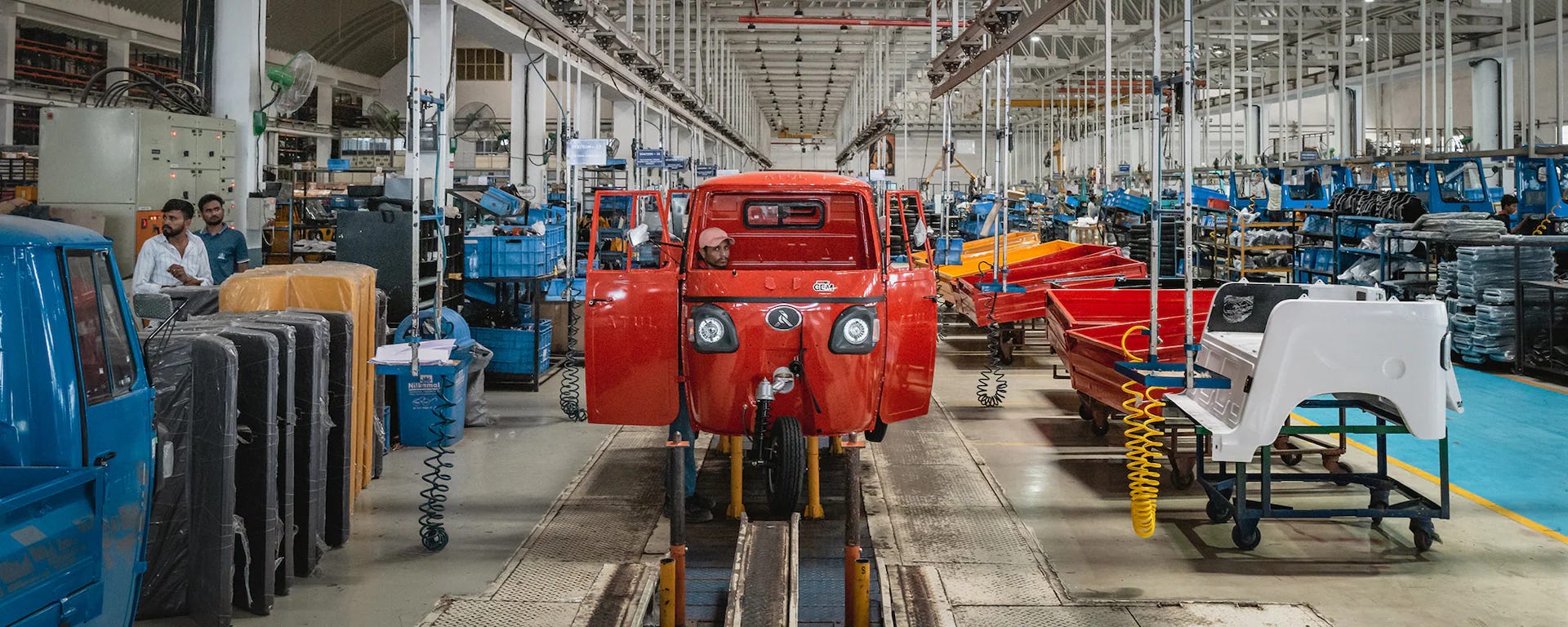
And while the West obsesses over electric cars, the developing world is electrifying all its smaller vehicles. India leads: nearly 70% of three-wheelers (rickshaws, mopeds) sold there in 2025 ran on batteries, up from 20% in 2020. The shift is spreading, sales in Southeast Asia doubled last year, African electric-motorbike sales have leapt from under 1,000 to 70,000 since 2020. Telegraph
Someone finally did a systemic review of how Indigenous communities foster biodiversity on their land, and now we all get to learn from it. There’s an old-fashioned streak in Western conservation that assumes the only way to save nature is to keep humans away from it, treating humanity like a virus that’s colonized the earth. That simply isn’t true. There’s a lot of land with people living on it whose biodiversity is just as high, if not better, than on comparable abandoned land — and it’s mostly populated by Indigenous communities.
It’s fashionable for well-meaning activists to say we should learn more from Indigenous knowledge systems, and yet that’s seldom put into practice. Now scientists are stepping up — last month, Nature published a systemic review of Indigenous land management practices across 27 nation-states. The conservation world could do well to look at the findings: ways to live well with nature where, yes, trees can be cut and rivers can be fished and animals can be hunted, but within frameworks that work with the world at large, rather than against it. Grist
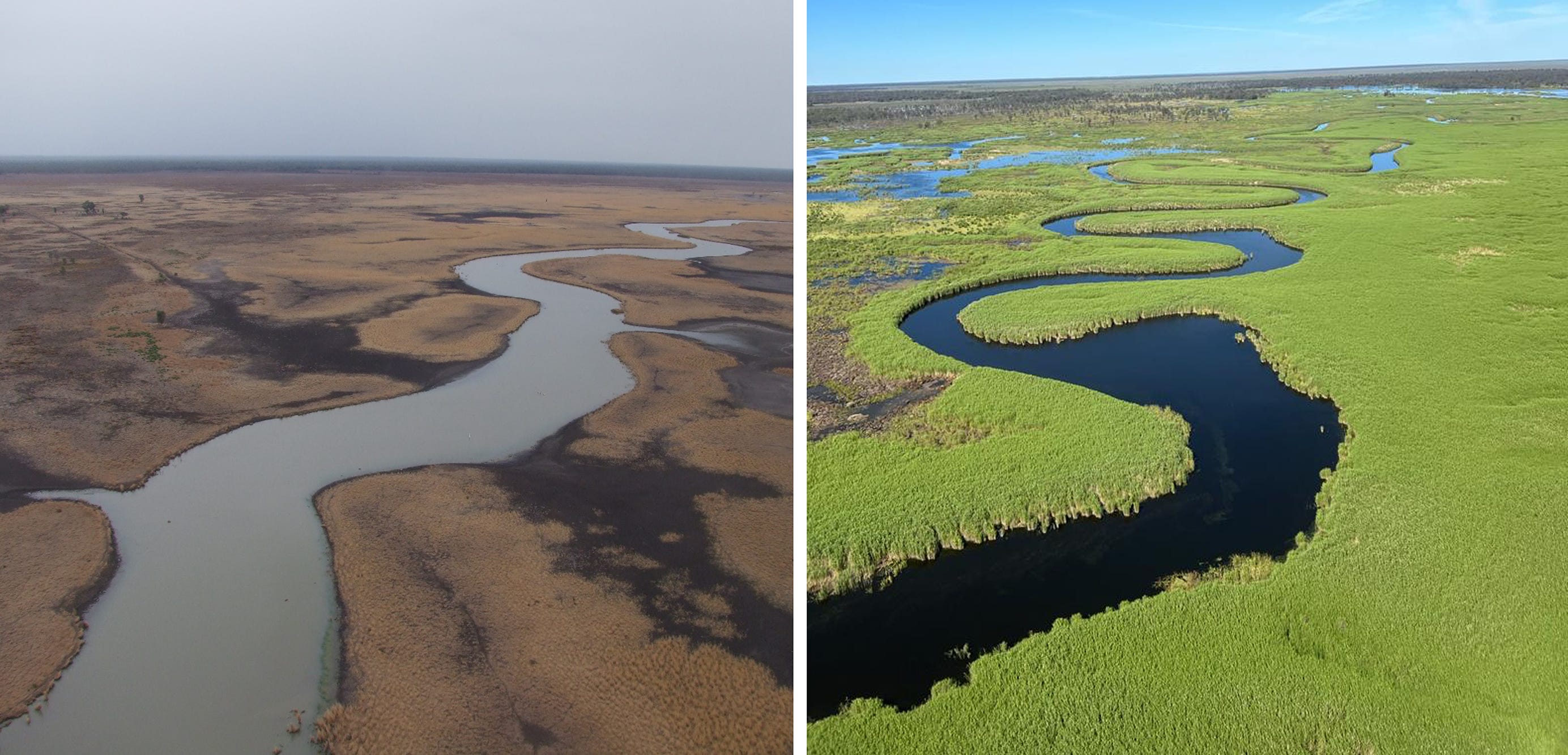
…which is to say, there’s a reason organizations like the Nature Conservancy keep selling lands to First Nations when they want them preserved in perpetuity. The latest victory: Australia’s Great Cumbung Swamp, a drought refuge currently being evaluated as a Ramsar wetland of international significance, is now in the care of Australia’s Nari Nari Tribal Council. Logged and grazed for decades, the land came up for sale in 2019, and the Nature Conservancy snapped it up.
Good thing, too. The land, which when purchased was nearly denuded, is a crazy important drought refuge for the regions fauna, who come to the wetland when the rest of the landscape is dry. This year, TNC sold the land to the Nari Nari Tribal Council, which pledged to protect the wetland long-term as they are already doing for adjoining properties including the Gayini Conservation Area and the Toogimbie Indigenous Protected Area. Mongabay
England scraps a 19th century law that penalises homelessness. From next week, rough sleeping is no longer a crime in England and Wales, ending a 200-year-old law written to punish “idle and disorderly persons, rogues and vagabonds”. 13,000 people sleep rough on London’s streets each year. The housing secretary framed the repeal as a shift “from punishment to prevention”, with new offences covering organised begging and trespass to fill the legal gap. LBC
Two southern African parks welcomed rhinos back in June 2026. Nine female white rhinos completed a decade-long reintroduction at Mozambique’s Zinave, once called a “silent park” after its civil war, where a breeding herd and seven calves are now established. In Zimbabwe, 17 black rhinos returned to Matusadona for the first time since poaching erased them in 2016, drawn from private conservancies that safeguarded the landscape’s own bloodlines while ranger numbers there quadrupled to 110. Mongabay / African Parks
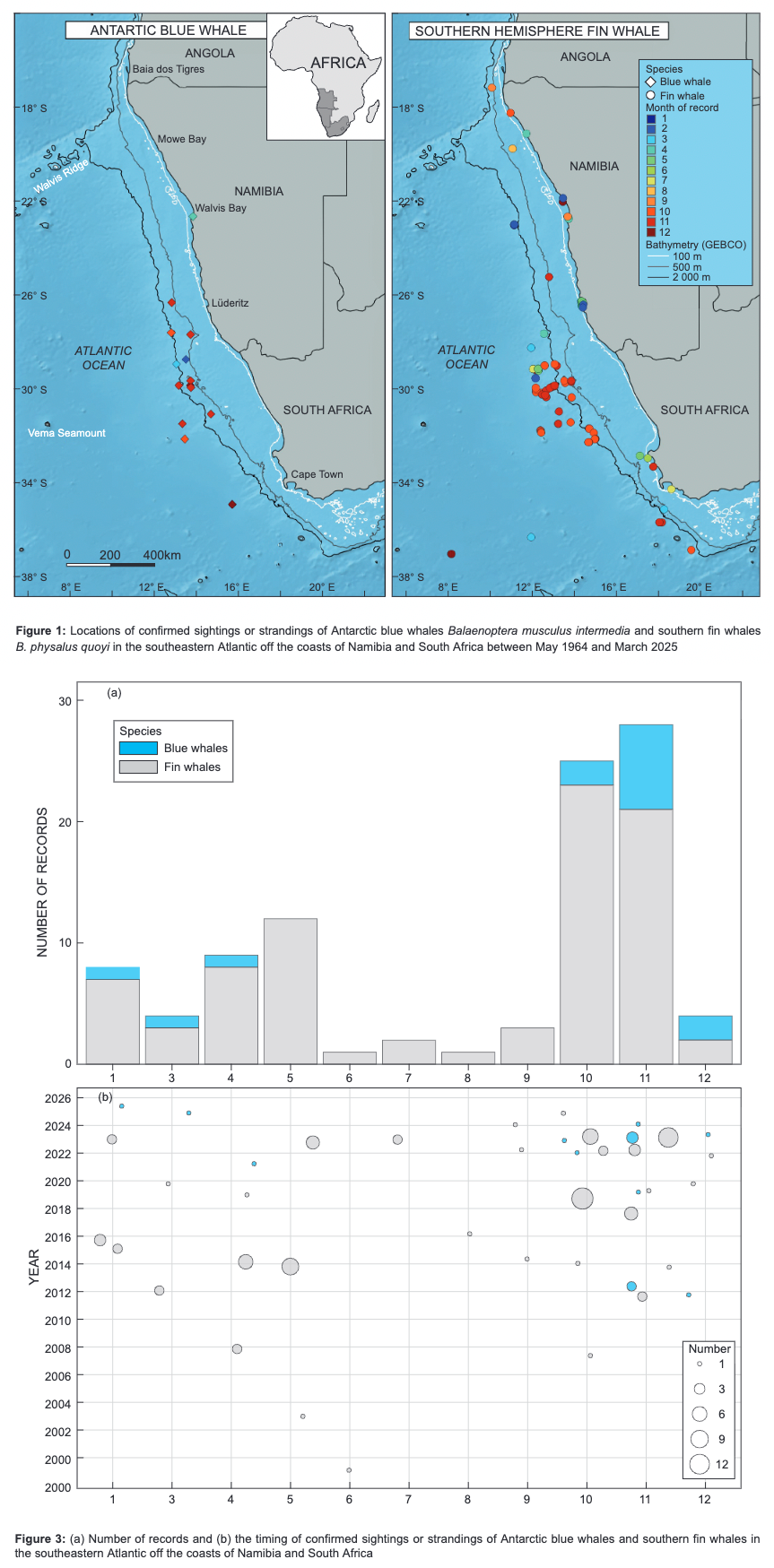
Blue and fin whales are returning to seas that whaling emptied. Twentieth-century hunting killed an estimated 350,000 blue whales and 725,000 fin whales; off Namibia and South Africa, just four blue-whale sightings were logged between 1973 and 2014. Now researchers have collated 12 blue-whale and 76 fin-whale sightings, 95% of them since 2012, with calves among them hinting the Benguela upwelling is again a nursery. African Journal of Marine Science
How’s this for permaculture on a whole new level? Adding fish to rice paddies fights a horrible parasitic disease. In a schistosomiasis hotspot in Senegal, researchers stocked rice fields with two native species, African bonytongue and Nile tilapia, that eat or outcompete the freshwater snails carrying the parasite. Fields with both fish held fewer snails, and yields rose more than 25%, with the harvested fish offering a second stream of income. The team now wants to scale it across endemic rice-growing regions. Stanford
Surprise, surprise - a landmark review confirms that mRNA vaccines are safe. Drawing on billions of doses, laboratory work and 68 clinical studies, a Lancet review confirms mRNA vaccines are safe and effective: serious harms are rare, and the myocarditis they can occasionally cause is less likely than the same harm from catching COVID itself. Gavi
Plus: According to the World Health Organization, vaccines have saved an estimated 51 million lives in Africa over the last five decades. In 2024 alone, vaccines averted an estimated 1.9 million deaths across the continent, with measles second-dose coverage up from 43% to 55% since 2022 and 25 countries now rolling out the first malaria vaccines.
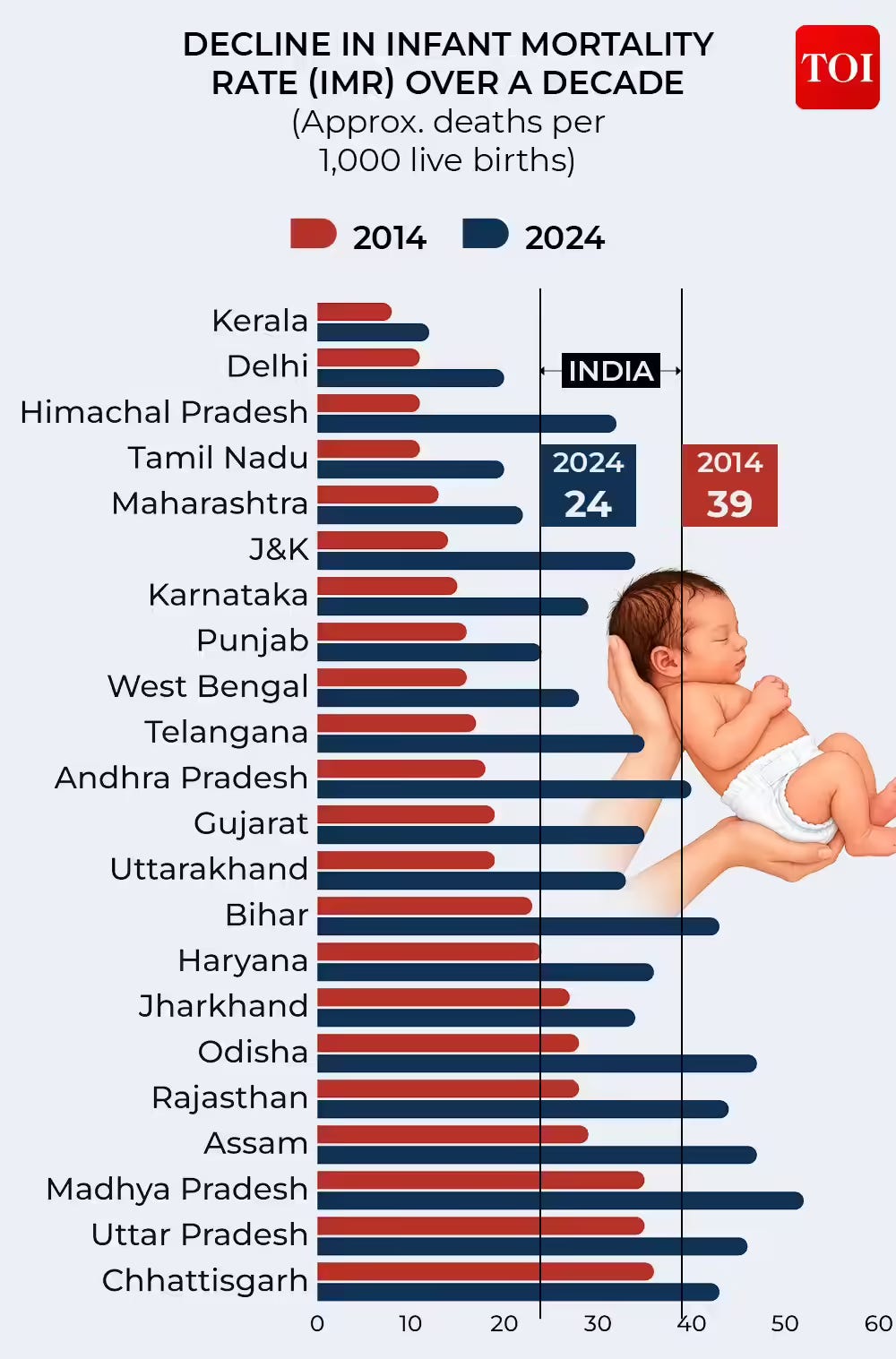
And finally...so how did India reduce infant mortality? Picking up a thread from Edition 343, India’s infant mortality rate was 24 deaths per 1,000 live births in 2024, down from 30 in 2019. Why? A big driver seems to be the rapid rise in births attended by a midwife, nurse or doctor - the percentage of live births where mothers received medical attention in government or private hospitals increased from below 83% in 2019 to more than 95% in 2024. Times of India
On the podcast this week…
For most of us, Antarctica only comes onto our radar when we see headlines about melting glaciers. What’s less well known is that it’s also one of humanity’s greatest success stories.
For more than six decades, Antarctica has been governed by an extraordinary international agreement that has kept an entire continent free from war, mining and territorial conflict. It isn’t perfect. It faces enormous challenges. But it remains one of the world’s most remarkable examples of global cooperation.
This week on the podcast, we sat down with Claire Christian from the Antarctic and Southern Ocean Coalition (ASOC), one of the few people with a front-row seat to the negotiations that shape the world’s coldest, driest and windiest continent. It’s a conversation about diplomacy, marine protected areas, weird invertebrates and penguin highways.
But more than anything, it’s a reminder that cooperation isn’t just an idea—it can be practised at every scale, from international treaties to giving a penguin the right of way.