343: The Prairie Remembers. Mission 300. Vultures. Dementia. Nepal 🏳️🌈
I’m not free until every woman is free.

In the last few episodes of our podcast we’ve been speaking to people who repair things: rivers, peace agreements, journalism. This week’s guest, Alice Achan, is rebuilding something equally important: the opportunity to learn, and experience a life free from fear.
Alice is the founder of Te-Kworo, one of our giving partners in Northern Uganda. After losing almost everything to the war, she returned to her village ready to give up. Instead, she started gathering with other women under a tree. Today, that small support group has grown into one of the most remarkable educational models we’ve come across: three campuses supporting more than 1,000 girls and young mothers through education, childcare and healthcare.
Alice calls it a “School of Restoration.” It’s a story about trauma, healing and how helping others rebuild their lives can become part of rebuilding your own.
This week’s top stories
Under the World Bank’s Mission 300 at least 50 million people across Africa have been connected to electricity since 2024. This is an astonishing achievement - the closest modern parallel is India, which connected around 120 million people in 2017 and 2018. But India had a centralised government, plenty of institutional infrastructure, and decades of prior grid-building to leverage. Mission 300 is doing it across 40 countries with fragmented governance, weaker institutions, and some of the hardest last-mile terrain on Earth.
The other obvious comparison is the US Rural Electrification Administration from the 1930s, which is the story everyone in development usually reaches for. The REA took about 15 years to go from 10% to 90% rural electrification — but that was with a single federal government and New Deal-era political will. Mission 300 is trying to pull off a similar transformation across an entire continent in a decade. Insanely ambitious, but it looks like it’s working.
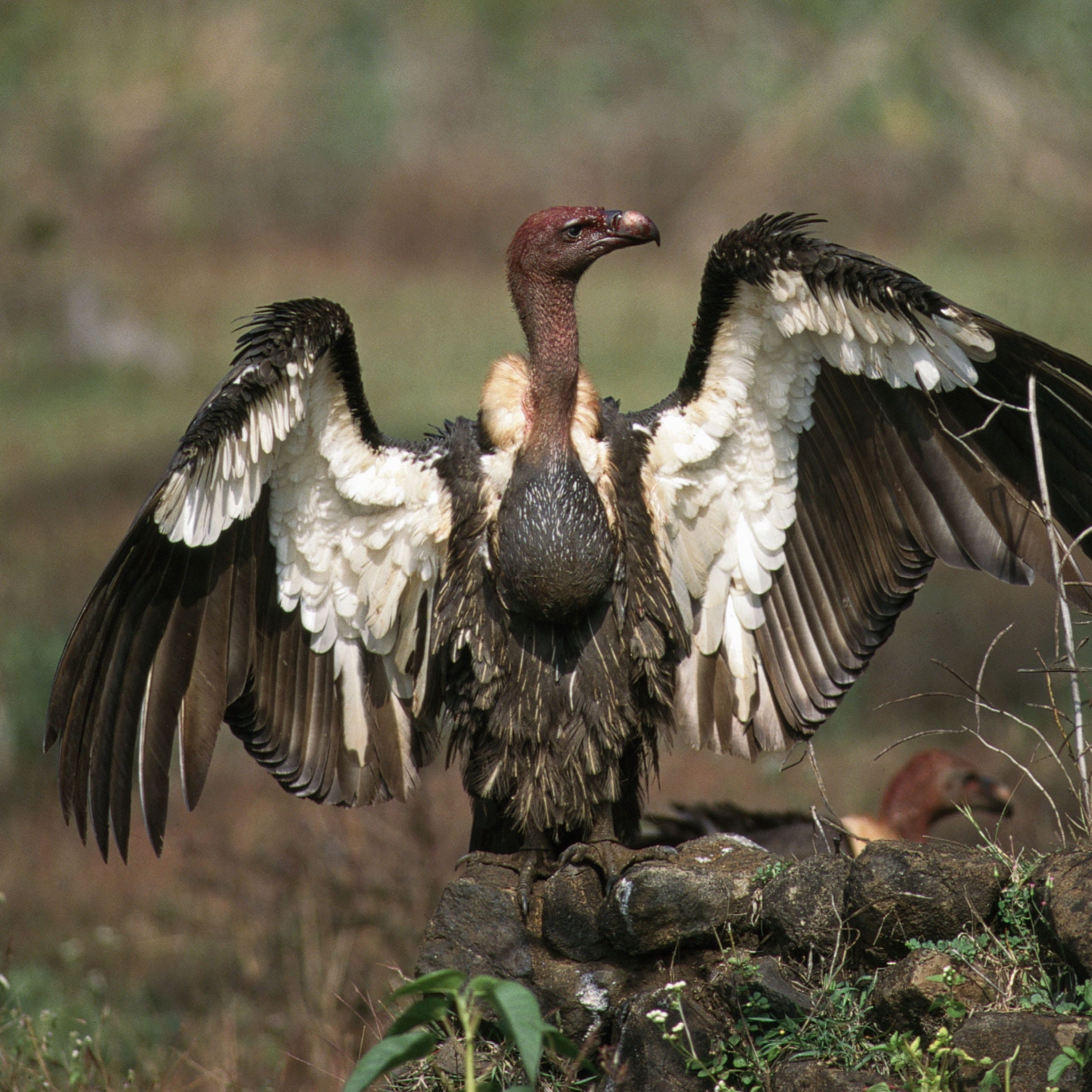
How South Asia solved the mystery of its vanishing vultures. In the late 1990s, vultures across South Asia were dying so fast that some species, like the White-rumped Vulture, were on the cusp of extinction. Scientists eventually traced the collapse to diclofenac, a livestock painkiller that killed the vultures when they fed on carcasses. India, Nepal and Pakistan banned veterinary diclofenac in 2006, then built breeding centres, looked for safer drugs and created Vulture Safe Zones. 20 years later, Nepal’s vultures are recovering, India’s have stabilised and three species that were heading for extinction are on their way back. RSPB
Dementia risk is falling at every age. Across wealthy countries, dementia risk has dropped around 13% per decade since the late 1980s, helped by better blood pressure control, lower cholesterol, less smoking and more education. This feels surprising, because dementia cases are rising as populations age, even as age-specific risk falls. We aren’t as helpless as we think either - a 2024 Lancet commission estimated that up to 45% of dementia could be prevented or delayed by tackling 14 risk factors. Vox
HPV vaccine drives cervical cancer deaths close to zero. A landmark study in England has found girls vaccinated against HPV on the cusp of their teenage years now have effectively zero risk of dying from cervical cancer before 30. Between 2020 and 2024, no cervical cancer deaths were recorded in women aged 20 to 24, the first time that has ever happened. BBC
Scientists make the world’s most efficient solar panel. German researchers have built the most efficient solar panel ever, turning 34.4% of sunlight into electricity. That’s way higher than ordinary rooftop panels, which usually convert between 20-23%. This is a research breakthrough, not something you can buy for your roof yet, but it shows how much better solar panels may still become. CleanTechnica
Meanwhile, at the world’s biggest solar trade show in Shanghai…
“Might be the most efficient solar panel I’ve seen - though I think LONGi recently announced a 26% module. 25% is the new 23% which was the new 20% - two years ago in Munich, Aiko put out the first 25% efficiency solar panel I’ve ever seen. Now, I walked the floor and I see them everywhere. There’s still plenty of lower efficiency modules – but the floor is now 23%! The shift has occurred.
John Fitzgerald Weaver (Commercial Solar Guy)

The global green economy has passed $10 trillion in value, according to the London Stock Exchange Group. If treated as a standalone sector, companies whose main source of revenue comes from clean energy, clean water, energy efficiency and other environmental solutions would form the world’s third-largest industry. Companies with at least 20% in green revenue have outperformed the wider market by around 12% over the past decade. Inside Climate News
Vietnam’s dog and cat meat trade faces growing pressure. Police in Ho Chi Minh City just rescued more than 400 cats in one of Vietnam’s largest recent cat meat busts. Vietnam’s dog and cat meat trade still kills an estimated six million animals a year, but public opposition is rising, pet ownership is changing attitudes, and many traders are now leaving the industry voluntarily. In Hanoi, several once-famous dog meat shops have shut down, and welfare groups are helping restaurant owners switch livelihoods.
Two young lawyers get Pakistan to abolish its period tax. Pakistan will remove the 18% sales tax on locally made sanitary products, after 25-year-old Mahnoor Omer and 29-year-old Ahsan Jehangir Khan took the government to court. The government will also remove the 18% sales tax on contraceptives, citing family planning as a priority. The Guardian
👆 The impact will be profound in Pakistan, where one in five girls misses school during menstruation, eight in ten girls feel embarrassed to discuss periods, and almost half are not told about menstruation before it begins.

Southeast Asia closes in on malaria elimination. Malaria cases across the Greater Mekong Subregion have fallen by 67% since 2010, putting Cambodia, Laos and Vietnam within reach of elimination. Ministers at a recent regional summit recommitted to ending malaria by 2030, though climate change, border transmission and falling funding remain serious risks. Cambodianess
Useful context: WHO certification requires three straight years with no local malaria transmission. The hardest bit now is the last mile: finding cases in remote communities, reaching migrants and forest workers, and stopping the disease from returning once numbers hit zero.
California is putting nearly half a billion dollars into free home electrification for low-income households, using revenues from its carbon-market to replace fossil-fuel appliances with heat pumps, induction stoves and efficiency upgrades. The program just completed its first retrofit in San Diego and expects to reach around 15,000 households. This is climate policy via the front door: buildings produce around quarter of California’s emissions. Quitting Carbon
Nepal’s Supreme Court rules in favour of marriage equality. Last week the Supreme Court of Nepal issued a binding order requiring the government to guarantee equal marriage rights for sexual and gender minorities. The ruling follows provisional recognition in 2023, confirms protections for already registered couples, and puts Nepal’s marriage equality movement on its strongest legal footing yet. QNews

Know someone who could use this in their week? Forward it on. Word of mouth is the main way most people here found us, and it's still how Fix The News grows. They can subscribe here.
The arsonist and the firefighter
We have an exclusive this week! On the eve of emerging from stealth with $50 million in funding, bioengineer and co founder of Radical Numerics, Eric Nguyen, sat down for an interview with Betsy Isaacson, our science editor.
AI that hunts for dangerous DNA, built by the people who taught AI to make DNA
In 2024, a team including Eric Nguyen and Michael Poli built Evo, the first AI that could read and write DNA at scale. In the same way a chatbot learns written language by reading human text, Evo learned the language of life by reading raw genomes.
Tools like this mean you can now make DNA cheaply. Evo doesn’t make the physical molecules - companies like Twist Bioscience do that - but scientists can use Evo and tools like it to write genetic code, send the string to a synthesis company, and get it back in the mail. It’s how a lot of modern biology gets done, and honestly it’s great: easy to study a gene, or build a vaccine.
But.
Here’s what we’d rather no-one mailed away for: pathogens, the kind that kill people, distilled into DNA. Ideally screening catches them - synthesis companies run orders against databases of known dangerous sequences, the genetic fingerprints of plague, smallpox, etc., and that catches a lot. What it struggles with is something genuinely new, resembling nothing on file.
Which is exactly what AI is now good enough to make. In a 2025 study, researchers at Microsoft took a dangerous toxin, a relative of ricin, and used AI to spin out thousands of redesigned versions: same deadly function, different genetic spelling. Many sailed past the screening software (to their credit, the same team then built and shared a fix).
This was a toxin, not contagious, it ran in simulation, and almost no one is trying this -- but it’s a gap that governments, biosecurity researchers, and big AI labs take very seriously.
Enter Eric, and his colleagues at Radical Numerics. The tool they released last week is essentially a better screener. You feed it a sequence, and instead of a flat yes-or-no, it returns a heat map: which stretches look dangerous, and how dangerous, region by region. Because the model understands the grammar of DNA rather than memorising a blacklist, it can flag a threat it’s never seen, even one dressed up to look innocent. It’s trained on these tricks: it’s the best in class.
The detector is only half of the model - the other half reads genomes and predicts which mutations might cause disease. One model, two jobs: guardian and healer. And it’s just a preview. The company says this DNA-only model is an early piece of a bigger system called Omnii, still in training, that is eventually meant to handle every kind of biological data.
There’s a strange symmetry to all of this. The same kind of AI that reads DNA for danger is the kind that writes it; Evo could already design a working genome, and the models keep getting better at it. The thing that might catch a designed pathogen and the thing that could design one come from the same lineage. The arsonist and the firefighter, apprenticed to the same master.
Radical Numerics doesn’t dodge this. Asked for the least flattering reading of his company, Eric offered it himself: they’re building the weapon and selling the defense at once. The launch materials put it more elegantly. The power to cure and the power to harm, they say, are “inseparable.”
Here’s where we land: we’re being offered a smoke detector for the genetic age, built by some of the same researchers who got very good at making matches. Unsettling, but probably the most sensible deal going. If anyone can spot a disguised dangerous sequence, it’s the people who understand how one gets built.