

342: Electric Asia. Erdős. OMG French Polynesia 🪼💙. Zambia education.
Accelerating past milestones we didn’t expect to hit until the 2030s
The sky doesn’t have borders. Neither does climate change.
Groundswell is a collective giving platform that backs the people on the frontlines of progress – protecting ecosystems, defending communities, accelerating renewables. Since 2020, their community has distributed more than $7 million to over 145 climate groups. Help fund the future we all share.

This week’s top stories
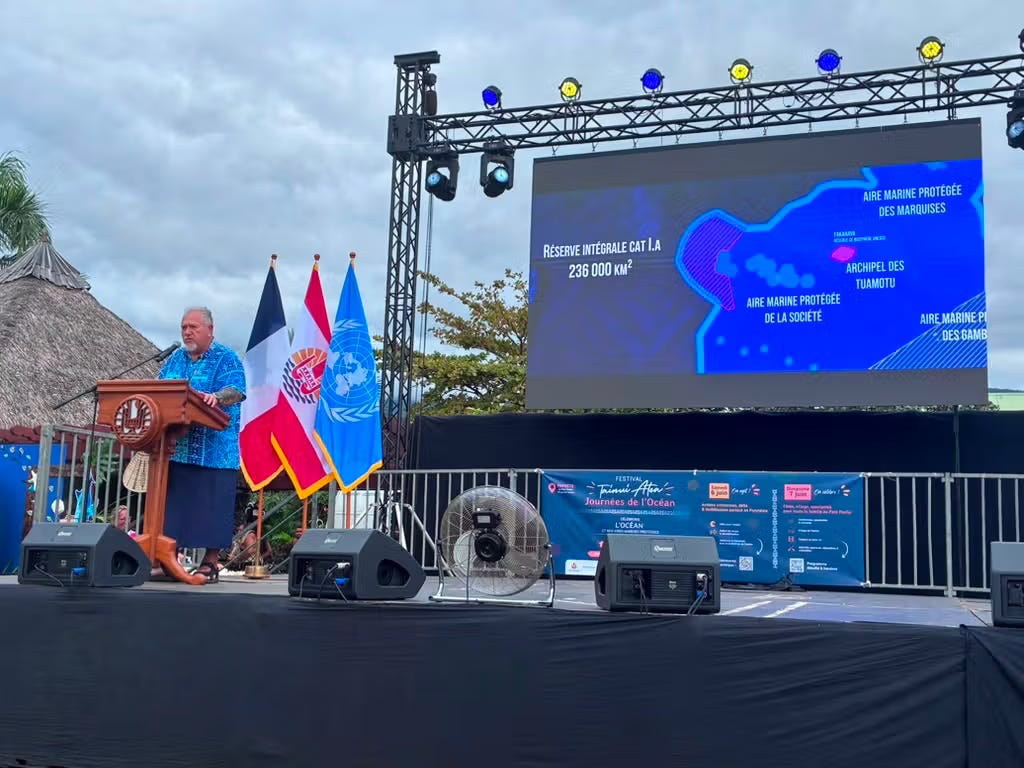
About a year ago, French Polynesia protected all of its waters, an expanse roughly the size of the European Union. Last week, they went further, announcing that another 520,000 km² of ocean surrounding the Austral, Marquesas and Western Society islands, some of the most biologically-rich waters on Earth, would receive the highest level of protection: no mining, trawling or industrial fishing permitted.
According to Mongabay, this brings the area of French Polynesia’s waters under full protection from extractive industries to about 1.4 million km² - the single largest contribution by any individual country to the global goal of protecting 30% of the planet’s lands and waters by 2030.
The problem of course, is how to make this more than just lines on a map: a vast area on paper, yet potentially unpopular with residents, ignored by commercial fishing fleets, and seldom patrolled by any boats. Fortunately, French Polynesia has put in the hard yards to make sure this doesn’t happen.
The new protections are built on rāhui, the closures Polynesian communities have used for generations to manage fish stocks, now hooked up to satellite monitoring and patrols. And the process has been slow, deliberately so. Officials spent more than a decade getting fishers, scientists and elders on board before any of the maps were drawn, and easing industrial boats out of the coastal waters that local fleets depend on. By the time the plan was announced, 92% of French Polynesians supported it, and 95% in the Australs.
Then there’s the money, which is often where these things often fall apart. Something called the Te Moana Collective (a regional ocean conservation coalition) will cover the recurring costs - the boring, yet crucial stuff that makes an MPA work, things like patrols and scientific surveys and salaries.
What the government hasn’t really figured out yet is enforcement, which to be honest is the part nobody has really figured out (although a lot of people are working on it). President Moetai Brotherson has asked France for more navy boats, and there’s still a loophole that lets foreign boats lurk just past the MPA boundaries.
But enforcement is a problem you only get to have once you’ve done everything else right, and French Polynesia has done an awful lot right here. This is one of the biggest conservation victories of this decade, the momentum is real, and there’s more on the way. Take a moment to appreciate it.
Most autocrats eventually lose at the ballot box. Viktor Orbán’s defeat in Hungary fits a larger pattern: aspiring autocrats often leave through elections, not collapse. Javier Corrales and Susan Stokes examined 27 cases of democratic erosion across 22 countries since 1999 and found that 20 leaders left office before completing a transition to authoritarianism. In 15 cases, their successors stopped the backsliding or began rebuilding democratic institutions. Journal of Democracy
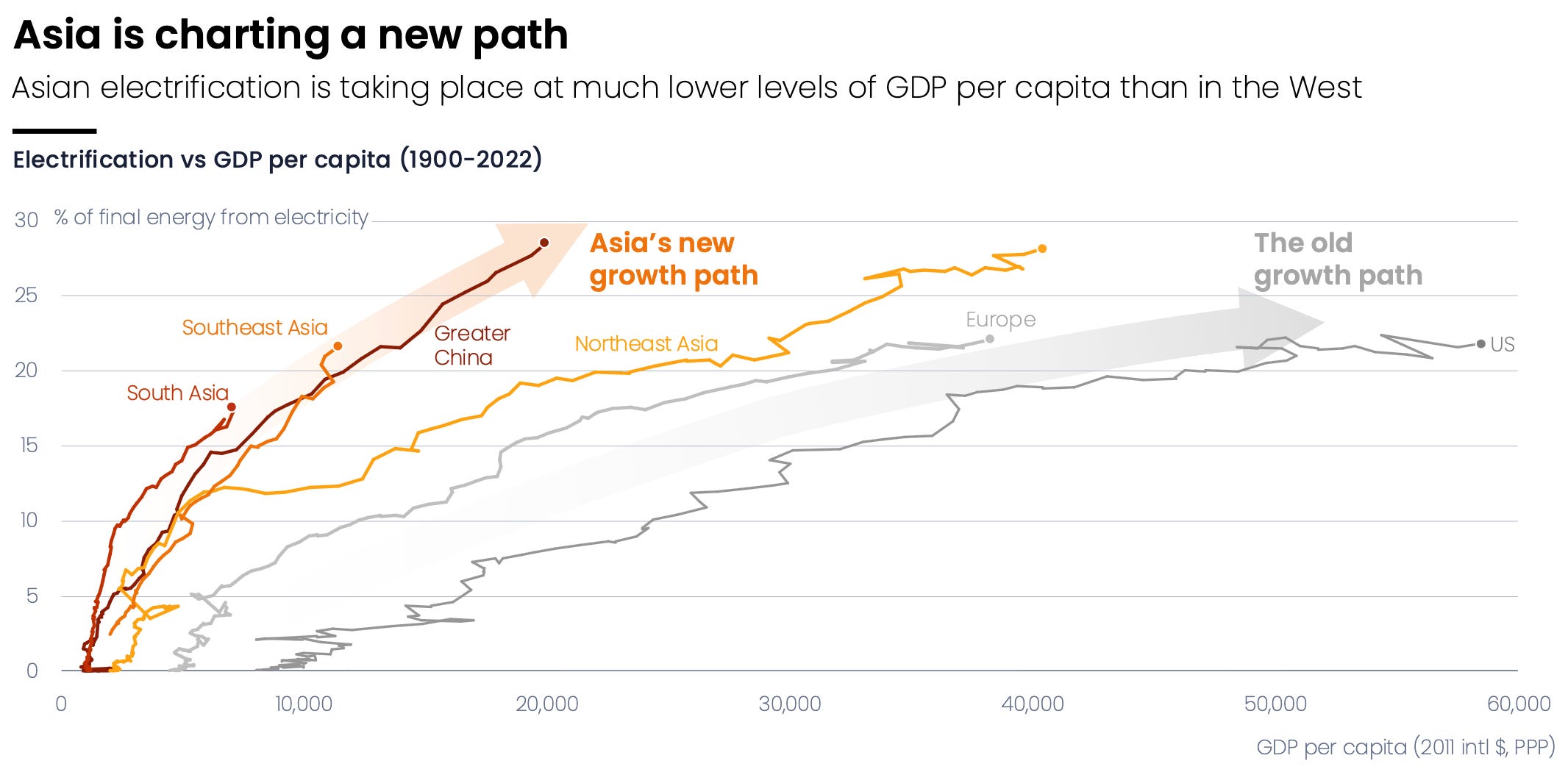
COP31 hosts put electrification at centre of climate talks. Turkey and Australia want electrification to be a headline target at COP31, with Turkey’s environment minister calling for electricity to meet 35% of final global energy demand by 2035, up from about 20% today. The focus is transport, heating, industry and clean cooking: sectors where fossil fuels still dominate despite cheaper renewables, EVs and heat pumps. The Guardian
And Asia is likely to be the engine room of this next, electric century, because it now generates more than half the world’s electricity, accounts for three-quarters of demand growth since 2000, and manufactures over 95% of solar panels, 85% of batteries and 75% of wind turbines. The region’s fossil fuel weakness may become its advantage: with only 4% of global oil and gas reserves and a $1.1 trillion annual import bill, electrification now offers the cheapest and quickest path to energy security and economic growth. Ember
“We are accelerating past milestones we didn’t expect to hit until the 2030s” — for the first time, Americans are getting more of their electricity from the sun than from coal. “That’s good for people’s wallets, it’s good for their health, it’s good for the planet.” Grist
Jigar Shah, former Director, U.S. Department of Energy Loan Programs Office:
Looking at May 2021 vs. May 2026, something remarkable has happened. Coal has gone from 20% of US electricity to just over 12%. And solar has gone from 5% to almost 13%. Globally, wind and solar hit a record 531 terawatt-hours in April, beating gas by 54 TWh. In April 2021, wind and solar were at 245 TWh. Since 2021 they more than doubled. Gas has stayed flat.
The economics have officially overtaken the politics.
In the United States, solar plus storage made up 91% of new generating capacity in Q1 2026. No new coal plants are planned despite announcements to the contrary. Solar is now the third-largest electricity source in the country, behind only gas and nuclear.
I get that we are not supposed to believe in the energy transition anymore. So lets just call it national security. We are accelerating past milestones we didn’t expect to hit until the 2030s.
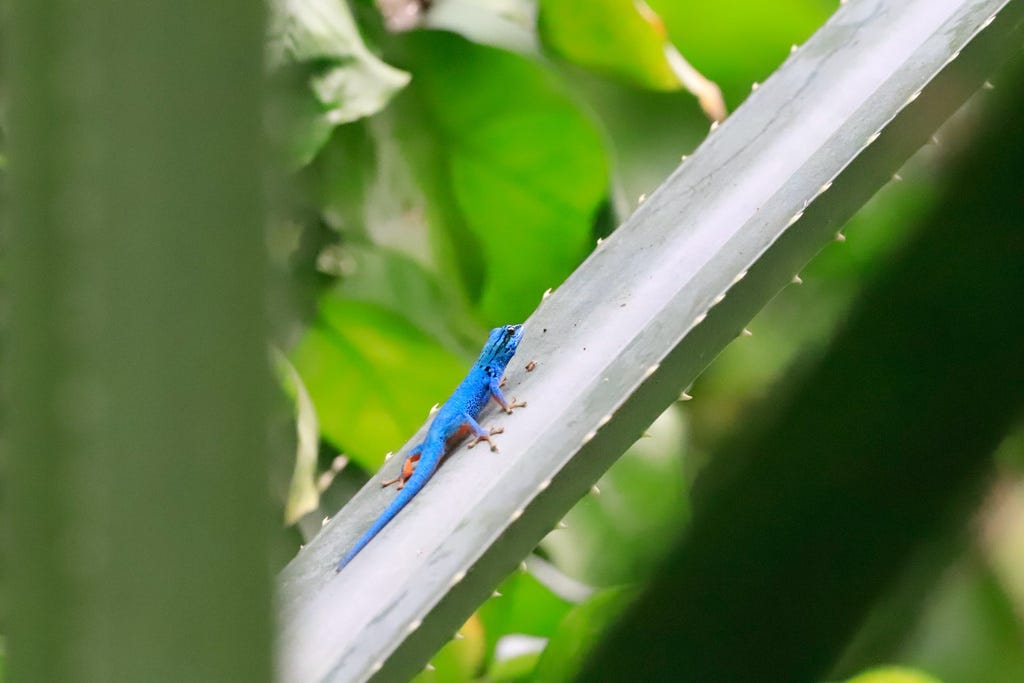
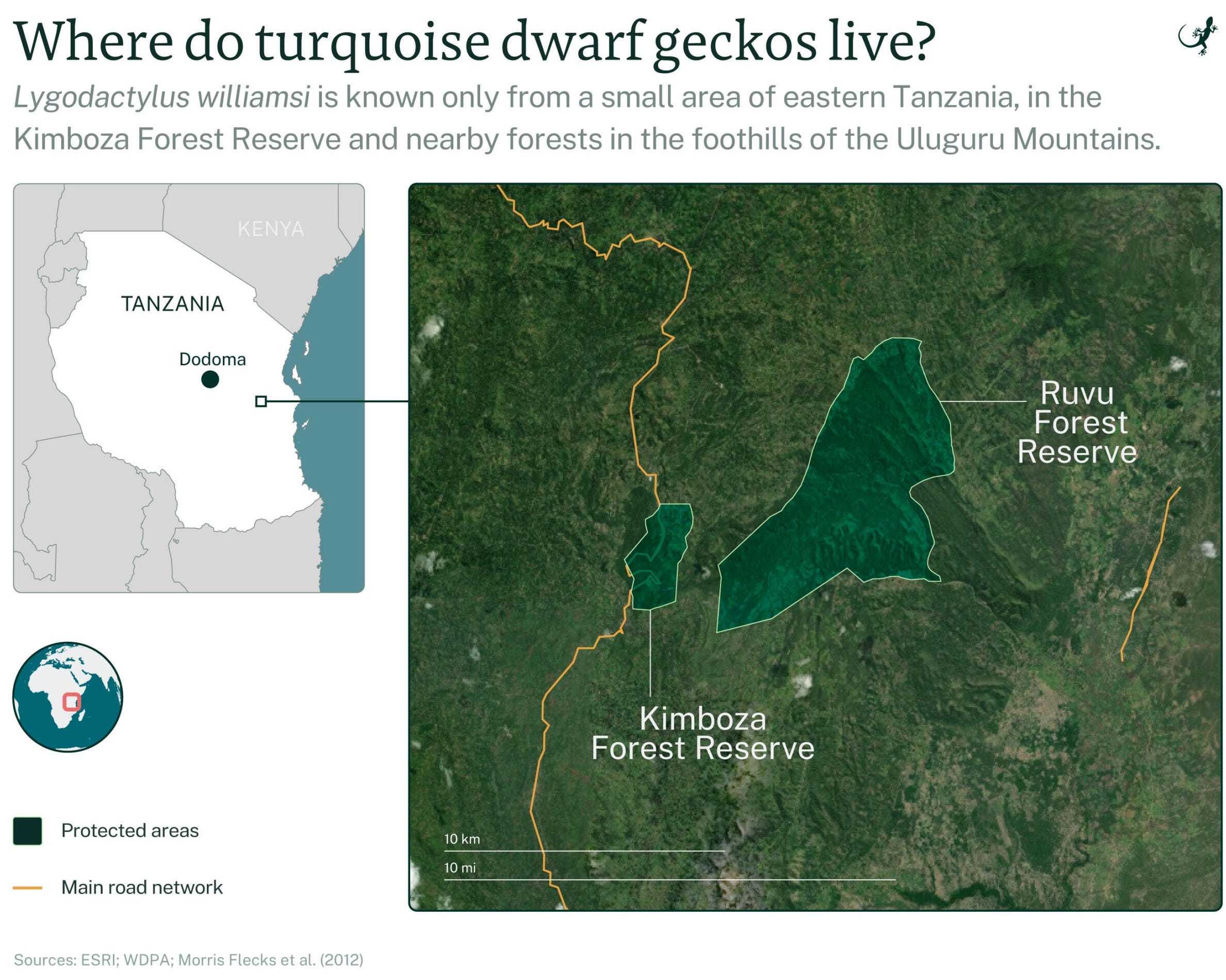
A trade ban has saved the world’s most gorgeous gecko. Tanzania’s native turquoise dwarf gecko was once a popular pet in Europe; this became a problem when collectors started stripping them from forests to feed the foriegn market. Listed as critically endangered in 2012, the gecko was subject to an international trade ban, and now gecko numbers in Tanzania have bounced back to pre-trade levels. Mongabay
The disaster that wasn’t: how the capital city of Chad didn’t flood. Sometimes tracking stories of progress means reporting on disasters that didn’t happen. Take Chad: after severe flooding hit the capital, N’Djamena, in 2022, the country cleared and repaired 350 km of drains, deployed 12 mobile pumps and trained a lot a lot of municipal teams and drainage crews.
When even bigger floods happened in 2024, the city remained largely unharmed, and pumps and drainage crews kept water out of neighbourhoods hit hardest two years earlier. Sometimes preparation and policy works, people! World Bank
Plus, further illness and death that won’t happen, brought to you by vaccines: Bangladesh just vaccinated 18.4 million children in an emergency measles-rubella campaign after an outbreak killed more than 600 people and exposed dangerous gaps in routine immunisation. In the DRC, health workers are using a combined measles-rubella and polio drive to find zero-dose children in 11 provinces, while Zambian researchers are preparing delivery strategies for the next generation of TB vaccines.
100 workers in China put up a 26-storey residential building in five days. Five days. No concrete poured. No welders. The modules arrived on flatbeds, 12m x3m x2.4m each, the exact footprint of a 40-foot shipping container — pre-wired, pre-piped, pre-furnished, and locked together like the world’s tallest piece of IKEA furniture.
208 apartments built in less than a week, all with four-paned windows, insulation, AC, and drinkable tap water. The skeleton is stainless steel, not concrete; the construction company claims a 1,000-year service life. Plus, the whole thing can be unbolted onto a truck and reassembled somewhere else, if you want to move it. Indian Defence Review

United States moves to restore $600 million for Gavi. The United States may release $600 million in stalled funding for Gavi after Secretary of State Marco Rubio said the State Department would retake the lead on the vaccine alliance from HHS. The money, already approved by Congress, would support malaria vaccines, Ebola response and routine immunisation, while helping Gavi phase out two older thimerosal-containing vaccines. Reuters
Zambia makes free education a legal right. Zambia has passed its first law guaranteeing free public education, turning a 2021 policy into a legal entitlement for every child. The reform bars schools from denying learners a place because they can’t pay fees, and makes reversal harder for future governments. Since fees were abolished, enrolment has surged, and over 41,000 teachers have been recruited. APA News
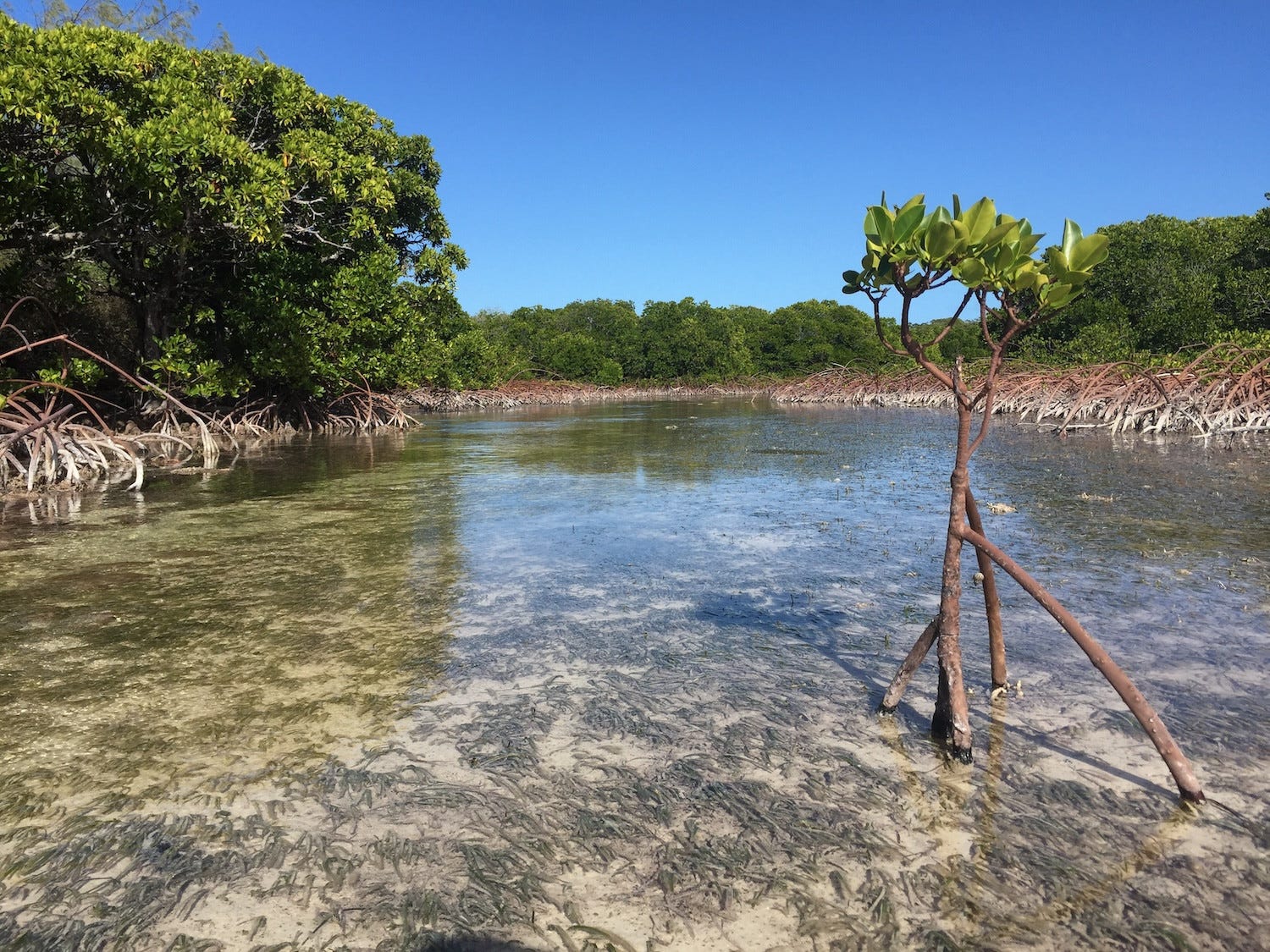
Global mangrove forests are growing again. After decades of destruction, the world’s mangrove forests are no longer in decline, according to a four-decade satellite study. Mangroves lost nearly 2,900 km² between the 1980s and 2010, but gains have outpaced losses over the past 16 years, driven by restoration, natural regeneration and expansion into new coastal mudflats. That’s a hell of a turnaround. Tulane University
Colombia has passed a cattle traceability law to stop beef linked to illegal deforestation from entering supply chains. The law lets officials create high-surveillance zones in deforestation hotspots, track cattle movements, and require slaughterhouses, traders and exporters to adopt due diligence systems within two years. Cattle are a major driver of forest loss across Colombia’s 600,000 km² of forest; this is a serious lever. Mongabay
California’s new eight-hour battery is making its grid even more renewable. California has switched on Tumbleweed, the first major US battery project able to discharge power for eight hours, twice the usual duration for grid batteries. Canary Media
☝️ This is a bigger deal than it might first appear. Four-hour batteries have already changed California’s grid, becoming the state’s largest power source after sunset. Eight-hour storage pushes them well past midnight, turning cheap midday solar into overnight supply and reducing the need for fossil gas to cover the gap. It also shows lithium-ion batteries may be able to handle more of the gaps than many long-duration startups assumed.
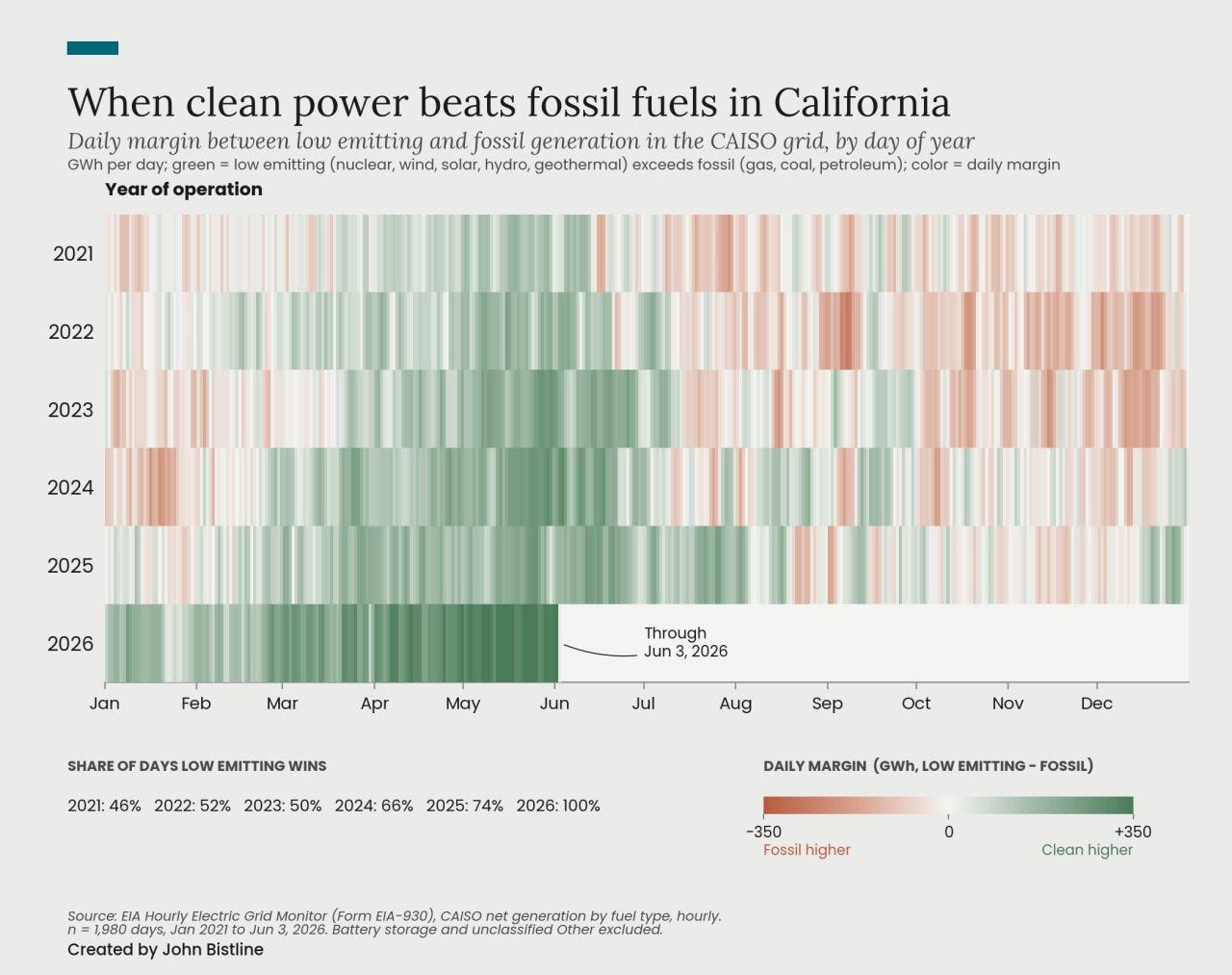
Also, from climate scientist John Bistline (an author of the IPCC Sixth Assessment Report): “No fanfare but, at some point in the last four years, California stopped being a grid that occasionally beat fossil fuels and became one that does it on a daily basis.”
Costa Rica court upholds country’s first same-sex marriage. A Costa Rican family court has rejected a government bid to annul the country’s first same-sex marriage, confirming the 2015 union of Laura Flórez-Estrada and Jazmín Elizondo. The ruling ends a decade-long fight and reaffirms the constitutional basis of marriage equality, six years after Costa Rica became the first Central American country to legalise it. Tico Times
US regulators move further from animal testing. The US Environmental Protection Agency is expanding its approved list of non-animal testing methods for chemical and pesticide safety, and creating a faster route for researchers and companies to propose alternatives. A House appropriations package also backs EPA efforts to reduce vertebrate testing and includes first-of-its-kind language preventing pesticide and chemical safety data from being generated through dog tests. Humane World
Artificial intelligence solves an Erdős problem, proves it can push boundaries with top-tier human mathematicians. In 1946, mathematician Paul Erdős wondered: if you sprinkle n dots on an infinite piece of paper, how many pairs of dots can you place exactly one unit apart? Most people who try the problem reach for a square grid as the obvious best arrangement, and Erdős conjectured that was about as good as you could do.
Last month, an OpenAI internal model used techniques from algebraic number theory to find dot patterns with many more unit-distance pairs than the square grid, proving Erdős wrong. Days later, mathematician Will Sawin used the same approach to find an even better arrangement. Welcome to a new era of human/AI mathematical collaboration. The Conversation
This newsletter is supported by our members. We donate 30% of everything we receive from membership fees to small charities who create outsize impact. We’d love you to become a member?
Also… you get so, much, more, good news. This week alone: a new hepatitis B treatment that moves from lifelong suppression toward an actual cure; how Australia erased feral pigs from Kangaroo Island; global refugee numbers falling (really); clean energy keeps beating Trump in court, and scientists find bacteria living inside fog, eating pollution out of the air (yes really).