340: Fishery Productivity Structure. Alzheimer's. Democracy in Hungary. Coal 📉
What if we tried literally anything else?
The restoration of the Klamath is one of our favourite conservation stories of the decade - both for its scale, and its symbolism. We first heard about it in 2020 and have shared many, many updates on its progress in this newsletter. In 2024, after a generational campaign, the largest dam removal project in U.S. history was completed. Three days later, the salmon returned.
This week on the podcast we got a chance to sit down with someone who was right at the centre: Amy Bowers Cordalis, attorney, activist and member of the Yurok Tribe, who helped lead the fight (and got to blow up one of the dams on her birthday). From why she can’t sleep when the salmon run, to how joy helps in her advocacy, this is a conversation about what repair truly means for nature, communities and our collective future - and about what comes after the victory.
You can listen here, wherever you get your podcasts.
Or check out the full conversation on Youtube.
This week’s top stories
Hungary proposes an eight year limit for prime ministers. A week after coming in to office, Péter Magyar’s administration submitted a constitutional amendment that would cap prime ministers at eight years in office, barring ex-PM Viktor Orbán from returning after 20 years in power. The package also opens the door to dissolving the controversial sovereignty protection office, widely accused of silencing opposition voices, and reclaiming public assets moved into Orbán-linked foundations. The Guardian
The past year has brought us three Alzheimer’s breakthroughs. For 30 years, Alzheimer’s research has had one song, “Amyloid plaques are bad.” Billions of dollars, two FDA-approved drugs (lecanemab and donanemab), and yet Alzheimer’s patients have only gotten slightly less worse, a little bit slower. But within the last 12 months, three separate teams have said: what if we tried literally anything else.
Indiana University went for an enzyme called IDOL. Everyone assumed it mattered in the brain’s immune cells because that’s where most of it gets made. Wrong floor. Knock out IDOL in neurons and plaques drop, APOE (the gene variant that’s basically a lit fuse for late-onset Alzheimer’s) drops, and the receptors that keep neurons talking to each other go up.
Barcelona, Sichuan and London ignored the neuron, and went for the plumbing instead. The blood-brain barrier has a protein called LRP1 whose job is grabbing amyloid and shoving it into the bloodstream — except in Alzheimer’s, LRP1 jams. They built nanoparticles that act like a reset button. Three injections, and an elderly mouse came out behaviourally indistinguishable from a healthy one.
Bordeaux, Moncton and Inserm went one floor deeper. Forget the neurons, forget the plumbing, look at the power supply. Mitochondria — the engines inside every neuron — start failing before cells die. So the team built an artificial receptor that revs them back up, and memory came back.
Caveat: Mice. It’s always mice. But it looks like the amyloid plaque monopoly might finally be over.
Wind and solar just generated more electricity on Earth than fossil gas. In April 2026, wind and sunshine supplied 22% of the world’s electricity compared with fossil gas at 20%. Reuters
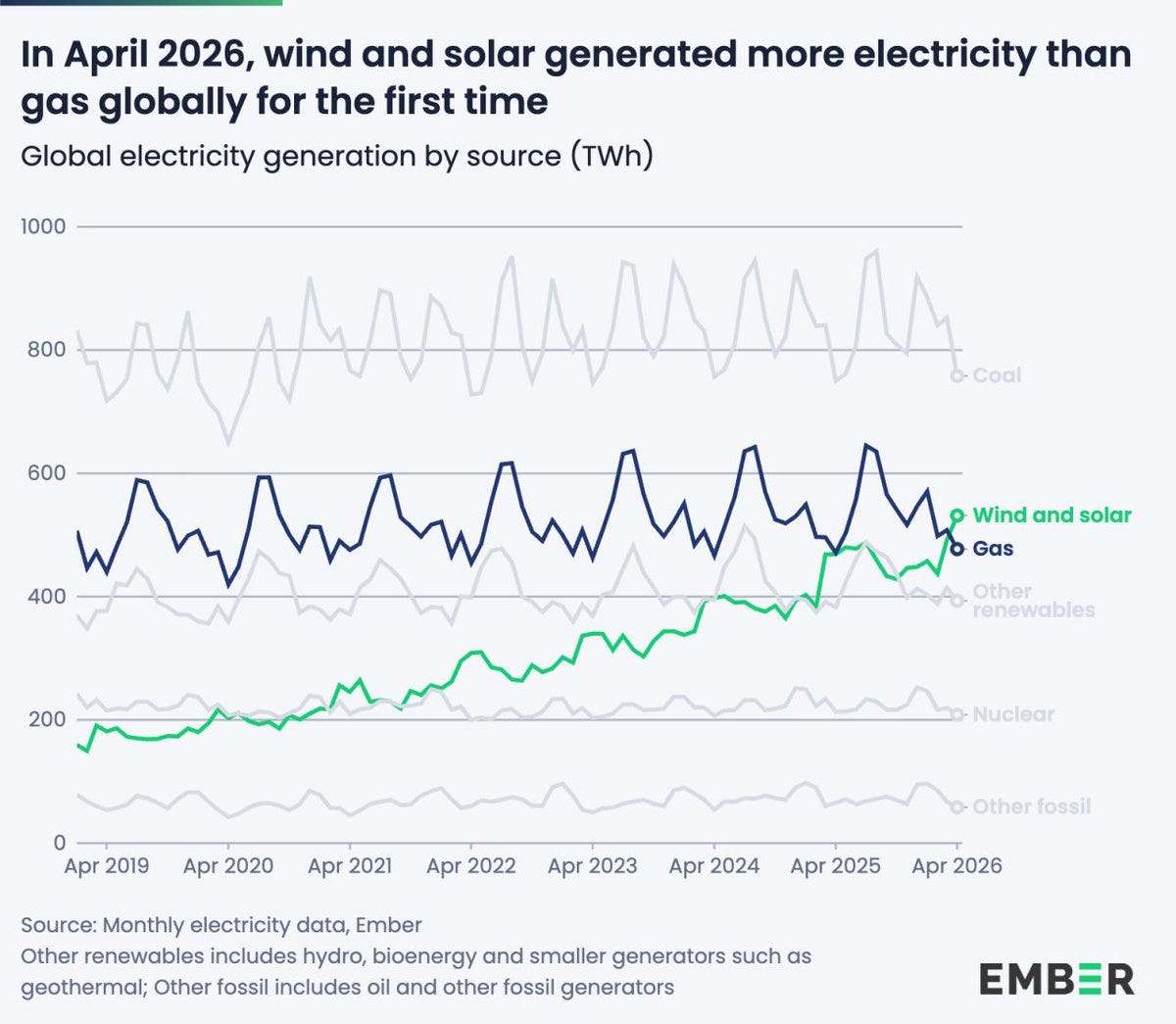
Gus here: I got dragged into the muck with the usual suspects when I posted this graph on Substack notes, but managed to get my shots in. I should know better than to argue with strangers on the internet, but sometimes you just can’t help it?
India is industrialising with wind and sun, not coal. India’s solar capacity is growing by 40% a year and is expected to double again by 2030. Coal still supplies around 70% of power, and weak grids mean a lot of solar is now wasted, but the direction is historic: the world’s most populous country is trying to industrialise with wind and solar at a scale no major economy has ever attempted. Yale Environment 360
“But what about all the coal plants India and China are building?” Global coal capacity rose 3.5% in 2025, yet coal-fired generation fell 0.6%, according to Global Energy Monitor’s latest report. In China and India, especially, new coal plants are being built, but wind, solar and batteries are more than meeting new demand, cutting actual coal use. Why build new coal plants then? Inertia, mostly. Most of the new coal capacity in India and China was commissioned years ago, before the market dynamics around renewables changed. So new coal plants are coming online, but they’re running as backup, not baseload, idle most of the time but fired up on demand to maintain grid stability.
Namibia gets funding to conserve 24% of its country. Namibia has a long conservation history; at independence it wrote environmental protection into its constitution. It passed a law establishing the right of local people to organise themselves into conservancies in 1996. What it hasn’t had is money: there’s a difference between a conservancy run by locals on a shoestring and the same thing but with a nice endowment to preserve it through instability. Now the international community and the government are finally stepping up, with the “Namibia For Life” initiative securing $63 million to permanently conserve more than 24% of the country. WWF / Bloomberg
“As Namibians, we have done things that no one in this world has done before. We have secured wildlife species that went extinct in other countries. They live outside protected areas and can roam freely in their natural habitats. It’s a victory for us to see conservancies putting more land aside for conservation. These are all ordinary people, cattle herders who have walked the talk of community-based natural resource management and want to take the next step.”
New medical treatments are reaching more people, across more diseases. No mice. Check out this list of medical news from just the last few weeks.
In San Francisco, researchers are preparing the first human trial of in utero gene therapy, starting with a rare lysosomal storage disorder.
In colon cancer, adding immunotherapy to standard treatments halved the risk of recurrence or death for patients with a specific early-stage form of the disease.
For skin cancer, a new vaccine trained patients’ immune systems to recognise their own tumours, cutting the risk of spreading or death by 59% after five years.
For heart disease, a trial of a gene-editing treatment dramatically lowered cholesterol levels, perhaps permanently, after just one infusion.
For age-related diseases a team from Texas developed a nasal spray that dramatically reduced brain inflammation, restored the brain’s cellular power plants and significantly improved memory.
For type 2 diabetes, the US FDA recently approved the first long-acting insulin, turning a daily burden into a weekly one.
WHO and Gilead will donate almost 403,000 vials of AmBisome for visceral leishmaniasis, a parasitic disease that is usually fatal without treatment.
Moxidectin, a better treatment for river blindness, has been rescued by non-profit funders after the pharmaceutical industry walked away.
A $140 million fund has been launched to make a vaccine for Strep A, which kills an estimated 639,000 people a year, a toll comparable to HIV/AIDS and malaria.
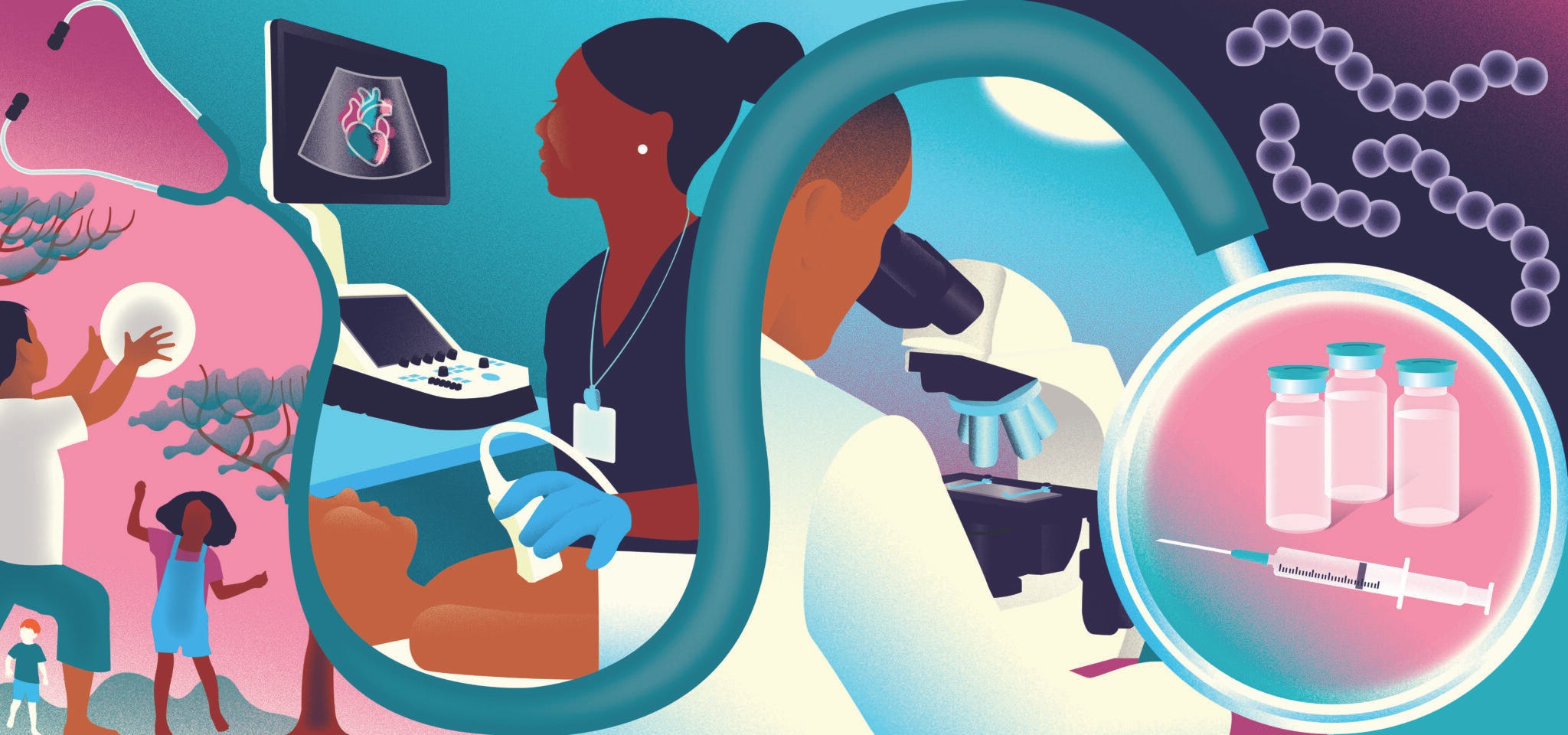
The largest ever private sector school meals commitment will feed 366,000 children across East Africa. The World Food Programme and two Danish foundations just launched an $80.85 million programme across Uganda, Kenya and Ethiopia. Over five years, the partnership aims to feed 366,000 children and create stable markets for 57,500 smallholder farmers.
British beavers stop underground station flooding. Love this story. Until two years ago, West London’s Greenford Tube station used to flood whenever it rained heavily. Then the Ealing Beaver Project got a licence to resettle a family of five beavers in Paradise Fields, a former golf course turned urban-forested park near the Greenford Tube station. After the beavers felled a few trees and built a dam to make a pond from the golf course creek, flooding stopped at the tube station, and new species started moving in. The council has now scrapped its expensive plans for a reservoir and levee. NPR
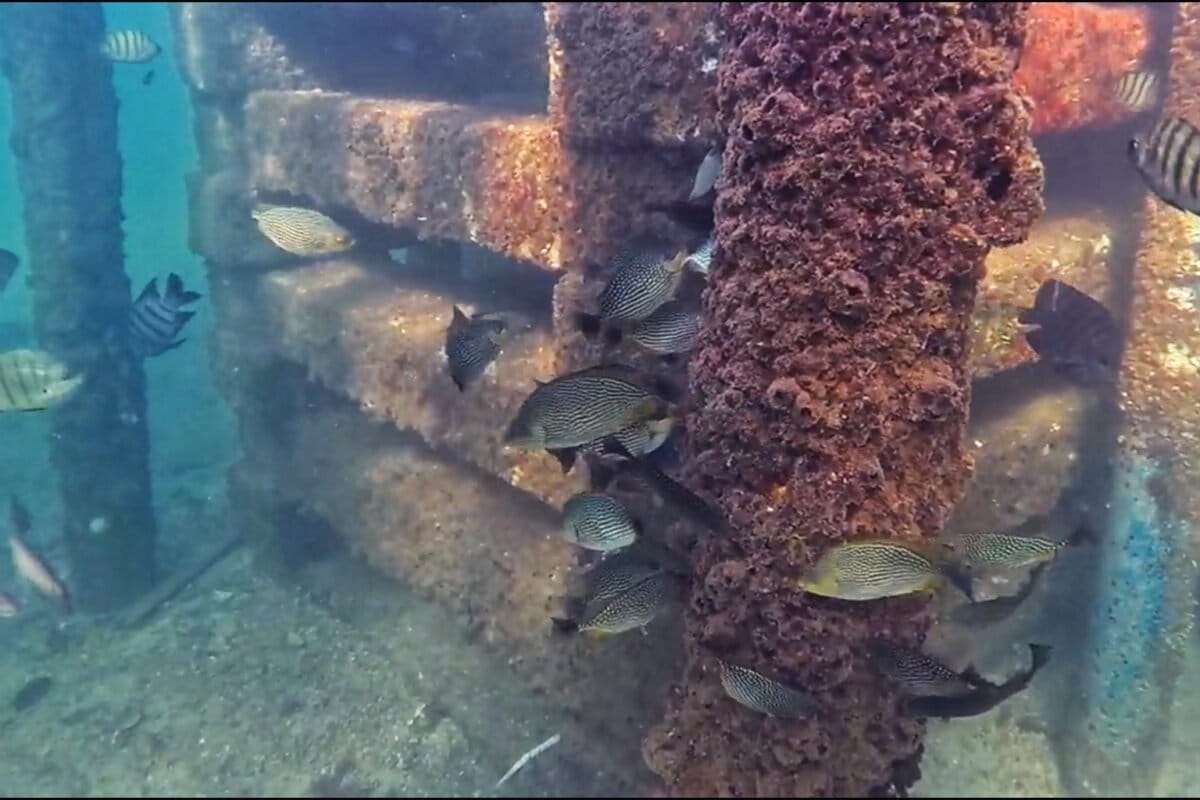
To block illegal bottom trawlers, Cambodia is building concrete towers. It’s very clever: three-tonne underwater concrete towers disable trawl nets while creating shelter and nursery space for fish. An NGO has now deployed 1,250 of these ‘Fishery Productivity Structures’ across its southern coast, protecting more than 200 km² of habitat. Early monitoring found fish abundance six times higher at protected sites than control areas. Oceanographic
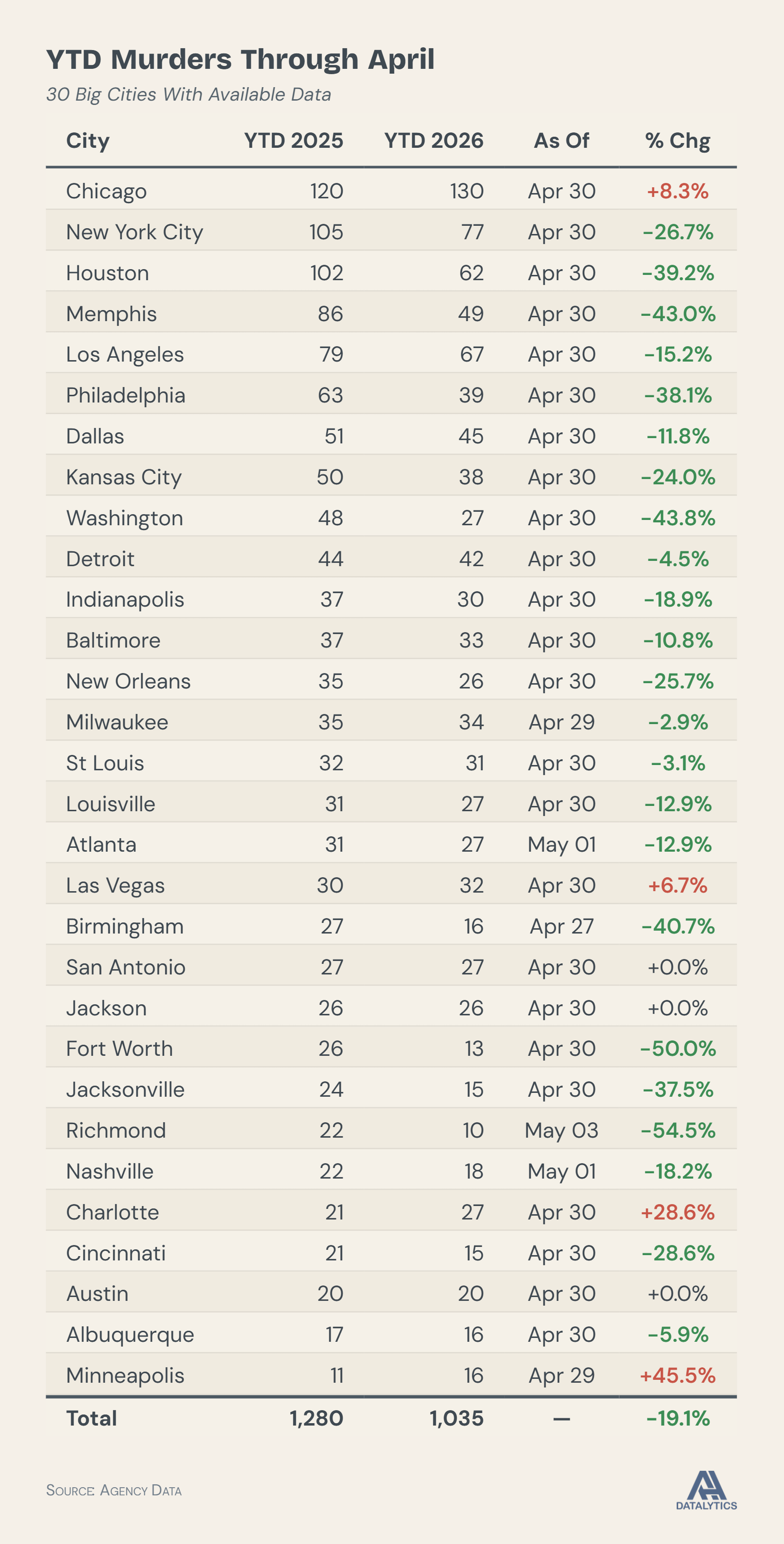
2026 will probably see the lowest US murder rate ever recorded.
”Yes, it’s late May and there are still more than seven full months remaining in 2026, but there has been enough data collected on this year to say that this year will likely set a new record for lowest murder rate ever recorded by the FBI when their Crime in the Nation report comes out sometime next summer or fall.”
Jeff Asher