

339. Electric truck. African vaccines. American rivers. White-tailed eagles.
Some of the species don’t match anything in the books yet.
This week’s top stories
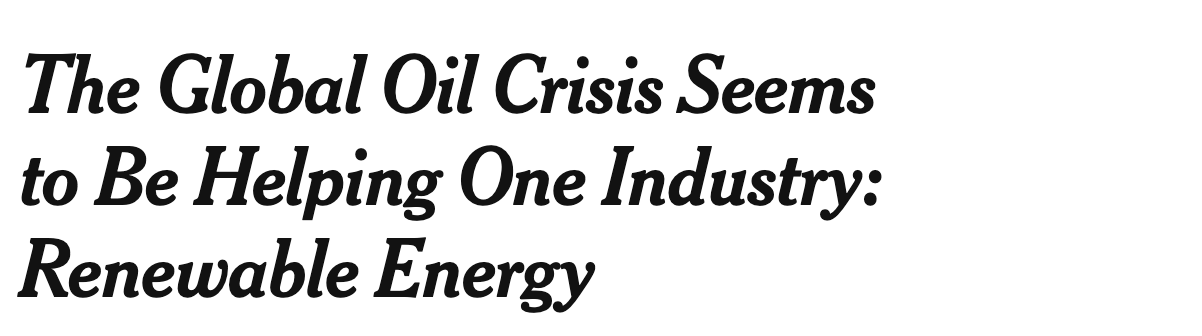
Energy forecasts from 12 months ago are being shredded by the growth of solar and the Iran war. BloombergNEF says solar is now on track to become the world’s largest source of electricity by 2032, several years earlier than it predicted just 12 months ago. These forecasts are always a bit of a thumbsuck — the error is what matters here: once again, solar and batteries are outrunning even the most optimistic assumptions from forecasters. Bloomberg / Renew Economy

Africa moves closer to making its own vaccines. Africa CDC and Aspen Pharma are discussing a long-term supply framework for African-made vaccines, while Gavi is proposing $189M in new incentives to tackle market bottlenecks and buy up to 70 million doses from startup manufacturers on the continent. During COVID-19, Africa produced just 0.1% of global vaccines despite having 20% of the world’s population. Reuters / Gavi
Tunisia has eliminated trachoma as a public health problem. It becomes the 31st country globally, and the 14th in the Eastern Mediterranean region, to achieve this goal. Trachoma affected at least 50% of Tunisia’s population in the early to mid-20th century, but the government has spent decades prioritising eye-health and implementing the WHO-recommended SAFE strategy. WHO
White-tailed eagles are returning to southern England after 240 years. Britain’s largest bird of prey is continuing its comeback in England, with conservationists approved to release up to 20 more white-tailed eagles in Exmoor over the next three years. Since the reintroduction began on the Isle of Wight in 2019, 45 young birds have been released, four breeding pairs have established territories, and six chicks have now been born in the wild for the first time since the 18th century. Forestry England
The Gambia has cut malaria cases by 46% in a single year. Cases fell from 108,090 in 2024 to 58,283 in 2025, thanks to a package of interventions that included the distribution of 1.2 million next-generation insecticide-treated nets and malaria chemoprevention for 127,578 children during the rainy season. Expanded rapid testing, community access to antimalarials and the imminent arrival of vaccines have put a 2030 elimination target into play. The Voice
As China’s car market races away from oil (internal-combustion vehicle sales fell by 37% year-on-year in April 2026), it’s worth noting the country’s electrification push has already made the air much cleaner. A new study in Nature shows the transition has cut PM2.5 concentrations by 23.8% and carbon monoxide by 30.7% across 150 cities, preventing an estimated 262,000 deaths. The air is only going to get cleaner: new energy vehicles now have a 61.4% market share, and nine of the ten top-selling models last month were plug-ins.
Papua New Guinea will protect 200,000 km² of its waters, an area roughly the size of the United Kingdom. The proposed Western Manus Marine Protected Area will become the largest no-take reserve in this part of the Pacific Ocean, safeguarding coral reefs, grey reef sharks, dolphins and seabirds. National Geographic Society
☝️ The best part of this is that the MPA boundary was drawn by the animals themselves. Scientists tracked grey reef sharks moving between shallow and deep habitats to define where protection was needed most. Conservation shaped by biology, not by bureaucracy.
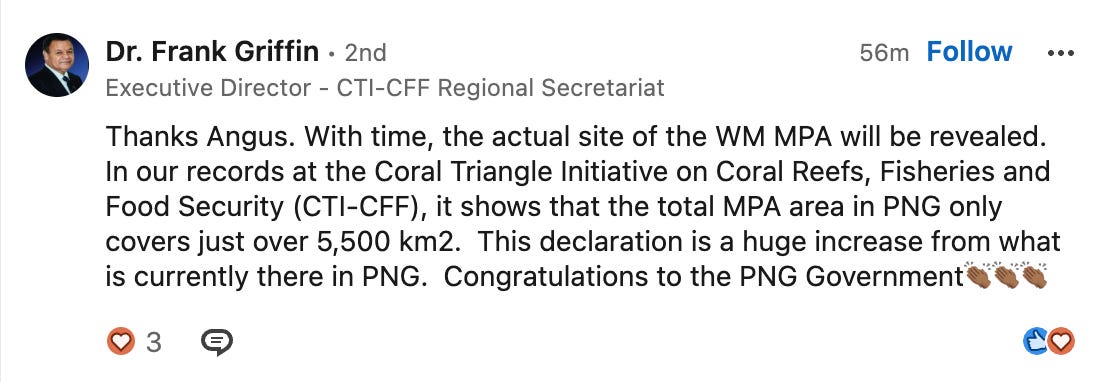
We’ll share the map as soon as it becomes available. When Gus posted this on Linkedin he got this reply from Dr Frank Giffin from the CTI‑CFF, a six‑country partnership (including Papua New Guinea) focused on marine conservation, sustainable fisheries and food security in the Coral Triangle. They’re the folks responsible for maintaining regional records on MPAs.
A cheap eye scanner invented in India may help protect unborn babies. Remidio’s handheld camera, built in India and cleared by the FDA in December 2025, can capture retinal images in under a minute and is already used for diabetic-retinopathy screening in 40 countries. The Gates Foundation recently spotlighted its potential to flag gestational diabetes, hypertension and anaemia, all conditions linked to stillbirth. Around two million babies are stillborn every year (funny how the pro-life folks never seem to mention this as a problem worth solving?).
AI mapping tools are transforming rainforest investigations. Environmental journalists are using satellite imagery and machine-learning to expose illegal activities across the Amazon. One investigation mapped 3,718 illegal gold-mining sites in Venezuela, including inside protected Indigenous territories. The technology now allows continent-wide monitoring for the Amazon and Congo basins, allowing reporters to track environmental destruction remotely in regions too dangerous or inaccessible for field reporting. Nieman Lab
27 years after their existence was confirmed, Brazil has begun demarcating land for one of the Amazon’s most vulnerable uncontacted peoples. The Pardo River Kawahiva Indigenous territory covers 4,100 km². This demarcation will give the nomadic hunter-gatherer community better protection against farming expansion, land grabs and illegal logging and mining. Full recognition still requires a presidential signature and stronger enforcement from Brazil’s Indigenous affairs agency, but encouragingly, the territory has already recorded two years without deforestation. The Guardian
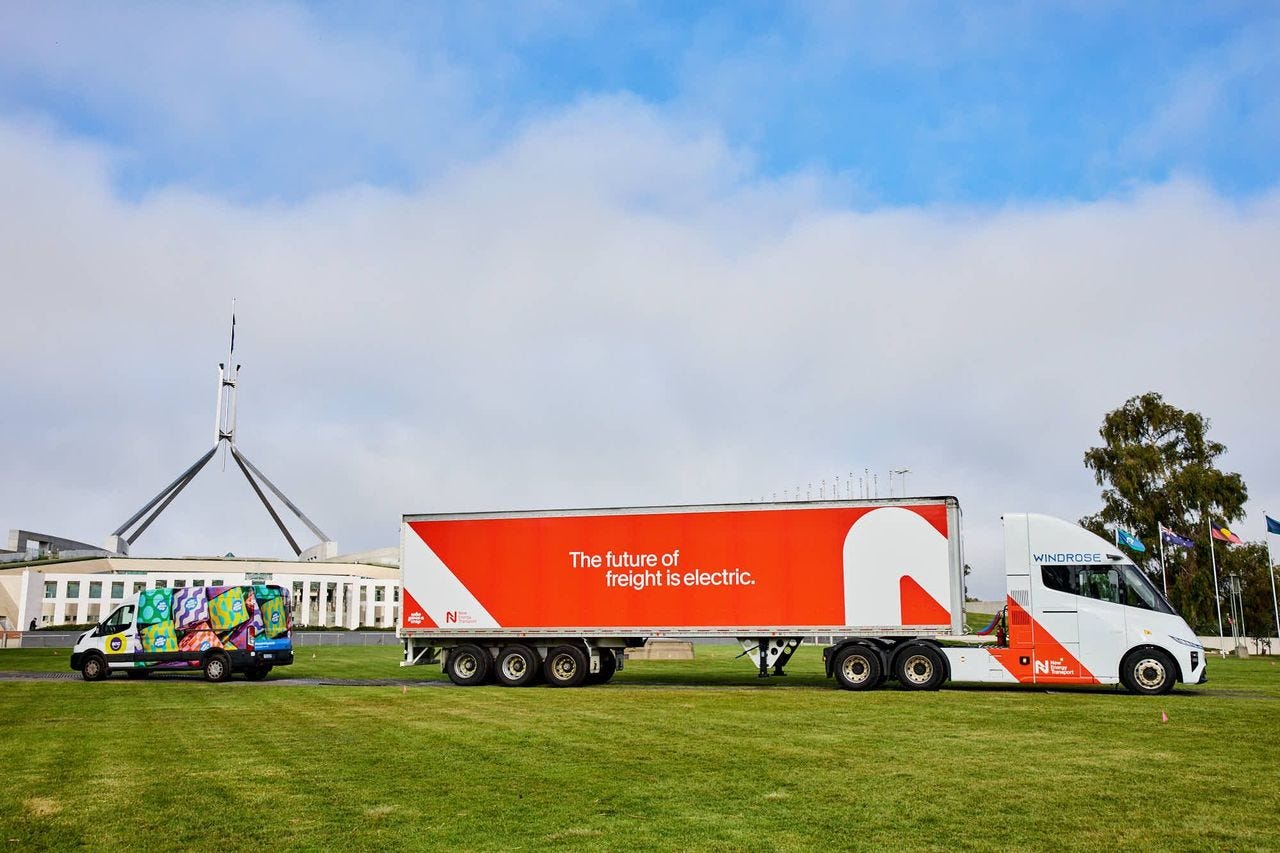
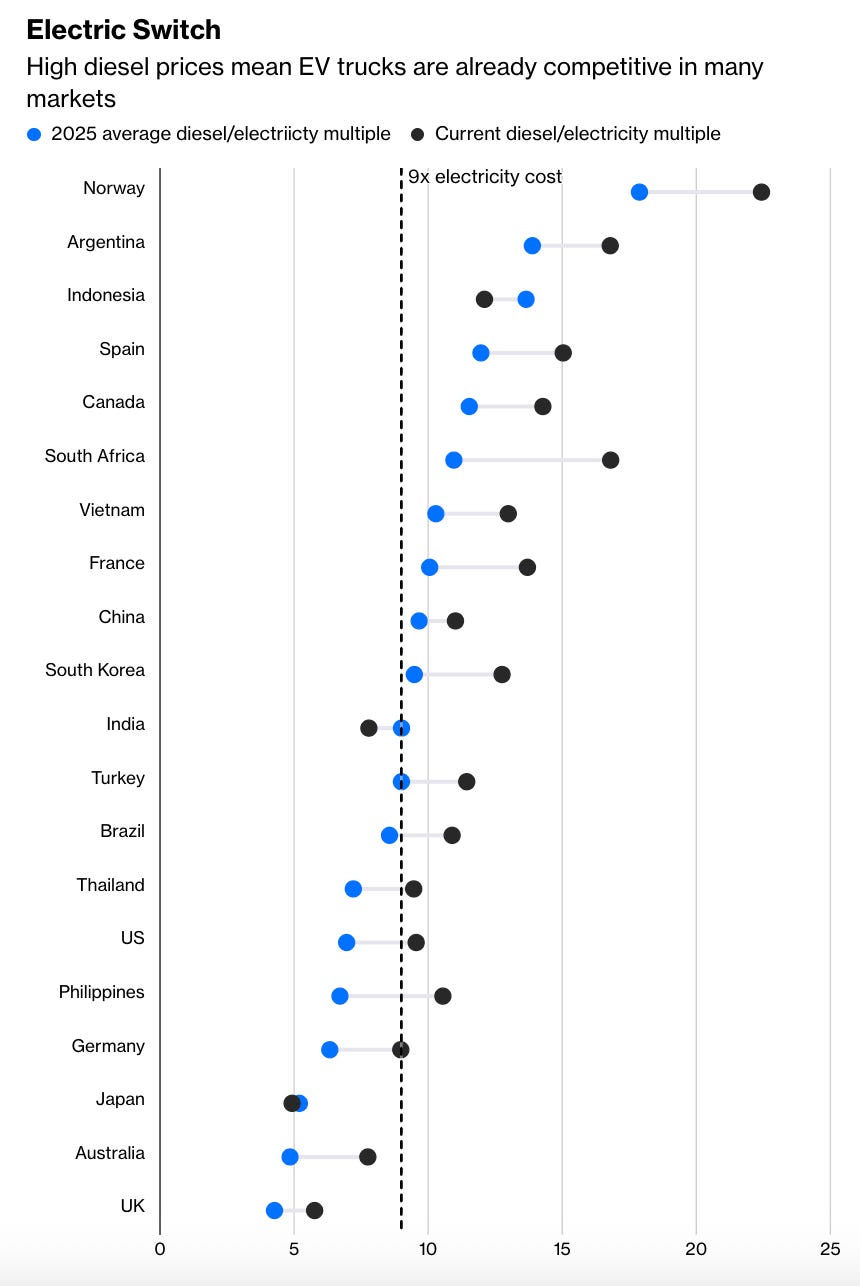
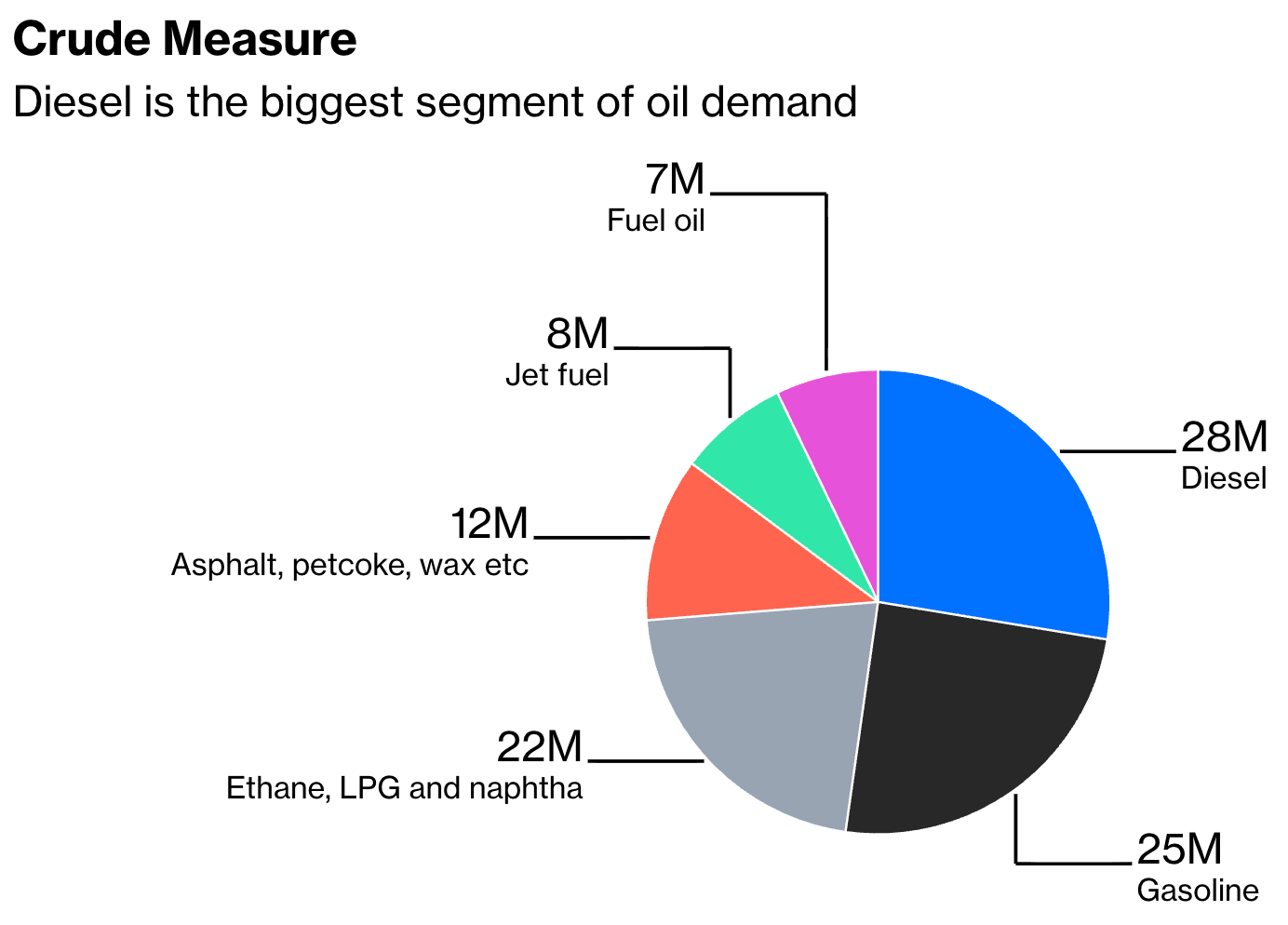
Electric trucking is moving faster than almost anyone realises. Battery-only models now account for roughly 11% of heavy long-distance truck sales and 20% of smaller truck sales in China. The economics are everything here: Bloomberg says electric trucks beat diesel wherever fuel costs more than four times electricity. Since diesel trucks and buses burn about as much fuel as all cars and motorcycles combined, the impact on oil demand is going to start getting really interesting.
10 million of the 60 million people in the world who live with hepatitis C are in Pakistan (thank unsafe blood transfusions and injections). Now Pakistan has launched a national hepatitis C elimination programme with free screening and treatment. Read that again — elimination —not prevention — this is ambitious. The programme aims to test 50% of the eligible population and treat five million people by 2027, all entirely free of charge. Pakistan Today
After two decades, Florida has completed a major Everglades restoration project that re-establishes natural water flow across 222.6 km² of drained wetlands in Picayune Strand. Crews plugged canals, removed elevated roads, and restored the slow “sheet flow” that once defined the River of Grass. Scientists are already documenting returning wetland plants, marsh mammals and endangered bats. Yale 360
More of the United States’ rivers were reconnected last year than at any other time in history. Over 100 dams came down across 30 states in 2025, reconnecting nearly 7,900 km of waterways for fish, flood safety and cleaner rivers. NYT
West Africa is turning 15 national grids into a regional power system, making electricity cheaper, cleaner and more reliable across borders. More than 4,000 km of high-voltage lines now connect the West African Power Pool, enabling utilities to trade electricity across borders, while upgrades have brought service to over three million people in Burkina Faso, Guinea, Liberia, Senegal, Sierra Leone and The Gambia. World Bank
Scientists found a giant squid without ever seeing one — and they did it by reading DNA floating in seawater. Off the coast of Western Australia, a team scooped up over 1,000 water samples from depths as deep as 4.5 km and analysed the tiny bits of genetic material that sea creatures shed as they swim. The result: 226 species, including the legendary Architeuthis dux (eyes the size of a large pizza, body longer than a school bus), Cuvier’s beaked whale, and a faceless cusk eel. Some of the species don’t match anything in the books yet. Curtin University
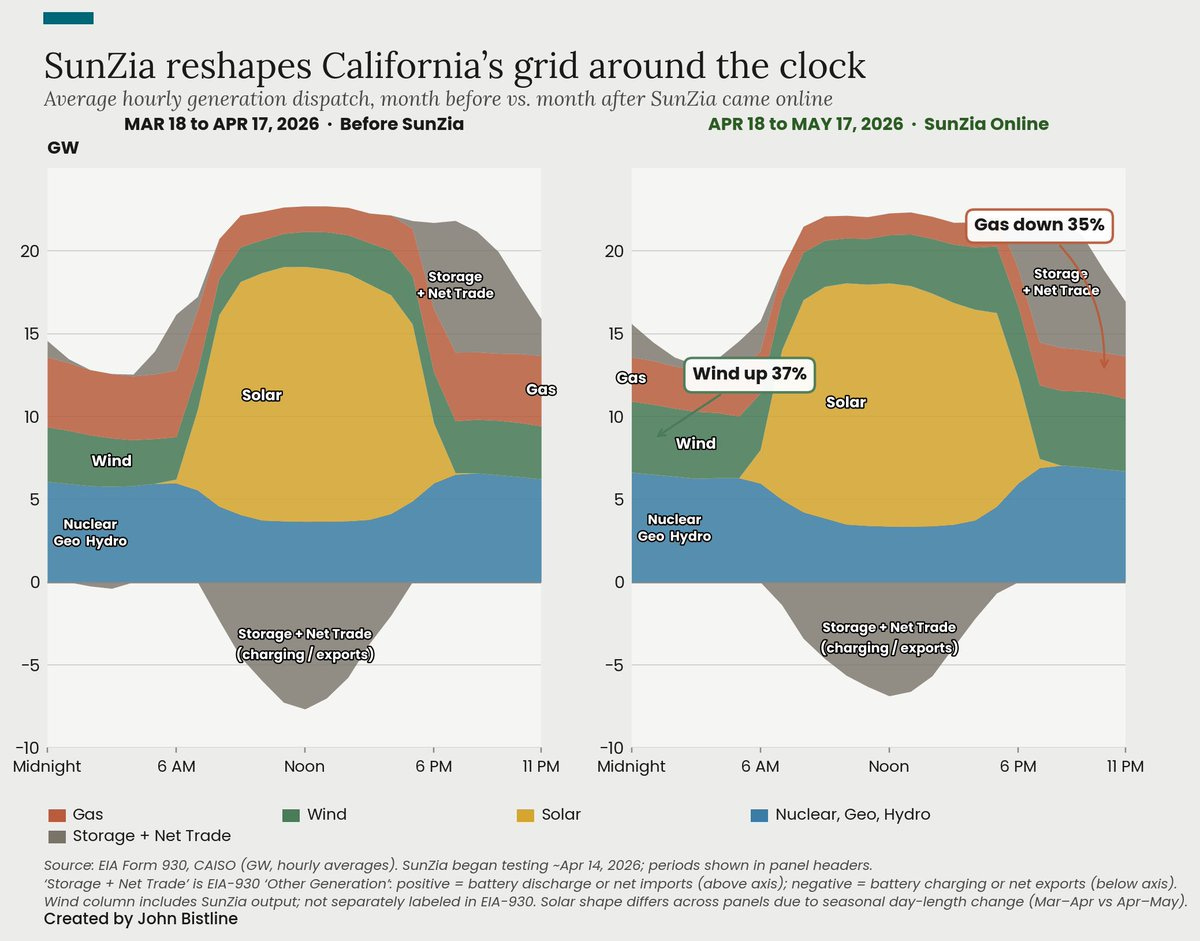
The United States’ biggest renewable project is already decarbonising the grid. SunZia, the largest renewable energy project ever built in the US, has begun sending wind power from New Mexico to California via an 885 km transmission line. The impact is already visible: in the month after SunZia came online, California wind generation rose 37% and gas generation fell 35%. That is what new transmission is supposed to do: move cheap clean power from where it is abundant to where it can displace fossil fuels.
A Short History of Saving the World
We’re equal parts nervous and excited to introduce you to our new history podcast, with rogue historian and one of our favourite science fiction writers, Ada Palmer.
Every generation thinks it’s living through the end of the world. Truth is, we’ve been here before. Part conversation, part historical detective work, this series revisits the moments where everything was supposed to collapse, but didn’t.
Join Ada and a slightly overwhelmed Gus as they embark on a whistle stop tour through information revolutions, pandemics, battles for freedom, censorship — and discover the surprising ways societies continue to adapt and endure through the ages.
You can subscribe here, wherever you listen to your podcasts.