334: Mother. Orion. Europe 💪 Ukraine. Vancouver's marine life. Asia pivots to solar.
Houston, we're going to need some new superlatives.

Hi everyone, Gus here. There won’t be a regular edition next week as I’ll be travelling to Vancouver for the annual TED conference. I’m guest curating a session on progress, with an incredible lineup of speakers including many names that will be familiar to readers of this newsletter: Bill McKibben is speaking about solar energy, Amy Bowers Cordalis on the restoration of the Klamath River, Saloni Dattani on global health, Felix Brooks-church on solving hidden hunger, Leopoldo López Mendoza on resistance to authoritarianism, Rapelang Rabana on literacy, Drew McCartor on combating lead poisoning, and President Vjosa Osmani of Kosovo, on democracy.
We’ll be sharing all their talks here as they come out over the next few months. Thanks in advance for your patience. We’ll be back to regular programming in a fortnight :)
This week’s top stories
Four humans just flew behind the Moon…and photographed Earthrise.
At 12:37 a.m. on April 6, 2026, four people crossed an invisible line in space. The Artemis II spacecraft Orion, carrying NASA astronauts Reid Wiseman, Victor Glover, and Christina Koch, and Canadian Space Agency astronaut Jeremy Hansen, entered the Moon’s sphere of influence. About an hour later, Koch radioed down: “We are now falling to the Moon rather than rising away from Earth.”
It has been 53 years since any human was this close to the lunar surface. The last crew to see the Moon with their own eyes was Apollo 17, in December 1972. Those astronauts walked on it. This crew would not land, but they would do something no one has done since the Nixon administration: swing around the far side of the moon and try to photograph a new Earthrise.
At 6:43 p.m. ET, the spacecraft slipped behind the Moon and the Deep Space Network lost Orion’s signal. For 40 minutes, the crew could not communicate with Earth: complete radio silence as they floated further from our home than any human beings have ever been. At the apex of their figure-8 path, Orion was 252,756 miles from Earth — 4,111 miles farther than the previous distance, a record set by Apollo 13 under less pleasant circumstances.
Then, at 7:24, Orion came around the Moon, and Earth rose.
It wasn’t the same Earthrise that Bill Anders photographed from Apollo 8 on Christmas Eve 1968 — it couldn’t be. Anders was 60 miles above the lunar surface; this crew was 4,000. Anders hadn’t planned the shot; he scrambled for colour film as the blue marble slid into view. This crew knew it was coming and had Nikon D5s ready. But the feeling, by all accounts, was the same. Koch, who had hung a print of Anders’s photograph in her childhood bedroom, spoke first as communications were restored: “It is so great to hear from Earth again.”
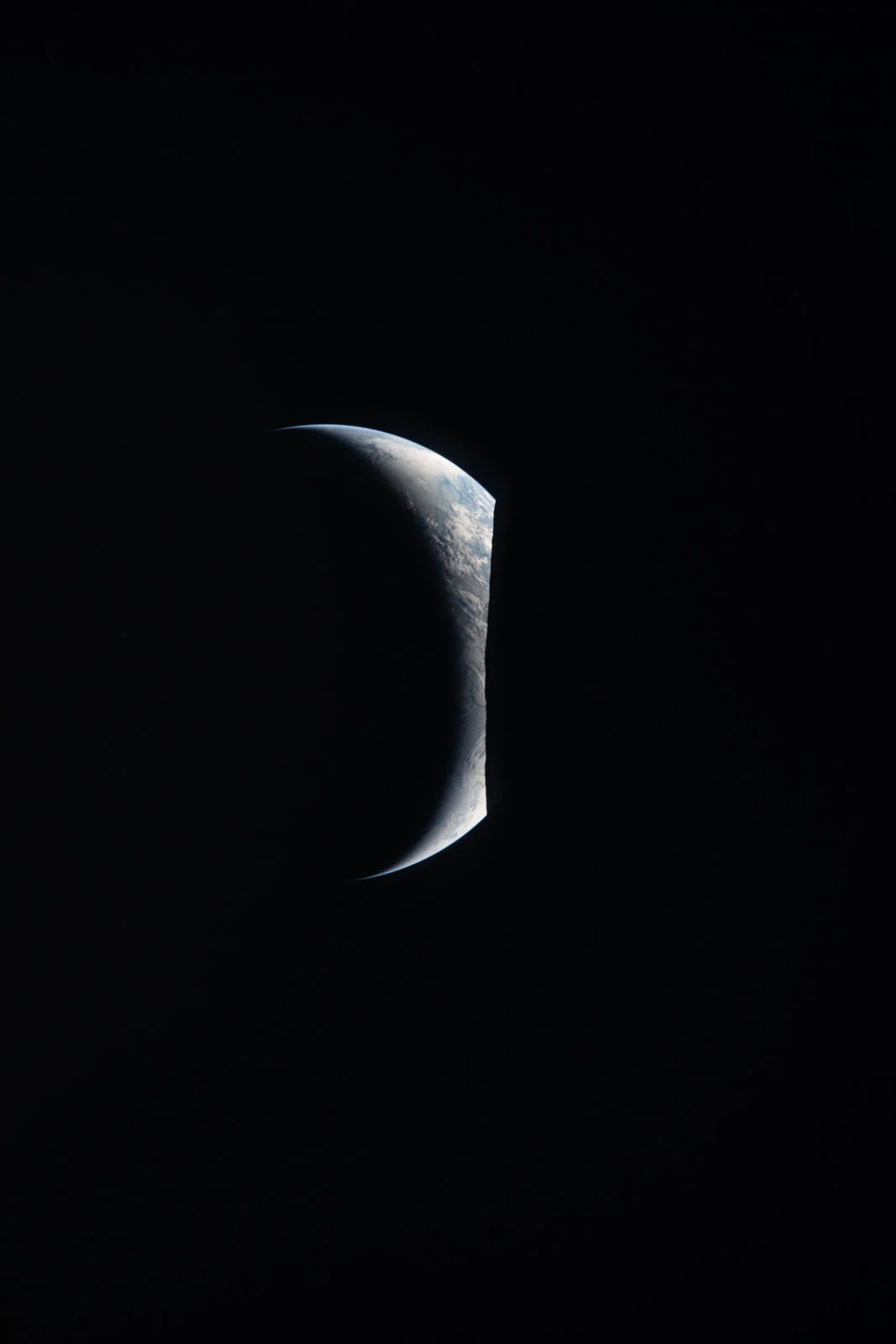
The Earthrise photograph from the Artemis II mission hasn’t yet been released in high definition, and won’t be until the Orion astronauts return home. But a lower-definition version has been published in PetaPixel and Scientific American: here it is.
Other tidbits from the Artemis II mission:
The Artemis II astronauts sent back photographs of the moon’s far side, but they also studied it with their eyes. “The human eye is basically the best camera that could ever or will ever exist,” said Kelsey Young, science lead for the Artemis II mission. “The number of receptors in the human eye far outweighs what a camera is able to do.”
Case in point: the crew reported colour nuances on the moon’s surface — not the silver-grey of photographs, but browns and blues, subtle shifts that reveal mineral composition and age.
The astronauts observed two fresh lunar craters, and proposed naming one of them “Carroll,” after Commander Reid Wiseman’s late wife, who died in 2020.
Glover was captivated by “the terminator,” the boundary between the Moon's light and dark halves, describing it in vivid terms: "The islands of light, the valleys that look like black holes — you'd fall straight to the centre of the Moon if you stepped in some of those. It's just so visually captivating."
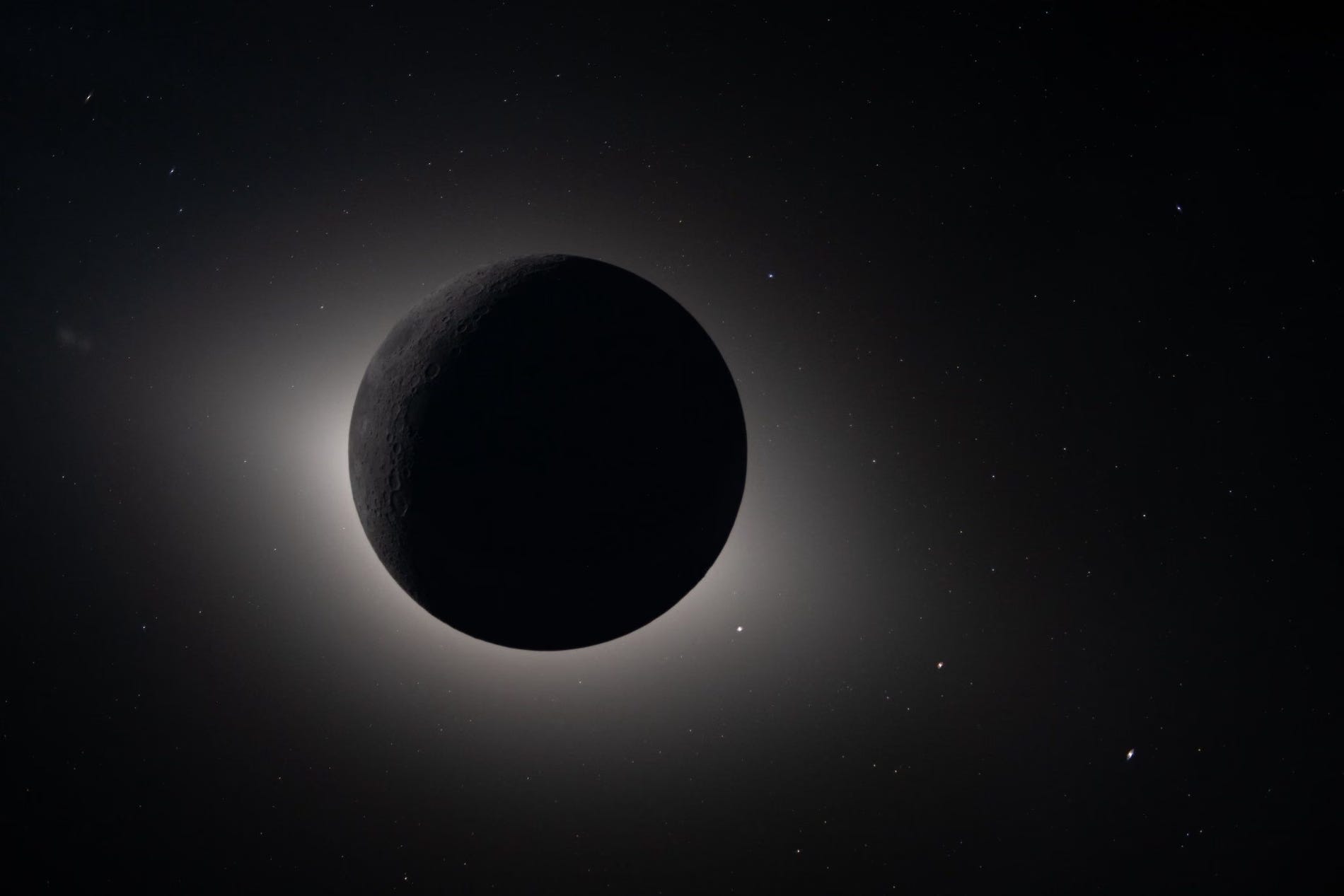
The Artemis crew captured the moon eclipsing the sun. Totality lasted for nearly 54 minutes, and Hansen requested that the science team on Earth should "come up with some new superlatives" because he lacked the words to express what he was seeing. In the bottom right of the picture you can see from left to right, Saturn, Mars and Mercury.
Yes, the toilet broke. No, it wasn’t a disaster. While mission control worked to fix the out-of-commission commode, Glover, Wiseman, Koch and Hansen did their business in bags, just like astronauts did in the bad old Apollo days.
Instead of bread, the astronauts ate tortillas — a practical necessity, not a statement piece. Bread crumbles, and in zero-g, the crumbs get everywhere, including into the equipment, which can actually endanger astronauts. Tortillas do no such thing, so they’re now standard astronaut fare.
Thank Rodolfo Neri Vela, a 1985 payload specialist on the Atlantis mission and the first Mexican in space.
On Easter (or “Wester,” if you’re Eastern Orthodox), the Artemis II astronauts hid eggs around the cabin, and engaged in an Easter egg hunt. “They were the dehydrated scrambled egg variety,” said Koch, “but we’re all pretty happy with them.”
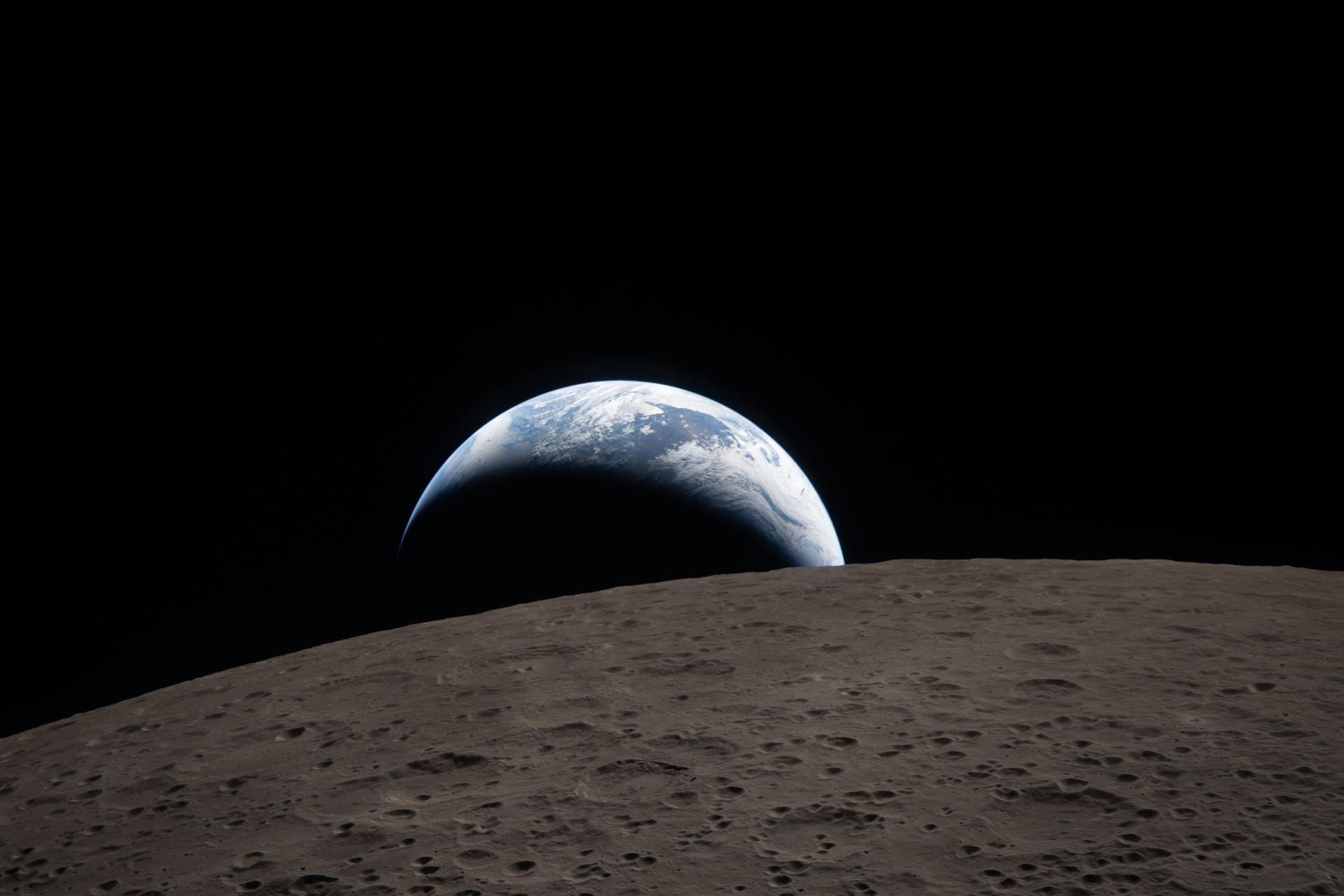
The astronauts didn’t just capture Earthrise; they also captured “Earthset,” the earth disappearing around the curve of the moon. Unlike the new Earthrise “Earthset” got the full social media treatment and may become the mission’s most iconic photograph.
…or will the most iconic photograph be “Hello, World” released on April 3, a full-frontal image of our planet with glowing auroras at the poles?
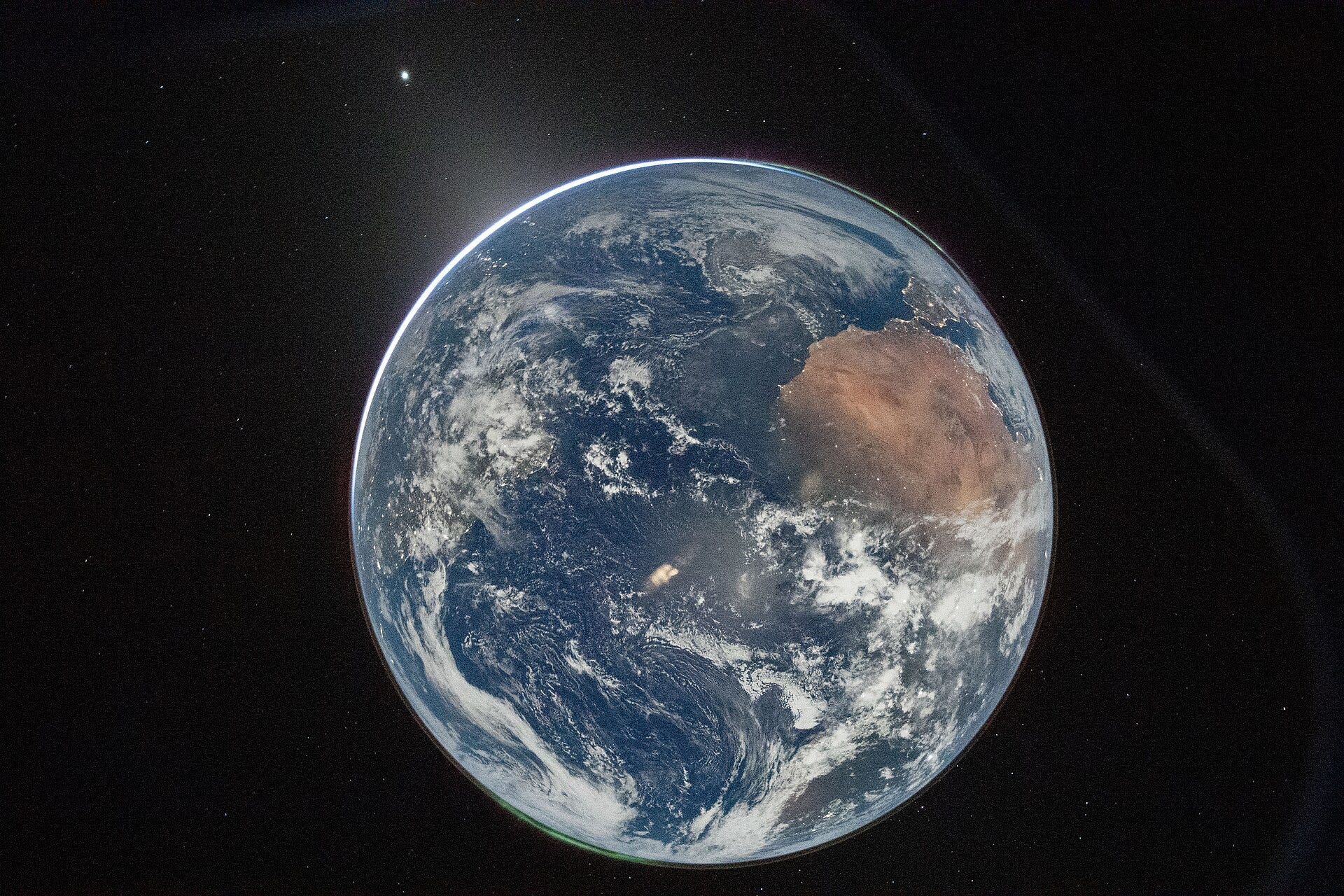
Orion is now heading home. Splashdown is scheduled for April 10 off the coast of San Diego. Most of the photographs won’t be downloaded until after the crew returns — there’s too much data for the Deep Space Network to relay in transit. But Wiseman gave us a taste during the live broadcast, holding up his iPhone to the camera to flash a close-up of the lunar surface he’d snapped through the window.
What’s next? Artemis III. Boots on the ground. The first Moon landing since 1972.
…and now, back to Earth…
The world has finally crossed the 10% mark for ocean protection. In the past two years, we’ve protected 5 million km² of ocean, an area larger than the EU. Satellite tracking and machine learning are making enforcement easier too, even for nations with small budgets and huge protected areas, like tiny Palau. Leading the charge is Global Fishing Watch, which expanded its monitoring to 73 million km² last year (around a third of all national waters) enabling over 400 sanctions against illegal fishing activity.
The last two years have also seen a hidden surge in women’s rights. Between 2023 and 2025, 68 countries enacted 113 reforms strengthening workplace protections, expanding parental leave, and removing barriers to employment. While the gaps are still stark, these reforms will drive real progress, linking legal rights to real-world economic gains at a global scale.
The UN Special Programme on Human Reproduction’s 2025 annual report reveals women today are 40% less likely to die from pregnancy or childbirth than in 2000. That’s astonishing progress, and there are powerful reasons to believe it will continue: in 2025 the WHO issued new guidance on standardising postpartum haemorrhage treatment, the single leading cause of maternal mortality globally, responsible for around a quarter of all deaths.
☝️ possibly the most beautifully designed UN report you will ever see.
Meet “Mother,” the machine that can keep a uterus alive outside the body. Spanish scientists have successfully built a perfusion machine — plastic arteries, a pump for a heart, an oxygenator for lungs — that can keep a uterus alive outside the human body. The first test kept a donated uterus alive for 24 hours; now they’re aiming for 28 days: long enough to watch a full menstrual cycle and study implantation (the moment an embryo burrows into the uterine lining). The machine is technically called PUPER, which stands for “preservation of the uterus in perfusion.” But González’s colleague Xavier Santamaria says the team has adopted a nickname for it: “We call it ‘Mother.’” MIT Technology Review
Thailand has classified sexual harassment as a criminal offence. The amendments to the Criminal Code cover harassment by words, gestures and stalking (online and in person) with penalties rising in cases involving repeated abuse, public settings, and the abuse of authority or children under 15. UN Women
Japan has ended its sole-custody-only rule for divorce, allowing parents to negotiate joint custody for the first time in more than a century. The change, which took effect on April 1, brings Japan into line with the rest of the G7 and explicitly requires parents to respect each other’s positions and cooperate “in the best interests of their child”. The Guardian
South Africa’s HPV programme cuts dangerous infections by 83%. A decade after South Africa launched school-based HPV vaccination for Grade 4 girls, infections from the two main cancer-causing strains have fallen 83% among 17 to 18-year-olds. It’s the clearest evidence yet that HPV programmes can deliver population-level gains in high-burden African settings. The Lancet
Mozambique has wiped its IMF debt to zero. The country cleared its $701 million IMF debt by late March, making Mozambique one of a growing number of African countries with no IMF debt at all (Nigeria and Namibia cleared theirs last year). The move doesn’t end the country’s wider debt problems, but it does remove an important external liability. Business Insider Africa
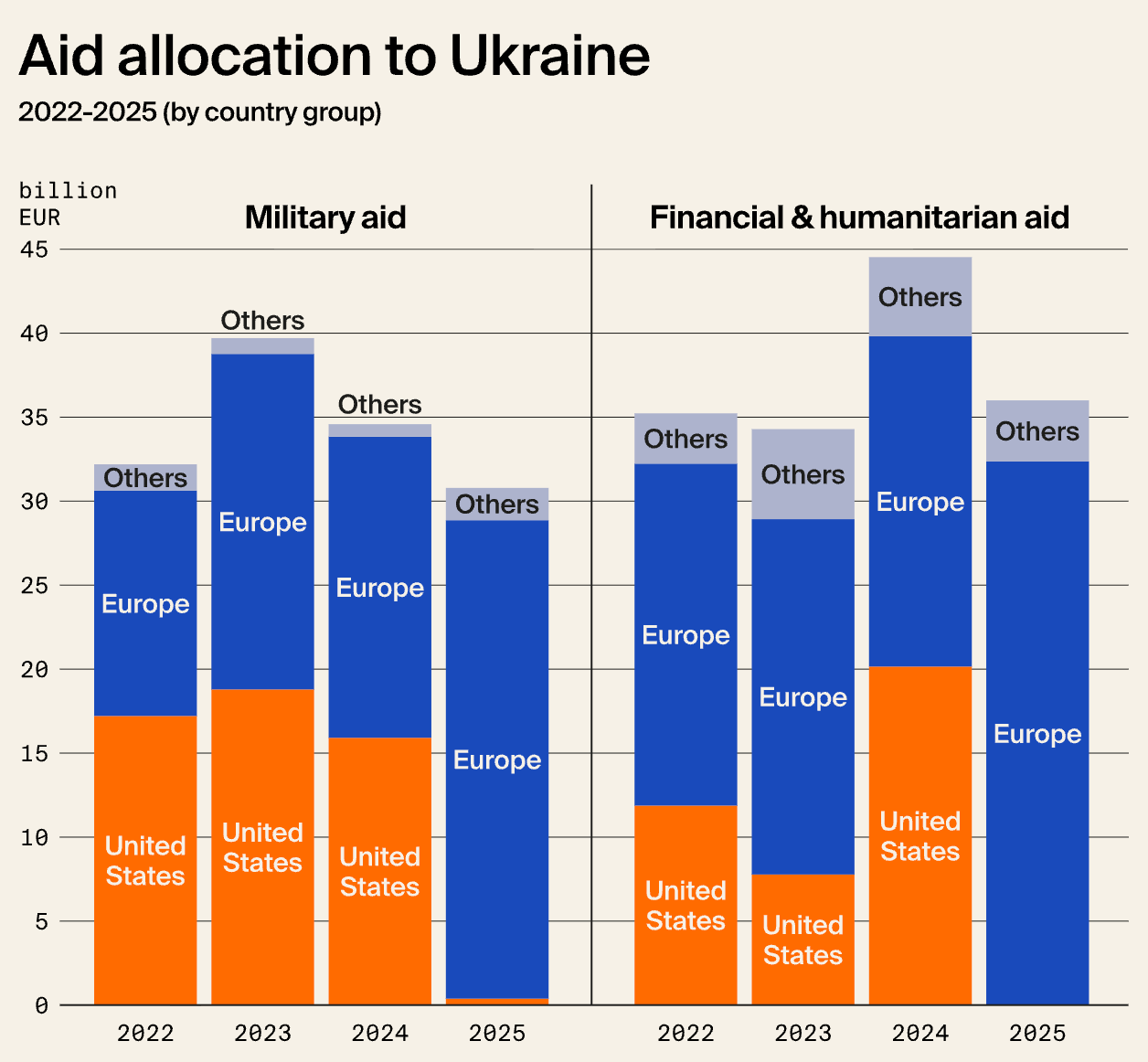
As American aid to Ukraine has fallen, Europe has stepped up to keep support flowing. In 2025, the Nordic and Baltic states — despite representing just 8% of the GDP of tracked European donors — provided 33% of military aid, helping offset the evaporation of American support. Kiel Institute
The war in Iran has pushed Asia toward solar, not coal. Fears that disruptions from the war would drive Asia back to coal are overstated. Even a worst-case scenario would add only about 100 million tonnes to a 9 billion-tonne coal market, equivalent to the impact of a weather swing. Instead, higher electricity prices and faster permitting are accelerating rooftop solar adoption across the region, reinforcing a structural shift away from fossil fuel dependence. Bloomberg
The clean energy industry is taking the gloves off in the United States. After losing federal subsidies under the Trump administration, US renewable energy firms are shifting from advocacy to direct political spending. Backed by wealthy investors, the new campaigns aim to reshape support by emphasizing jobs, domestic manufacturing and lower costs, signalling an industry that is now willing to compete in the same political arena as fossil fuels. NYT
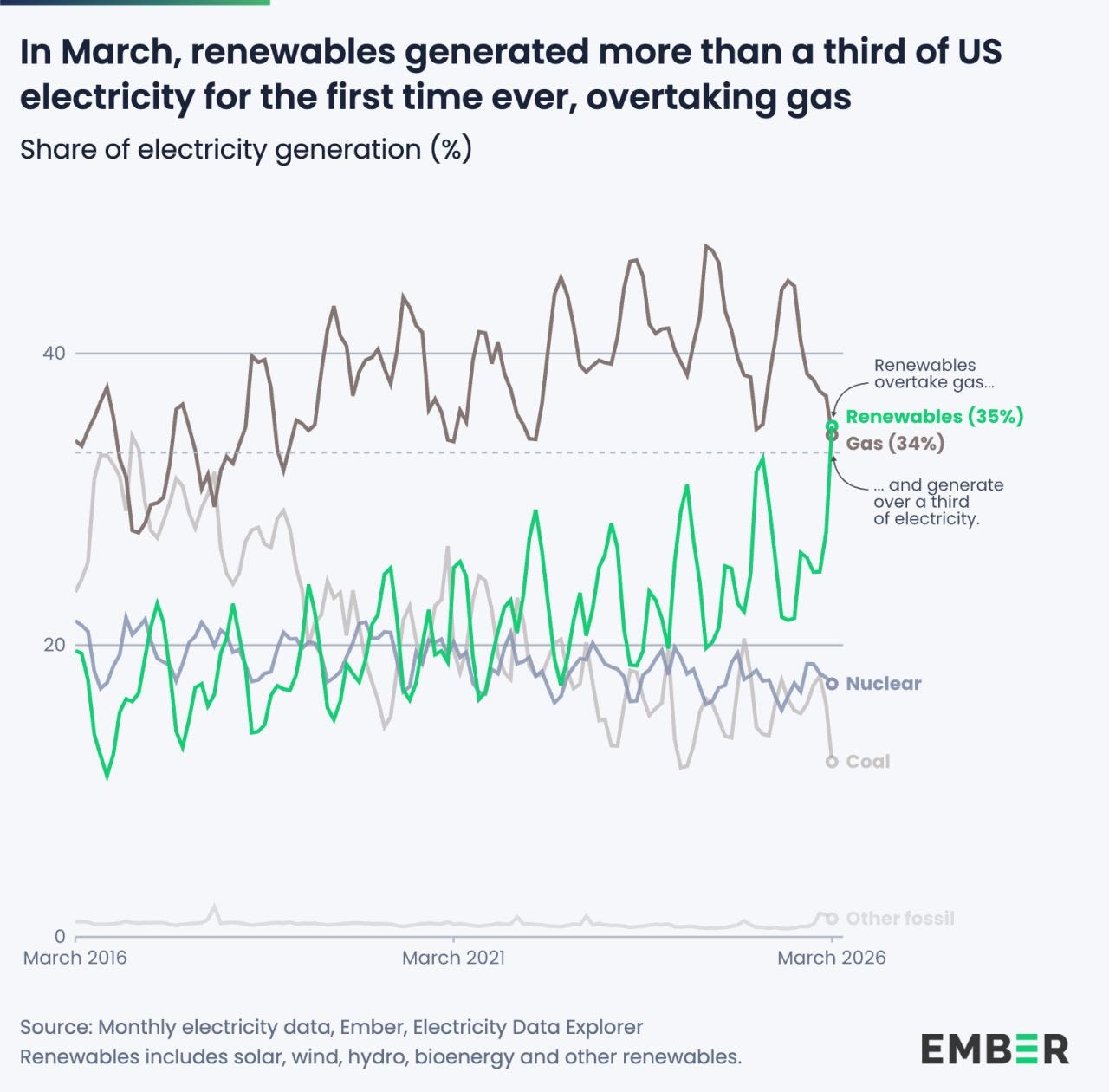
Renewables hit a record share of US electricity, overtaking fossil gas
Renewables generated over a third of US electricity in March 2026 for the first time, surpassing gas as wind and solar reached a record 26% combined share. The milestone reflects rapid structural growth, especially in solar, while coal fell to just 12%, one of its lowest levels on record. Ember
Electric vehicles won every major category at the 2026 World Car Awards, from urban and luxury to performance and design. The clean sweep suggests EVs are now the benchmark for quality, efficiency and desirability across segments, even as protectionism slows access to the best global models in some markets. CleanTechnica
China just launched a nationwide healthcare insurance system for people with disabilities, with a three-year target to cover its entire population. The reform scales up pilots that began in 2016, sets a roughly 0.3% contribution rate from employers, individuals and government subsidies, and promises the same benefits in rural and urban areas. Reuters
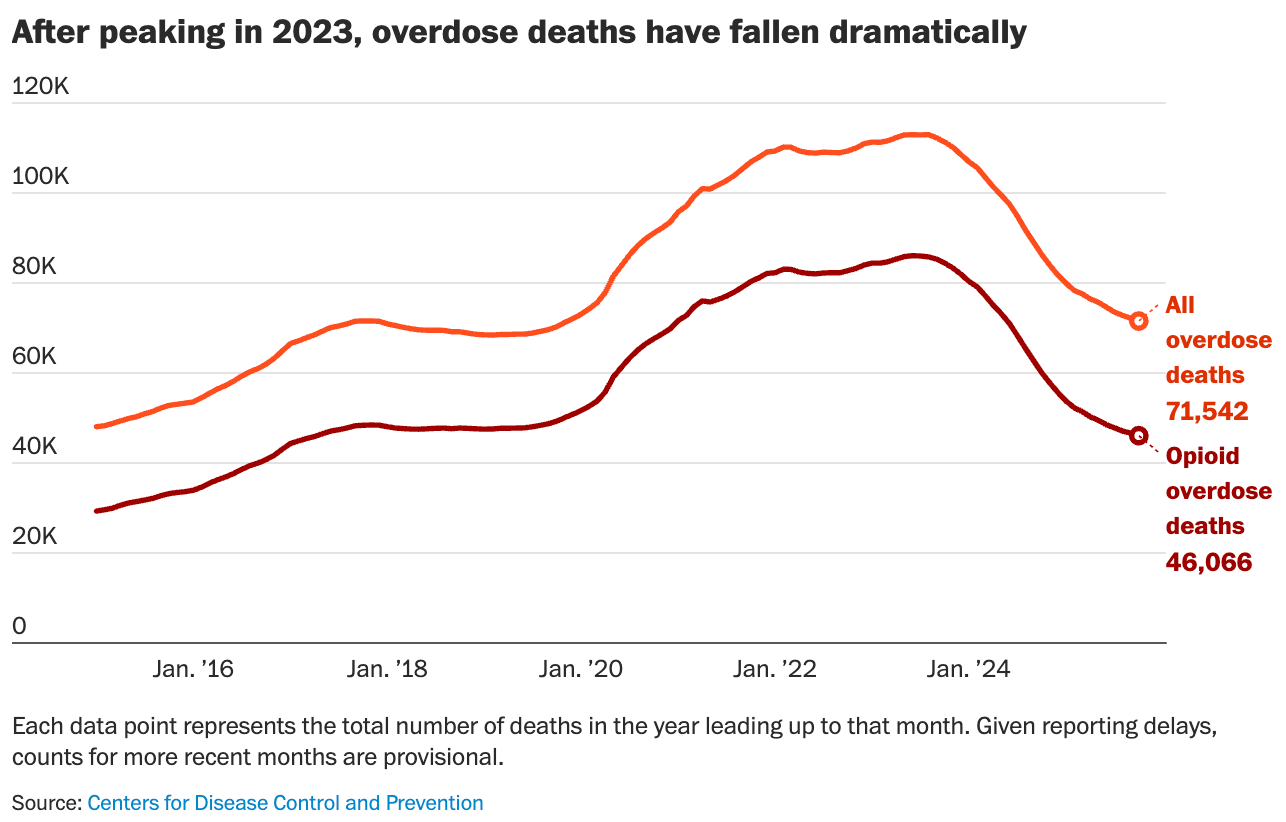
U.S. opioid overdose deaths have fallen by nearly half from their 2023 peak. According to CDC data, annual opioid overdose deaths dropped from almost 84,000 in June 2023 to about 43,000 by October 2025, a reversal that spans all racial groups after years of harm. Some states, including North Carolina, Ohio and Pennsylvania have seen declines of more than 50%. The shift reflects stricter border controls, wider naloxone access and more treatment, but also a huge amount of local volunteer work: grassroots groups have spent years handing out overdose-reversal kits, training neighbours, staffing drop-in centres and building trust with people often missed by formal services. WaPo
Brazil is embedding environmental enforcement into its financial system. A new rule now requires banks to check if rural loan applicants have any deforestation on their farms using satellite imagery. If bank managers detect any clearing since 2019, farmers applying for government-funded rural credit must show proof of deforestation permits to get their loans approved. Reuters
Marine life rebounds off Vancouver Island after decades of loss
The waters off Vancouver Island are witnessing a striking ecological return. In north-eastern British Columbia, annual humpback sightings have risen from just seven in 2003 to more than 115, while sea otters, once hunted to near extinction, now number about 8,200. Recovering seal and sea lion populations are also drawing more orcas, a reminder that protection can rebuild entire food webs. Financial Times
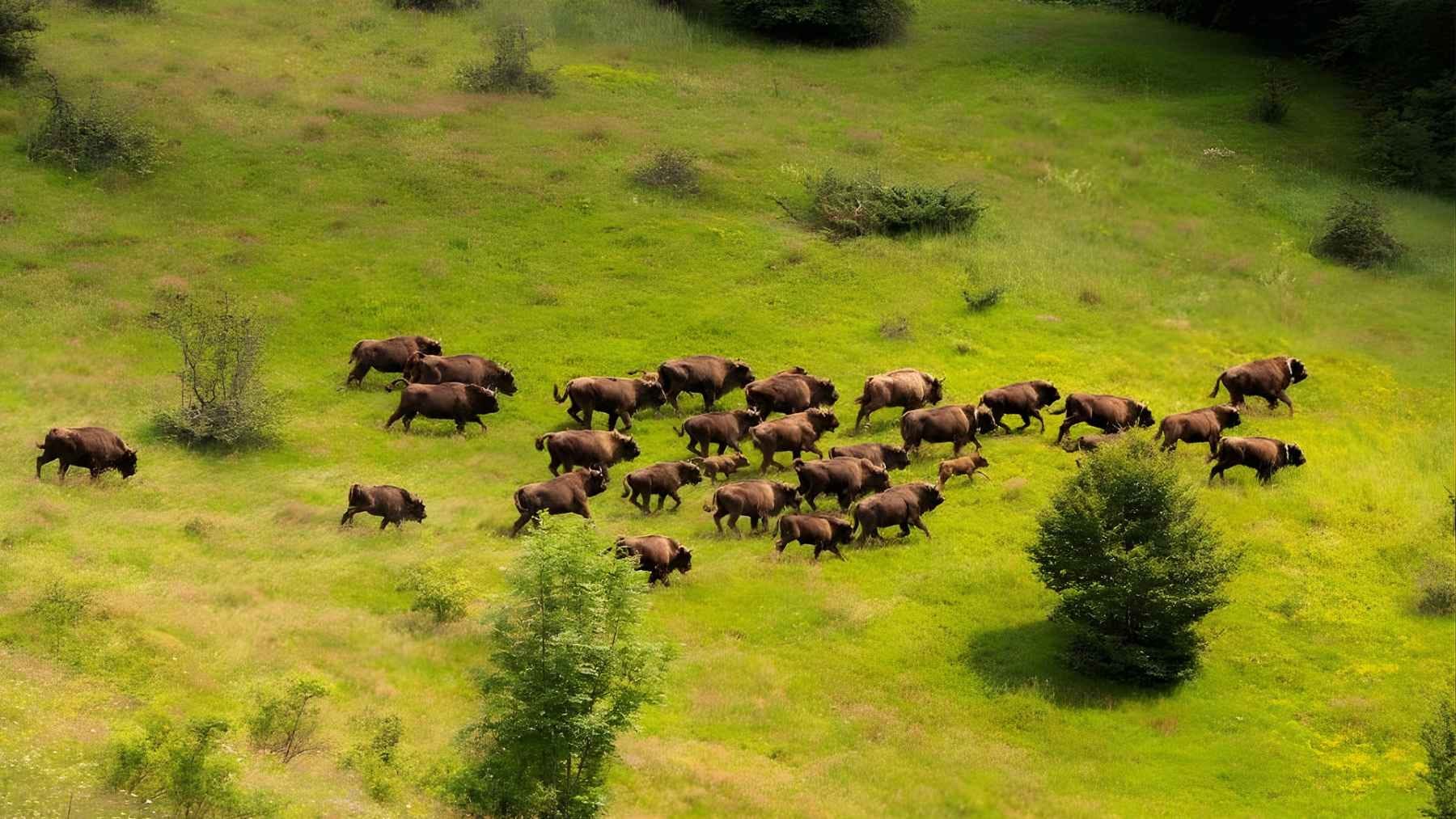
And finally, in Romania’s Tarcu Mountains, European bison are proving that rewilding can change an ecosystem, not just save a species. The animals were once driven to near-extinction in Europe by hunting and habitat loss, but in areas where they have been reintroduced since 2014, researchers have found plant biomass and diversity are up by about 30%. That makes the comeback of Europe’s largest land mammal more than symbolic: a species nearly erased from the continent is now helping rebuild richer, more resilient grassland and forest-edge habitat. Ecoticias