328: Sea of Possibility. Gaza. Hydrofoil. Wolbachia 🦟. Peak coal?
Three new technologies have made this possible.

This week’s top stories
Since the October 2025 ceasefire the United Nations has been ramping up flows of aid to Gaza: Around 750 tonnes of food now enters each day, soap is finally being delivered and UNICEF teams are providing counselling to children. World Central Kitchen says more predictable entry and safer movement has enabled it to reach the milestone of serving one million hot meals a day in Gaza.
Today, we reached one million hot meals a day in Gaza. It’s not a statistic. It’s Palestinians feeding Palestinians, cooking with dignity under impossible conditions. It’s communities refusing to give up on one another. Today we honor this achievement—and tomorrow, we keep cooking. Because feeding people is the most basic act of humanity, and Gaza still needs the world to show up.
José Andrés, Founder, World Central Kitchen


USAID’s former innovation arm relaunches with $48 million in backing. Development Innovation Ventures was a small programme that repeatedly punched above its weight by finding and backing practical ideas that actually worked. Costing less than 12 cents per US citizen per year, it funded new approaches, checked the results, and helped the strongest ones grow (see Semilla Nueva in Guatemala or Uganda’s Health Access Connect). After being fed into the woodchipper in 2025, it has now re-emerged as an independent fund with $48 million in philanthropic backing - less than half the old budget, but enough to keep the engine running. AP
Interpol-led tech crackdown on illegal smuggling rescues 30,000 animals. Late last year Interpol coordinated raids across 134 nations, seizing about 30,000 live animals and flagging over 1,100 suspected traffickers. The success of the operation reflects the wider use of three new technologies - AI cargo scanning, online monitoring and portable DNA kits. Between 2018 and 2023, tech firms also removed 23 million wildlife-linked listings online, tightening digital markets. The Conversation
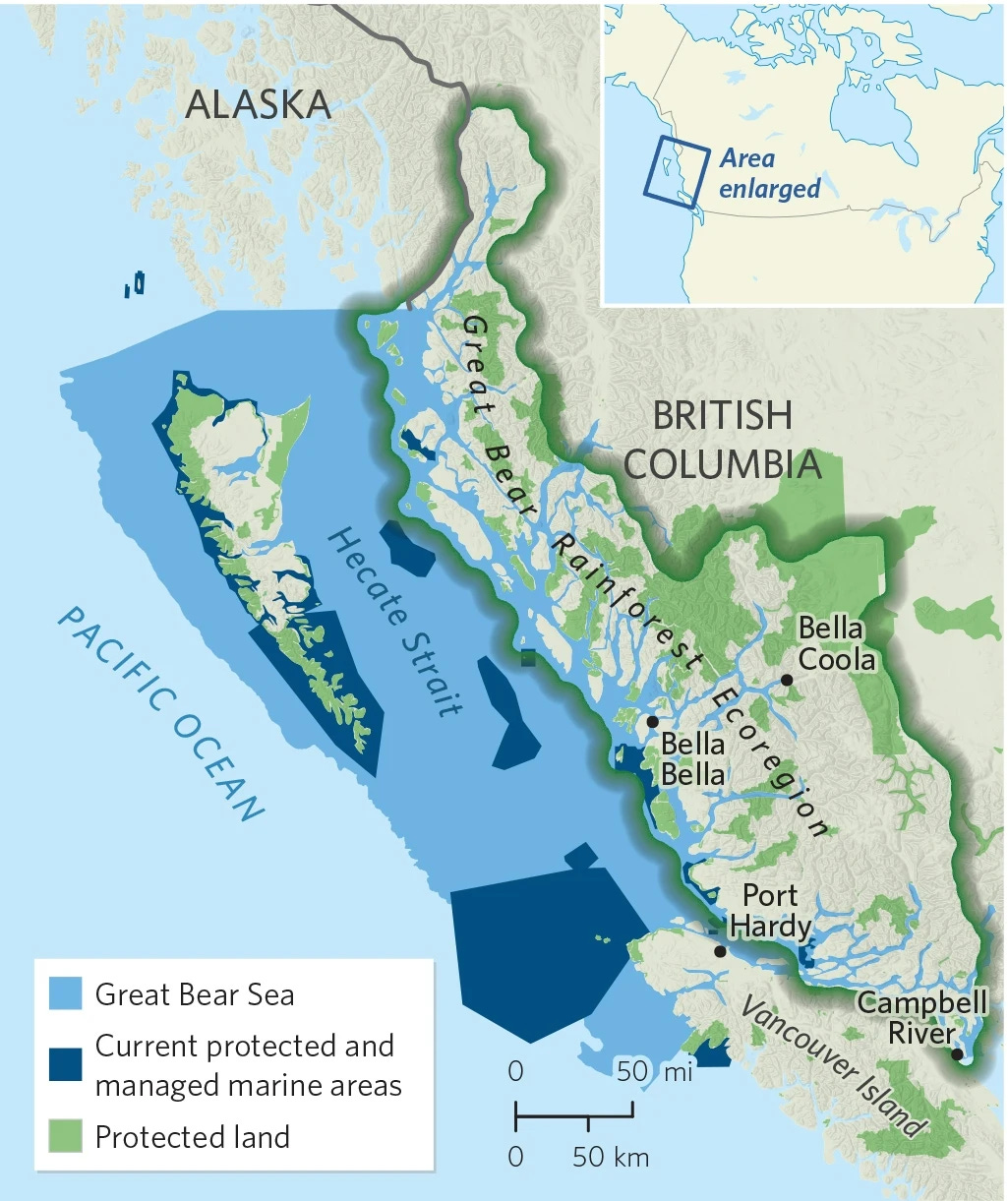
The Great Bear Sea moves from pact to practice in Canada. A decade after a 2014 agreement, the 101,200.0 km² Indigenous-led marine protected area network in the Great Bear Sea is shifting from pledge to implementation. 17 First Nations are now negotiating site-level protections, deploying ranger programmes and directing CA$335 million in secured finance toward stewardship and local enterprise. Nature Conservancy

New blood test spots cancer before scans. Chinese scientists have built a highly sensitive blood test that can detect tiny traces of lung cancer long before a tumour shows up on a scan. The convergence of three technologies, DNA nanotechnology, CRISPR, and quantum dots (how’s that for a 21st century cocktail) had made it possible to spot near-invisible warning signals in blood, opening the door to earlier diagnosis and faster treatment decisions. Science Daily
Underwater hydrofoils bring passenger boats up to speed. Like an F1 car with airfoils, a boat can have hydrofoils - ‘wings’ curved up top and flatter underneath, so when they move through a fluid the pressure reduces on top and increases underneath, producing lift. Traditional hydrofoils make for a bumpy ride, but put them underwater, and the speed gains are huge while the ride stays smooth… smooth enough to create nearly no wake.
Right now most waterways near cities are no-wake zones, which means powered boats have to go slow. That makes waterways underused, compared to, say, roads, something that underwater hydrofoiling could change. The foiling also makes the boats quieter, and cuts energy usage by up to 80%, which is huge (and helpful for electric boats). The first hydrofoil ferries are currently moving from concept to reality, as firms like Sweden’s Candela start delivering to cities around the world. The Economist
The convergence of three technologies has made the reinvention of the hydrofoil possible.
Geothermal energy could be huge. But we need oil and gas companies to build it. That was a TIME headline from 2023. It’s still true: new analysis from Ember suggests geothermal could replace 50% of Europe’s fossil power, but the drilling experts are the oil and gas industries, and they’re against clean energy… or are they? In the United States, geothermal is having a real moment, with Big Oil, perhaps seeing the writing on the wall, looking to transition its expertise. Brock Yordy, a third-generation driller, talks to Inside Climate News about how he hopes to lure other drillers like himself into geothermal, while Fervo, a startup piloted by a former fracking guy, just drilled its hottest well to date in the western United States.
Singapore demonstrates that specially-bred mosquitos can keep dengue suppressed at city-scale. Wolbachia is a bacterium that lives in many insects; when scientists breed male Aedes aegypti mosquitoes with it, those males don’t bite, and when they mate with wild females the eggs don’t hatch. In a 24 month trial across 15 residential areas in Singapore, this approach slashed wild female mosquitoes by around three‑quarters and reduced symptomatic dengue risk by roughly 70%. Medical Xpress
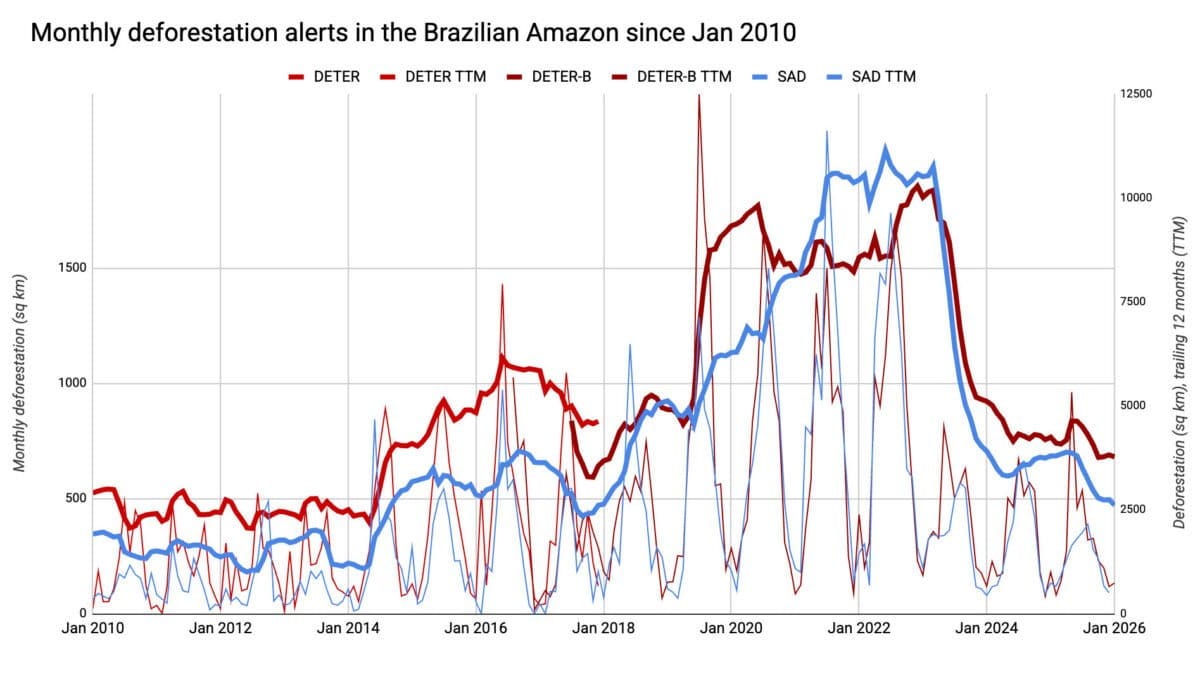
Deforestation in the Brazilian Amazon on track to fall to its lowest level ever recorded. Brazil detected 1,325 km² of deforestation between August 2025 and January 2026, down from 2,050 km² a year earlier. Annual loss fell 11% to 5,796 km², an 11-year low. Environment Minister Marina Silva says that if current policies hold, the country could reach a historic milestone. “There is an expectation that we will reach, in 2026, the lowest deforestation rate in the historical series in the Amazon if we continue with these efforts.”
The Philippines’ Supreme Court has given same-sex couples a concrete legal foothold by recognising co-ownership of property. The country’s ‘Family Code’ defines marriage exclusively as a bond between a man and a woman, but the high court said Article 148, which governs “property relations of people who live together but cannot legally marry”, does not discriminate based on gender and applies to same-sex couples, “otherwise, we render legally invisible some forms of legitimate intimate relationships.” BBC
Filipinos also want clean energy, and they’re willing to pay. Imported fossil fuels currently power most of the country, but they’re a security risk, and expensive, so now the government is changing things up. They’ve committed to buy at least 25GW of clean energy each year between now and 2035. Next on the docket, 3.2GW of utility solar across all three island groups—Luzon, Visayas and Mindanao. This is what we call a “long-term market signal,” positioning renewables to displace fossil fuels and strengthen energy security across the archipelago. PV Tech
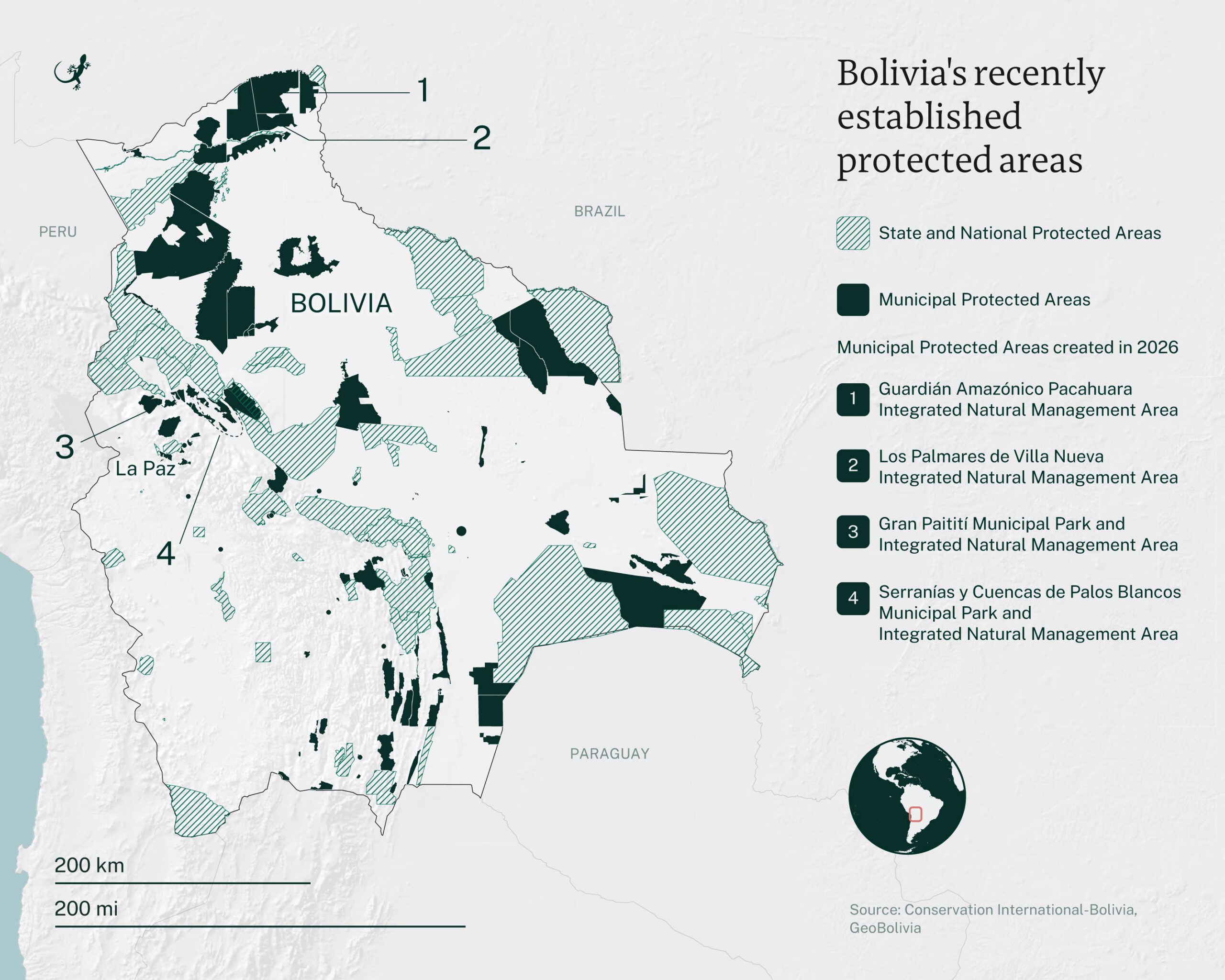
Bolivia has added nearly a million hectares to its protected areas to link Indigenous territories with nearby national parks. That’s 9,072.4km² of protected-area mosaics, created by municipal governments and Indigenous groups to curb encroachment from mining, logging and agribusinesses while protecting wildlife corridors, forest livelihoods, and water sources. Remarkably, some municipalities have protected more than half their territories. Mongabay
Cancer mortality in Canada is declining as earlier detection and better treatment improve survival: 64% of people diagnosed today are expected to live for more than five years. The biggest gains are in lung and colorectal cancer, thanks to decades of tobacco control, plus organised screening and everyday prevention like quitting smoking and using sunscreen. The pressure points now are gaps in HPV vaccination and cervical screening, and cutting the 18–24 month waits for some cancer drugs. Medscape
The IEA calls peak coal, as the world enters the age of electricity. Rapid growth in renewables and nuclear is outpacing new coal generation, reshaping power markets despite rising overall electricity consumption. RenewEconomy
Amanda Royal: “I’d fire the Washington Post’s climate desk, too.”
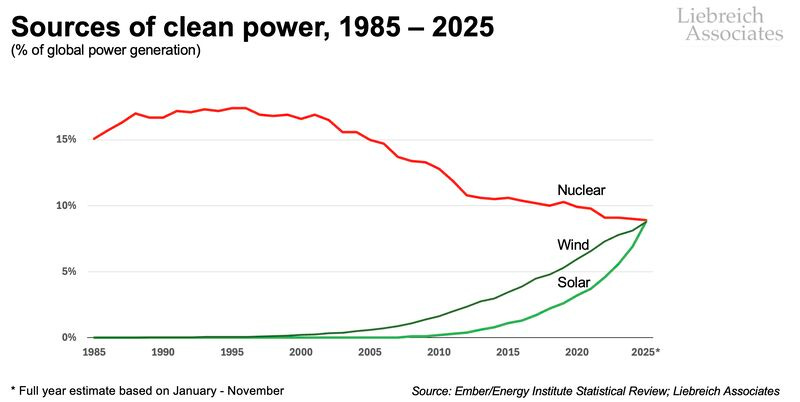
Solar overtakes nuclear in clean power race. Global nuclear generation held a narrow lead over wind and solar combined in full-year 2025, at about 9% of electricity. But in the second half of the year, solar alone appears to have surpassed nuclear output. With wind already level and solar still accelerating, 2026 is likely to push nuclear into third place among clean sources, marking a structural shift from thermal baseload to variable renewables. Liebreich
India is building a comprehensive national health system. Launched in 2018, Ayushman Bharat has delivered free hospital care to over 110 million people, adding 25 million beneficiaries in the past year alone. The scheme now covers 15,733 private hospitals, 182,944 primary-care centres, and nearly 490 million digital health IDs. As a result, average out-of-pocket spending in India has declined from 64% of total health expenditure in 2014 to 39% in 2022. That means fewer families forced to borrow, sell assets, or fall into poverty because of hospital bills.
South Africa recorded a 16% national decline in rhino poaching in 2025, with 352 rhinos killed compared to 420 in 2024, reflecting continued reductions in illegal hunting driven by enforcement and anti-trafficking efforts. Africa News
Vienna reclaims street space by ending free parking and turning parking spots into shade, trees and Dutch-style cycling. The city has run over 350 projects to swap asphalt for green/public space, including a ‘Dutch-inspired’ cycling street where 140 parking bays became 1.3 km of bike lanes and planting. Since 2022, all street parking has been paid, raising €180m/year, and nudging commuters to public transport. DW
This one’s interesting: a new book claims that Francis Crick and James Watson did not steal Rosalind Franklin’s data. One of the most famous “science is sexist” stories might be more complicated? Franklin was an active, central contributor whose group was independently converging on DNA’s structure, but was under‑credited in a male‑dominated system. Blame James Watson, whose animosity towards “Rosy” in his memoir badly distorted her image. Franklin and Crick later became genuine collaborators and friends, continuing to share notes for years after the discovery of DNA. Nautilus
Male birth control, maybe? A newly discovered molecular ‘switch’ supercharges sperm — a finding that could both cure infertility, and make male birth control a reality. Science Daily
And finally, we usually share stories about changes in the lives of millions, or even billions of people. Sometimes though, it’s worth remembering that progress is also better irrigation systems in Kenya that boost rice yields, or a new bridge in Sierra Leone that cuts travel from half a day to five minutes, or a new road in Azerbijan that attracts teachers to schools (and saves migratory birds) or a new sewage plant in Gabon that stops human waste from being dumped in rivers. The world gets better quietly, one piece of infrastructure at a time, long before the changes show up in statistics or stories.