327: Bike angels. Sea silk. Initihuasi Seed Bank. US education. Rewilding The Alps.
All hail the undisputed champion of beautiful clean coal.
This week’s top stories
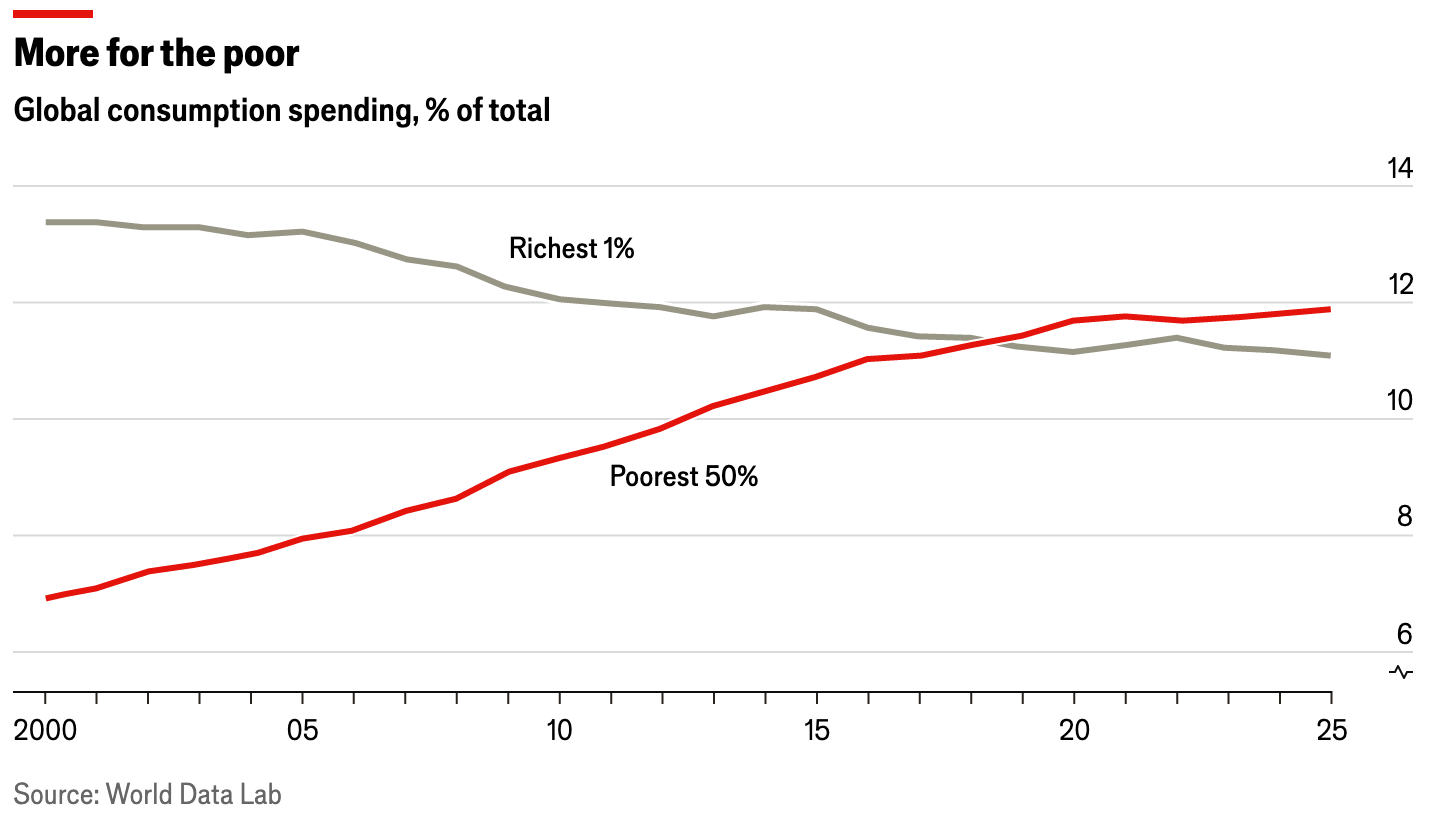
The world is becoming more equal. Contrary to popular belief, global consumption patterns are converging. New data covering 194 economies show that the ratio between spending by the world’s richest 10% and poorest 50% has more than halved since 2000. Back then, the rich spent about 40 times more than the poor; today the figure is closer to 18. Over the same period, the richest 1% have seen their share of consumption shrink. Economist 🗄️
Armenia is building a universal health care system. Mandatory health insurance started on 1st January 2026, rolling out over three years, with a single national benefits package. The state will fully cover minors, senior citizens and several vulnerable groups, with the first phase aiming to reach 1.6 million people. The government says it expects the share of people skipping healthcare for cost reasons to drop by around 30%. OC Media
Clean-energy industries drove more than one-third of China’s economic growth in 2025 and over 90% of new investment, according to Carbon Brief. The clean sector is now responsible for 11.4% of GDP, led by EVs, batteries and solar. Without clean energy, China would have missed its growth targets, underscoring the sector’s increasingly central economic role.
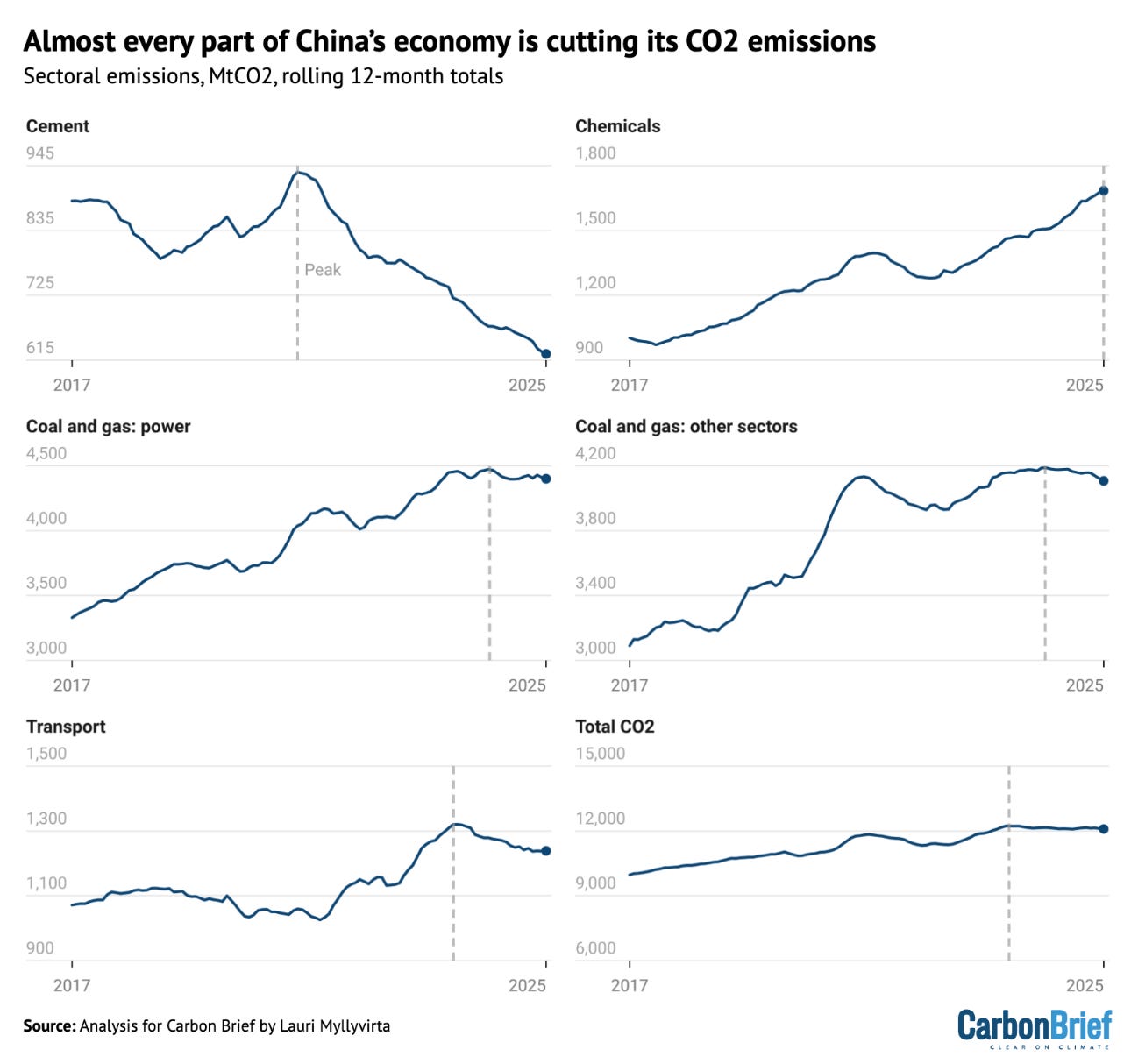
China’s emissions really do look like they’ve peaked. China’s CO₂ emissions have been flat or falling for 21 months, with what looks like a 0.3% decline in 2025. Clean power met all electricity-demand growth as solar, wind and nuclear rose, pushing coal generation down 1.9%. Chemicals emissions are now the outlier, up by 12%. If this is China’s peak (still to be officially confirmed) it’s the climate story of the century. Carbon Brief
Mississippi, Alabama and Louisiana lead US education rebound. Three southern states once synonymous with weak schools now lead the country in post-pandemic learning recovery. Mississippi ranks ninth nationally in fourth-grade reading and first after demographic adjustment, while Alabama leads math recovery and has the lowest chronic absenteeism. Tighter accountability, early reading mandates and relentless attendance tracking are driving gains despite limited public funding. NYT 🎁
Colombia titles 5,214.9 km² of Amazon land to Indigenous groups
Colombia has formally titled a huge swathe of land in the Amazon to Indigenous communities, securing territory for 12,792 families across five frontier departments. The move coincides with a broader shift: early data show Amazon deforestation fell 25% last year, suggesting that land rights, community governance and enforcement are beginning to bend the deforestation curve. ColombiaOne
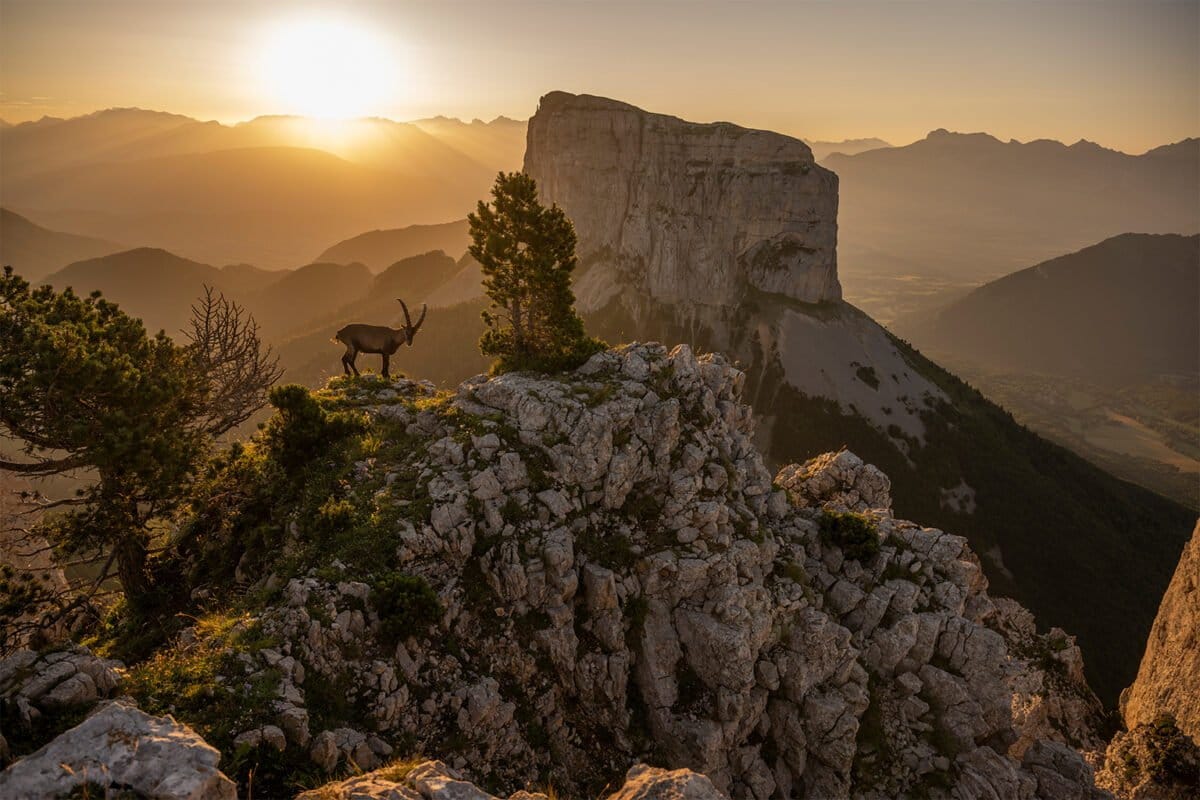
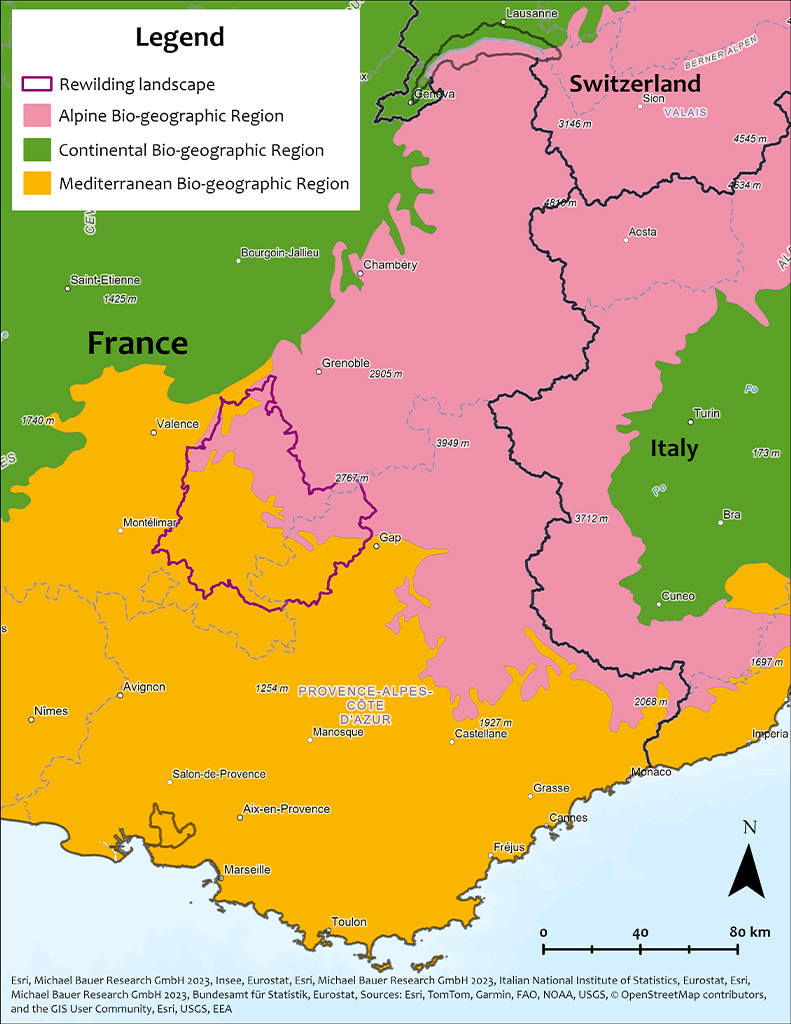
France launches its largest ever rewilding project in the Dauphiné Alps. Launched late last year, the project builds on decades of natural species return, aiming to restore herbivores, predators and river systems across mostly forested land, pairing biodiversity recovery with local economic activity and climate resilience in one of Europe’s fastest-warming mountain regions. Mongabay
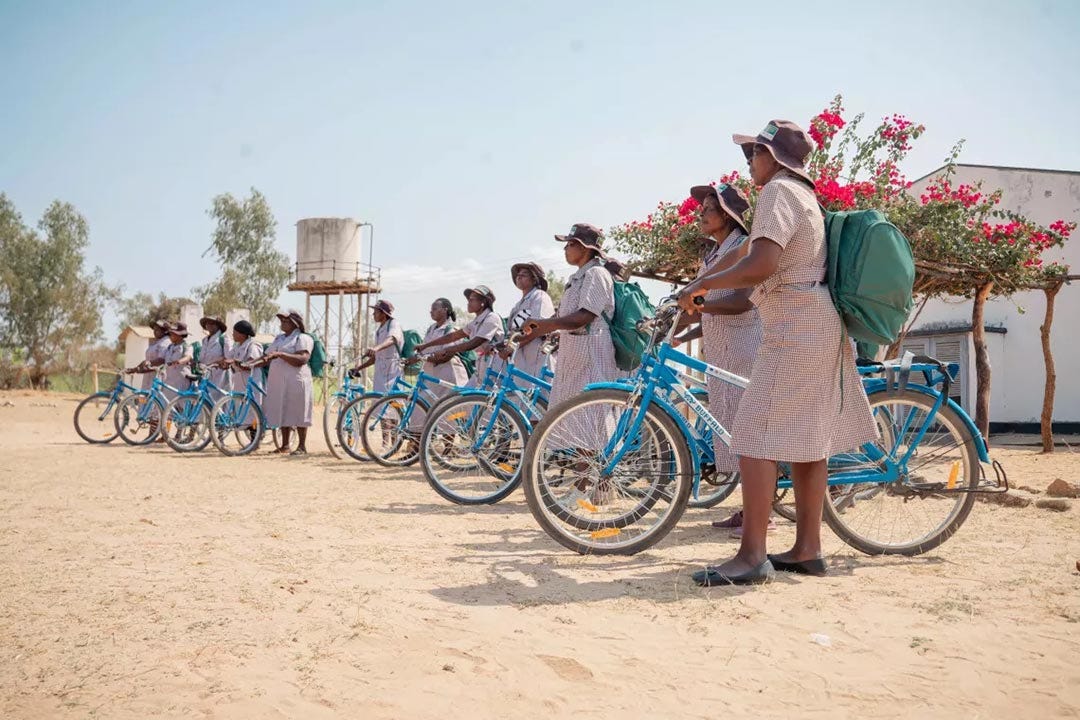
African countries are cutting cervical cancer by meeting women where they are. Zambia has screened over 1.5 million women since 2006 by task-shifting to nurses, embedding services in clinics and mobilising traditional leaders. Burkina Faso has paired free screening with mobile clinics, reaching nearly two million women. In Zimbabwe, bicycle-riding community health workers are now a keystone of care, immunising millions of girls in rural districts.
A major new piece of research finds that combining solar panels with farming could boost global crop output by enough to feed more than two billion people a year. This is revolutionary news because it means any suitable piece of cropland can now be modified to produce more food, more power, more income, more biodiversity and fewer emissions, all in a single step. The report drily notes that potential added agricultural income could exceed $1 trillion.
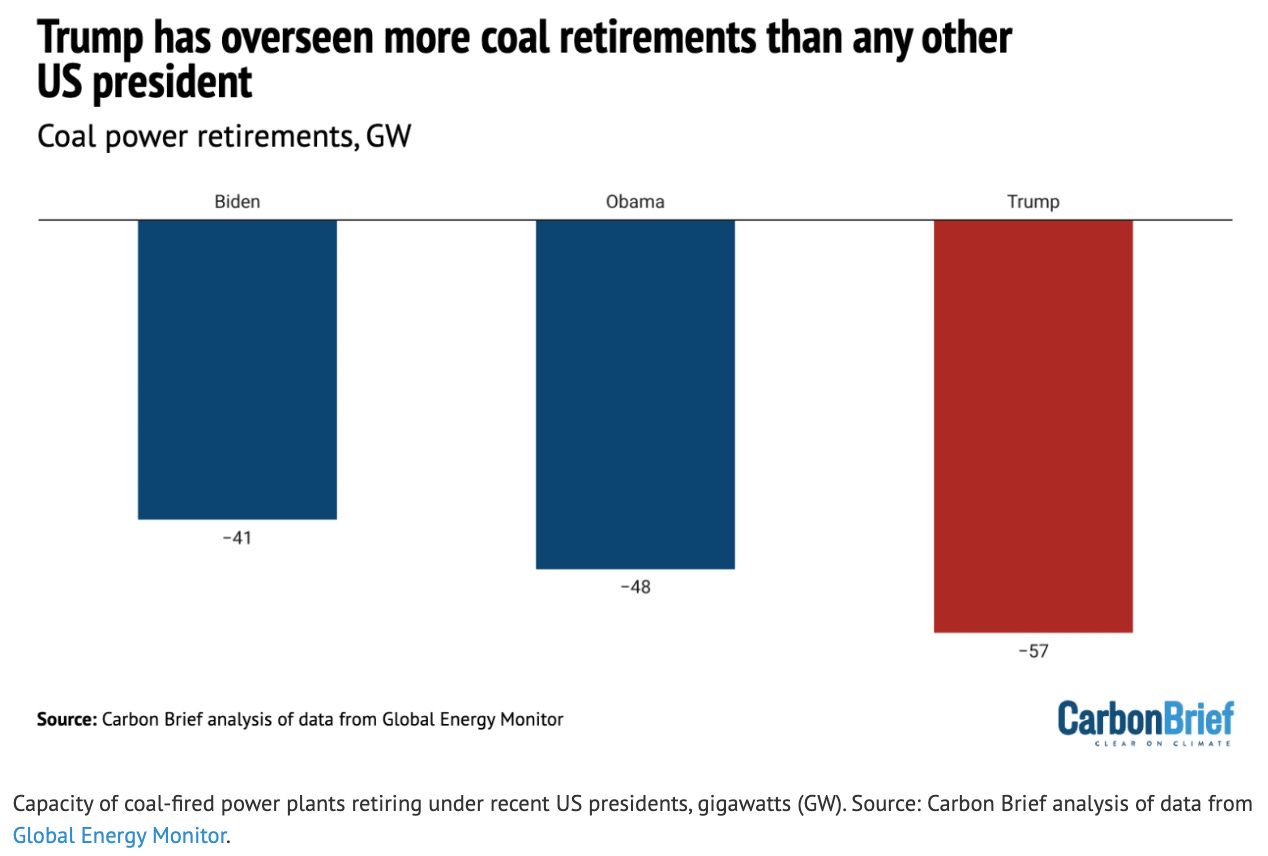
The Undisputed Champion of Coal has overseen more retirements of coal plants than any other president in US history. A new analysis shows 57GW retired across Trump’s two terms, versus 48GW under Obama and 41GW under Biden. Ageing plants and cheaper fossil gas and renewables have driven this trend, with wind and solar now generating more electricity in the United States than coal.

Hospitals are cutting climate pollution by dropping a common anaesthetic. Medical institutions across Europe, North America and Australasia are phasing out desflurane, a widely used anaesthetic with 2,530 times the warming impact of CO₂. The shift to alternatives has already cut anaesthetic-related emissions by nearly 30% over a decade, with no loss of clinical quality and significant cost savings. Regulators now see operating rooms as a fast, low-cost climate win. Bloomberg 🎁
AI reads brain MRIs in seconds and flags emergencies. Researchers at the University of Michigan have developed an AI system that can analyse scans in seconds, identifying neurological conditions with up to 97.5% accuracy while also triaging urgency. Tested on over 30,000 MRI scans, the model flags strokes and haemorrhages for immediate attention, offering a potential fix for radiology backlogs and delayed diagnoses as MRI demand outpaces specialist capacity. Science Daily
You’ve heard of the Svalbard Global Seed Vault - did you know Chile has one too?
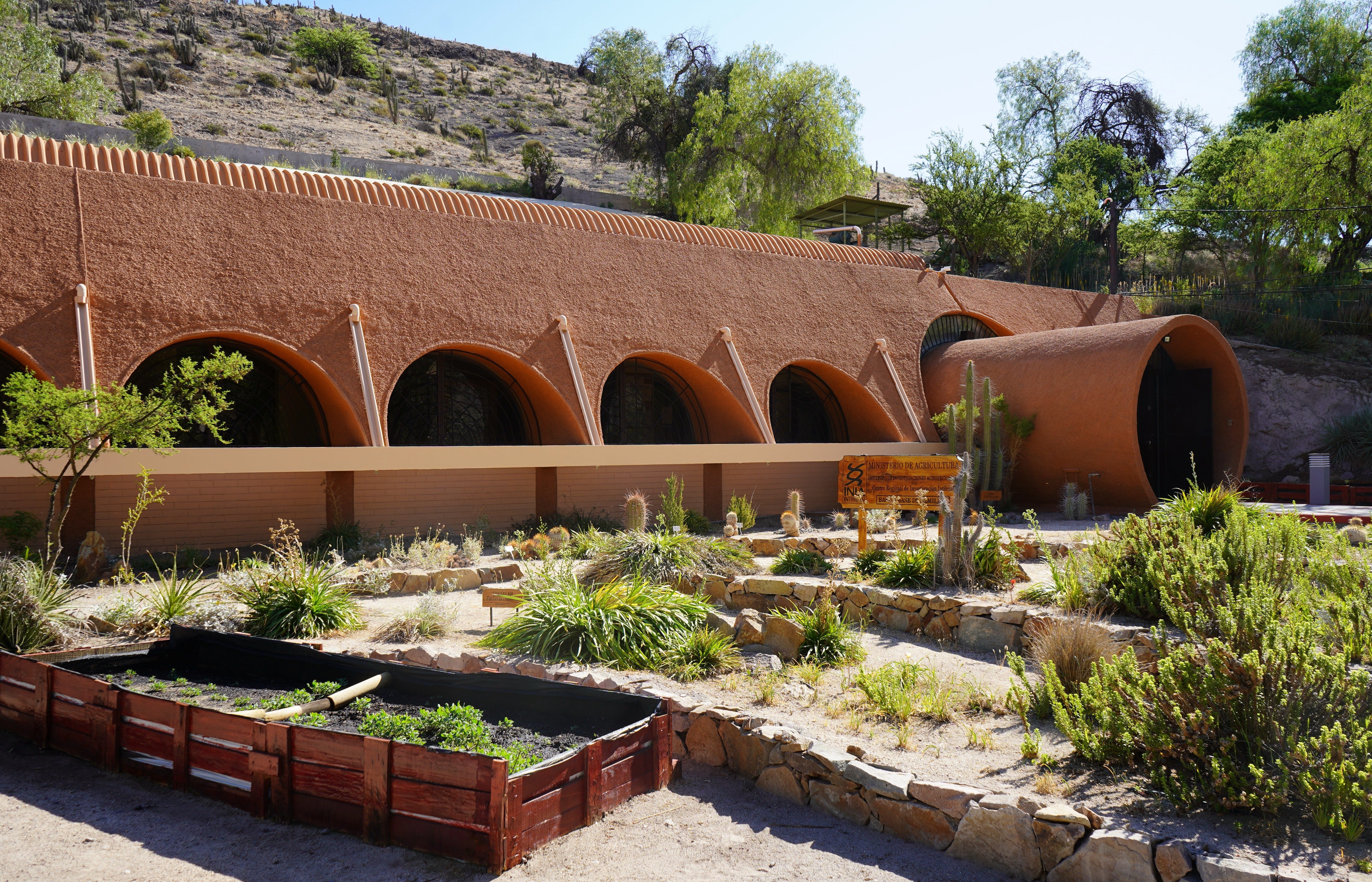
In the Atacama Desert, one of the world’s driest regions, the Initihuasi Seed Bank is freezing thousands of native plant species to safeguard them against climate change, extinction and disaster. Stored at –20°C in earthquake-proof vaults, the collection now underpins species recovery, supports rewilding pilots, and acts as a genetic backstop for a country where 46% of plant species exist nowhere else on Earth. OPB
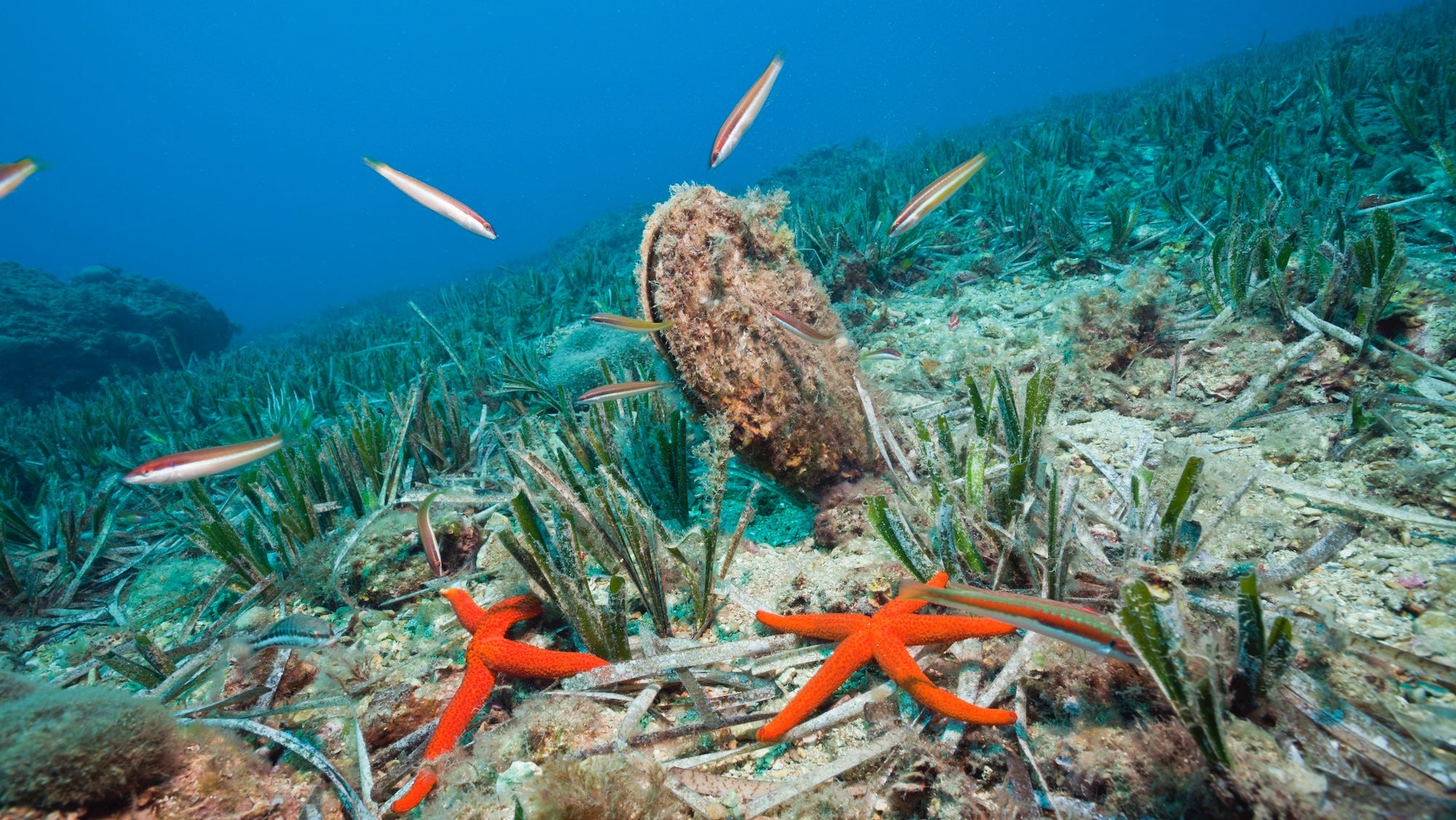
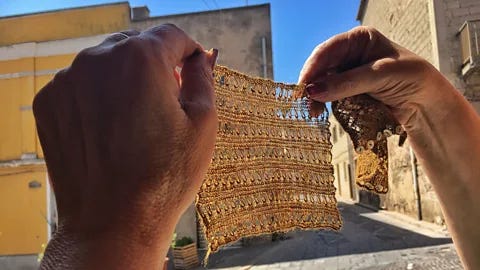
And finally, a legendary golden fabric once worn only by emperors has made an astonishing comeback. Sea silk’s beauty is legendary: often referred to as the "golden fibre of the sea," it was among the most treasured materials of ancient Rome, possessing a golden sheen that never fades. Historically reserved for Emperors and Popes, it’s produced in southern Europe from byssus threads produced by Pinna nobilis, a large Mediterranean clam. Today, these clams are endangered and harvesting their beards is strictly controlled, and it was feared the art of sea silk weaving would die with the bivalves’ last surviving seamstress.
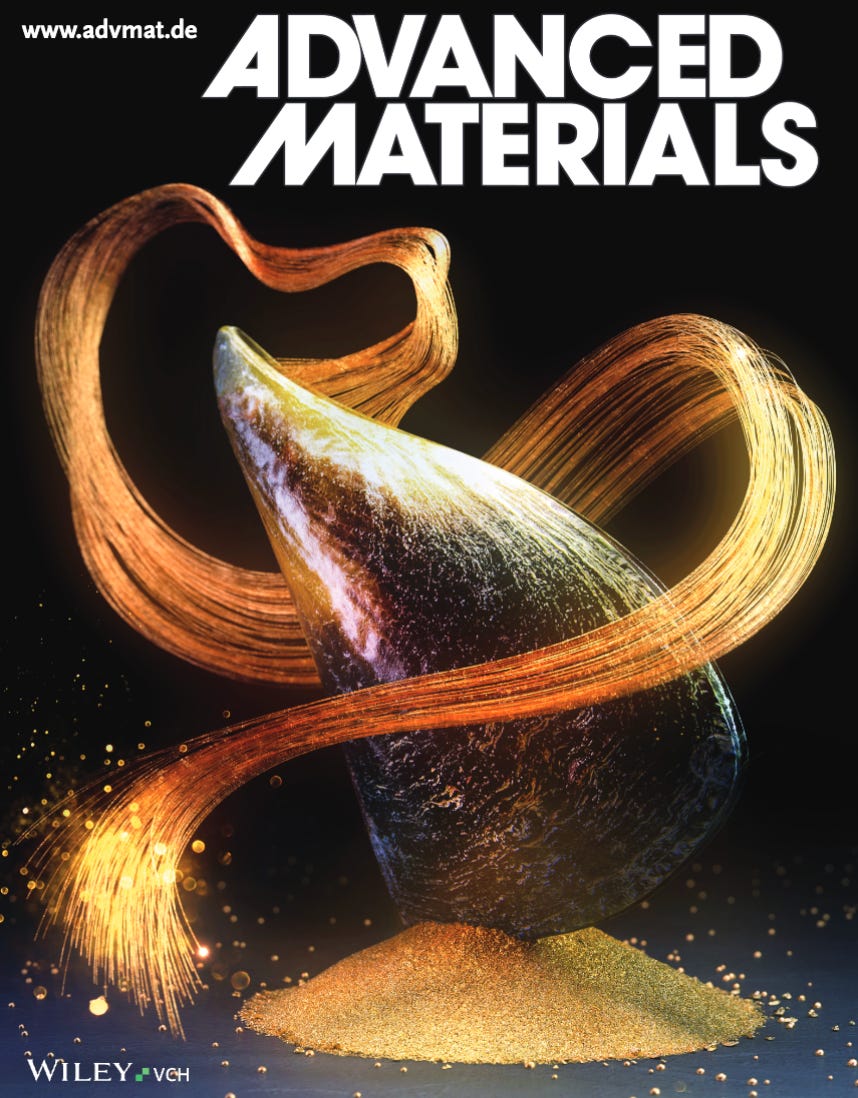
But behold! Halfway across the world, fish farmers in Korea cultivate a common clam called Atrina pectinata. Late last year, researchers made the first true sea silk from its beard threads: now they’ve discovered why the colour lasts for so long. The team found that sea silk’s iridescence is created by a spherical protein structure known as photonin. These proteins form layered arrangements that reflect light in a way similar to soap bubbles or butterfly wings. Because the colour comes from structure rather than pigment, it remains stable for thousands of years. Science Daily
Women in Mesopotamia used the exceptionally light fabric to embroider clothes for their kings some 5,000 years ago. It was harvested to make robes for King Solomon, bracelets for Nefertiti, and holy vestments for priests, popes and pharaohs. It’s referenced on the Rosetta Stone, mentioned 45 times in the Old Testament and thought to be the material that God commanded Moses to drape on the altar in the Tabernacle.