

325: Food forests. Happier US students. India's electrotech fast-track. Care blocks.
We'd like a word with those Doomsday Clock people.


Hi everyone, we’re thrilled to introduce you to our first charity partner for 2026, Dogs4Wildlife. Run by professional police and military K9 trainers Darren Priddle and Jacqui Law, they teach dogs to become elite wildlife protectors across the African continent. Their latest project takes rescue dogs in Zimbabwe and trains them to work alongside rangers in Matusadona National Park.
We’re sending them AUD$20,000 to build a specialised training and agility area at a new sanctuary just outside Harare. The sanctuary will serve two purposes: it’ll provide critical training infrastructure for the seven conservation dogs currently in training, building their confidence, coordination and problem-solving abilities, while also giving more than 450 rescue dogs a space to play, explore and thrive.
Darren and Jacqui told us that for the conservation dogs, structured enrichment and agility work is essential for developing trust with handlers and ensuring they enjoy their training. For the wider sanctuary population, it’s a permanent space where they can express natural behaviours, reduce stress, and simply be dogs.
A huge thank you to all our paid subscribers for making this donation possible. This sanctuary will benefit both African wildlife and rescue dogs for years to come.
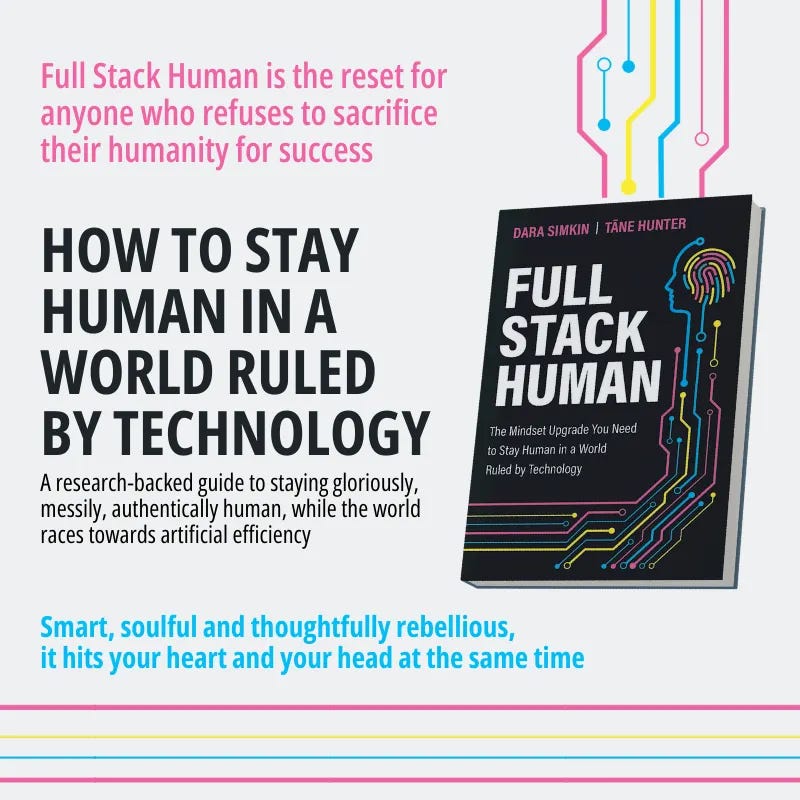
Full Stack Human isn’t another wellness fad or productivity hack. It’s an evidence-based playbook for finding agency in chaos, opportunities in disruption and turning information overwhelm into actionable capacity. This is neuroscience meets real talk - get it while everyone else is still doom-scrolling.
This week’s top stories
The world just passed eight years and four months without a nuclear explosion, the longest period since the atomic era began more than 80 years ago. The most recent test was in North Korea on September 3rd 2017. That’s a welcome milestone: Daniel Ellsberg (the guy who leaked the Pentagon Papers) skipped a retirement fund assuming a nuclear holocaust would arrive first. Could someone please share this news with the Doomsday Clock people?
Since 2021, poverty has declined in most countries, but progress is uneven. Three in four countries in the world saw a decline in poverty between 2021 and 2024, signalling a broad recovery after the shock of the pandemic. Countries mired in conflict and violence continue to confront the steepest challenges, but things are starting to look up (slowly) - the World Bank estimates that four in five countries saw poverty decline in 2025, the largest share in ten years.
The mental health of America’s students is improving. UCLA surveyed 84,000+ students across 135 campuses nationwide, and found severe depression fell to 18% in 2025 (down from 23% in 2022), and suicidal thoughts fell to 11% (from 15%). Loneliness is still high and only one in three students said they were ‘flourishing’; still, the results reflect an important counter narrative to the constant headlines about young people’s mental health.
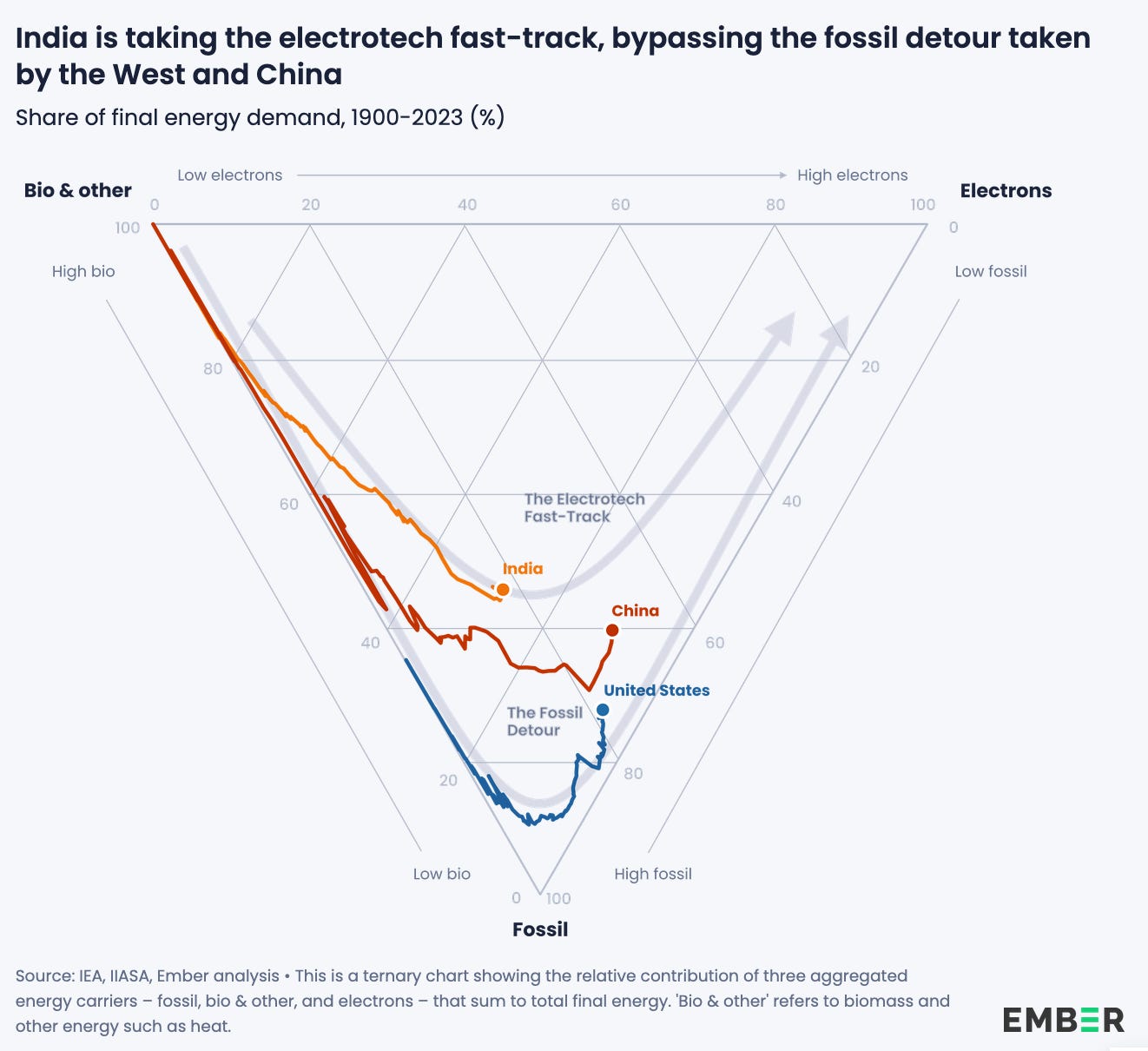
India is going green faster than China did at the same income level. Cheap solar, wind and batteries are allowing the world’s largest country to bypass a fossil-heavy growth phase. As Bill McKibben notes, costs have flipped so dramatically that renewables now undercut coal itself, opening a credible path for emerging economies to grow as “electrostates” that are built on clean electricity rather than fossil fuels. Ember
In 2025, wind and solar generated more electricity than fossil fuels in the EU, while nuclear provided an additional 23%. Gas, coal and oil only generated 29%, with coal becoming increasingly marginal at 9.2%. A big shout out for solar, which now generates a cool (or should we say ‘hot’?) 13% of electricity for more than 450 million people across the continent. Ember
Australia’s clean energy transition is going better than almost anyone realises. In the last quarter of 2025 renewables supplied a record 51% of the country’s electricity, with wind, solar and batteries each at all-time highs. The share of fossil gas is at its lowest since 2000, coal power is at its lowest level ever, emissions are down, and wholesale electricity prices have plunged by 44%. The figures show a system shifting faster than the public debate has caught up with yet. AEMO
And in case you were worried about the United States…
99% of new US capacity in 2026 will be solar, wind + storage. (EIA)
US green energy growth is proving hard to kill. (Financial Times)
Trump is trying to kill clean energy. The market has other plans. (Grist)
Meanwhile, deforestation keeps falling across the Amazon —
In Brazil, deforestation in the Amazon is down to its lowest level since 2014. At COP30, President Lula recognised 24,500 km² of Indigenous territories, with another 45,000 km² in the pipeline; funders pledged $1.8 billion for land rights and $100 million for wildfire prevention. Context
In Colombia, new figures show forest lost from January to September 2025 is down 25% compared to the same period in 2024. Officials credit a government-led plan that leans on Indigenous collaboration, rural land-use zoning, restoration and voluntary conservation deals, as well as cash incentives. Mongabay
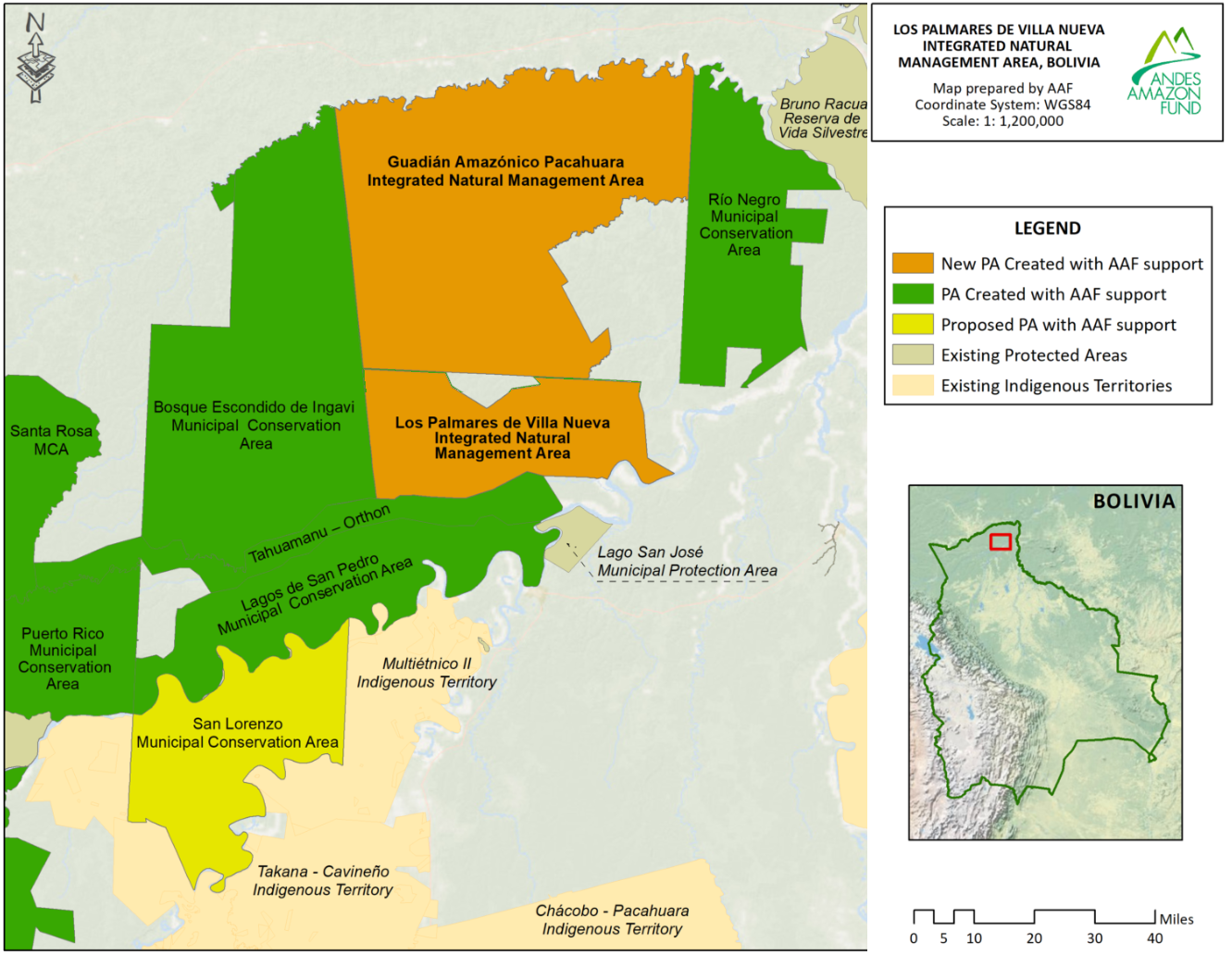
And on the border with Peru and Brazil, Bolivia recently added two new protected areas to stitch the western Amazon together. Created by municipal governments, the 7,300 km² of intact forest, rivers and floodplains will give jaguars, tapirs, river dolphins, giant otters and spider monkeys corridors to move around vast territories. Andes Amazon Fund
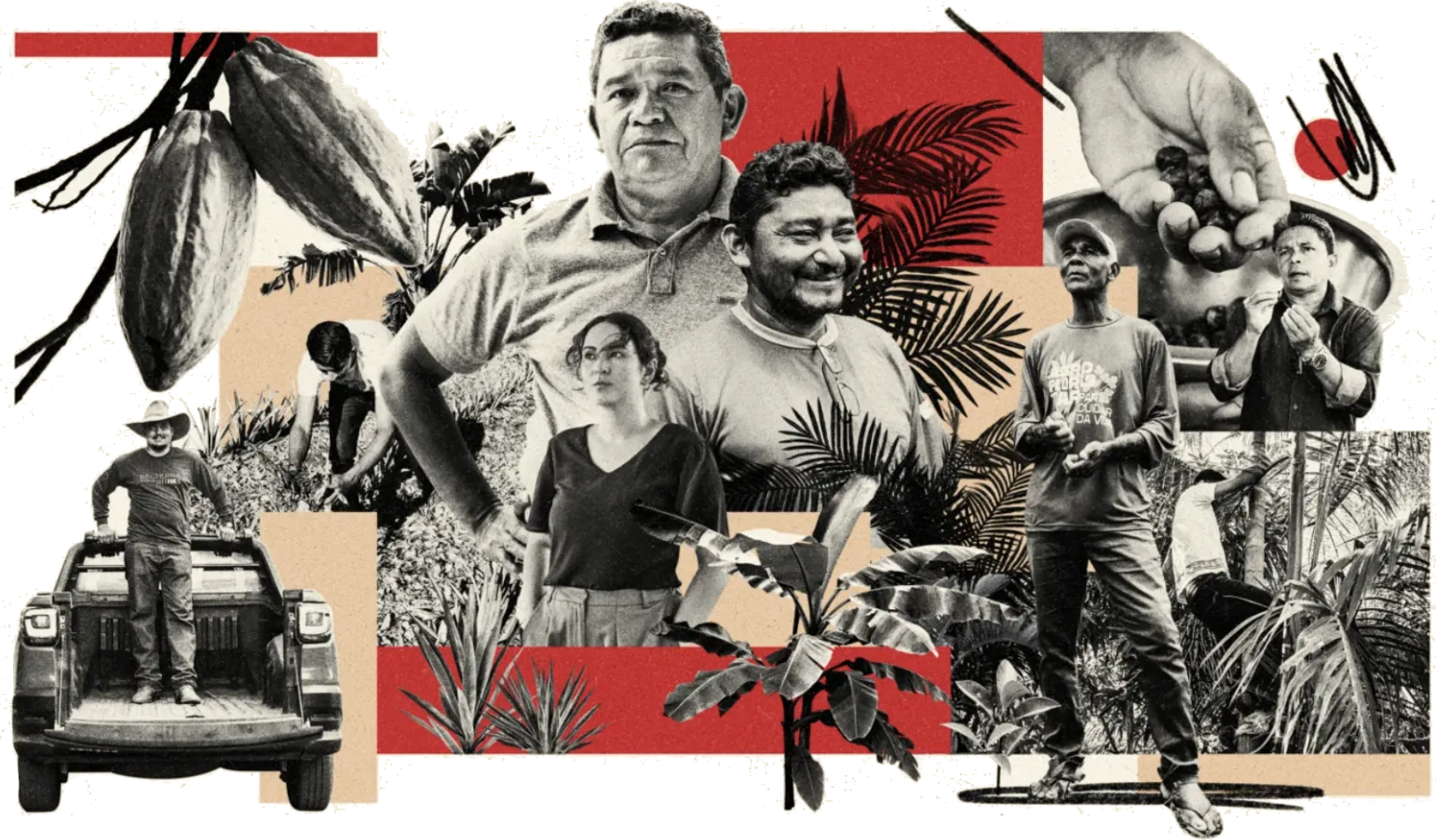
If you want to go deeper, check out Oliver Gordon’s excellent solutions journalism deep dive on food forests in Brazil. The indigenous practice of agroforestry is gaining traction in Brazil, replacing degraded pasture with mixed tree-crop systems that restore soils, cut emissions and raise incomes. So-called ‘food forests’ (dense, mixed plantings of fruit, nut and other productive trees) provide habitats for animals while also providing food (and income!) for farmers. Just Stories
Heart disease deaths fall in the United States as pandemic surge recedes. According to new data from the American Heart Association deaths from heart disease and stroke declined in 2023, reversing a multi-year rise linked to the pandemic. Around 25,000 fewer Americans died from heart disease than in 2022, with improvements in age-adjusted death rates. Despite the progress, heart disease and stroke still cause more than a quarter of all US deaths.
Soon, asymptomatic illnesses could see you glowing green. Rising inflammation in the body is one of the best ways to spot illness before symptoms show up. Now a Japanese team has found a way to bioengineer living skin to glow green when inflammation hits…currently in mice, maybe someday in humans. Upside: now you’ll know you’re ill before you start suffering, and be able to treat preemptively. Downside: you’ll have to plan your outfits a little more carefully. Nature
Veronika, a 13-year-old cow, has been filmed using sticks and a broom as a bovine backscratcher. Her newly-recorded tool use is causing us to rethink what we know about cow intelligence, and the possibility of tool use among large mammals more generally.
And in what may or may not count as tool use (apparently it’s controversial) last year, a wolf in British Columbia was caught on camera dismantling and robbing crab traps. If ‘dismantling crab traps’ does count, this is the first tool use recorded in a wild canid.
Hawaiʻi modernises parentage law, locking in protections for LGBTQ+ families. The new law replaces heteronormative, marriage-based rules with gender-neutral standards that recognise intended parents, assisted reproduction and surrogacy. The reform secures legal parentage for children born into LGBTQ+ families without requiring adoption or court orders after birth and closes gaps that left families vulnerable during medical emergencies or custody disputes. Kauaʻi Now
Cycling surges in the world’s most iconic cities. Forget Waymo. Bikes and e-bikes are reshaping urban transport faster than autonomous taxis, helped by pandemic-era habits, cheaper batteries, and separated lanes. In London cyclists now outnumber cars in the financial district by two to one. In Paris, they now outnumber motorists across the whole city. Even in Beijing the number of cyclists is rising again - and as cities reallocate street space, we’re starting to see a “war on cars.”. Bring it on.
Waymo, Alphabet’s self-driving taxi firm, proudly proclaims that its cars do around 250,000 trips a week. Yet in New York alone that number of trips is made every three days using the city’s bike-share scheme.
One of the most beautiful rewilding stories of our time, courtesy of French filmmakers Arnaud Hiltzer and Aurélie Miquel (and their little girl Rose).
Subtitles are available in English and Spanish.
Bogotá’s care blocks are buying women their time back. Colombia’s capital is home to eight million people, and 1.2 million women who do more than ten hours a day of unpaid care. Since 2020 though, the city has opened 25 neighbourhood hubs where caregivers can drop off children or elderly relatives, do the laundry, then use free legal aid, training or mental-health support - or just sit down and read a book. The model is now spreading to Sierra Leone, Mexico and (soon) the United States. Vox
A hidden solar boom is reshaping Pakistan and Africa. Solar deployment in Pakistan and across Africa is far larger than official figures suggest. In Pakistan, imports of solar panels exceeding 50 GW imply far more than the 6.8 GW appearing in net-metering data. In Africa, official records show 23.4 GW operating, but Chinese export data suggests total capacity may exceed 63 GW. Most of this growth is residential and small-scale commercial, quietly transforming energy systems beyond the grid.
And finally, coral rehabilitation efforts are buying the Great Barrier Reef more time. Australia’s Reef Restoration and Adaptation Program, launched in 2018 and backed by nearly $300 million, now spans 300+ scientists across 20+ institutions, collecting coral spawn at sea and breeding heat-tolerant corals in a giant lab. It produced 35 million embryos last year and is aiming for 100 million corals a year that survive for at least 12 months or more. Vox
Full Stack Human isn’t another wellness fad or productivity hack. It’s an evidence-based playbook for finding agency in chaos, opportunities in disruption and turning information overwhelm into actionable capacity. This is neuroscience meets real talk - get it while everyone else is still doom-scrolling.