323: Iraq 💙. Cancer ⬇️. Nancy Drew. The Golden Age of Vaccines. Oryx.
Hidden stories of progress from around the world.
Welcome to 2026. Thanks for your patience while we were on our summer break, Sammy and I had two lovely weeks on the Sapphire Coast of Australia. Lola is nut brown and brave enough to swim under the waves now, Cleo got stung by a bluebottle and flew a kite for the first time, and Juno managed to eat her bodyweight in beach sand.
While we started the year slowly, the same is not true of the news. Things feel insane. A reminder - while we’ve been following all that stuff too, you won’t find any coverage of it here, because you’re already drowning in it. Both legacy and social media are explicitly designed to show you what’s breaking, what’s terrifying, what’s going wrong. We’re trying to offer a correction to the distortion.
The stories you’re about to read are just as important, if not more so, than the chaos currently dominating your feed, but they’re invisible because they don’t generate the emotional charge required to break through. Progress doesn’t spike cortisol. Disease elimination doesn’t trigger shares. That doesn’t stop them from happening though.
This week: Iraq offers a counterpoint in the Middle East, trachoma exposure falls below 100 million worldwide (down from 1.5 billion in 2002), coal power drops simultaneously in India and China for the first time since 1973, astonishing progress in the fight against cancer, and how conservationists saved one of the world’s most beautiful species of antelope.
Our version of the news isn’t more true than the one you’re seeing everywhere else, but it is a lot harder to find. If it helps, please share it!
This week’s top stories
The WHO just released new data showing the number of people exposed to trachoma worldwide has fallen below 100 million, down from over 1.5 billion in 2002, signalling an extraordinary reduction in the world’s leading infectious cause of blindness. The WHO’s SAFE strategy - surgery, antibiotics, facial cleanliness and environmental improvement - is working, with elimination now validated in 27 countries.
Iraq is ‘unrecognisable and remarkable’ after years of conflict (that’s a nice thing to write). According to the United Nations the country has emerged from two decades of conflict into a more stable phase, with poverty falling to 17.5% and security improvements enabling about five million internally displaced people to return home. Recent parliamentary elections saw a 56% turnout, up 12 points on the previous vote, and a third of the candidates were women. UN News
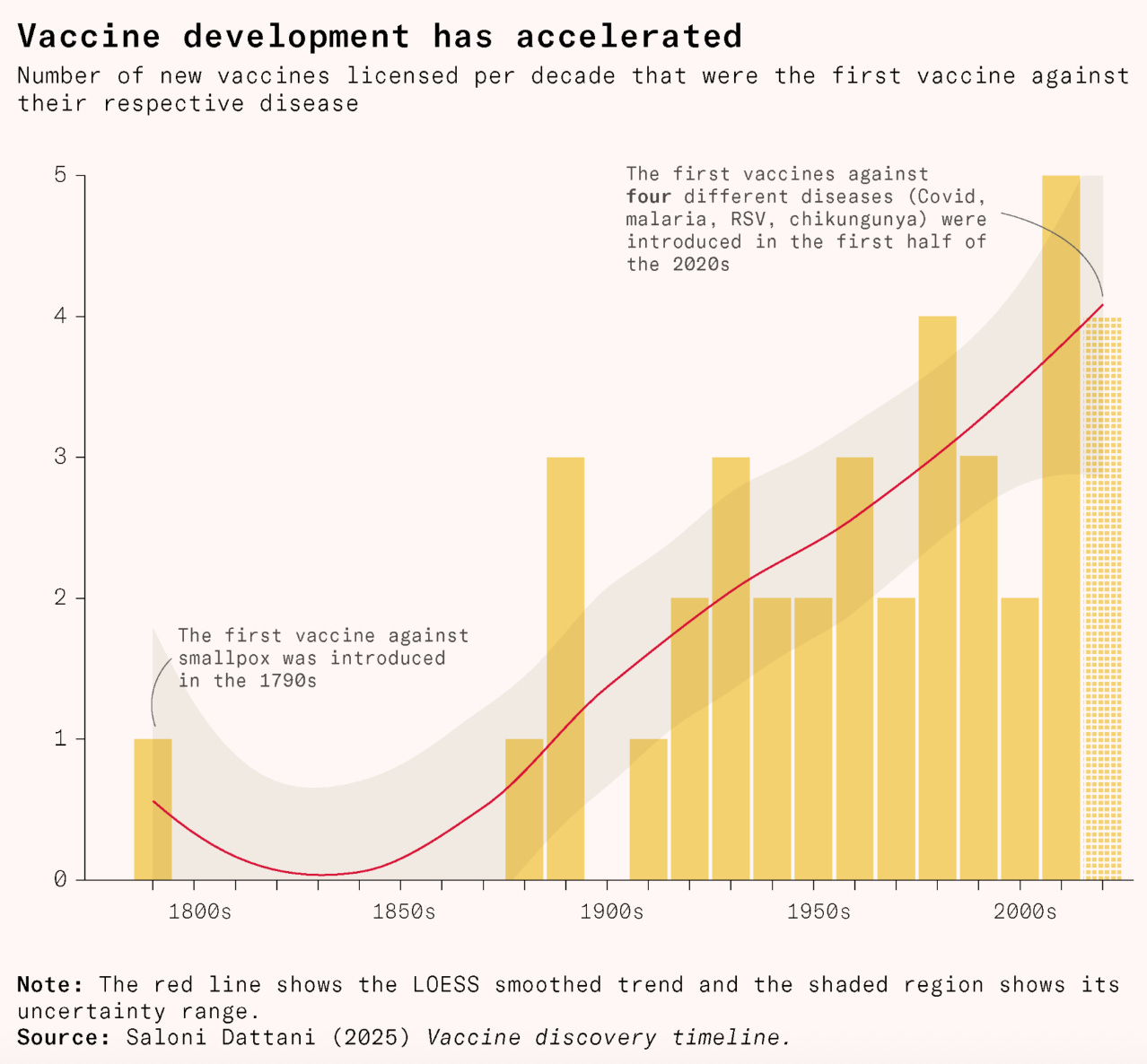
Global vaccine development has moved from serendipity to precision engineering. Saloni Dattani on how advances in microscopy, cell culture, genomics and mRNA platforms are now letting scientists design vaccines atom by atom, with a turnaround of just weeks. After more than a century of slow iteration, the pace has sharply accelerated, with multiple diseases getting their first ever vaccines in the past five years.
In the next few years we can expect:
- A universal flu vaccine.
- Next-generation COVID-19 vaccines with broader, longer-lasting protection.
- Personalised cancer vaccines, starting with melanoma.
- Malaria vaccines with higher efficacy and longer durability.
- Tuberculosis vaccines providing adult protection.
- Second-generation RSV vaccines for more age groups.
- Safe dengue vaccines without the need for prior infection screening.
- Gonorrhoea vaccines reducing antimicrobial resistance pressure.
- Chlamydia vaccines targeting the most common bacterial STI.
Ocean protection rose to 9.6% of global waters in 2025, a 1.2-point increase driven by some very large designations. The biggest moves came from French Polynesia’s planned 4.8 million km² reserve, Samoa’s nine new MPAs covering 30% of its ocean, and new protections in the Philippines, Pakistan and the Marshall Islands. Mongabay News
Happy Public Domain Day! On January 1, 2026, Nancy Drew entered the public domain, as did the papers of Hannah Arendt and Albert Einstein, Langston Hughes’ Not Without Laughter and Dashiell Hammett’s The Maltese Falcon. For more works entering the public domain this year, check out the Public Domain Review.
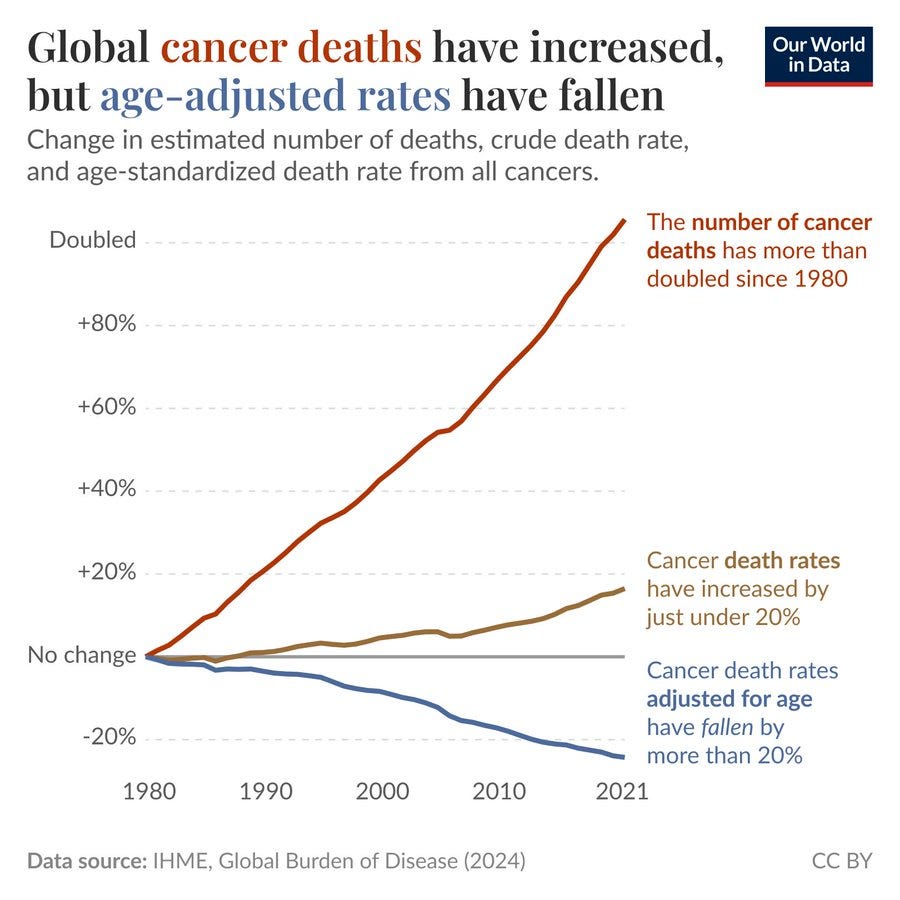
Global cancer deaths have doubled since 1980, but this reflects population growth and ageing, not treatment failure. Once age is accounted for, cancer deaths have fallen by more than 20%. What that means is that for people of the same age, the likelihood of dying from cancer is now significantly lower than four decades ago, reflecting real progress in prevention, detection and care. Our World in Data
Also, in the United States: “Seven in 10 people now survive their cancer for five years or more, up from only half in the mid-70s. This stunning victory is largely the result of decades of cancer research that provided clinicians with the tools to treat the disease more effectively, turning many cancers from a death sentence into a chronic disease.” US Cancer Statistics 2025
Oh, and in Britain, the first leukaemia patient just received CAR-T cell therapy on the NHS. “Usually, this type of leukaemia is aggressive and patients don’t live beyond 6–8 months. With this, we are able to offer them years and potentially a cure.”
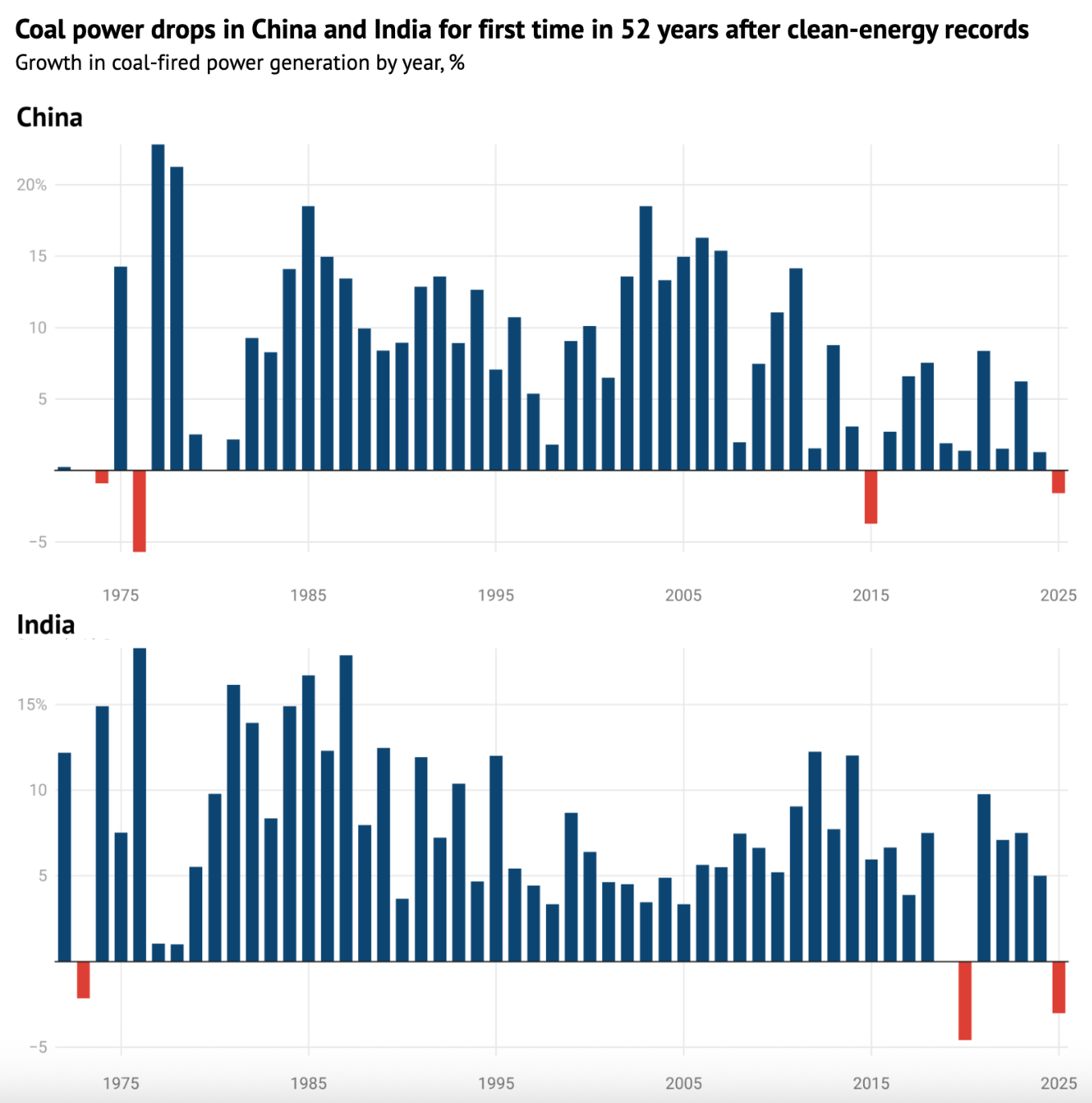
Coal power falls in both India and China. In 2025, coal-fired electricity generation fell simultaneously in India and China for the first time since 1973. India cut coal power 3% and China 1.6% as record solar, wind and storage additions outpaced rising demand. Together, these two countries account for roughly 40% of global annual CO₂ emissions from fossil fuels and industry. Guardian
Given this, it’s perhaps unsurprising that global seaborne coal exports fell 5% in 2025, the first annual decline since 2020, driven mainly by lower imports across Asia. China cut thermal coal imports 12% as clean power surged, while India’s imports fell by 3%, raising the prospect that global coal trade has peaked. Reuters
The United States Congress has moved to overturn President Trump’s proposed 22% cut to federal science spending, rejecting what would have been the steepest reduction since World War II. NASA in particular is breathing a sigh of relief: spared a 75% cut in science funding, projects including the Dragonfly to Titan mission and the Nancy Grace Roman Space Telescope are now safe.
The US Senate has also rejected Trump’s proposed $1 billion cut to National Park Service funding, instead advancing a bipartisan bill that includes provisions to retain and rehire staff, require congressional notice of any mass firings, and protect conservation and maintenance funding. Plus, a US appeals court has upheld an injunction preventing the National Institutes of Health from imposing a flat 15% cap on indirect cost payments to universities.
Chinese scientists have created a hybrid rice that reproduces clonally through its seeds, locking in high-yield traits across generations without annual repurchasing. The advance tackles the main constraint limiting hybrid rice uptake, particularly in low-income regions. With hybrids already delivering up to fourfold yield gains in parts of Africa, clonal varieties could dramatically lift global food output. South China Morning Post

Pakistan and Rwanda have both registered measurable progress against child stunting. Over the last five years Pakistan’s Nashonuma Programme cut stunting among under-twos by 6.4% and among six-month-old babies by an “enormous” 20%. Rwanda lowered national stunting from 33% to 27% between 2020 and 2025, halving the number of high-burden districts and reducing acute malnutrition, showing sustained nutrition policies are delivering gains across very different contexts.
South Korea has ended bear bile farming, formally banning the breeding, possession and bile extraction of bears under strengthened animal welfare laws. The decision follows a 2022 agreement between the government, farmers and animal rights groups, as demand for bear bile collapsed amid cruelty concerns and medical alternatives. Associated Press
London recorded 97 homicides in 2025, pushing the city’s homicide rate to 1.1 per 100,000 - the lowest level since current records began. Metropolitan Police.
The results speak for themselves: fewer lives lost, fewer families shattered. Every murder is a tragedy, but we will continue to use every tool at our disposal to drive down serious violence.
Sir Mark Rowley, Commissioner of Police of the Metropolis
New York City just recorded the lowest number of shootings in its history. There were 688 shooting incidents in 2025, the lowest total ever, while murders dropped 20.2% year-on-year and major crime declined 3% overall. CBS News
Each of those percentage points adds up to dining room tables without an empty seat, lives freed from the dark cloud of grief, children that grow up with a parent at home
Zohran Mamdani, Mayor of New York
US cities where murder rates fell to all-time lows in 2025
San Francisco / Detroit / Baltimore / Chicago / Philadelphia / Oakland / Fresno / Modesto / Newark / Bridgeport / Providence / Richmond.
Meet five new species discovered in 2025: live-birthing toads in Tanzania, a smiley snailfish from the deep sea, a mini-marsupial in the Andes, an undercover spider in California, and, from the fossil record, a long-extinct sea cow that lived in the Persian Gulf and was an ‘ecosystem engineer’ much like today’s manatees and dugongs. NPR
Neither jellyfish nor sea anemones have brains. But these animals sleep in ways strikingly similar to humans.
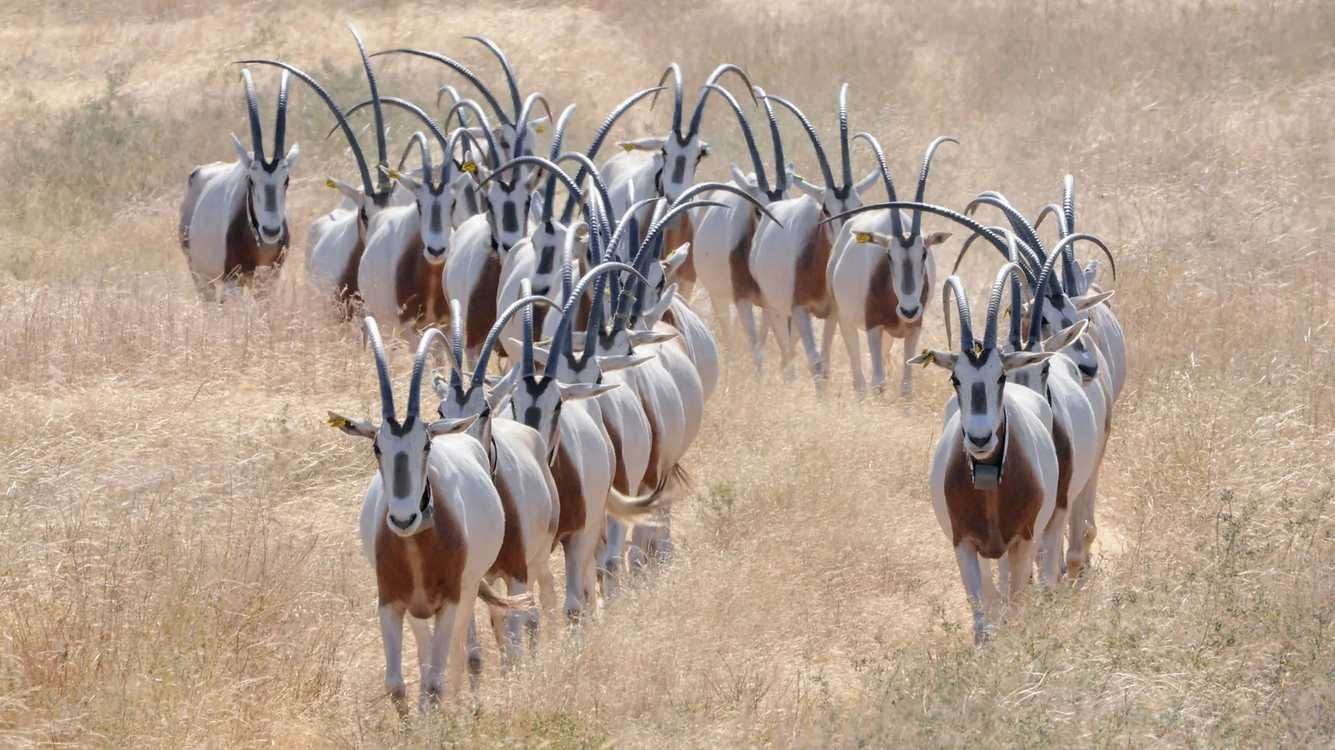
And finally, the scimitar-horned oryx has been brought back from extinction through captive breeding. After wild populations vanished in the 1980s, the antelope has now been re-established in Chad through one of the most complex rewilding efforts ever attempted. Following decades of coordinated breeding in European and U.S. institutions, the turning point came in March 2016, when 25 oryx from a genetically curated “World Herd” were released into the Ouadi Rimé–Ouadi Achim Faunal Reserve, an area larger than Ireland. Since then, 347 animals have been reintroduced and around 600 now roam free, prompting the IUCN in 2023 to downgrade the species from “extinct in the wild” to “endangered.” BBC Future