

322: Shinga. Ray of Hope. Alphafold/Miura-ori fold 🧬 💠. Measles ↓.
We see a lot of advancement in those puppies.

You’re reading Fix The News, a weekly roundup of stories of progress. We give away 30% of subscription fees to charity. Give someone a gift subscription. Get a group subscription for friends, family or your organisation. Listen to our podcast. If you need to unsubscribe, there’s a link at the end.
It’s our last official edition of the year! Over the next two weeks we’ll be publishing some personal essays and a big end-of-year roundup, before turning off our screens for the summer break (yeah we know, Australia). To finish in style we’ve got a bumper edition for you this week, including a new charity partner. This isn’t the last time you’ll hear from us in 2025 but it is our last big regular news roundup. We hope you’ve enjoyed it as much as we’ve loved putting it all together.
This week’s top stories
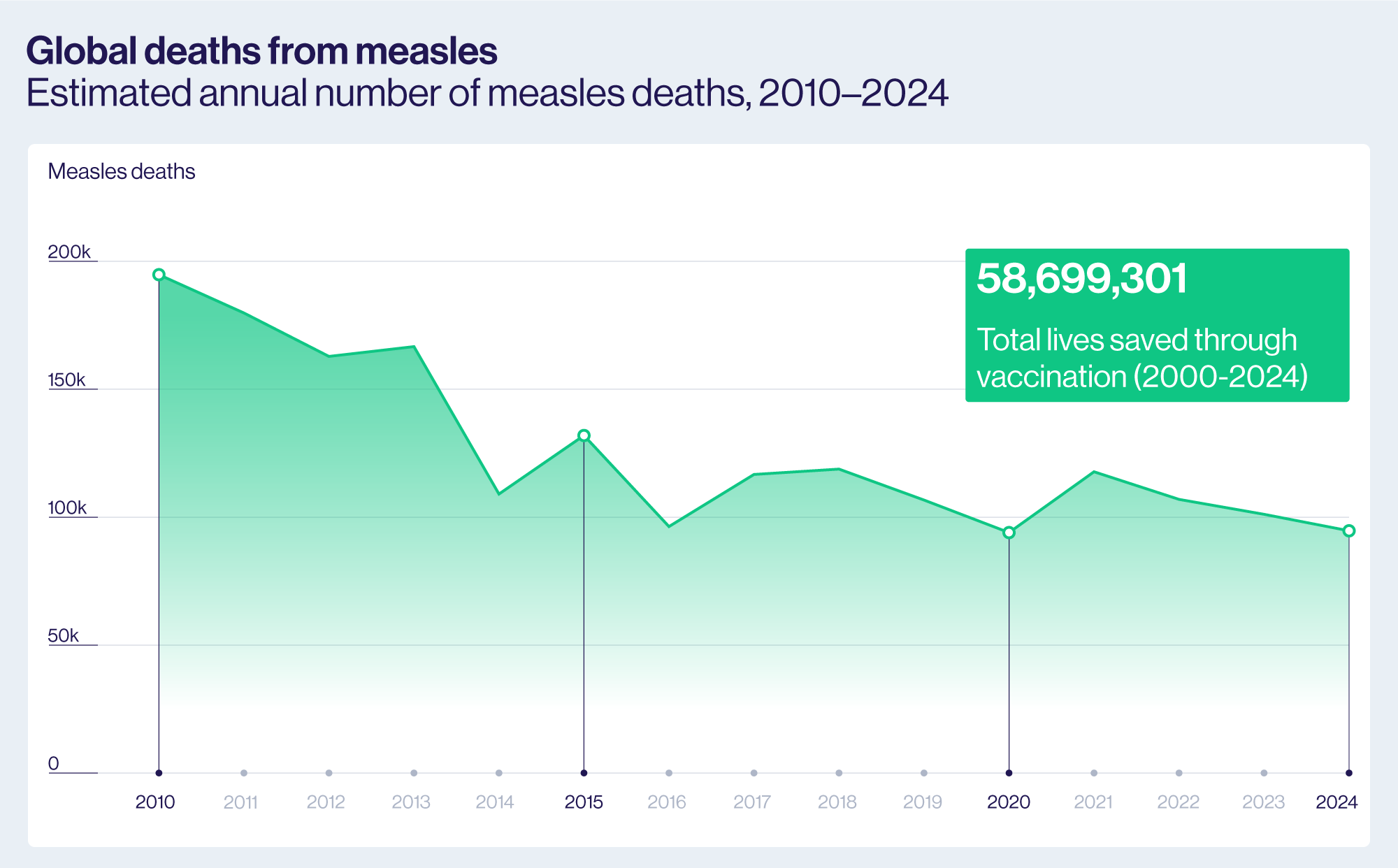
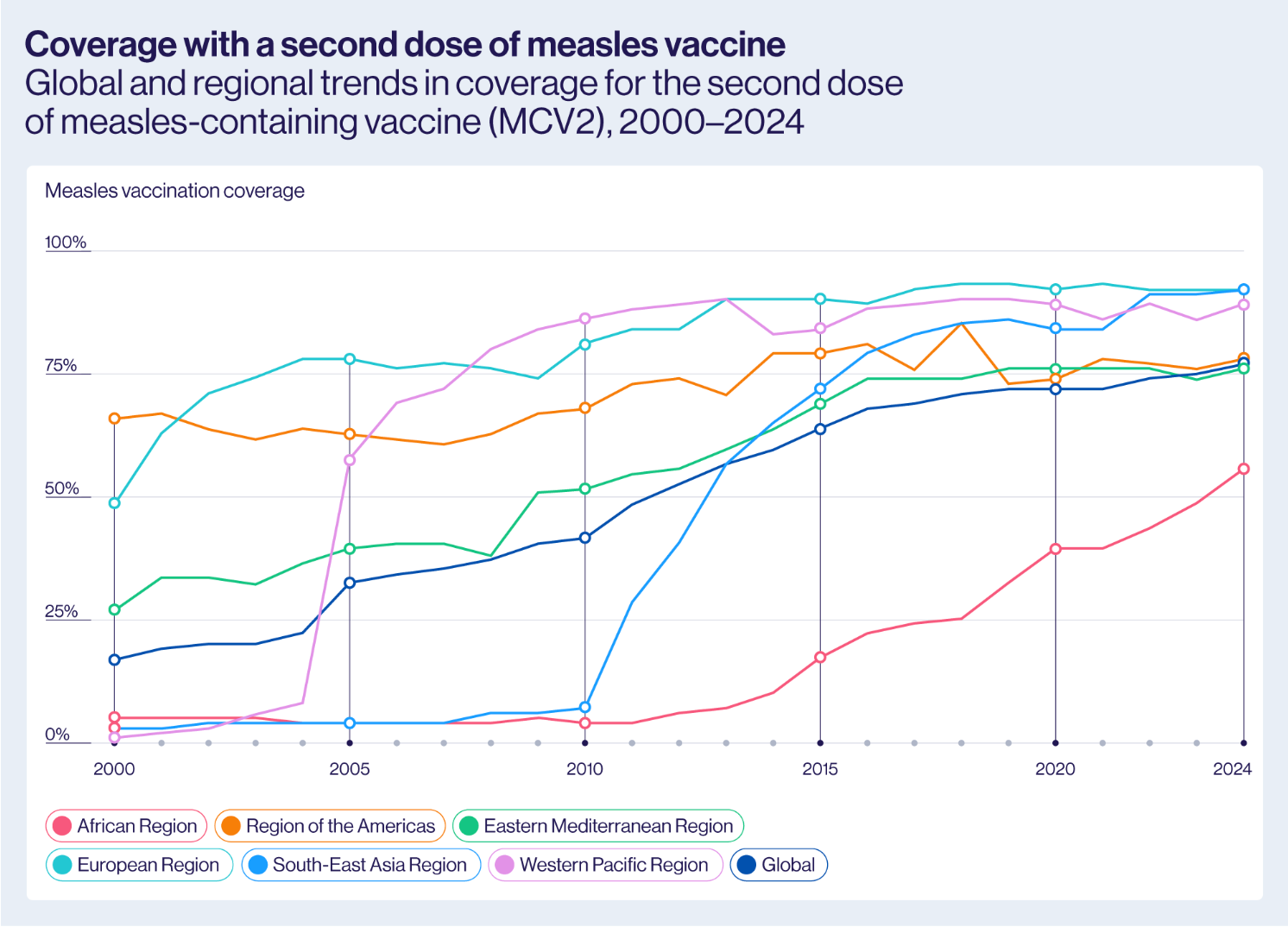
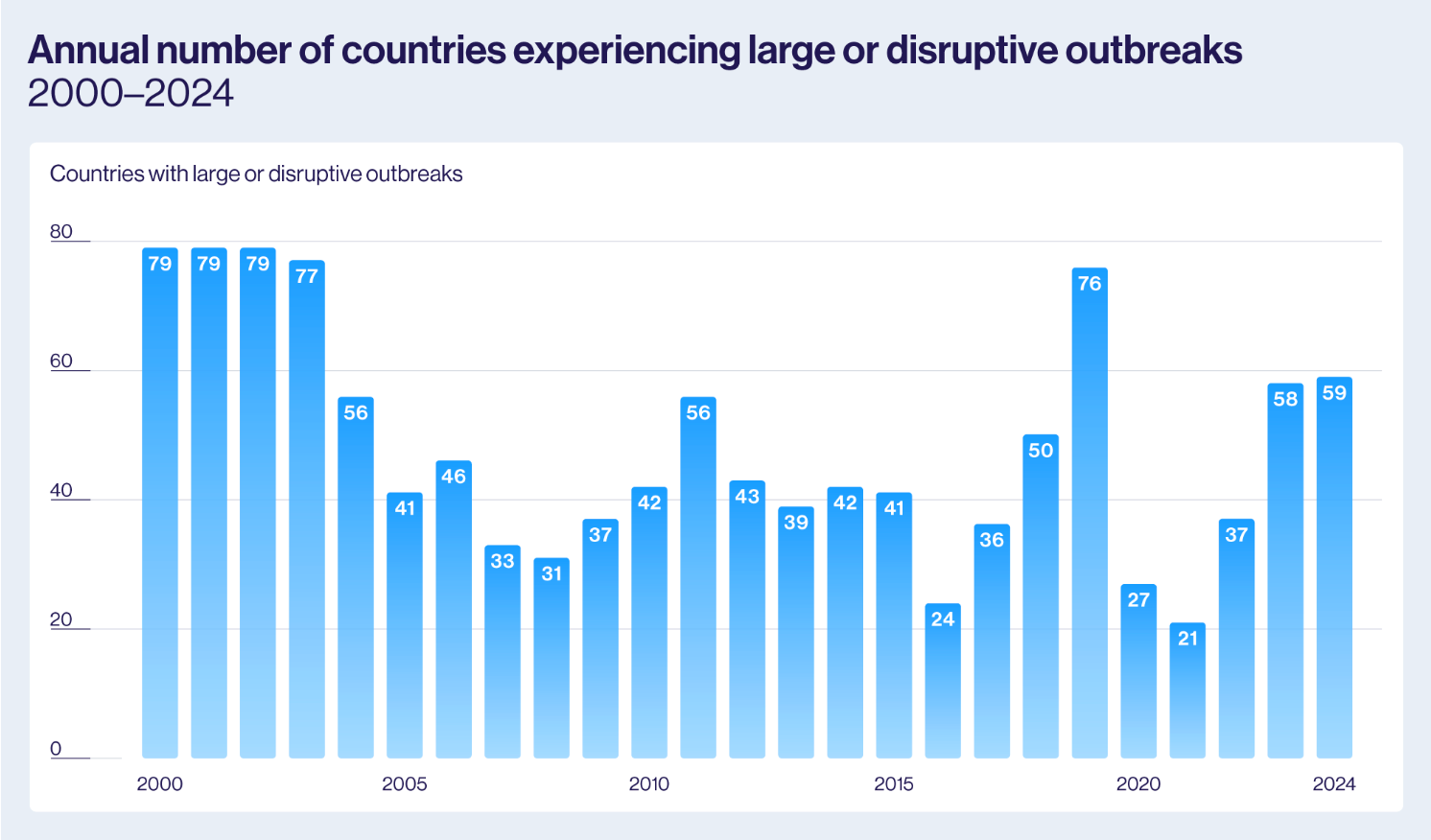
Humanity’s fight against measles in three charts. A new report from the WHO reveals that annual measles deaths fell by 88% between 2000 and 2024, from 777,000 to 95,000 a year. Vaccinations have prevented an estimated 58 million deaths over this period, one of our species’ greatest ever achievements. Routine immunisation, including a second-dose surge from 17% to 76%, has reshaped our collective immunity, particularly in Africa, yet there is still so much work to be done: 20.6 million children missed their first dose last year, driving outbreaks in 59 countries. Gavi
Energy analysts say electricity demand in the United States is about to skyrocket. And they really do mean skyrocket — predicted to grow 25% by 2030, which would be the largest increase in electricity demand in US history. It’s mostly being blamed on generative AI: data centres are already driving up electricity prices around the country.
But… that may not be the full picture. Newly released data from the EIA show that after a scary start to 2025, when electricity use jumped 4.8% and coal generation spiked 23%, the US grid has shifted course: demand growth has slowed to 2.3% in the first nine months of the year, while solar has grown by 36%. That pace has allowed solar to cover more than 80% of new electricity demand, putting the country close to a structural tipping point where solar growth fully absorbs rising consumption and starts squeezing out fossil fuels (including gas). Good, yes?
Well yes, but seriously, what is AI even good for? Is this all just in aid of search summaries and ChatGPT girlfriends? Well, not entirely. Five years of AlphaFold has caused a global shift in how biology is done. Humanity now has a public database of 200 million predicted protein folds used by millions of researchers, faster pathways for drug design, and the tool has been cited in more than 35,000 papers. AI can now predict not just protein structures, but full molecular interactions, accelerating discovery far beyond what labs alone could achieve.
Turkish undergraduate students Alper and Taner Karagöl taught themselves structural biology during the pandemic using online AlphaFold tutorials – with no prior training. They’ve now published 15 research papers.
Surprising everyone (including us), the United States has reaffirmed its commitment to the Global Fund, the world’s largest financier of AIDS, TB, and malaria prevention and treatment programs. To say this comes as a surprise is an understatement - after all this year’s shocking news, this represents a lifeline for millions. The $4.6 billion commitment (the largest from a single donor) enables continuation of pooled medicine purchases and frontline service delivery. Think Global Health
A $6.25 billion gift turbocharges new child investment accounts in America. The US government is creating ‘Trump accounts’ for children born between 2025 and 2028, each seeded with a $1,000 deposit and invested in an index fund that matures at adulthood. Parents and others may contribute up to $5,000 a year until the child turns 18. Michael and Susan Dell will put an extra $250 into the accounts of children who live in zip codes with a median family income of $150,000 or less. The Guardian
DRC and Rwanda endorse US-brokered peace deal despite ongoing fighting. Both governments have agreed to withdraw foreign troops and disarm the FDLR militia group, but analysts say the absence of a functioning ceasefire limits the immediate impact. Trump has framed the agreement as a precursor to major investment in Congo’s mineral sector. BBC
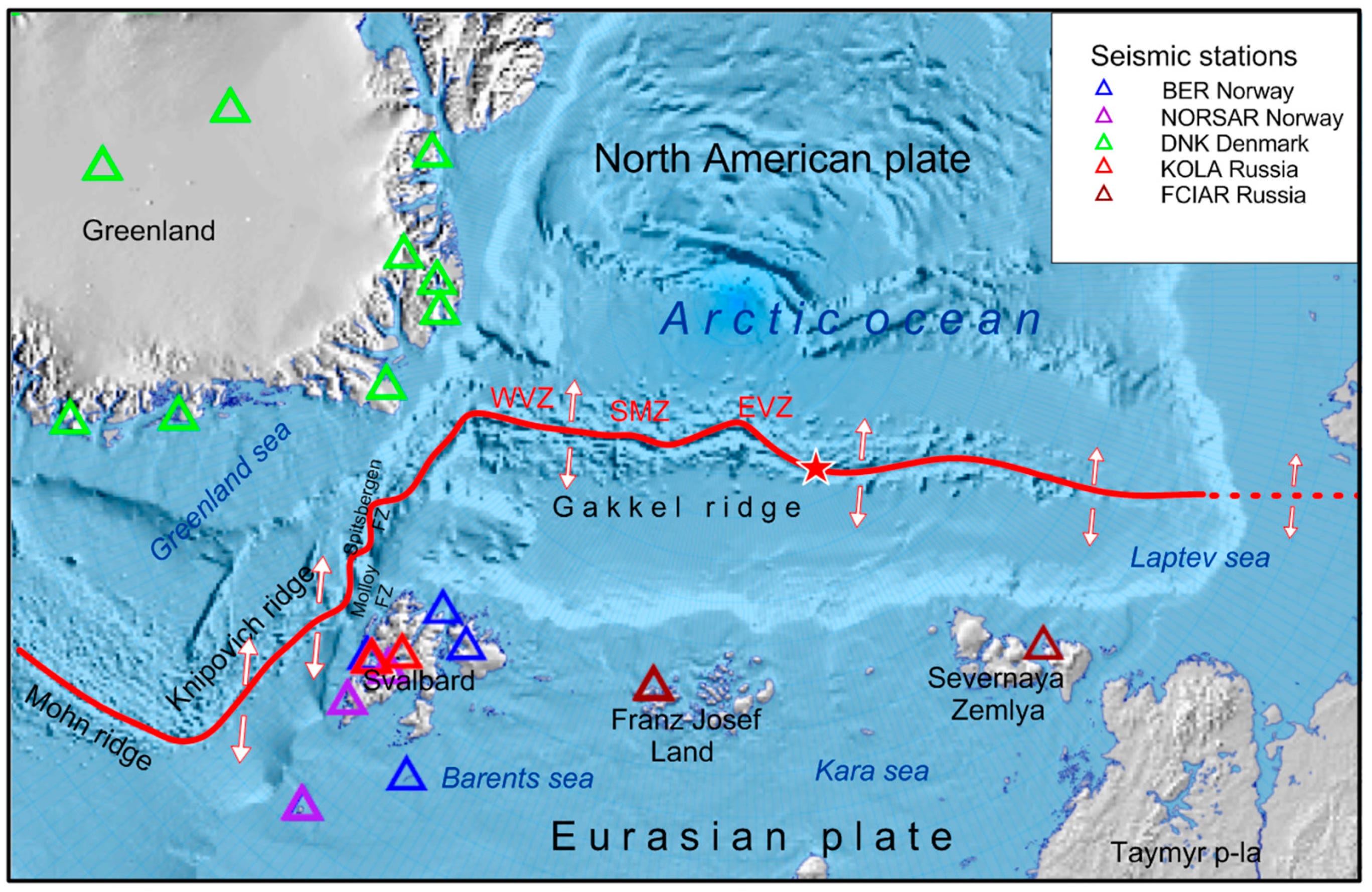
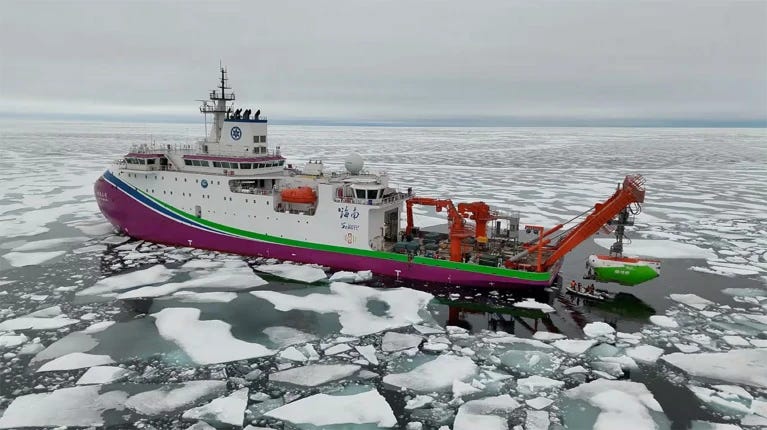
Scientists reach untouched Arctic ridge in 5km deep-sea dives. Chinese researchers have completed the first intensive survey of the eastern Gakkel ridge, carrying out more than 40 crewed dives beneath the Arctic sea ice to map volcanic terrain as deep as 5,277 metres. The expedition retrieved rocks, fluids and fauna from one of Earth’s slowest-spreading plate boundaries, opening a new window on hydrothermal systems that may mirror those on icy ocean worlds. Nature
‘Fortress conservation,’ that evicts people from places that have been their home for generations is (thankfully) falling out of fashion. There’s a reason for that: we now know that biodiversity is highest on land managed or co-managed by Indigenous communities. But does this only work for communities that have lived on the same land for thousands of years? Turns out, no!
A little context.
Centuries ago, a lot of people from Africa were taken as slaves to South America, and a lot of those people fled to the forests (for a fascinating history of this check out National Geographic’s article on Brazilian quilimbos). Today, many of their descendants live on what are now protected lands, and a new study shows that these places have also seen lower levels of deforestation and greater biodiversity conservation than protected areas that are free of people. It appears that humans can live in harmony with nature even if their ancestors haven’t been in the same place for millennia, so… let’s do it?
We might be doing it. In Europe, rewilding is reversing the fortunes of ‘Empty Spain.’ In the sparsely populated Serranía Celtibérica, a decade of rewilding efforts has revived ecosystems, wildlife and rural livelihoods. Semi-wild herbivores and predators are returning to abandoned farmland, local timber and resin businesses are gaining sustainable footing, and young volunteers are helping build a rewilding movement rooted in community and ecological renewal. Rewilding Europe
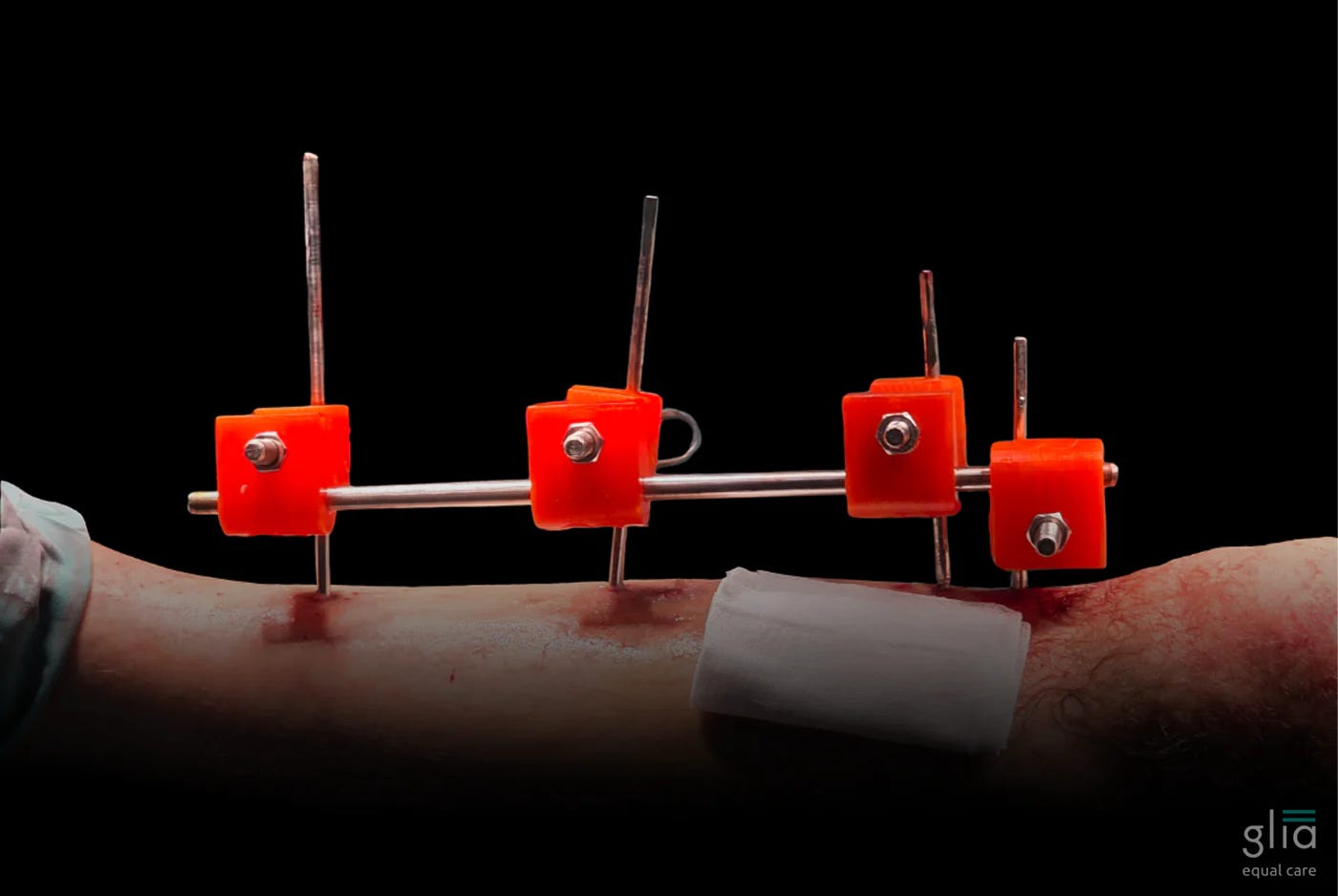
Amazing news from one of our charity partners: Glia has built the first externally fixated fracture device ever designed and manufactured entirely inside the Gaza Strip. Using recycled plastics, 3D printers powered by solar panels, and no imported components, they are producing functioning orthopaedic fixators at a moment when more than 90% of local medical facilities are damaged and conventional devices are unobtainable. Glia
Britain ends new fossil fuel exploration. The government has introduced a legal moratorium on all new oil and gas exploration licences, ending five decades of North Sea expansion and aligning policy with 1.5°C targets. Existing fields will keep producing under stricter climate tests, but future investment will now flow to offshore wind, carbon-free heat and upgrades to the grid. Greenpeace UK
The Indian state of Kerala, home to over 60 million people, says it has eliminated extreme poverty — from over 60% of the population in the 1970s to nearly zero today. You’ve heard us talk about Kerala before! For decades, the state had some of India’s best literary and health indicators, yet some of its lowest incomes. That gap has now been closed. The shift stems from micro-interventions delivering food, housing, medical care, education support and job cards, backed by intensive local monitoring and community implementation. Brookings
Meanwhile, Vietnam’s multidimensional poverty rate has dropped to 1.3%, a sharp fall from 4.4% just three years ago, and Tajikistan has cut national poverty from 56% in 2010 to about 20% today.
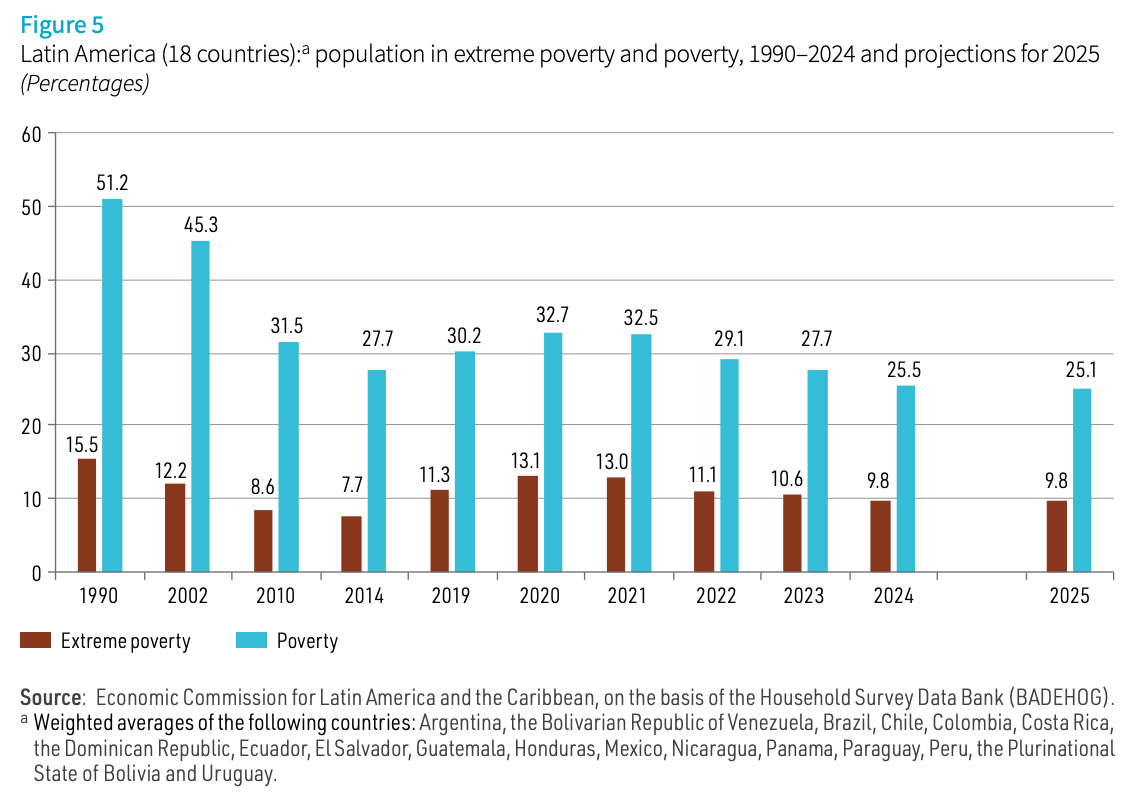
Plus, poverty in Latin America fell to 25.5% of the population in 2024, the lowest level on record. The 2.2% drop from 2023 means there are now 12 million fewer people living in poverty: a decline driven largely by rising wages in Mexico and Brazil. Colombia One
Wildlife rangers in southern Africa have plenty of experience in chasing off poachers — but often lack the tools to actually catch the culprits. Now parks in South Africa and Zimbabwe have started employing police dogs from Wales, with great success. Nonprofit Dogs4Wildlife, which provides the dogs, gives priority to smaller reserves, which have far fewer anti-poaching resources than Africa’s most renowned parks. “Some of the smaller wildlife reserves have almost eradicated poaching completely, just because of the deterrent value.” CNN
Australia’s environmental laws are set for their biggest improvement in decades, after a years-long deadlock between Labour and the Greens. The deal establishes Environment Protection Australia as the country’s first independent environmental regulator and introduces legally enforceable national environmental standards, as well as finally subjecting native forest logging and high-risk clearing to federal scrutiny. BBC
An 18-year-old in Alabama redrew their state’s senate map on free software, and a federal judge adopted it over plans drafted by professional cartographers, fixing a Voting Rights Act violation for nearly 300,000 people.
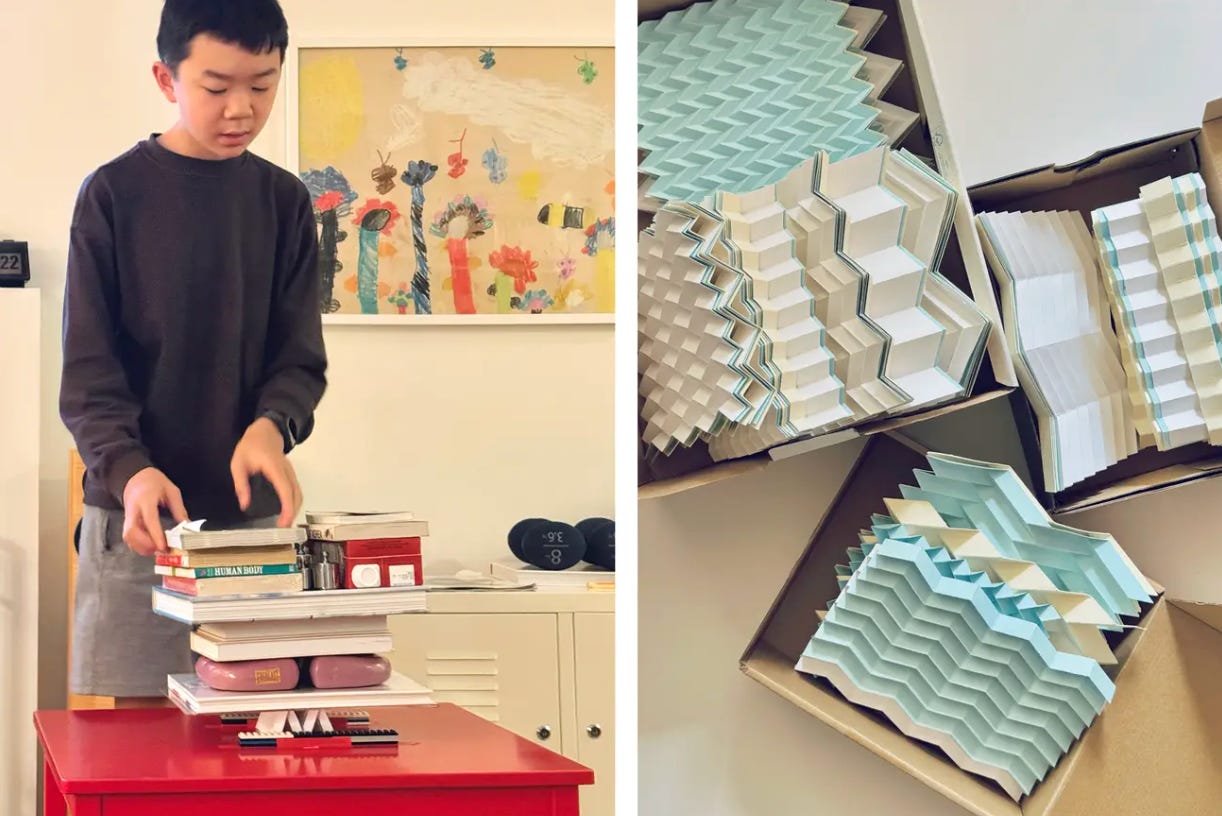
And finally — a 14-year-old boy has folded origami that can hold 10,000 times its weight. Miles Wu used the Miura-ori fold, which is known for collapsing and expanding with precision. He’d like to use his origami experiments to help improve pop-up emergency shelters, which currently are “sometimes strong,” sometimes “easily deployable,” and sometimes “can compact really small,” but rarely all three.
Ray of Hope
We are so pleased to introduce you to our final giving partner for 2025: the Asha Kiran Society, an incredible grassroots organisation in Odisha, one of the poorest states in India. Asha Kiran - which means “Ray of Hope” - began in 1991 when three young medical students rented a mud hut in the small village of Lamtaput with a shared dream to serve tribal communities overlooked by India’s mainstream health system.
Today, the 45-bed hospital delivers an outsized impact, offering affordable healthcare to more than 40,000 patients each year. When we spoke with hospital director, Dr Ravi Ninan George, he explained that because the closest referral hospital is 200 kilometres away, many patients choose to return home and die rather than travel for treatment – which puts increasing pressure on their small facility to offer services beyond their resources.
Cataracts are one of the most common health problems, and for older patients the impact is profound. As Dr George explained, “When you can’t contribute, you’re slowly pushed out. But once their sight returns, they can care for children, tend cattle and rejoin family life - so more people are coming forward for surgery.”
We’re sending them $10,000 USD for ophthalmic instruments for community screenings. Any extra funds will cover a defibrillator, new lights for the operating theatres and lab equipment to help with diagnostics, including malaria screenings. If you’d like to add to the donation, we now offer tax deductible options for readers in both the United States and Australia. 100% of your contribution will get added directly to the money we’re sending to Asha Kiran.
Other ways to help:
If you’re interested in volunteering, reach out to the team here.
They are fundraising to upgrade the existing hospital facility (approximately $1.5 million) by adding a maternity ward, special newborn care unit, and intensive care unit. If you want to get involved contact: ravigeorge@ashakiransociety.org


