320: Aha! Lost Worlds. Mongolia 💚 Colombia. Tuberculosis 🛑✋. Uninterrupted toolmaking.
It’s a nice feeling when your brain suddenly comes up with an answer.

You’re reading Fix The News, the world’s leading solutions journalism newsletter.
This week’s top stories
Scientists have pinpointed how the brain generates ‘aha’ moments. Neuroscientists have identified a clear brain pattern behind the phenomenon of sudden insight, by scanning volunteers as they deciphered hidden images. Moments of recognition triggered a coordinated spike in the ventral occipitotemporal cortex, amygdala and hippocampus, creating a burst of emotion and salience that also strengthened long-term memory (did someone just say Eureka!?). Quanta
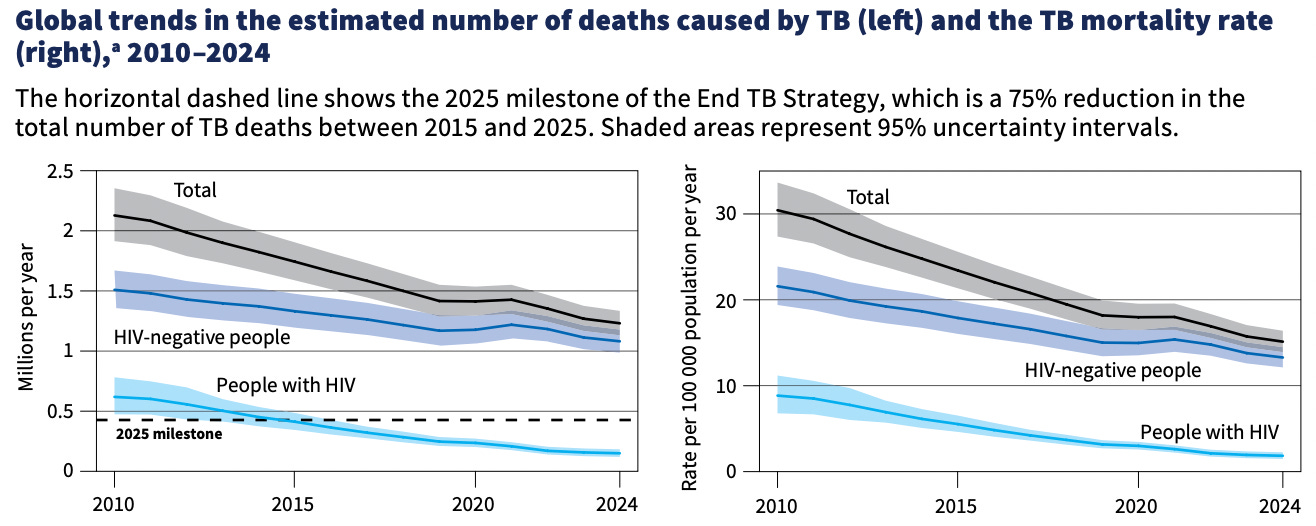
Deaths from the world’s deadliest infectious disease down by 29% since 2015. The latest WHO report shows TB mortality fell to 1.23 million in 2024, the lowest number ever recorded, and a 29% drop since 2015, with the African and European regions achieving reductions of 46% and 49% respectively. Over 100 countries have cut mortality by at least 20% since 2015, marking a quiet shift back to long-term progress after the setbacks of the pandemic. WHO
Diplomacy edges Congo and Sudan conflicts toward de-escalation. The world hasn’t been paying attention to the civil war in Sudan or the 30-year (!) conflict between the Democratic Republic of the Congo and Rwanda-backed rebels. Suffice to say, these wars are horrifying: the conflict between Sudan’s armed forces and rebel paramilitaries is notoriously brutal while the conflict in the DRC has killed 10 million people, more than the population of Hungary.
BUT there’s maybe, a chink of light? Congo and the Rwanda-backed M23 rebels have just signed a US-and-Qatar-mediated framework that sets the steps for a peace deal, while Sudan’s Rapid Support Forces have accepted a US-Arab proposal for a humanitarian ceasefire and have signalled openness to talks. CNN / Reuters
We know Donald Trump usually appears as a villain in this newsletter, but we’re pretty sure the peace deal he brokered between Rwanda and the DRC in June 2025 paved the way for the current talks between the DRC and M23.
On each side of the Atlantic, scientists are opening new fronts against cancer. In the United Kingdom, scientists are driving advances in prevention and ultra-early detection, from the first trials of cancer-stopping vaccines to blood tests that spot tumours way before scans do. In the United States, the breakthroughs are in precision treatment, with immunotherapies, CAR-T, targeted radiation and engineered viruses offering new hope for once-lethal cancers. The bigger picture is a convergence, as prevention, early detection and precision therapy meet in the middle, transforming cancer from a death sentence to a treatable condition. The Times / WSJ
Their optimism is palpable. In an increasingly polarised, fractious world, they bring hope of good news. What’s not curable today could be curable tomorrow, they think. “We are getting very close to defeating cancer once and for all.”
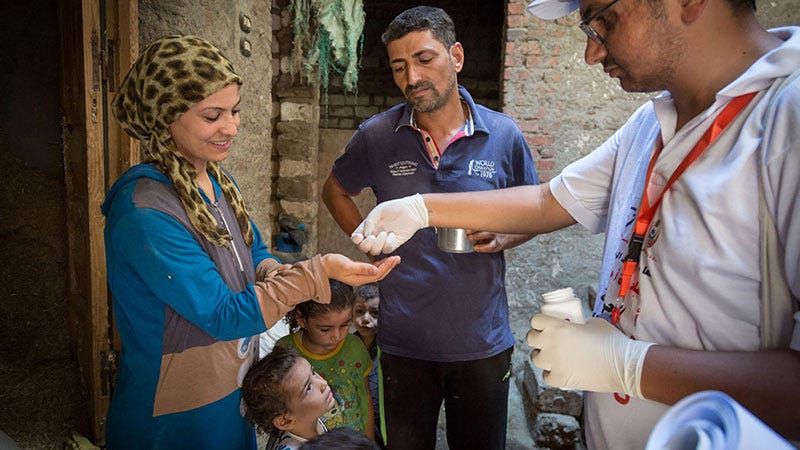
Egypt eliminates trachoma after more than 3,000 years. Egypt has become the seventh country in the Eastern Mediterranean region – and the 27th worldwide – to eliminate trachoma (the world’s leading infectious cause of blindness) as a public health problem, following a decade of mapping, surveillance and a nationwide implementation of the WHO’s elimination strategy. WHO
A story about impossible caves, lost worlds and how sometimes, people do the right thing. In 2009, a Vietnamese logger led British explorers to what turned out to be the world’s largest cave. Hang Sơn Đoòng is big enough to fly a Boeing 747 through, taller than the Great Pyramids of Giza, vast enough to have underground weather and its very own rainforest. The ‘discovery’ kicked off a frenzy: cue suggestions like “let’s build a 10-kilometre cable car into the depths to allow for mass tourism.” But environmental activists managed to convince local authorities to keep their heads, and now the area around Hang Sơn Đoòng is a conservation success story that’s protected not only the cave, but the Annamite region around it.
Why is this a big deal? Let’s talk about the Annamite.
In an era when Western scientists get excited about finding a new tubeworm, this place is home to at least 25 species found nowhere else in the world, including charismatic megafauna like the ‘recently discovered’ saola, an antelope-like bovine with straight sharp horns and a black-and-white patterned head so rare it’s known as the ‘Asian Unicorn.’
The area, variously called the ‘Amazon of Asia,’ the ‘Lost World’ and the ‘Noah’s Ark of Wildlife’ (the latter because it’s also provided refuge to many thought-to-be lost species, like the Roosevelt’s muntjac, a deer declared extinct in 1929) was an absolute goldmine for poachers; little-watched and less explored, its plants and animals were hunted for meat, medicine and, yes, to satisfy tourists who wanted to see new species. The fear, expressed in the 2013 book “Gold Rush In The Jungle,” was that the Annamite mountains would soon fall prey to empty forest syndrome.
Now the success of sustainable tourism in and around Hang Sơn Đoòng — including the re-training hundreds of local poachers as guides and porters — has led UNESCO to create a new transboundary World Heritage Site with Laos, extending protection across the Annamite range.
Oh, and Ho Khanh, the illegal logger who discovered the cave? He’s one of the tour guides.

Site in Kenya reveals 300,000 years of uninterrupted toolmaking. Archaeologists uncovered nearly 1,300 stone tools spanning 2.44 to 2.75 million years, showing that early hominins taught and replicated the same techniques across roughly 10,000 generations. During this time period, the surrounding landscape shifted from lush, humid forests to arid desert shrubland and back again - and the hominins survived in part because of their toolmaking traditions. 404 Media
Colombia has declared its entire Amazon biome, 42% of its territory, a reserve for ‘renewable natural resources’ and will block 43 pending oil blocks and 286 mining requests, halting all new large-scale extraction. Let that sink in for a moment. Colombia just protected all its rainforests, almost half its territory. Acting environment minister Irene Vélez used COP30 to urge neighbours to follow suit, framing the move as one of climate safety. Mongabay
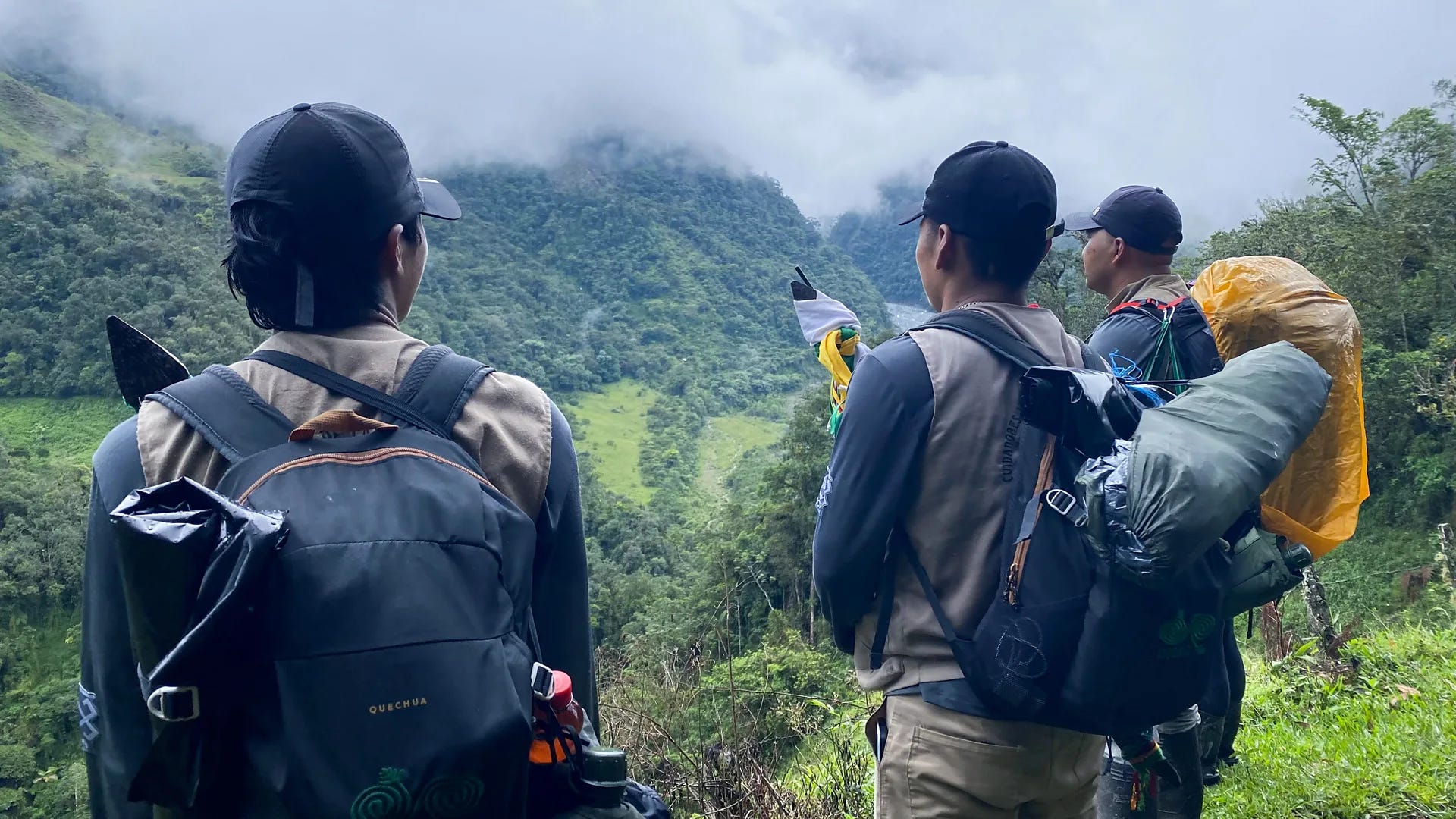
… but who’s protecting those rainforests? While in theory it’s the government’s job, in practice, unarmed indigenous patrols have become the most effective forces protecting the Colombian Amazon. More than 50,000 guards now operate year-round where state forces cannot, and their unarmed, community-rooted patrols deter illegal extraction and safeguard isolated tribes. It’s not just Colombia that’s doing this: indigenous guards are coordinating across borders and training their counterparts in Peru and Ecuador. BBC
For over a century, Africa’s ‘meningitis belt’ stretching from Senegal to Ethiopia, has suffered deadly outbreaks every few years. Now, a breakthrough 13 years in the making could stop those outbreaks for good. Developed by the Serum Institute of India, the Men5CV vaccine protects against five major bacterial strains for just $3 a dose. It’s already rolling out in Niger and Nigeria, while Mali, Ghana, Burkina Faso, Chad and Togo all have plans to introduce it in the coming months. Telegraph
World’s seventh-largest coal fleet slated for phase-out. South Korea has joined the Powering Past Coal Alliance at COP30, pledging to stop building new coal plants and to retire 40 of its 61 existing units by 2040, with plans for the rest due next year. The move marks a major shift for one of the world’s largest coal users. Korea Times
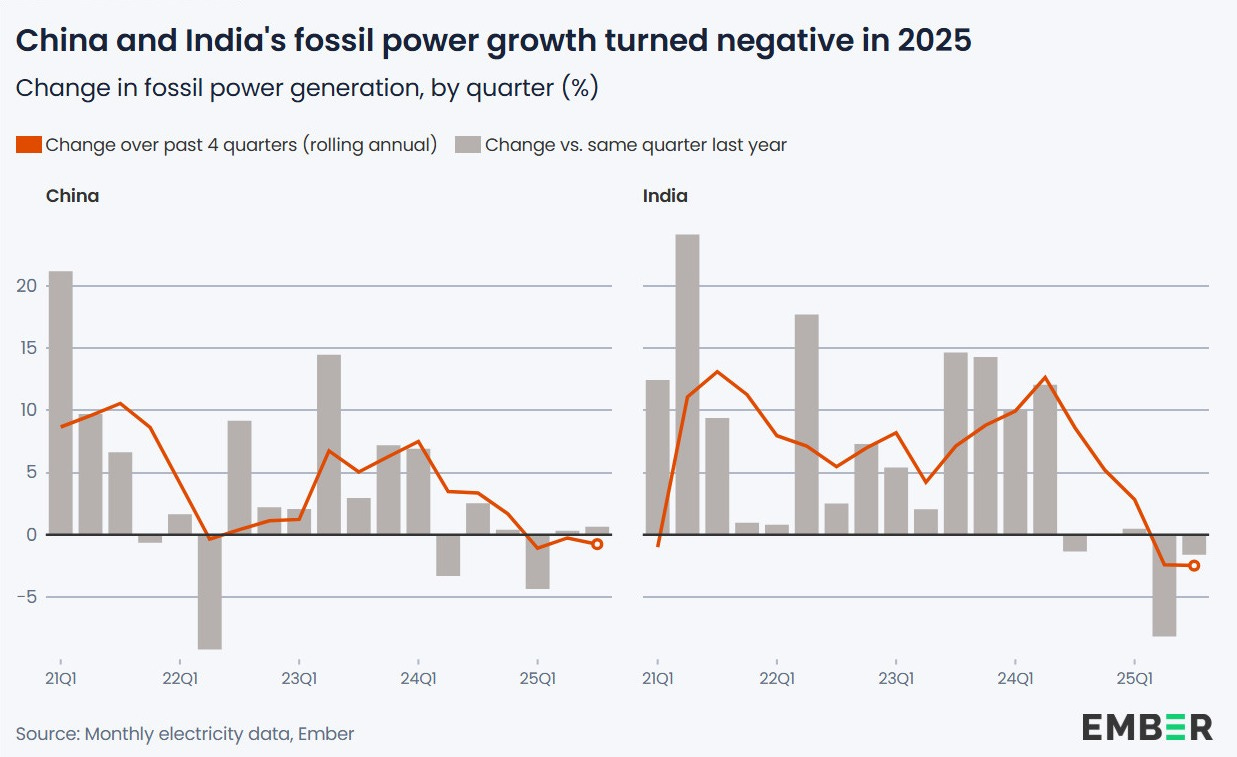
Clean power growth is now covering all new global demand; and fossil fuels are falling in China and India. Solar and wind generated 635 TWh in the first nine months of this year, exceeding the 603 TWh rise in global electricity demand, and holding fossil generation flat for the year. China’s fossil generation fell 0.7% in the last 12 months compared to the previous period. India’s fossil generation declined by 2.5%. Why? Sunshine, wind, water and batteries. Ember
The number of people worldwide without official proof of identity has dropped to 800 million, down from over 1 billion in 2017. Access to digital IDs has improved too, with 400 million more people now covered than in 2021. Legal identity and digital identity determine who gets to participate in a modern economy and who gets shut out, so closing these gaps is one of the fastest ways to expand opportunity and reduce exclusion. World Bank
In Canada, the legalisation of recreational cannabis in 2018 has delivered one of the world’s clearest examples of how policy reform can cut crime. Police-reported drug offences are one third lower than in 2019, and cannabis-related arrests have collapsed by nearly 90% since 2014. What was once the driver of two-thirds of all drug crime now represents just 17%. Stratcann
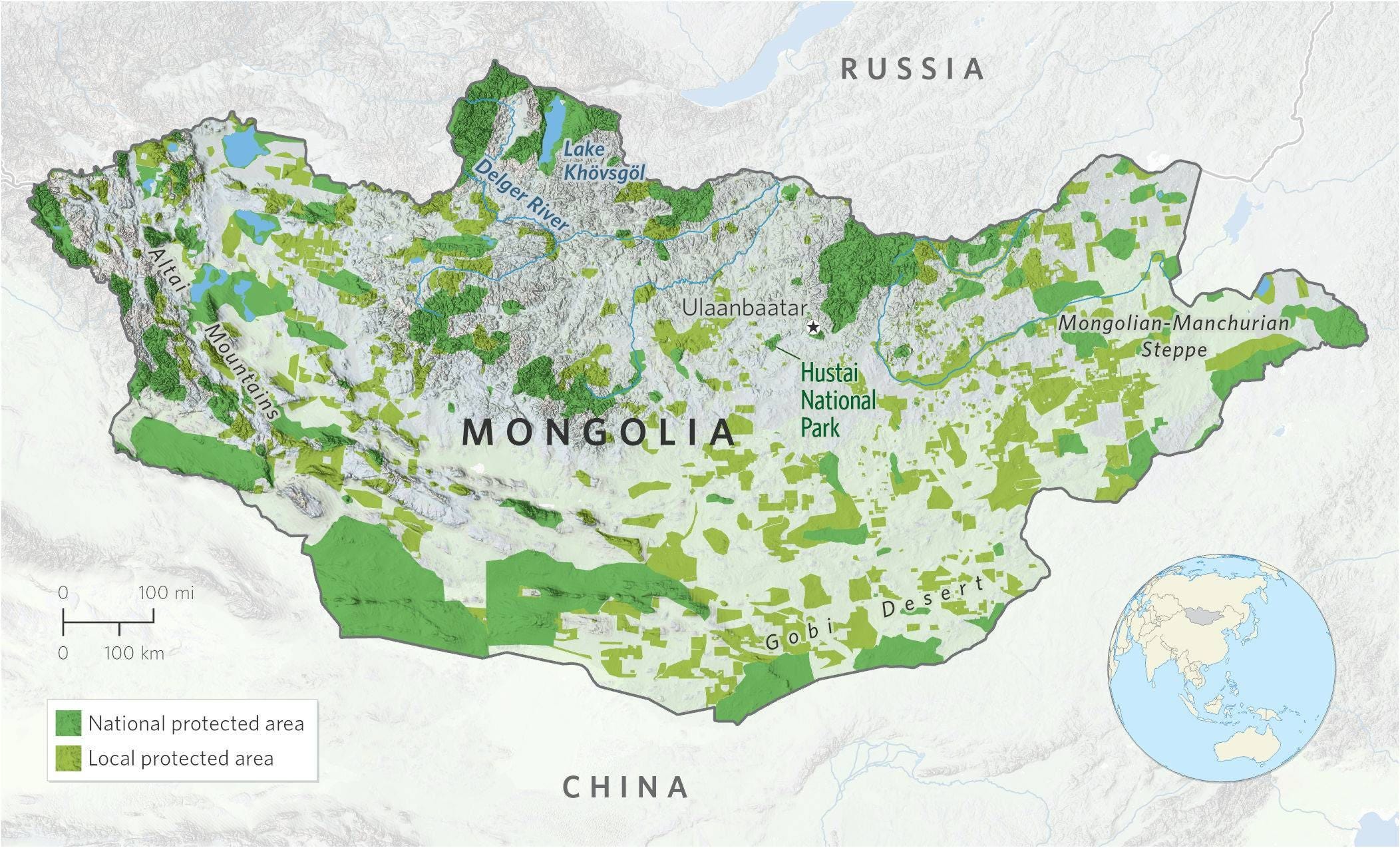
Mongolia launches one of the world’s most ambitious land protection plans.
Mongolia has approved a 15-year, $200 million conservation deal that will expand protected areas to 30% of the country, adding 141,600 km² and improving management across existing reserves. The plan also supports sustainable grazing across a further 339,000 km², working with 200,000 herding families to reverse overgrazing and protect carbon-rich grasslands and peatlands. Backed by a new fund, the initiative marks a national pivot toward climate resilience and landscape restoration. Nature Conservancy
The Misery Machine
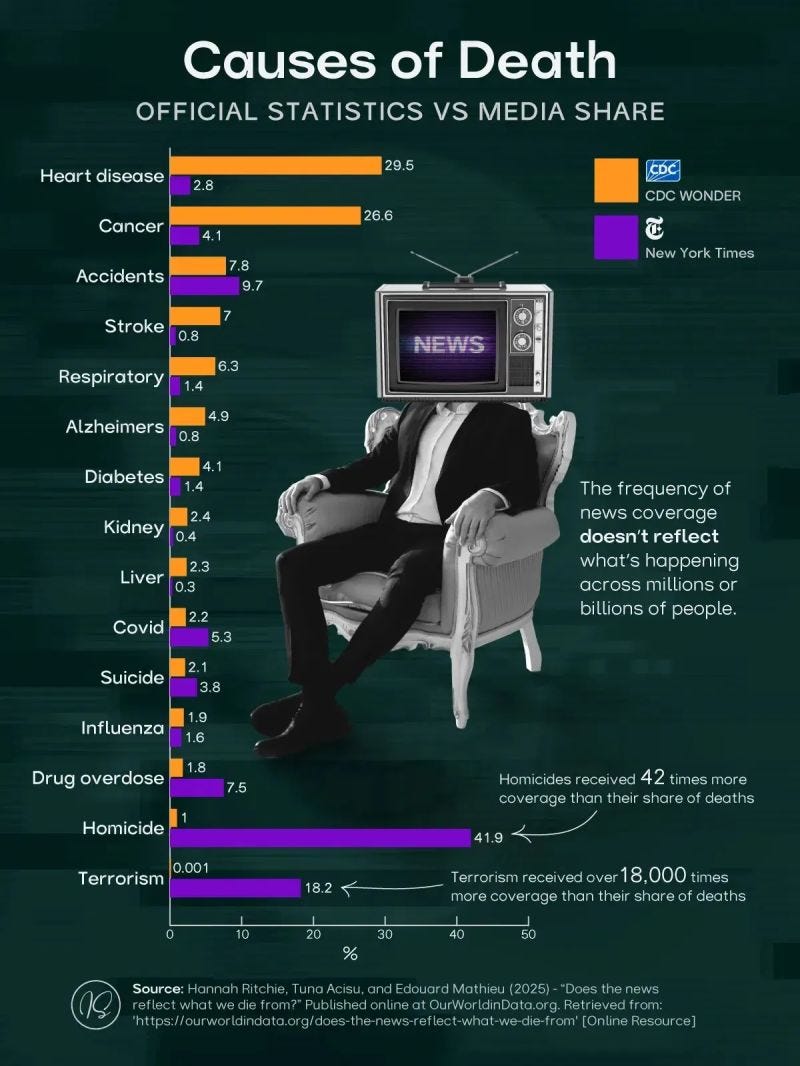
If you feel like the world is getting more dangerous, more violent and more chaotic, that’s not an accident. News organisations have engineered that feeling, and the distortion is worse than you think.
A new analysis from the team at Our World in Data tracked every article published by the New York Times, Washington Post and Fox News in 2023, and compared their coverage to what Americans actually die from. What they found is obscene.
Heart disease and cancer together accounted for 56% of deaths in America. They received 7% of media coverage. Terrorism killed 16 people in the US that year. Sixteen. It got more attention than heart disease, cancer, stroke, Alzheimer’s, diabetes, kidney disease, and liver disease combined. In fact, terrorism received 18,000 times more coverage than its share of deaths, while homicides were overrepresented by a factor of 43.
The reason is obvious once you’re aware of it. Heart disease kills 2,000 Americans every single day, which means it isn’t news, because it isn’t new. Tomorrow’s headline is always identical to today’s. People who die from chronic conditions become numbers in reports that nobody reads. People who die in rare, violent events become stories, with faces and names, and we click on those stories, which tells news organisations to publish more of them.
Of course, this has been going on for a long time. William Randolph Hearst coined the phrase “if it bleeds, it leads” back in the 1890s, during the days of yellow journalism. What’s different now is that we all get our news on the black devil glass, all the time, as it happens, from everywhere - which is why we are drowning in an endless stream of alarm that makes the world feel far more dangerous than it actually is.
We’ve said this a hundred times before, but it’s always worth repeating: the world’s biggest news organisations aren’t reflecting the world. They are reflecting what’s dramatic, rare, and cheap enough to turn into a story. If you’re after an accurate picture of what’s getting worse, or what’s improving, you’ll need to look somewhere other than the news.