

319: Electrostate. Good Samaritan. Overfishing, over. X59. The rapture of the nerds.
It produces high-value elements AND restores contaminated soils.



This week’s top stories
Stuff goes bad. The world goes mad. But sometimes we can fix things, even when the pressure is on to keep making mistakes.
Take a look at the United States, where elk have been reintroduced to the Sierra Nevada after 17,000 acres of ancestral land were returned to the Tule River Indian Tribe. Salmon have returned to the headwaters of the Klamath after last year’s dam removal, for the first time in more than a century. The Hopi are re-popularising dry farming. The Blackfeet and other nations are re-introducing bison to parts of their native range.
And, even as the Trump administration halts food assistance payments, multiple tribes are turning to sovereign food systems they’ve been building up over decades. “It doesn’t always take a crisis to realise that having a food source and being able to feed your own people is a great idea.”
The Santa Cruz River, once bone-dry, now flows again through Tucson after treated wastewater was redirected into its channel, reviving wetlands and native life. We can thank reconciliation ecology for this - the practice of environmental restoration in human-dominated landscapes. Endangered Gila topminnow are breeding, cottonwoods have returned, and 40 native species have reappeared (so have people, cleaning up trash, clearing invasive plants, or just watching wildlife). “We don’t have to do everything. The river knows. We just have to be down there together.”
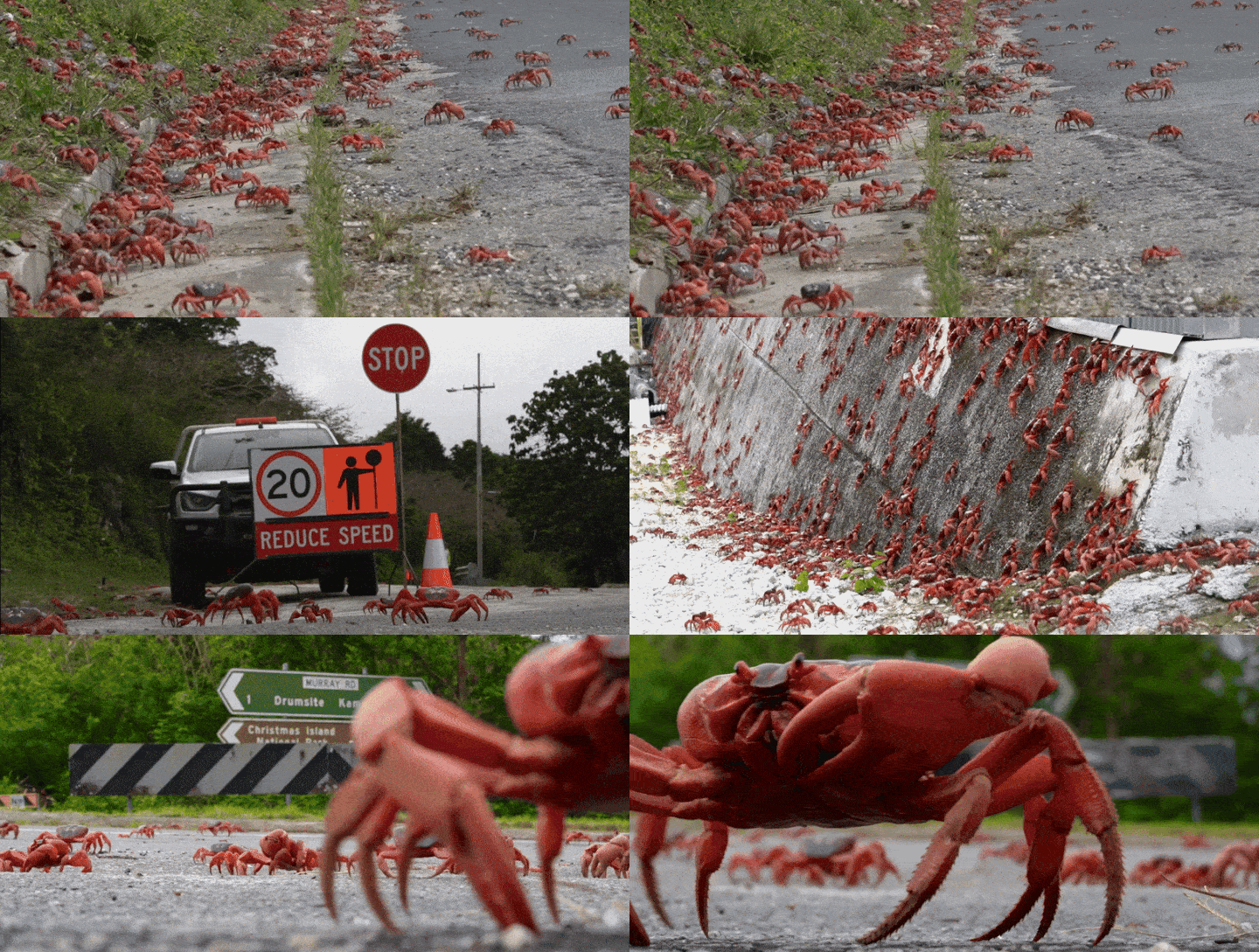
Here’s another example. Christmas Island in the Atlantic Ocean is famous for its annual march of tens of millions of red crabs from the rainforest to the sea. The astonishing phenomenon is a favourite of nature documentaries, but starting in the 1990s, crab numbers started declining thanks to the invasive Yellow Crazy Ant (no, really that’s its name.) But, a 2016 introduction of Malaysian micro-wasps cut ant numbers by suppressing their food source, and now crab populations have climbed from historic lows to around 180 million.
Solving invasive species by introducing other species? Re-directing wastewater to restore a river? The purists don’t like it, but our ecosystems have already been changed forever by the Anthropocene. Sometimes the only way out of disaster is through it, to something new, and strange, and never-before-seen on the other side.
South Africa has become the first African country to register the twice-yearly anti-HIV injection lenacapavir. Approved by the country’s national regulator in record time (65 days) South Africa’s first 460,000 doses will be distributed across 360 clinics in high-incidence districts in early 2026, with plans to expand once generic versions arrive in 2027. Bhekisisa
The world’s deadliest infectious disease, tuberculosis, is now being fought with AI across more than 80 low- and middle-income countries. Trained health workers use mobile x-ray units that send images to an AI program, which instantly analyses them and highlights possible signs of TB in vivid, heat map-like scans, filling a life-saving gap and catching cases that would otherwise go unseen. NPR
Leishmaniasis, a tropical parasitic disease spread by sandflies, is in retreat. Once rampant across South Asia and Africa, annual cases of its deadliest form, visceral leishmaniasis, have fallen by nearly 60% in the past decade. With 98% of treated patients now cured, it’s a milestone that should be front page news. Naturally, we had to trawl through dense epidemiological reports to find it.
(Visceral leishmaniasis is a really horrifying disease where protozoan parasites migrate to the liver, spleen and bone marrow. It’s commonly known as black fever because it turns human skin grey and black like something out of Game of Thrones, is near-100% fatal if left untreated, and opens the body to infections like pneumonia, tuberculosis, and dysentery, kinda like AIDS…and it’s the second-largest parasitic killer in the world, after malaria. Or it was. Oh, and you can read about Upendranath Brahmachari, the unsung Nobel nominee, who discovered the disease’s treatment, here.)

MIT engineers have designed a programmable drug-delivery patch that could help the heart heal after a heart attack, no open-heart surgery required. The flexible hydrogel patch, applied directly to the heart, releases three drugs in sequence over two weeks: one prevents cell death, another spurs blood vessel growth and a third blocks scarring. The approach mimics the body’s own healing timeline, restoring heart function far more effectively than traditional treatments. MIT News
Stairs have long been the nemesis of wheelchair users, turning simple errands into logistical nightmares and limiting access to countless spaces. Like it or not, a lot of our built environment is designed for legs, not wheels, and as disability advocates know that’s fiendishly difficult to change. So if we can’t transform the world at the scale we need, could we transform the wheelchair? At the Japan Mobility Show 2025, Toyota revealed Walk Me, a four-legged autonomous chair designed to transform mobility. Unlike wheelchairs, Walk Me well, walks: its robotic legs can climb stairs, cross gravel and manoeuvre on rough ground. Lidar, collision radars and weight sensors keep riders centred and safe; a day-long battery targets real daily use. Interesting Engineering
COP30 won’t save us, but China might
We’ve been writing about China’s renewable energy revolution here for years, so we know it’s not news to you. But it does feel like something has shifted in the last few weeks; that mainstream outlets seem to have finally woken up to what’s actually happening and more importantly, what it means. It’s not just that China is building lots of solar and wind. It’s that China might actually be the country that saves us from climate catastrophe.
This is a difficult thing for many of us in the West to get our heads around. China has been the world’s collective climate bogeyman for so long, the largest emitter, still pumping out coal, refusing to make the commitments everyone else has agreed to. But, as negotiations kick off in earnest at COP30 in Belém, the story has flipped. China’s emissions are plateauing and more crucially, they’re now supplying the technology for the energy transition to everyone else.
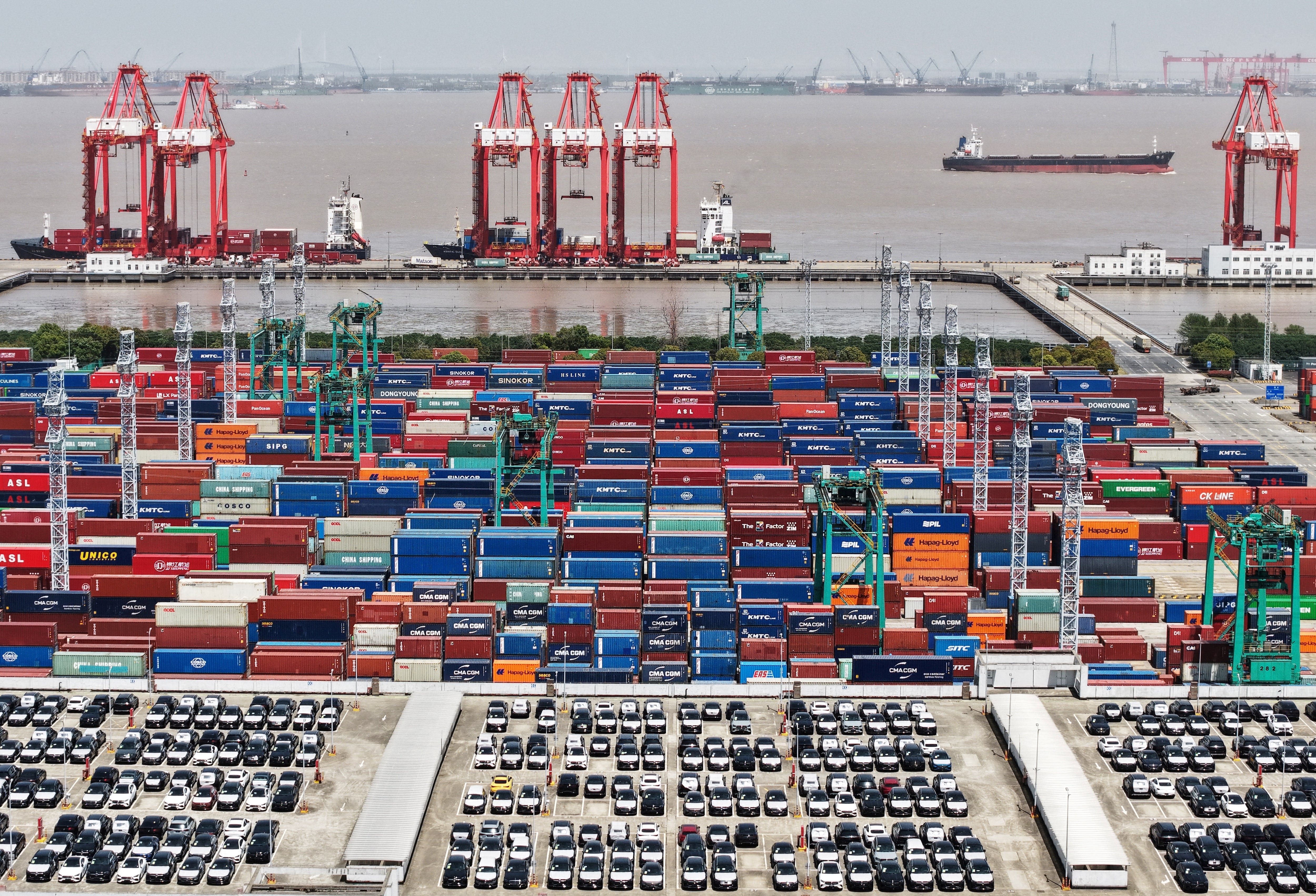
The Economist says China is “a new type of superpower: one which deploys clean electricity on a planetary scale;” already home to a terawatt of installed solar capacity, more than double what the United States and Europe have combined. It makes more money from exporting green technology than America (the world’s biggest petrostate) makes from exporting fossil fuels.
Reuters notes that China now dominates clean energy supply chains and files three times more clean-tech patents than the rest of the world combined. “China is now the main engine of the global clean energy transition.”
The New York Times reports that China’s overseas investments in clean energy have exceeded $225 billion since 2011, more than the Marshall Plan, adjusted for inflation. In Pakistan, a standalone panel costs farmers $125, and they never have to worry about buying diesel again. In Nepal, electric vehicles now make up 76% of new car sales because the Chinese Seres Mini EV sells for $10,000. These aren’t moral decisions. They’re economic ones.
But the journalist who captures it best is Ambrose Evans-Pritchard in The Telegraph. He starts with the grim reality that CO2 emissions hit record levels last year, oceans are the warmest ever recorded, and forests are burning at unprecedented rates. Then he introduces the idea of a “second derivative” - the early signs of an energy shift most people are missing.
Global fossil use in industry peaked in 2014. Sales of petrol and diesel cars peaked in 2017. Transport emissions are finally rolling over. China’s coal use appears to have peaked. Its emissions have fallen by 1% this year.
His conclusion is worth repeating: “We may or may not avert a scorching runaway world of two degrees plus, but whether we succeed will have nothing to do with anything said or agreed to by the 50,000 people descending on Belém. It will be decided by geopolitics, market prices and the tidal force of technological change.”
Try not to worry too much about the climate summits. What matters far more is that China is now playing midwife to a clean energy transition that makes economic sense for the 80% of humanity that lives in countries that import fossil fuels. Those 6.4 billion people have no reason to stay dependent on shipments from petrostates anymore, when they can import solar panels made by the world’s first electrostate.
This doesn’t mean the problem is solved, energy is too big and complicated for that. China and India are still building coal plants. Almost every country is building fossil gas. But the trajectory has changed. And it’s changed not because of international agreements or appeals to the better angels of our nature, but because national self-interest is finally aligning with climate action.
Bolivia grants Indigenous title over 2,700 km² of Amazon forest after 20-year campaign. After two decades of efforts, the Tacana II Indigenous communities of the Madre de Dios River have secured formal collective title to 2,723 km² of ancestral forest - an area around one third of the size of Yellowstone National Park. The new territory links five major protected areas across Bolivia and Peru, strengthening a transboundary wildlife corridor while granting the Tacana people autonomy to manage and conserve their land. Andes Amazon Fund
In a landmark step toward reconciliation, Victoria has become the first Australian state to enshrine a treaty with First Peoples into law. Passed to applause and tears in parliament, the Statewide Treaty Bill establishes Gellung Warl, a democratically elected Aboriginal body that will be formally consulted on laws and policies affecting Indigenous communities. The treaty also cements the work of the Yoorrook Justice Commission, Australia’s first truth-telling body, which investigates the ongoing impacts of colonisation and systemic injustice against Aboriginal Victorians. ABC
And finally (did you know this? We didn’t) overfishing has been almost entirely stopped in the territorial waters of the United States. An unlikely alliance of fishermen and environmentalists has ended competitive fishing and aligned profits with conservation. NOAA reports 50 stocks rebuilt since 2000, with 94% of assessed stocks not subject to overfishing today. USA Today
A new charity partner in Haiti
We don’t just report progress, we try to make it happen. This circular news model is central to everything we do - without it, we’re just another bunch of hacks begging for your attention. That’s why we take 30% of the money we receive from your paid subscriptions and give it to small organisations doing genuinely good things in the world. Think of it like Robin Hood, but for news junkies.
We’re really pleased to introduce you to our latest partner, The Good Samaritan of Haiti. Haiti rarely makes the front page anymore, but the crisis hasn’t eased just because the cameras have moved on. Over the past 16 years these amazing people have provided long-term support to rural communities – building two schools and creating interlinked educational and agricultural programs, with half of all food for school meals now produced at their school farm.
In the wake of Hurricane Melissa, surrounding communities are in urgent need of food relief after severe flooding washed away seedlings and crops. As administrative director Mandy Thody explained to us, “Many of the smaller farmers who are on a poor diet or are existing on no food haven’t got the physical energy to do the work that has to be done so that there’ll be food next season.”
Thanks to you, our subscribers, we’re sending them $12,000 USD to support recovery efforts and increase production from their two cassava factories. Cassava is a starchy root vegetable, locally grown, that’s more nutrient-dense than wheat or potato flour. “Cassava is super useful in overcoming food shortages and crises and because it grows below the ground, it doesn’t get as damaged as other crops,” says Mandy.
Would you like to help?
The team are looking for long-term, larger donors to partner with.
If you have skills in publicity or grant-writing, perhaps you could donate some time?
They are also in need of physical goods like solar panels, laptops for the schools, generators and used sails from yachts.
Contact Mandy Thody: mandy.thody@gmail.com


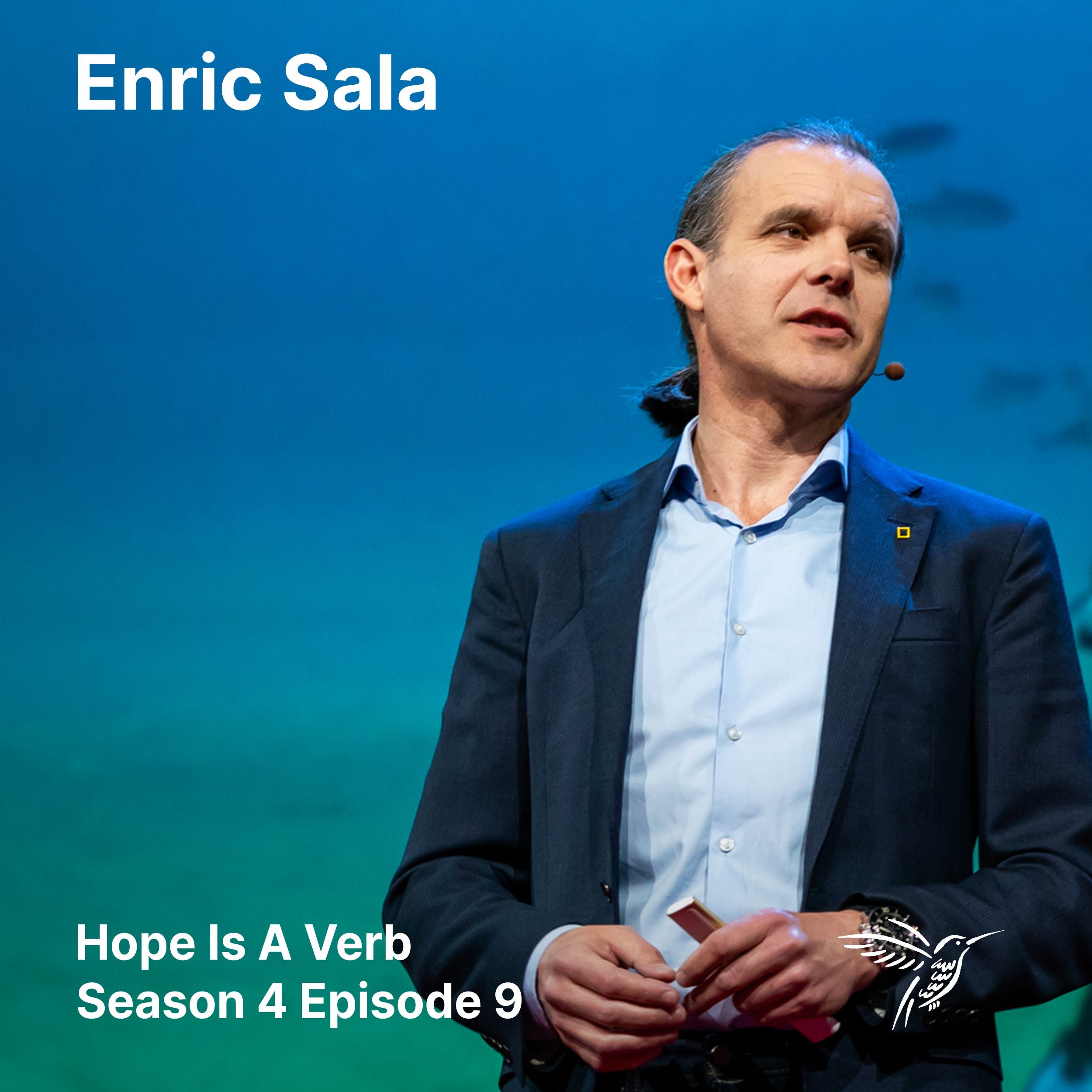
Enric Sala - Ocean Time Machine
In the latest edition of our podcast we speak to Enric Sala, a marine ecologist, National Geographic Explorer-in-Residence and founder of Pristine Seas – an organisation that has helped create 31 marine protected areas, safeguarding nearly 7 million square kilometres of ocean. From his expeditions to untouched atolls, to his film Ocean with David Attenborough, and his ongoing work with governments and coastal communities to drive the 30x30 goal – Enric is someone who genuinely understands the scale of the crisis, yet still has proof that restoration is possible.
Topic discussed: the Ocean Decade’s slow progress; High Seas Treaty benefits and blind spots; why 96% of catch comes from inside coastal waters; the spillover benefits of Marine Protected Areas; a five-year Pacific expedition with a new sub; the Port State Measures Agreement in practice; China’s distant-water fleets and accountability; combining science and storytelling; how protection boosts local incomes; community-driven reserves in Greece and Turkey; exploring ‘pristine ocean’ that no human has gone to; financing and defending parks through politics; succession planning after a cancer scare; educating future stewards across the Pacific; Revive Our Ocean as a tool for communities; focused action as an antidote to despair; and bottom-trawling footage as a visceral wake-up call.
🎙️ Spotify | Apple | Amazon
Human Progress
The UN, WHO, and Gaza’s Health Ministry have launched a life-saving, three-stage immunisation campaign to reach 44,000 children in Gaza who missed their vaccines. The drive will run from November through January, protecting children against measles, polio, pneumonia, and other preventable diseases. More than 450 health workers and 149 doctors will deliver and monitor the rollout. UN News
Two decades after the EU ratified the WHO Framework Convention on Tobacco Control, smoking rates are steadily declining across the continent. Every EU state now monitors tobacco use and carries large pictorial warnings, eight have achieved full smoke-free environments and four have comprehensive bans on advertising and sponsorship. WHO
Plus, new Eurostat data show the EU’s subjective poverty rate - how people perceive their financial situation - has dropped from 25.3% in 2016 to 17.4% in 2024. Every age group has seen improvement. The findings reflect easing inflation and resilient labour markets, suggesting that, at least for now, Europeans are finding it a little easier to make ends meet.
“Children need to grow up in families, not in institutions.” Once home to more than 17,000 institutionalised children, Moldova has nearly phased out orphanages altogether, with only 700 children remaining, and a goal of zero by 2027. Since launching its National Childcare Reform Strategy in 2007, the government has worked with UNICEF and the Lumos Foundation to replace institutional care with community-based support, early childhood centres and foster families. RTBC
Many children were placed in such institutions not because they were orphans, but because their families lacked the means to care for them, or because they had special needs that families struggled to address as the school system could not accommodate them. Single mothers, who were stigmatized at the time, were also pressured to abandon their babies, often giving false names at maternity wards and fleeing after birth.

Youth crime in developed nations has plummeted since the 1990s. The decline began in the United States and spread across Europe, with theft and vandalism plunging most steeply. Researchers say young people today drink less, spend less unsupervised time with peers and are under closer parental watch. Max Planck
India has quietly achieved a remarkable crime turnaround, with its 2023 violent crime rate lower than its 2004 level. Government data shows violent crime fell 29% over the past decade, riots by 40%, murders by 18%, and rape by nearly 20%. Officials have credited this to the creation of a vast digital crime-tracking network, tighter timelines for investigations and expanded protection for women and children.
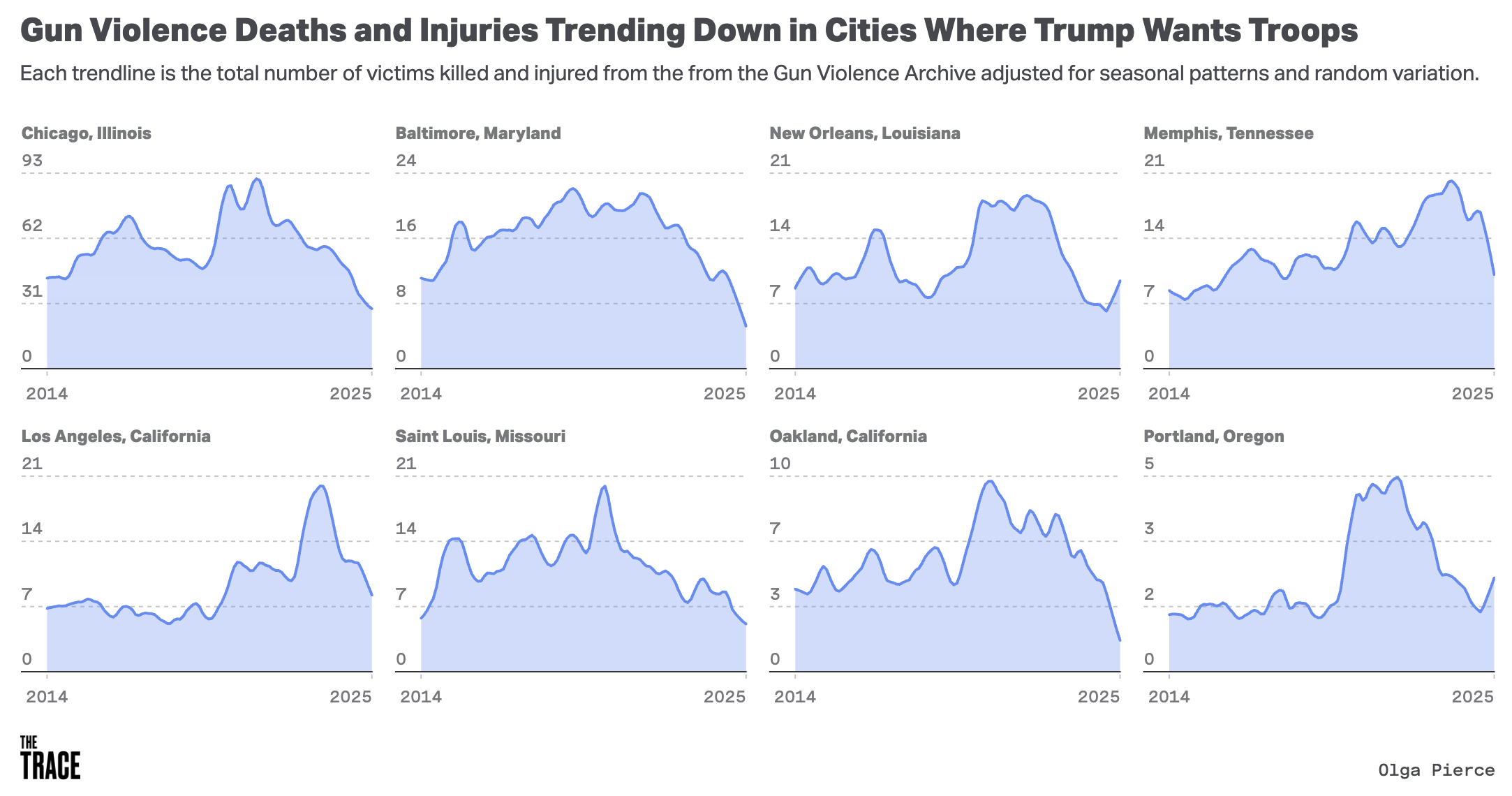
And drumroll please… an analysis of 150 US cities shows that 2025 is seeing one of the greatest drops in gun violence - ever. Gun violence is falling in more than three-quarters of America’s most affected cities, with over half seeing faster declines than last year’s record drop, according to The Trace’s Gun Violence Data Hub. The nationwide pattern spans red and blue states alike, with cities like Detroit and Philadelphia recording their lowest shooting rates in decades.
Environment & Conservation
The world’s biggest fishing nation has ratified the High Seas Treaty. China, responsible for 44% of all global fishing activity, has finally said yes. The pact, which enters into force in January 2026, establishes a framework for creating marine protected areas, sharing genetic resources and curbing illegal fishing across two-thirds of the ocean. More than 60 countries have now ratified the accord. Dialogue Earth
Global law enforcement coalition ramps up crackdown on forest crime. INTERPOL and the United Nations Office on Drugs and Crime have launched a new phase of their global programme to stop illegal logging in tropical forests. The project links police, customs and prosecutors across five countries to track and arrest networks behind timber trafficking and illegal mining. Interpol
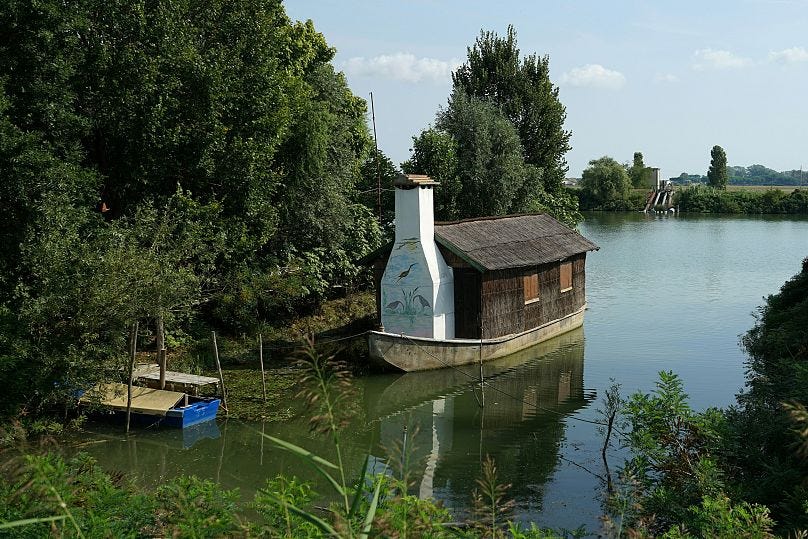
Court blocks offshore gas next to Italy’s Po Delta reserve. Environmental groups have won a legal challenge halting the Teodorico platform off the UNESCO-listed Po Delta, after judges found the state failed to assess impacts on adjacent protected areas. The decision shields wetlands covering around 500 km² already stressed by salinisation and drought, and sets a constraint on new drilling in the northern Adriatic. Euronews
Two of the US’s biggest breeders of laboratory dogs have agreed to shut down rather than be prosecuted for animal cruelty. This comes after activist investigations got the US courts to say that no really, even dogs meant for animal testing have to be kept to the standards set by the Animal Welfare Act. The dogs — mostly beagles — are being re-homed. Vox
Endangered Palau ground doves rebound after rat eradication on Ulong Island. A joint effort by Island Conservation and Palauan authorities has restored Ulong Island’s ecosystem, confirming the removal of invasive rats that devastated native wildlife. One year later, sightings and acoustic data show sharp increases in endangered Palau ground doves and seabirds, with chicks observed for the first time in decades. Island Conservation
Thousands of baby taricaya turtles released in Peru’s Amazon. Earlier this month local and indigenous communities joined Peru’s park service to release more than 6,500 vulnerable taricaya turtles into the Callería River basin. A very cute and moderately informative video about it can be found here.
In the United States, Catholic sisters return Wisconsin land to Ojibwe tribe in a historic first. The Franciscan Sisters of Perpetual Adoration have transferred a lakefront property in northern Wisconsin to the Lac du Flambeau Band of Lake Superior Chippewa for the same $30,000 they paid in 1966. The move, believed to be the first land return by Catholic sisters to a tribe, marks a symbolic act of atonement for the Church’s boarding-school past. 19th News

Energy & Climate
“No fossil fuel growth expected in 2025.”
Ember
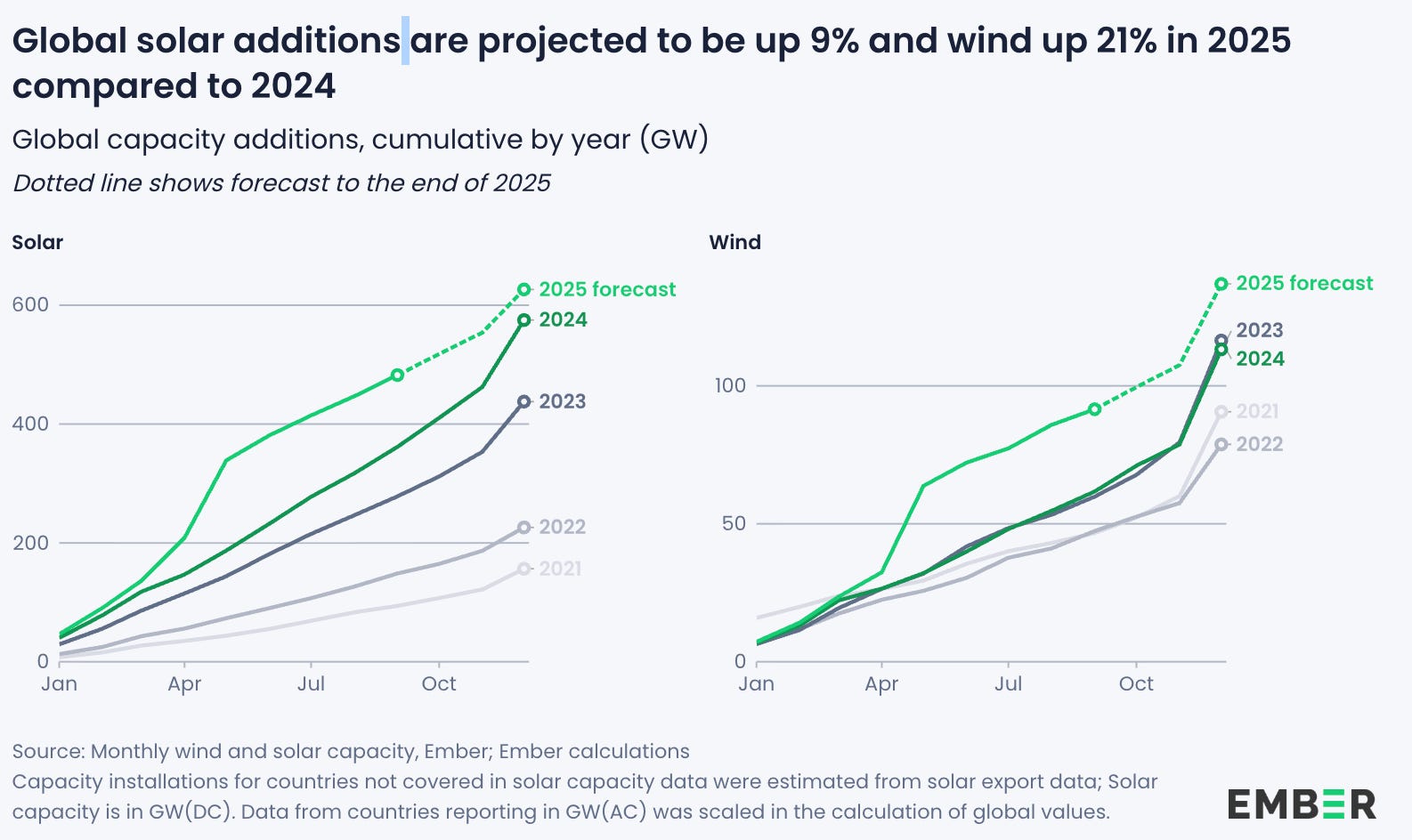
Also from Ember: The COP28 goal of tripling renewables might be in reach.
Two years ago world leaders agreed on a target to triple global installed renewable energy by 2030. This posited a rise in renewable capacity by 21% every year: in 2023, that goal was considered “hard but achievable.” Since then, global renewable capacity has increased by an average of 29% annually, which means additions now only need to rise by 12% per year from 2026 to 2030. Ember
EU member states have backed a binding target to cut greenhouse gas emissions 90% below 1990 levels by 2040, a key step toward climate neutrality by 2050. The deal maintains flexibility for nations via carbon credits and removals, and final talks with Parliament are now revving up. Council of the EU
China’s renewable capacity jumps 48% as clean power nears 60% of total
China added 310 GW of new renewable capacity in the first nine months of 2025, up 47.7% year-on-year and accounting for 84% of all new power installations. Total renewable capacity has reached 2,200 GW (59% of national power) while renewables now generate about 40% of electricity. CNESA
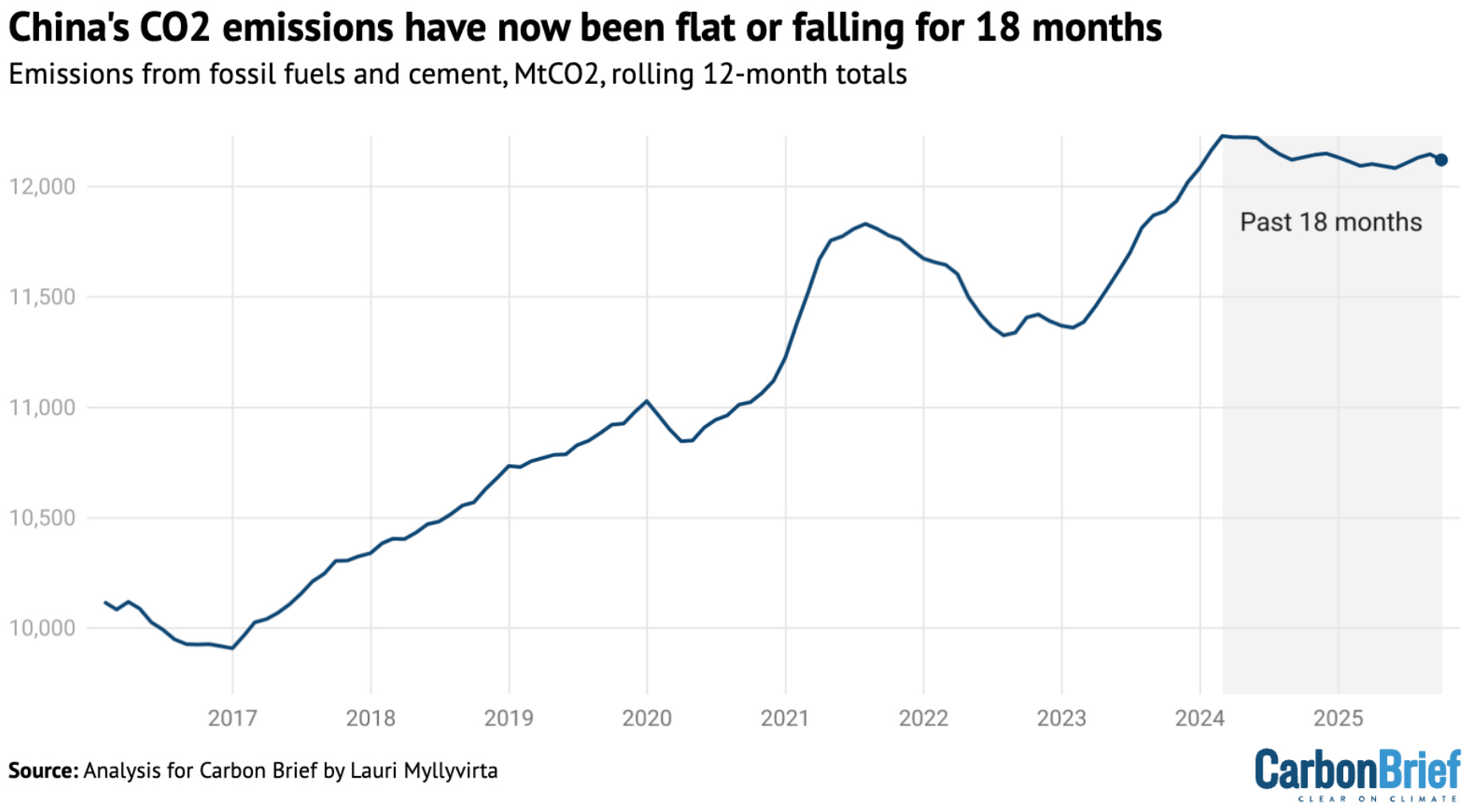
China’s CO₂ emissions have now been flat or falling for 18 months, with levels unchanged year-on-year in the third quarter of 2025. Power-sector emissions stayed flat even as electricity demand rose 6.1%, thanks to a 46% jump in solar generation and 11% in wind. EVs drove a 5% fall in transport fuel emissions, and steel and cement output declined amid a construction slump. However, surging petrochemicals and plastics production erased some gains, resulting in a plateau, rather than outright decline. Carbon Brief
India surpasses 500 GW capacity as renewables top 50% for first time
India’s total installed electricity capacity reached 500.9 GW at the end of September 2025, with non-fossil sources—solar, wind, hydro and nuclear—now accounting for 256.1 GW, or 51% of the total. On 29 July, renewables supplied 51.5% of national demand, achieving India’s 2030 clean-power target five years early. Ministry of Power
Philippines adds renewables equal to a third of its total power capacity. The Philippines has awarded 10.2 GW of new renewable projects in its latest green energy auction - 123 projects spanning solar, wind and hybrid systems with storage, all due online between 2026 and 2029. Once built, this single auction could add about one-third of the nation’s power capacity, signalling a major structural shift toward renewables. Renewables Now
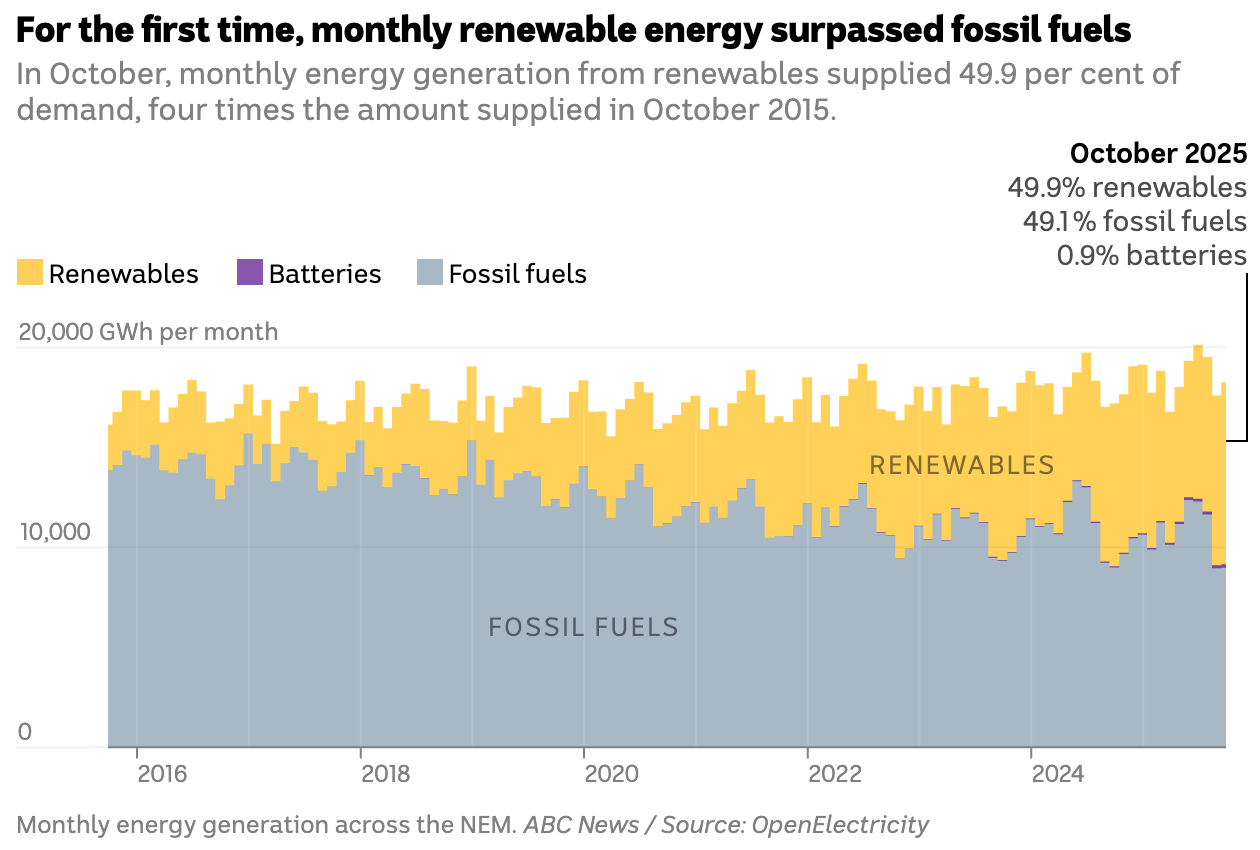
Renewables surpass fossil fuels for an entire month in Australia’s power grid. For the first time, renewable energy outgenerated fossil fuels across Australia’s eastern grid for a full month. In October 2025, renewables supplied 49.9% of electricity—four times their 2015 share—while fossil fuels provided 49.1%. The milestone reflects a structural shift powered by rooftop solar and wind, despite rising curtailment. ABC
Japan’s J-Power to close coal units by 2028 in emissions push. J-Power, one of Japan’s biggest power producers with about 7 GW of coal capacity, will shut two units at its Takasago plant by 2028 as part of plans to phase out coal generation. The move comes as fossil fuels’ share of Japan’s power supply fell below 60% for the first time, and signals a continued retreat from coal in Japan’s energy mix as cleaner technologies gain ground. Oilprice
China’s EV boom triggers record drop in holiday gasoline use.
During China’s October Golden Week (a national holiday that normally triggers the year’s biggest travel spike) gasoline demand fell 9% year-on-year, the sharpest drop ever recorded. The reason? Electric vehicles, supported by a network of 18 million public chargers nationwide. Reuters
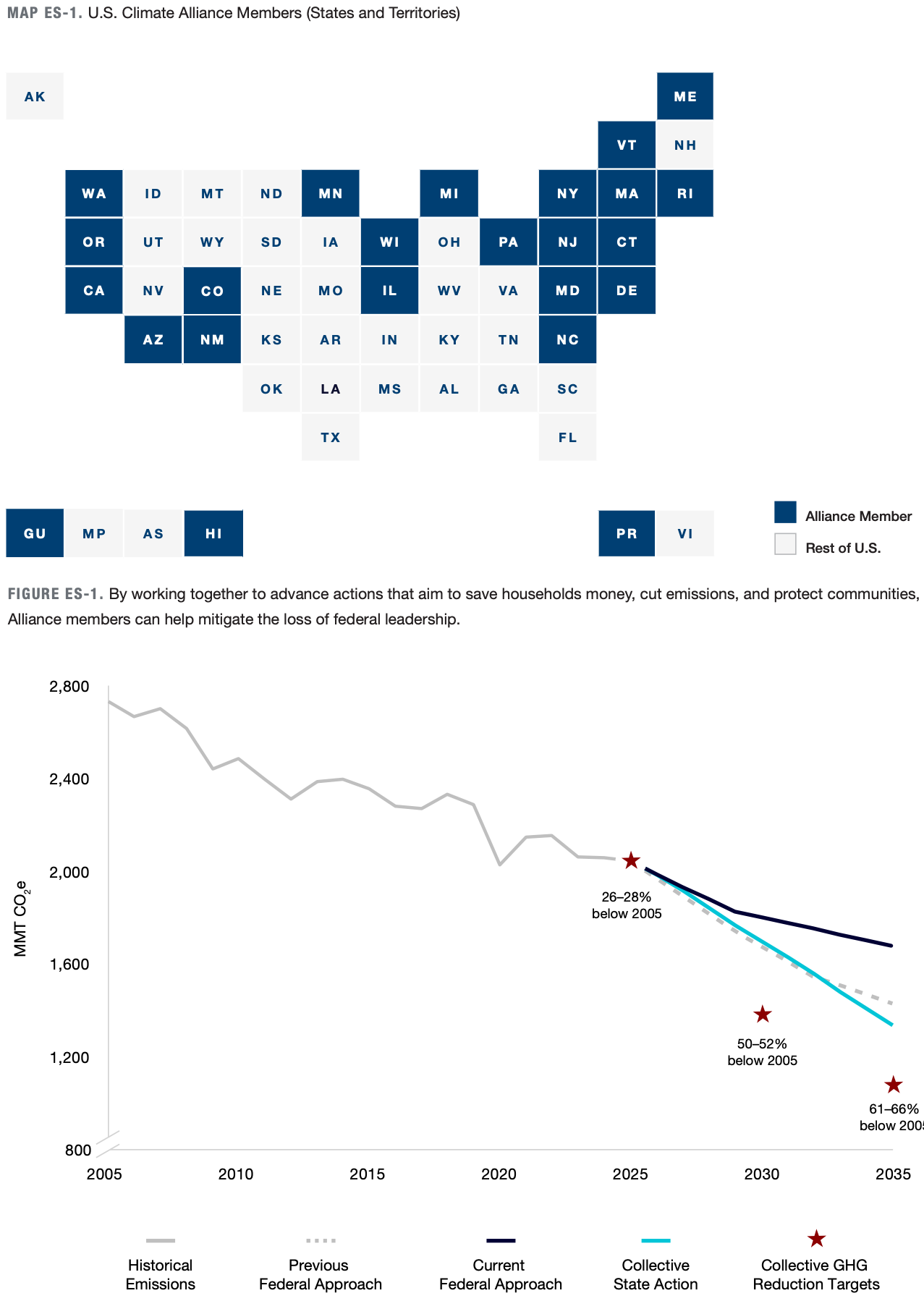
US Climate Alliance cuts emissions 24% while growing GDP 34%. A bipartisan coalition of 25 states, representing over half of America’s population and 60% of its economy, has cut greenhouse gas emissions 24% below 2005 levels while growing GDP by 34%. Its latest report credits cleaner power generation and rapid EV adoption. US Climate Alliance
Science & Technology
US scientists have created the first comprehensive atlas of brain development, charting how stem cells turn into neurons and other brain cells during early life. Using hundreds of thousands of human and mice cells, researchers mapped the precise genetic switches that guide each stage of cortical growth. The project, part of the U.S. BRAIN Initiative, gives neuroscientists an unprecedented reference for studying autism, schizophrenia and brain repair — and a new blueprint for decoding our own neural origins. Nature
The rapture of the nerds. Will Douglas Heaven, a journalist who’s been on the AI beat for as long as we can remember, digs into how the dream of artificial general intelligence has evolved from a fringe fantasy into Silicon Valley’s dominant obsession. Questioning whether AGI is a genuine technological goal, or the most consequential conspiracy theory of our time, he traces how a once-speculative idea became a near-religious narrative… one that fuels trillion-dollar investments, apocalyptic warnings and promises of digital salvation. MIT Technology Review
Flying from London to New York in just three hours? NASA’s experimental X-59 jet has completed its maiden flight, designed to slice through the sound barrier without the thunderous sonic boom of yesteryear. Built by Lockheed Martin for $518 million, the sleek aircraft turns the boom into more of a “soft thump,” using a top-mounted engine and elongated fuselage to diffuse shock waves. If successful, the X-59 could pave the way for commercial jets that cut intercontinental flight times in half without rattling the windows. Gizmodo

Explosions no more: Chinese chemists solve 140-year synthesis puzzle, slashing drug costs. Unless you’re a chemist, you probably haven’t heard of “aryl halides,” but trust me, they’re important: in industrial chemistry they’re used to manufacture everything from pesticides to pharmaceuticals. The problem with aryl halides though, is that making them sucks; the 140-year-old “Sandmeyer” process for producing them is expensive, poisonous and yes, actually explosive.
Enter Zhang Xiaheng, who’d been working on synthesizing aryl halides since starting his independent career in 2021. Playing around in the space, he “stumbled upon” an alternative using only simple, readily available reagents…and now he and his team have published a paper outlining the process, which scientists are calling “Nobel Prize-worthy.” The new technique could sharply cut production costs for cancer drugs and other complex molecules. South China Morning Post
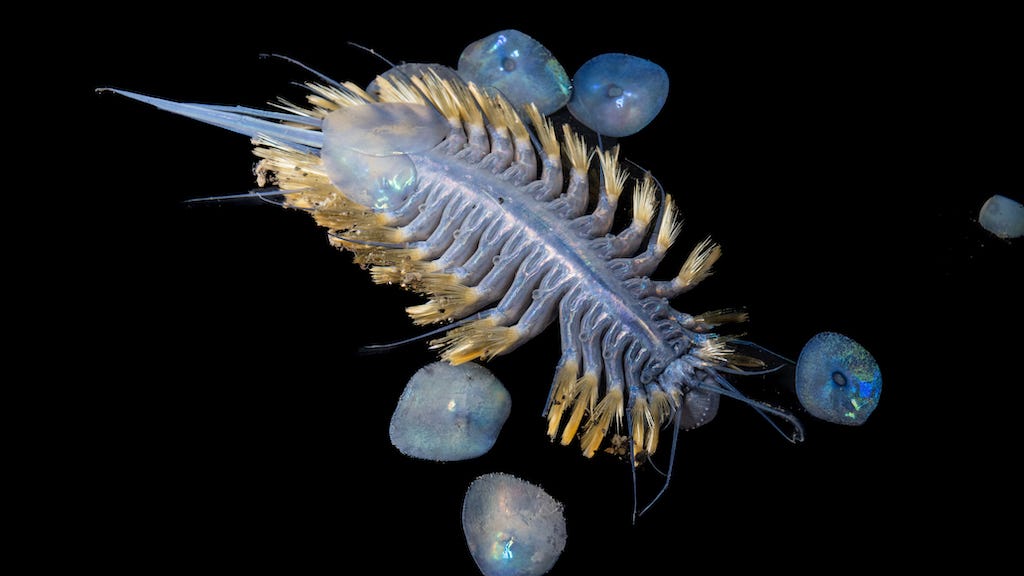
A 35-day deep-sea expedition in the Southern Ocean has uncovered 30 new species: from a carnivorous “death-ball” sponge to iridescent armoured worms, black corals and even the first-ever live footage of a colossal squid in its natural habitat. Scientists collected 2,000 specimens across 14 animal groups, revealing pure deep-sea anarchy: creatures with hooks, armour and glow-in-the-dark flair thriving miles below the surface and coral gardens and hydrothermal vents teeming with life. Reminder: only 10% of all marine species have been identified. Mongabay News
Scientists recover rare-earth minerals from a living plant for the first time
A collaboration between Chinese and American researchers has discovered nanoscale monazite crystals (a rare-earth mineral usually formed under extreme heat and pressure) inside the fern Blechnum orientale. The finding confirms that plants can produce extractable minerals under normal environmental conditions, offering a potential ‘phytomining’ method that both produces high-value elements and restores contaminated soils. SCMP
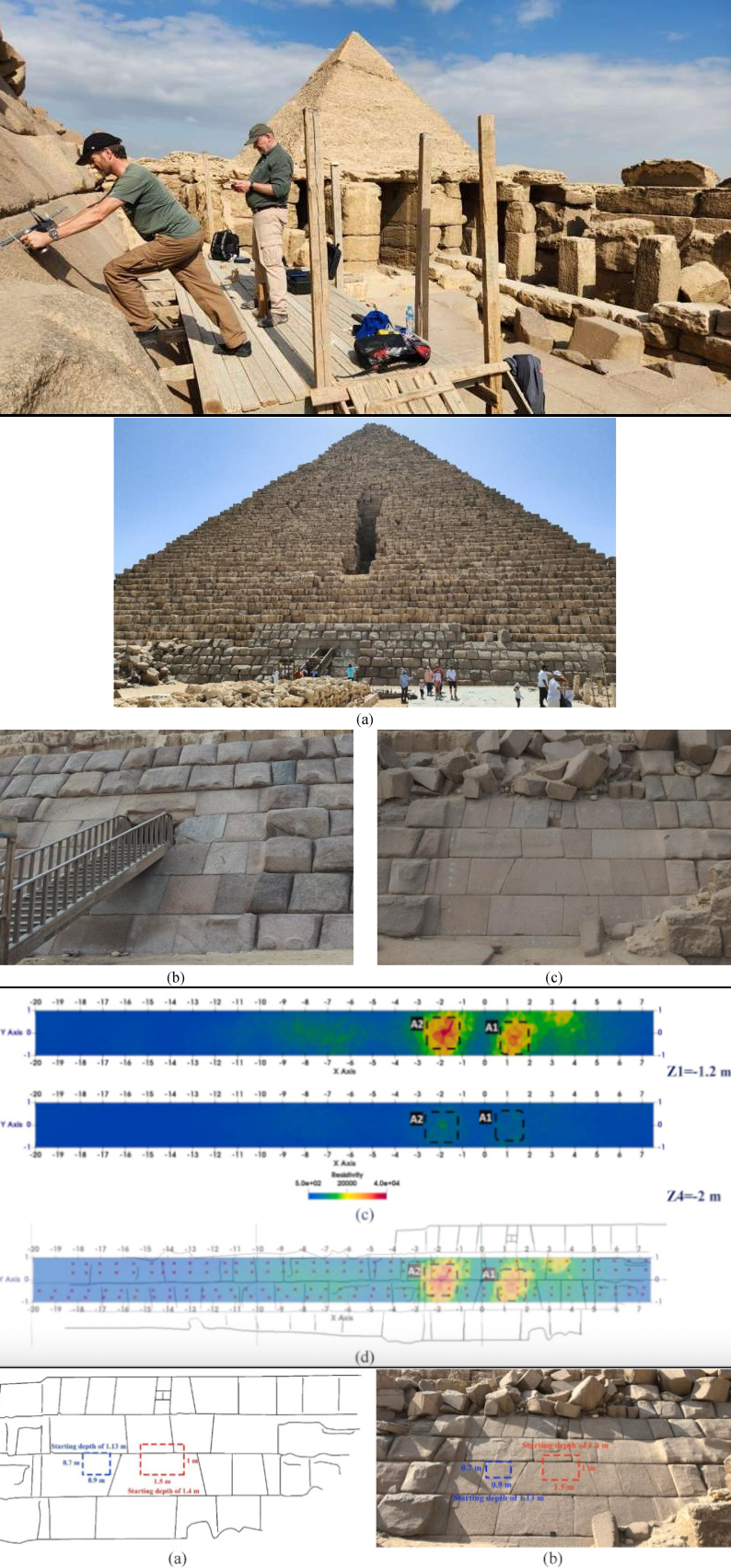
And finally, archaeologists have uncovered two mysterious, air-filled chambers hidden behind the eastern face of Giza’s third-largest pyramid — evidence that could point to a long-rumoured second entrance. Using radar, ultrasound, and electrical tomography, the team confirmed voids roughly a metre high, located a metre beneath the surface of the Menkaure Pyramid. The breakthrough follows the 2023 discovery of a hidden corridor in Khufu’s Great Pyramid and showcases how non-invasive imaging techniques are revolutionising Egyptology. Phys.org
That’s it for this edition, thanks for making this week’s donation possible, you all rock. We love ya. See you next week.
xxx
The FTN team
This is great, can you write about the pink dolphins? I think the Chinese ones may be dead, but there are some South American ones in trouble also. Thanks!
Come to our event in Sydney on the 3rd December 2025? - Please let us know if you do an event in Melbourne, I would do my best to be there!