317: The Noperthedron. #foodheroes. The sixth sense. Youth literacy. Don't cut the green crap.
The thing that excites me most is the seaweed.

You’re a paid subscriber to Fix The News, a weekly roundup of stories of progress. We give away 30% of your subscription fee to charity. Give someone a gift subscription. Get a group subscription for friends, family or your organisation. Listen to our podcast. If you need to unsubscribe, there’s a link at the end.
We have two brand new things to share.
The first thing is over here (it’s only five minutes), take a listen and let us know what you think.
Here’s the second thing.
Fix The News Live 🎤 ✨
After years of connecting through screens, we’re stepping into the real world. On Wednesday 3rd December, we’re hosting our first ever in-person gathering: an evening of conversation, storytelling and community in Sydney.
The night will feature a live podcast recording with David Leser, one of Australia’s most accomplished journalists. Over an extraordinary 46-year career, David has reported from the Middle East and Washington, written for Good Weekend, The Bulletin and The Sydney Morning Herald, and earned two Walkley Awards. He’s also the author of seven books and producer of the acclaimed documentary Paul Kelly: Stories of Me.
Fix The News founder Angus Hervey and creative director Amy Rose will be speaking with David about what happens to journalism when the old institutions crumble, the newsfeed turns feral, and trust in media hits record lows - and why truth-telling still matters in an age of noise and distraction.
We’ll record the conversation for our podcast, and spend the rest of the evening simply hanging out. This is a little experiment, just 50 tickets, and if it goes well we’ll do more!
📍 The London Hotel, Paddington, Sydney | 6pm - 8pm | 3rd December 2025
This week’s top stories
Happy 10th anniversary to the Paris Agreement. Since 2015, the world’s projected temperature rise has fallen from 4°C to 2.6°C, solar capacity is growing 15 times faster than predicted, wind has tripled, and clean power now supplies over 40% of global electricity (!!!), meeting almost all new demand. Clean energy investment outpaces fossil fuels by two to one, electric vehicles already make up more than 20% of new car sales, and clean-tech jobs have nearly doubled. ECIU
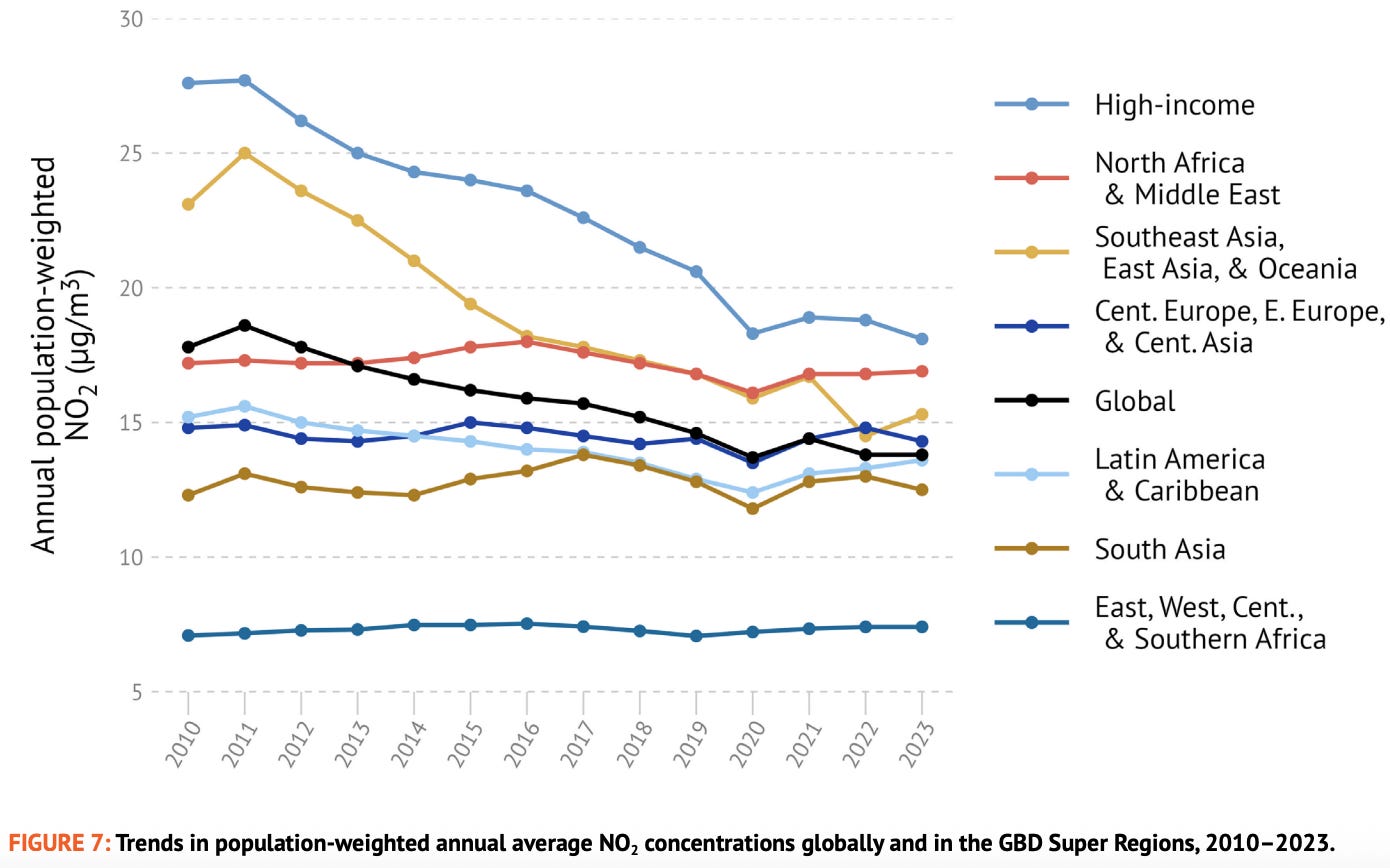
Global air-pollution deaths fall as clean-air era begins. For the first time in centuries, global deaths from air pollution are falling; down by 21% between 2013 and 2023 thanks to a steep drop in household smoke as billions gained access to cleaner cooking. The last 18 months have seen the fastest tightening of air-quality laws in history, and several major economies - notably China, the US and the EU - are now decoupling pollution from growth. State of Global Air 2025
Extinction risk is slowing down. A sweeping new analysis - the first to analyse rates, patterns and causes of recent extinctions across plant and animal species - finds that species loss actually peaked about a century ago. Most of those historical extinctions were island species wiped out by invasive animals, like rats, pigs, and goats. Today, the main threat has shifted to habitat loss on continents, which makes it misleading to project yesterday’s island-driven losses into the future.
☝🏾 These findings complicate the popular narrative of a “Sixth Mass Extinction.” While biodiversity loss remains severe and widespread, the data suggest the world isn’t seeing extinction rates on the scale of past mass die-offs. Instead, they reveal a more hopeful story: conservation laws, protected areas, invasive-species control and rewilding have started to work. Extinctions are still happening, but fewer each decade than before.
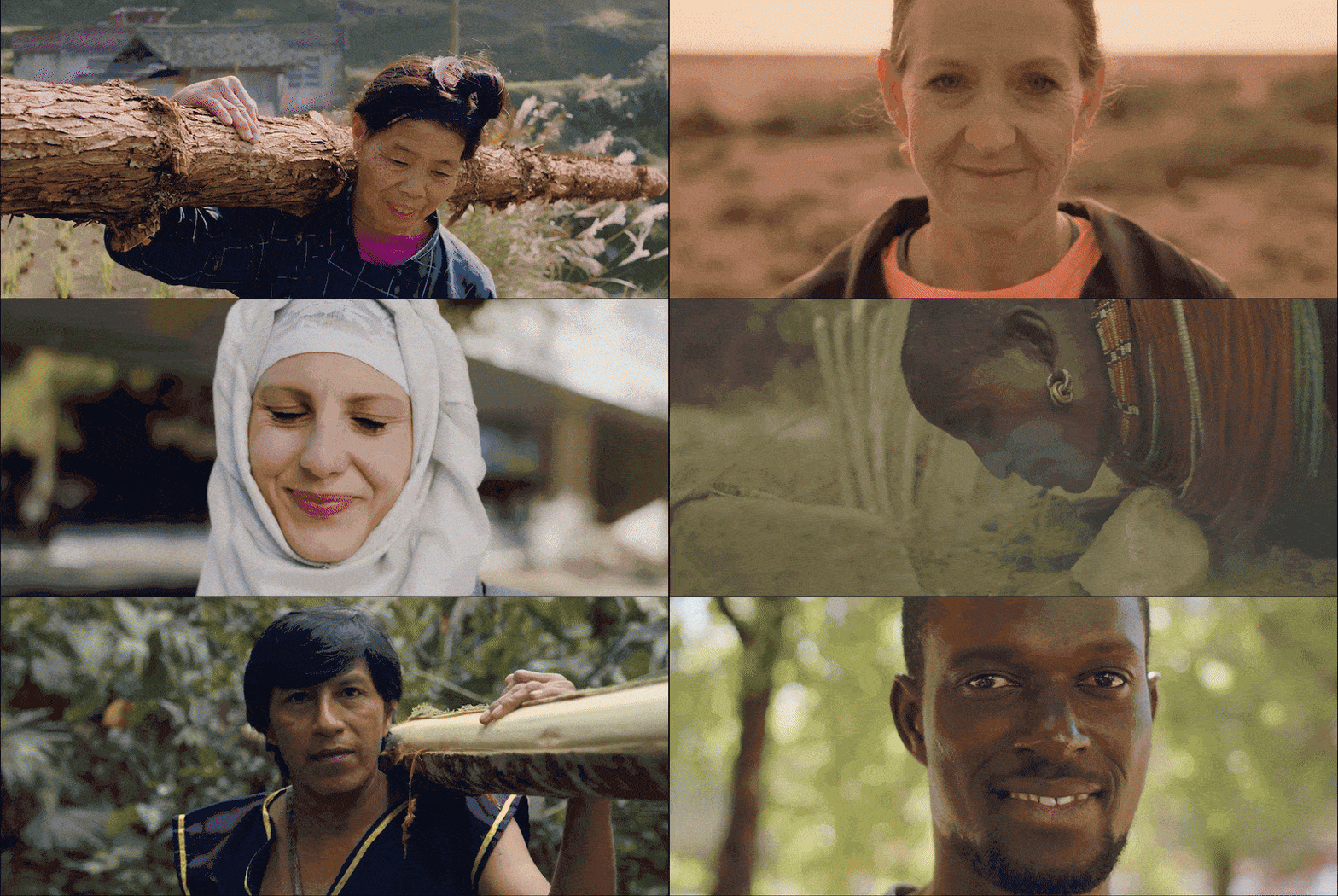
Meet the world’s ‘food heroes.’ The UN’s #foodheroes campaign (running since 2021) celebrates people transforming how the world eats and farms. This year’s group includes a women-led collective in Madagascar, grape farmers in Kyrgyzstan, a camel-milk cooperative in Mauritania, a hydroponic grower in Saint Kitts and Nevis, and a zero-waste chef in Italy. UN
This summer, 38 million farmers across India received a message that changed how they prepare for the rains. For the first time, machine learning accurately forecasted the arrival of the monsoon up to 30 days in advance. The success of this approach (which most importantly, secured the trust of farmers) offers a powerful blueprint for how AI can help farmers everywhere adapt to a changing climate. University of Chicago
Now let’s scale it up, and watch how Google integrates geospatial reasoning into Google Earth to detect disasters in real time. Originally launched in July 2025, their models can analyse global imagery to map population shifts, track environmental change and improve emergency coordination. An October update has brought in chatbot-like features, so users can ask questions to, say, find dried-up rivers or track wildfires and algae blooms in real time. Indian Express
How does your brain know you’re hungry, or that your heart needs to beat faster? Scientists at Scripps Research have received a $14.2 million NIH grant to map this “hidden sixth sense” known as interoception, AKA the internal network that lets the brain monitor organs like the heart, lungs and gut. Led by Nobel Prize-winning neuroscientist Ardem Patapoutian, the team will build the first 3D atlas showing how sensory neurons connect deep within the body. Scripps Research
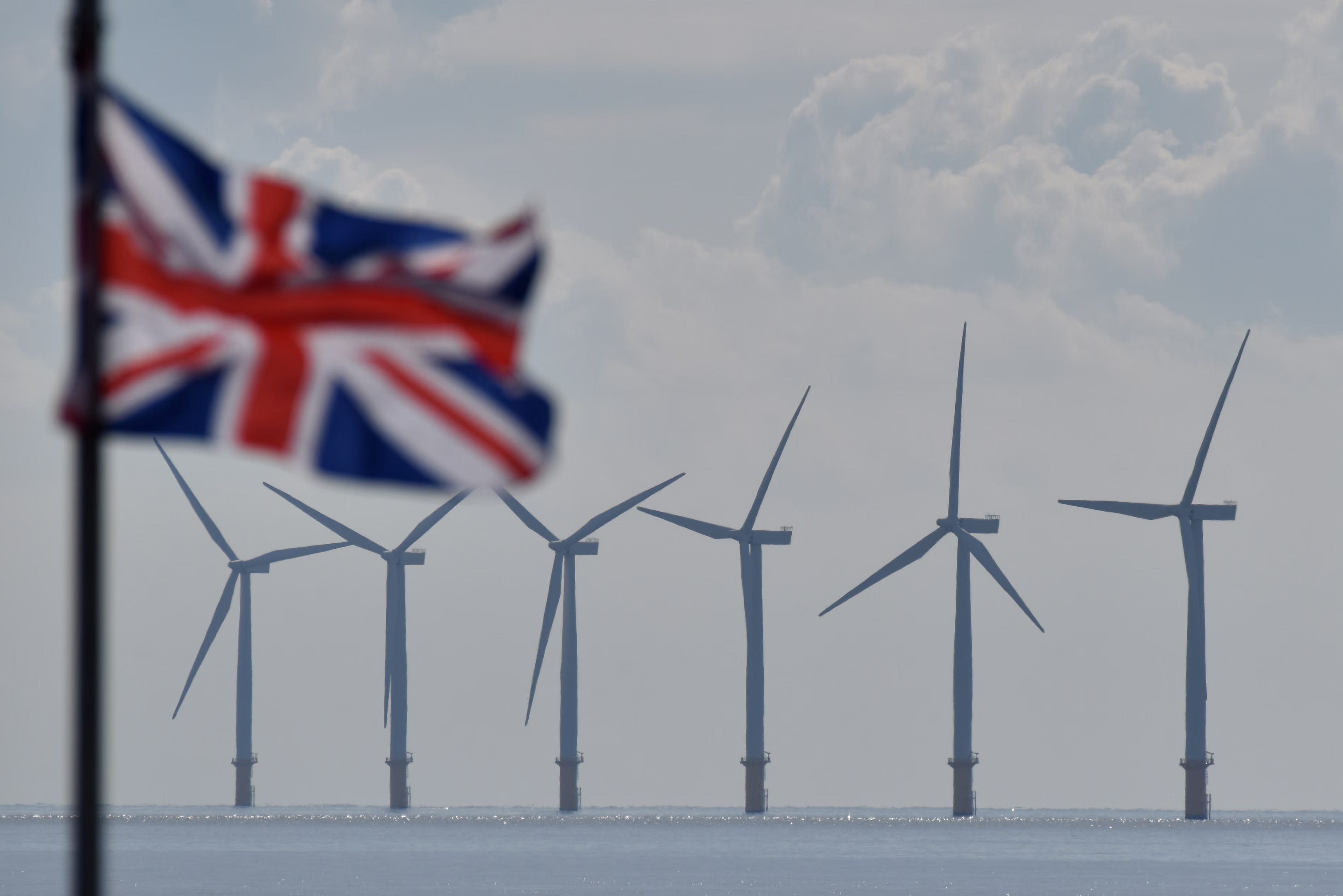
In 2013, former British prime minister David Cameron famously ordered aides to “cut the green crap.” Now a new study has shown that wind power has cut at least £104 billion from energy costs in the UK since 2010, thanks to cheaper electricity and reduced fossil gas demand.
A case of the green cutting the crap?
Or perhaps, in the words of Ed Milliband, “a brilliant antidote to despair.”
European court sets limits on new oil projects. In a landmark ruling, the European Court of Human Rights has ordered Norway to assess the global climate impacts of oil and gas before approving new fields - and crucially, including emissions from burning fuels abroad. The decision establishes binding legal duties for governments under human rights law, effectively setting limits on new fossil fuel expansion across Europe. Greenpeace
Deserted islands, seagrass meadows and endless ocean: kayaking in Sweden’s new marine national park. Guardian
The thing that excites me most is the seaweed. It’s a sign of healthy waters
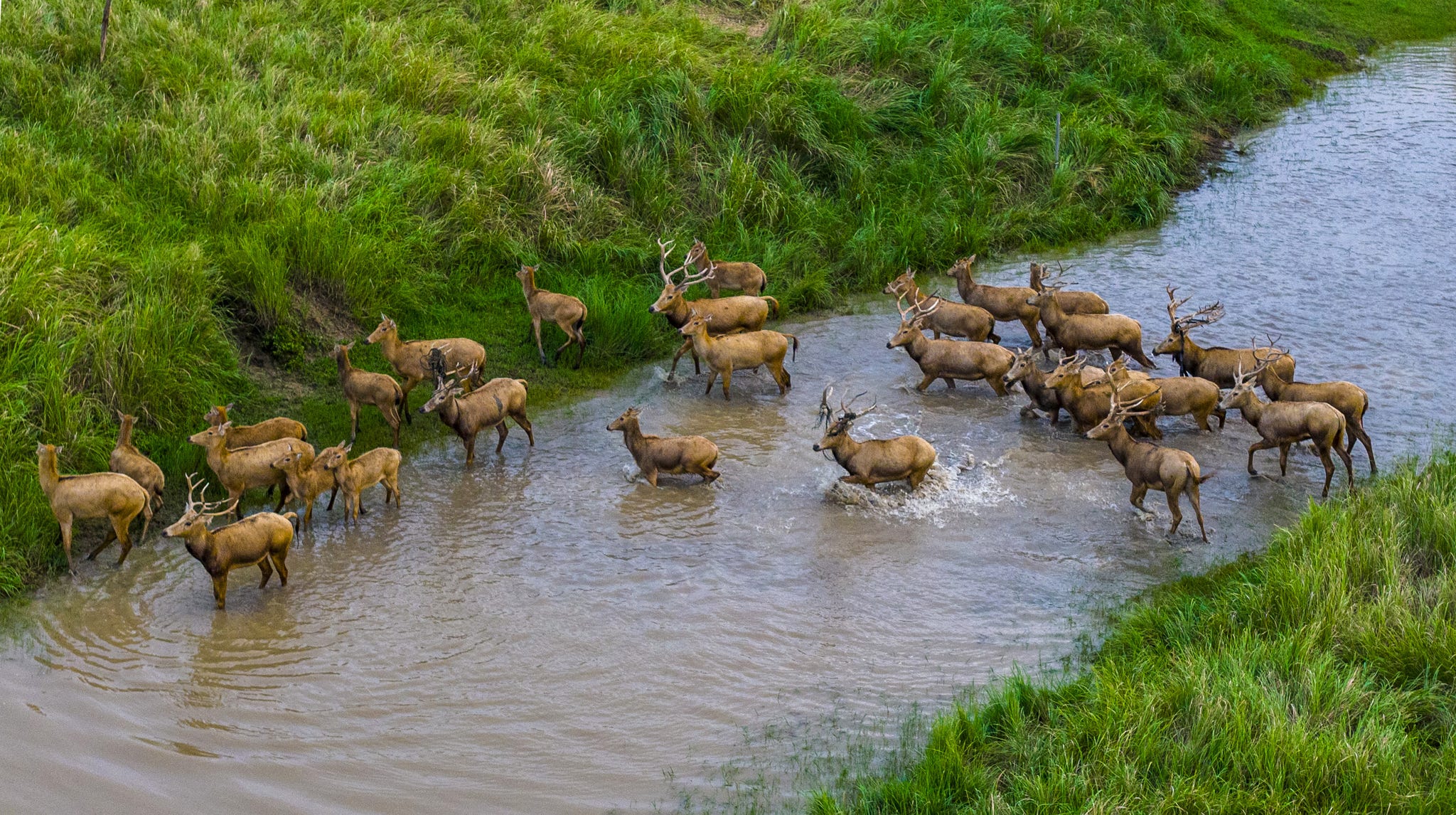
China’s ‘extinct’ Pere David’s deer makes historic comeback. Once wiped out in the wild, China’s milu (Pere David’s deer) has staged one of the world’s great wildlife recoveries. From just 39 animals reintroduced from British zoos in 1986, the herd at Dafeng Milu National Nature Reserve has grown to more than 8,500, part of a nationwide population topping 14,000.
Billions of dollars are flooding into fusion. But can it deliver? Last week we showed you Chinese scientists creating a record-smashing magnetic field for use in fusion experiments. This week we’re following up with news from Japan, where a startup has pulled off a world-first test of a superconducting coil that stayed stable at fusion-level heat. In the south of France, the world’s largest fusion project has just entered a critical phase, with the final assembly of its reactor core, and in the United States, NVIDIA, General Atomics and a team of international partners have built a high-fidelity digital twin for a fusion reactor. Everybody’s goal is the same: clean, endless power by the 2030s. Even if most of these projects fail, scientists say they’ll still push us closer to learning how to “bottle a star.”
The World Bank’s latest data shows a quiet global triumph: 93% of people aged 15 to 24 can now read and write, up from 87% in 2000. In many regions, including East Asia, Latin America, and Central Europe, youth literacy has reached or neared universal levels, marking one of the most successful, least reported stories in development.

For those who say technology only makes things worse…well, you’re probably reading the wrong newsletter. But with all the hype about AI, sometimes it’s nice to see a few stories about how things can go right using old-fashioned digital technology. For instance:
Working with Rwanda’s national telemedicine platform, a team of researchers compared phone-based consultations with traditional clinic visits. They found that telemedicine was 30% faster, 40% cheaper, and led to fewer unnecessary drugs or tests. Given there’s 2.5 million Rwandans already using the platform, this is pretty good news. VoxDev
Meanwhile, Kenya just slashed payment delays for vaccination campaign workers from 15 days to just 72 hours with a new digital system that transfers pay directly to their mobile wallets via M-Pesa. More than 120,000 workers are now registered, with 127 officials trained to manage the system across 13 counties. WHO AFRO
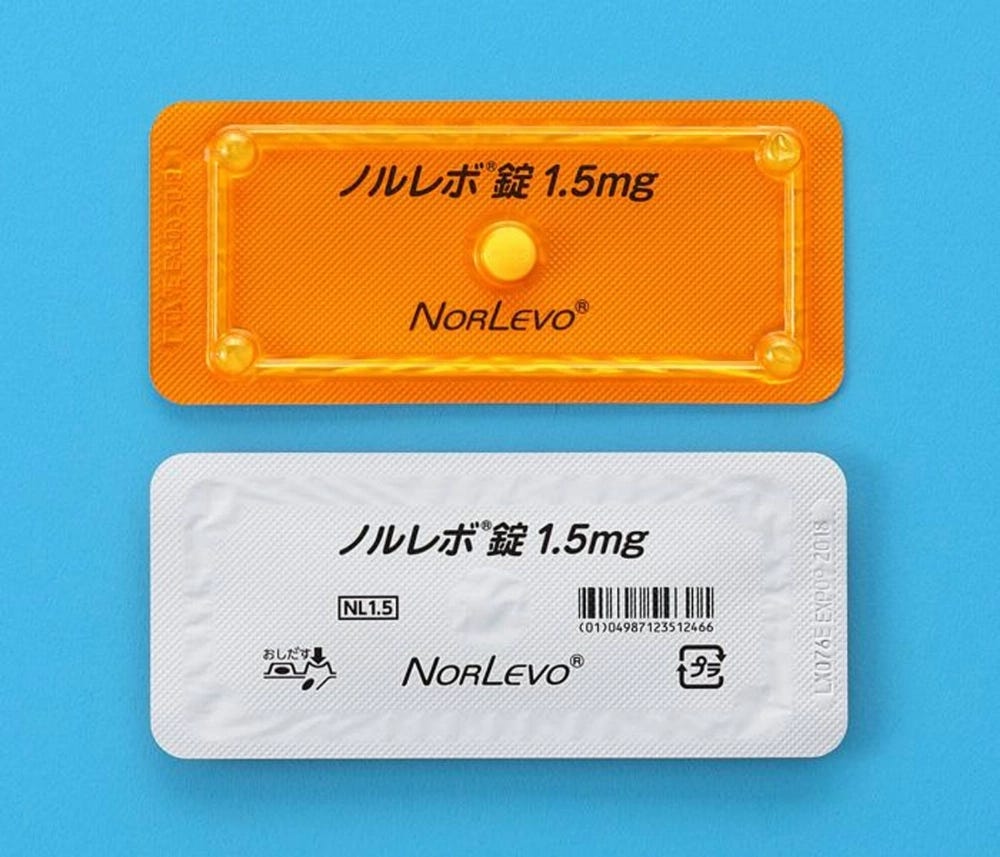
Japan approves access to the morning-after pill. Ending years of debate, the health ministry has cleared Aska Pharmaceutical’s Norlevo for over-the-counter sale - the country’s first emergency contraceptive available without a prescription. No age limit or parental consent necessary; but buyers must take the pill under a trained pharmacist’s supervision. Japan Times
Once dismissed as fantasy, ageing research is now uncovering ways to slow the biological processes behind cancer, dementia and heart disease… and potentially protect against all three at once. With drugs like rapamycin and senolytics extending animal lifespans by up to 40%, researchers say the first true longevity medicines could emerge within five years. Yet while influencers sell supplements, scientists warn real breakthroughs are going to demand patience and funding: the United States still spends 20 times more on cancer than on ageing R&D. Freethink
Two young mathematicians just broke a 330-year-old geometry riddle. Jakob Steininger, 30, and Sergey Yurkevich, 29, friends since maths-Olympiad days, have discovered the first known shape that can’t pass through a copy of itself, overturning a belief dating back to Prince Rupert’s 17th-century bet (here’s a brief history). Their 152-faced “Noperthedron” (after “Nopert” or “nope, Rupert”) was proved using millions of computer-tested orientations and a new theorem linking symmetry, rotation and shadow geometry. A delightfully nerdy milestone that closes a 330-year chapter in geometry’s history. Quanta Magazine
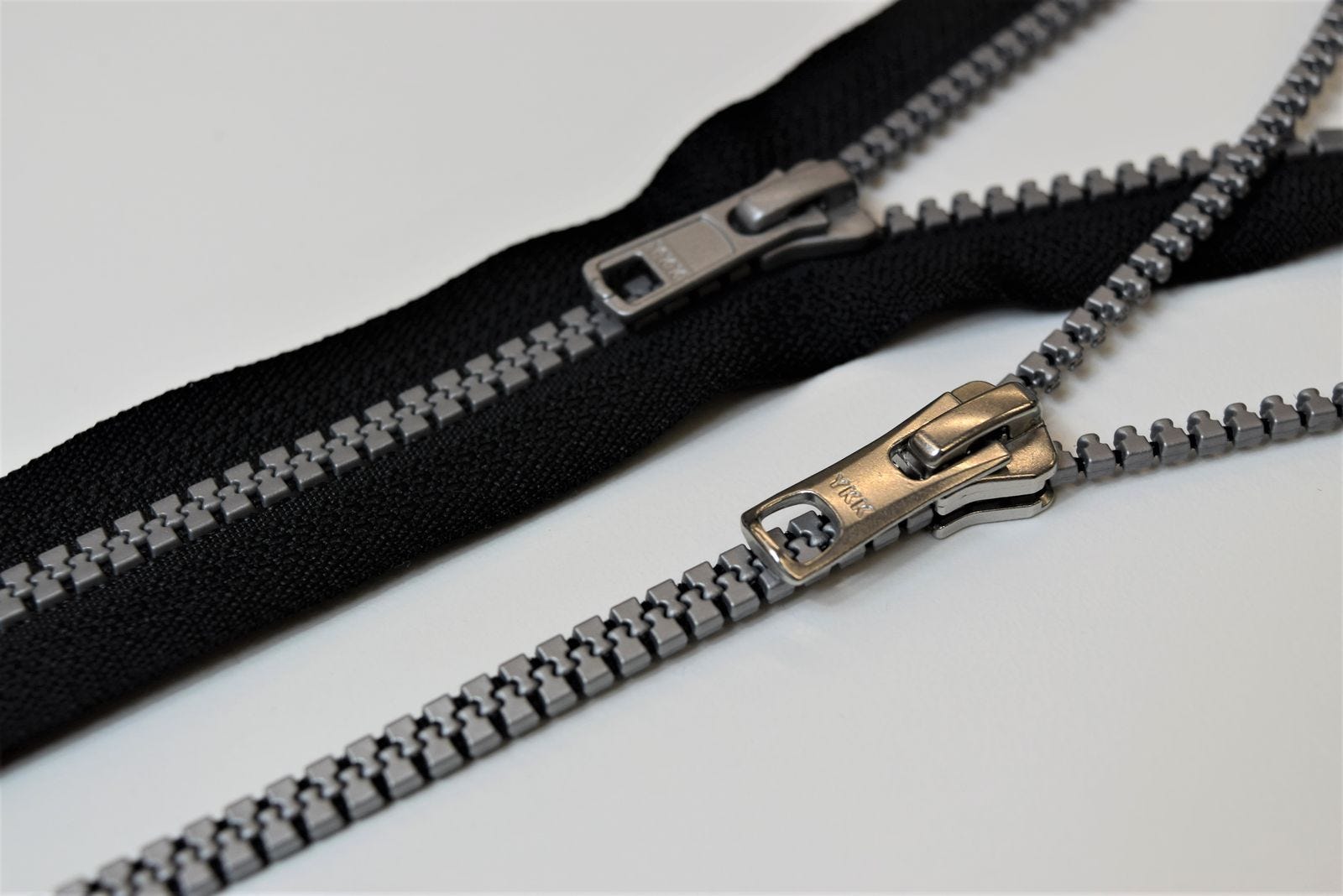
And finally, behold the zipper’s first upgrade in over a century. YKK, the Japanese company that makes about half the world’s zippers, has created a zipper that removes the traditional fabric tape, creating a lighter, more flexible, lower-impact closure that sits flush with garments. It requires new machinery, but by trimming fibre and dye, it cuts waste at massive scale. Early adopters include The North Face. WIRED
Giving Update
A quick roundup from recent charity partners…
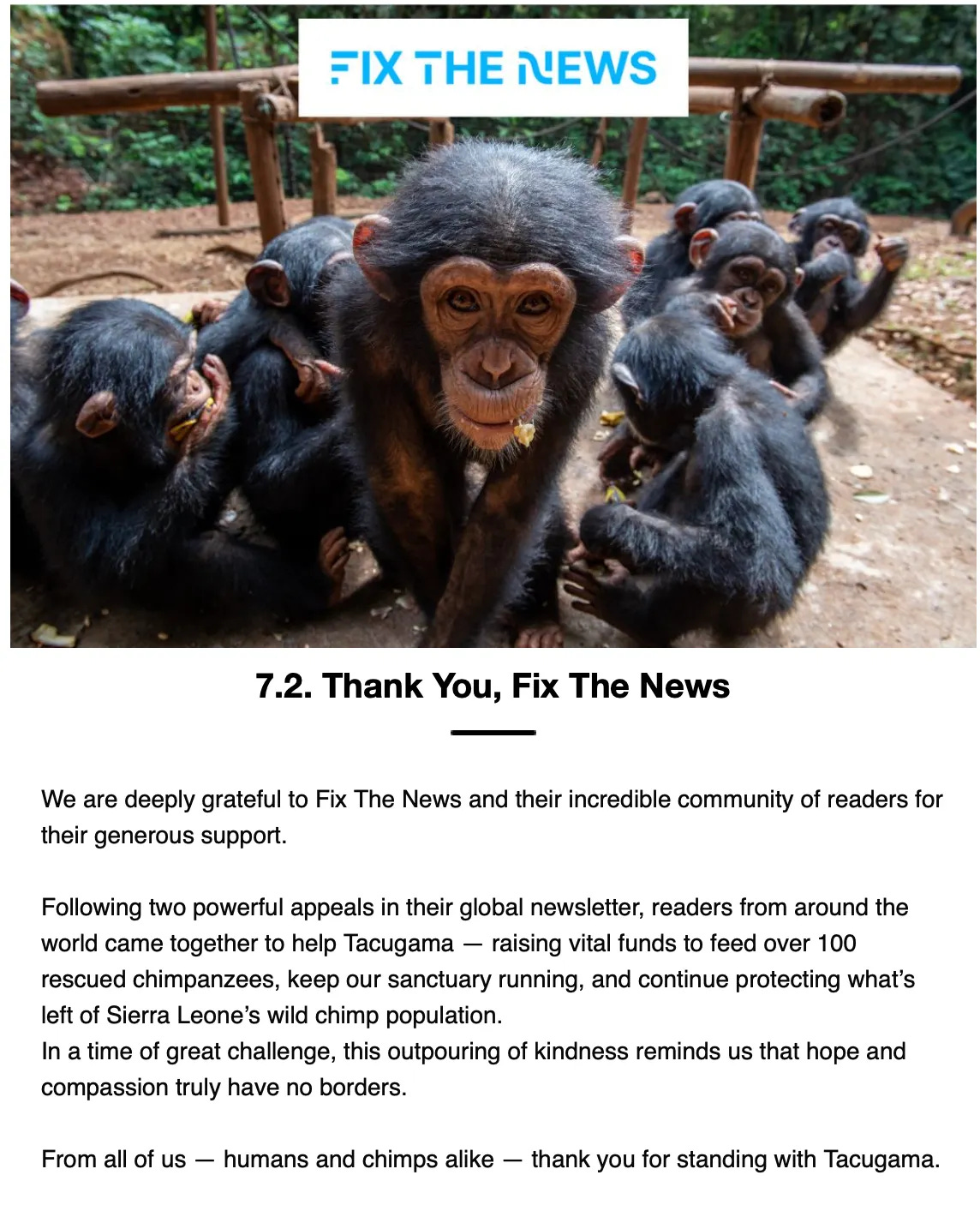
Finally, some good news for Tacugama! After months of uncertainty, we’re relieved to announce that Tacugama Chimpanzee Sanctuary will reopen to visitors on November 1st, 2025. The sanctuary was forced to close its doors mid-year after illegal land-grabbing posed a serious threat to the protected forest surrounding the sanctuary. But now, after weeks of negotiations the Government of Sierra Leone has agreed to step in and stop these illegal activities.
Thank you for standing with us, for believing in our mission, and for proving that together, we are stronger than any challenge.
No more sleeping on the floor for students in Uganda. An update from Te-Kworo Foundation, who provide education, boarding and maternal care to young mothers. The 100 bunk beds have arrived at the boarding school in Pader, and thanks to your support 200 girls now have a place to sleep. The school is still short 42 beds due to an unexpected increase in enrolments - if you can help out, click here.
A message from Aisha, one of the students at Te-Kworo:
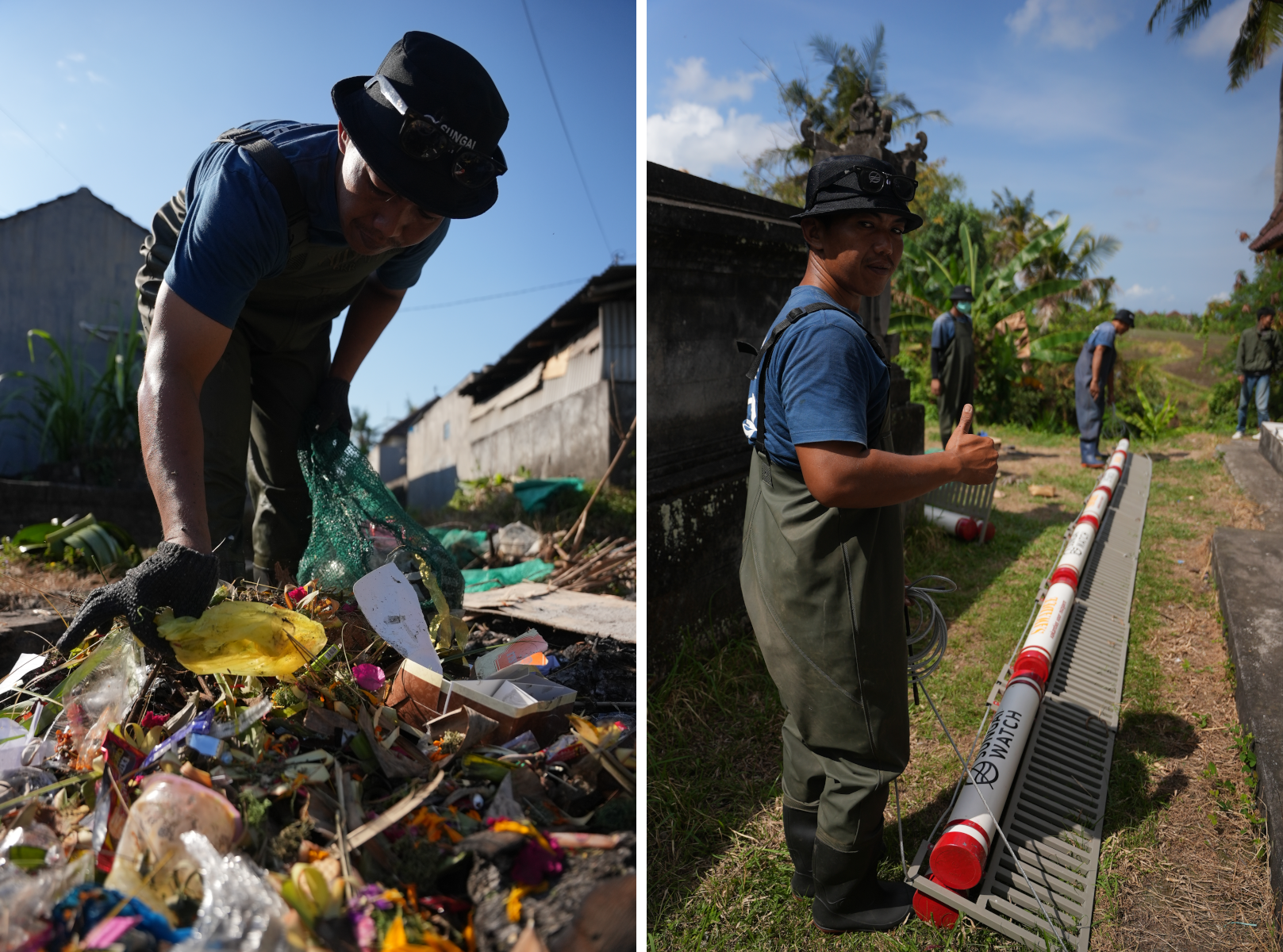
And, our river barrier in Bali has doubled its annual target of waste removal in just 126 days, despite flash flooding. An update from the team at Sungai Watch - in June, the barrier was lost during a severe flash flood. However the local team continued doing their regular cleanups until it was reinstalled and back in action. Thanks to their dedication, the Fix The News barrier has now removed 3,166 kilograms of waste from the river; more than double the typical annual amount :)