

316: Hope. Global homicide rates ↓ Deforestation too. Painting with fire. Water from air. Fiji eliminates trachoma.
Hidden stories of progress from around the world.

A landmark longitudinal study of 25,000 Australians over 14 years has found that hope may be one of the most powerful predictors of human flourishing — more so than income, education or intelligence. It’s the first ever large-scale study of its kind, tracking how varying levels of hope correlate with people’s health, earnings, education, social connection and resilience over time.
The results were striking: individuals who scored higher on measures of hope were consistently more likely to be employed, healthier, less lonely and better able to recover from major life shocks such as job loss, illness or divorce. Hope also appeared to strengthen people’s “internal locus of control” — their belief that they can shape their own future — and this persistence helped drive positive outcomes year after year.
The researchers found that, unlike cognitive skills, which stabilise by early adulthood, hope remains malleable throughout life. In other words, it’s something that can be learned. That makes it a rare lever for long-term wellbeing, one that families, educators and regulators can cultivate through mentoring, purposeful schooling, community rituals and clinical practice.
By contrast, the absence of hope is not just an emotional state, but has a physiological and economic impact: those without it are more likely to live shorter, sicker, and less prosperous lives. In the data, a troubling generational shift is visible: younger adults say they now have less hope than their elders.
The Medicine We Missed
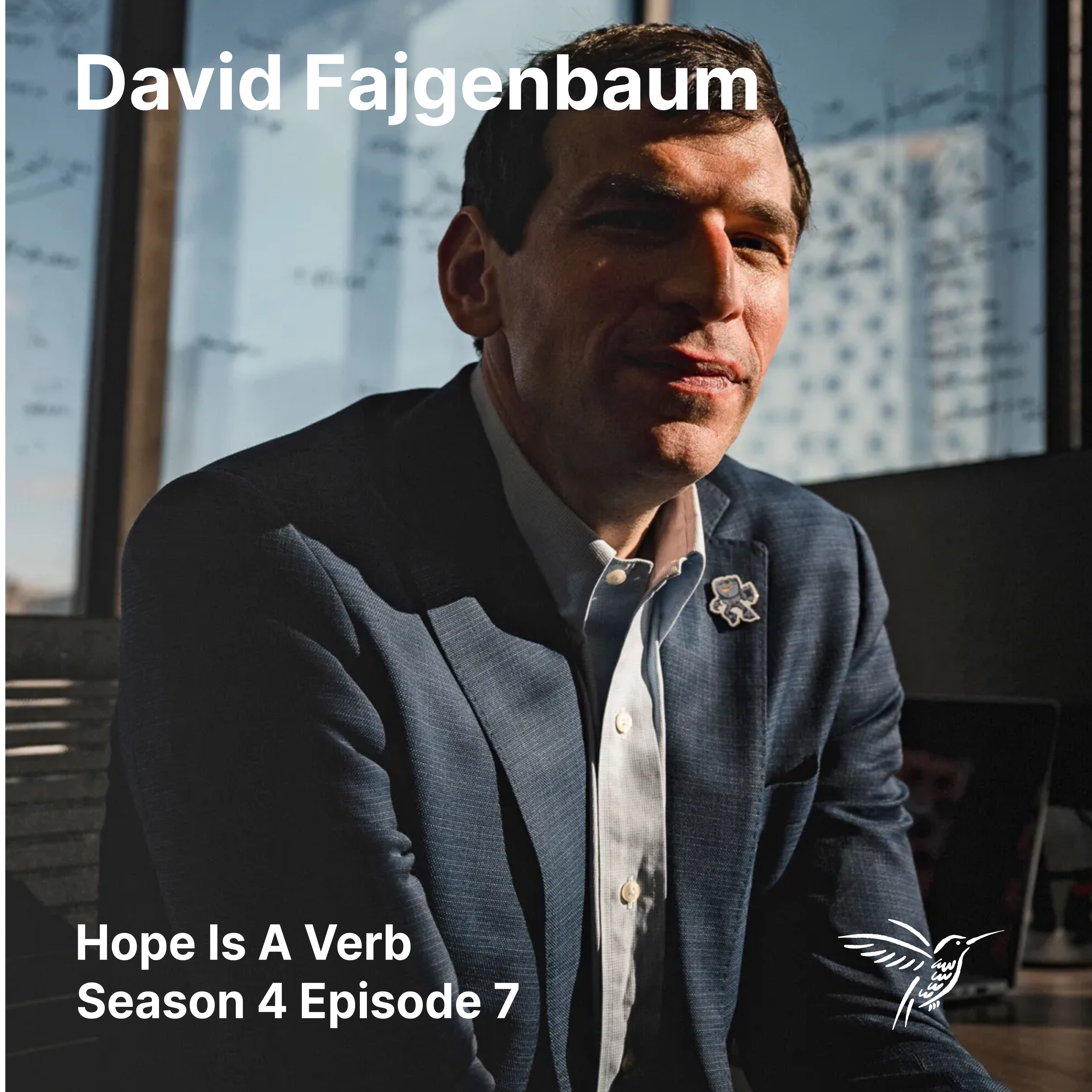
In the latest episode of our podcast we speak to David Fajgenbaum, a physician scientist saving lives by repurposing existing medications to treat different diseases. This conversation challenged the way we look at healthcare and revealed the possibility that some of the solutions we’re looking for are hidden in plain sight on the shelves of our local pharmacy. From the near-death experience that changed the course of David’s life, to how he’s harnessing the power of machine learning for good, it’s an unexpected revelation.
Topics discussed: how a repurposed drug saved David’s life, living life in ‘overtime,’ what it’s like to swim upstream against the medical system, AI’s advantage in fast-tracking drug matches to our 18,000 known diseases, how Viagra is saving sick kids, the economics of repurposing existing drugs, and what we can expect from the future of medicine.
CORRECTION
Last week we posted a story about humpback whales rebounding off the coast of Australia. The link was wrong! Here’s one that everyone can access.
This week’s top stories
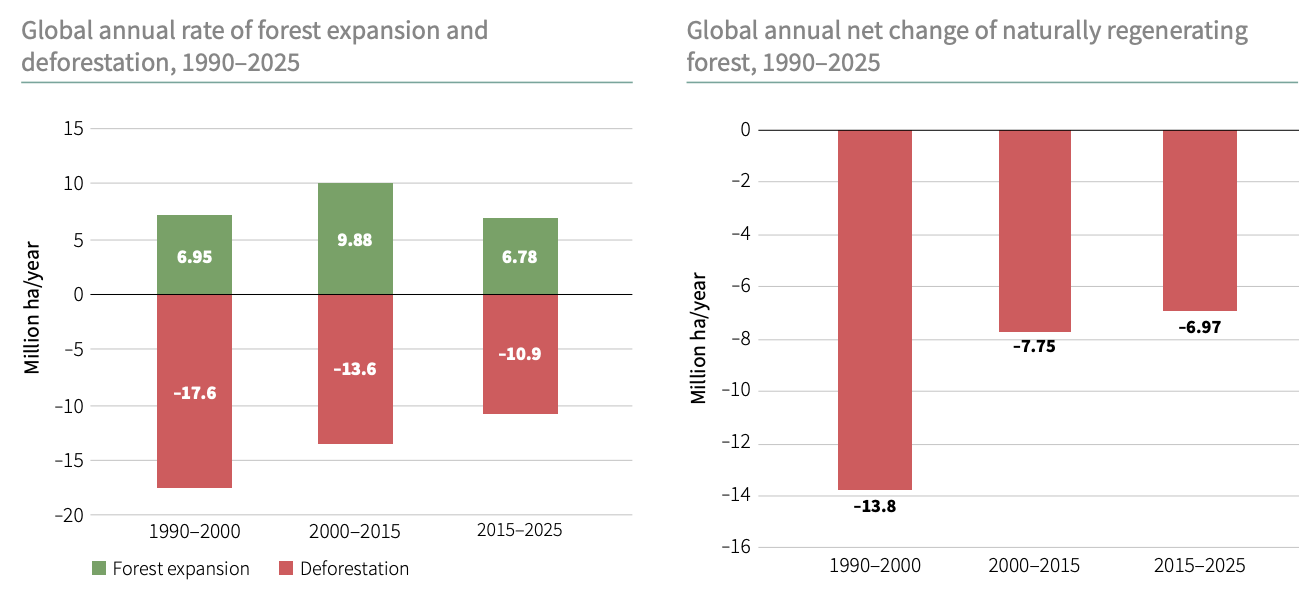
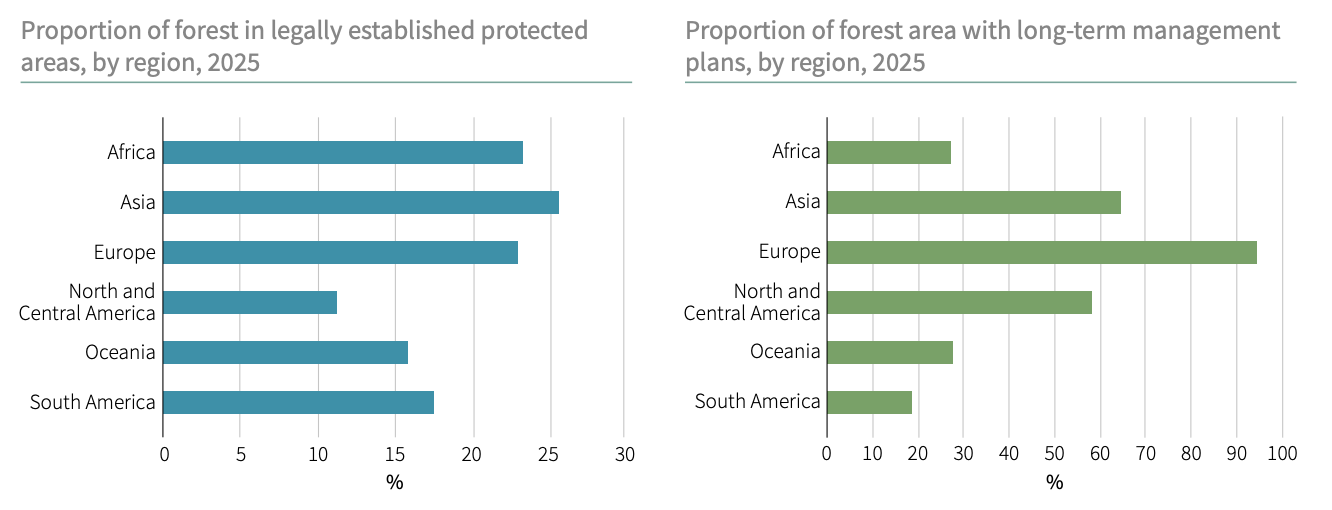
According to the UN’s latest global forest assessment, global deforestation has declined for the third decade in a row, falling from annual losses of 176,000 km² in the 1990s, to 109,000 km² a year over the past ten years. Nearly 5 million km² of forest have been lost since 1990, but protection is rising — one-fifth of forests are now legally safeguarded, with 2.51 million km² added since 1990, marking a tentative but sustained global shift toward forest conservation. UN FAO
(Hi everyone, Gus here. This report means a lot to me. I did my PhD on deforestation in southern Africa, and used to read these FAO reports from cover to cover. I’ve pulled out a few more highlights).
The steepest declines have taken place in the most important places – the tropics. About 88% of all deforestation since 1990 has occurred in tropical regions, yet annual losses have fallen from 159,000 km² between 1990 and 2000 to 94,000 km² between 2015 and 2025, a 40% drop.
Progress is uneven. South America’s deforestation rates have almost halved since 1990 (from 82,000 km² to 42,000 km² per year), while Asia and Europe are seeing stability or net forest gains. Africa is the laggard, still losing large areas each year although the pace is slowing (41,000 km² to 35,000 km²).
We’re getting greater clarity on ownership and tenure. Roughly 71% of the world’s forests remain publicly owned, 24% private, 4% mixed or unknown - but clarity on ownership has improved everywhere since 1990. The area of forest under management plans has increased in all regions too; globally, it has grown by 3.65 million km², reaching 21.3 million km² (more than half the world’s total forest area) in 2025.
More and more places are committing to restoration. 49 countries have set 2030 forest-restoration targets covering 1.77 million km², and around 270,000 km² have already been restored — in line with the Kunming–Montreal Global Biodiversity Framework.
Bolivia creates vast, community-led Amazon reserve. Bolivia’s Nueva Esperanza municipality has created the 2,093 km² Río Negro Amazonian Forest Protected Area, safeguarding pristine rainforest, savannahs and river ecosystems. Home to jaguars, river dolphins and ancient petroglyphs, the site protects biodiversity and Indigenous heritage while shielding forests from mining and deforestation. The project was driven by local communities and supported by conservation groups. Andes Amazon Fund
Fiji becomes the 26th country to eliminate trachoma.
”Fiji’s success in eliminating trachoma is a beacon of what’s possible when communities, governments, and partners unite behind a shared goal. This is a celebration of the power of Pacific leadership and the impact of sustained investment in health.” Dr Saia Ma’u Piukala, WHO Regional Director for the Western Pacific. WHO
After a century of bans on Indigenous burning, California tribes are restoring ‘good fire’ to the land. New laws now recognise tribal sovereignty to conduct cultural burns - small, intentional fires that nourish native plants, strengthen biodiversity and reduce megafire risk. In northern California, fire practitioners are now teaching new generations to read landscapes and burn safely, blending traditional knowledge with modern ecology to restore balance. Washington Post
👆 This is a wonderful piece of solutions journalism - beautifully designed, unexpected, hopeful. We cannot recommend it enough. 🔥
Maldives eliminates mother-to-child transmission of HIV, syphilis, and hepatitis B. No babies were born with HIV or syphilis in 2022–23, and hepatitis B has vanished among children. The WHO is calling it a “triple elimination,” the world’s first of its kind.
Australia’s five-year survival for all cancers combined has risen to 71%, up from 49% in the late 1980s. That’s one of the world’s highest survival rates. Mortality has fallen 24% since 1990, driven by early detection, screening, and precision therapies. Survival now exceeds 90% for breast and prostate cancer and 70% for melanoma, transforming outcomes nationwide. Australian Institute of Health and Welfare
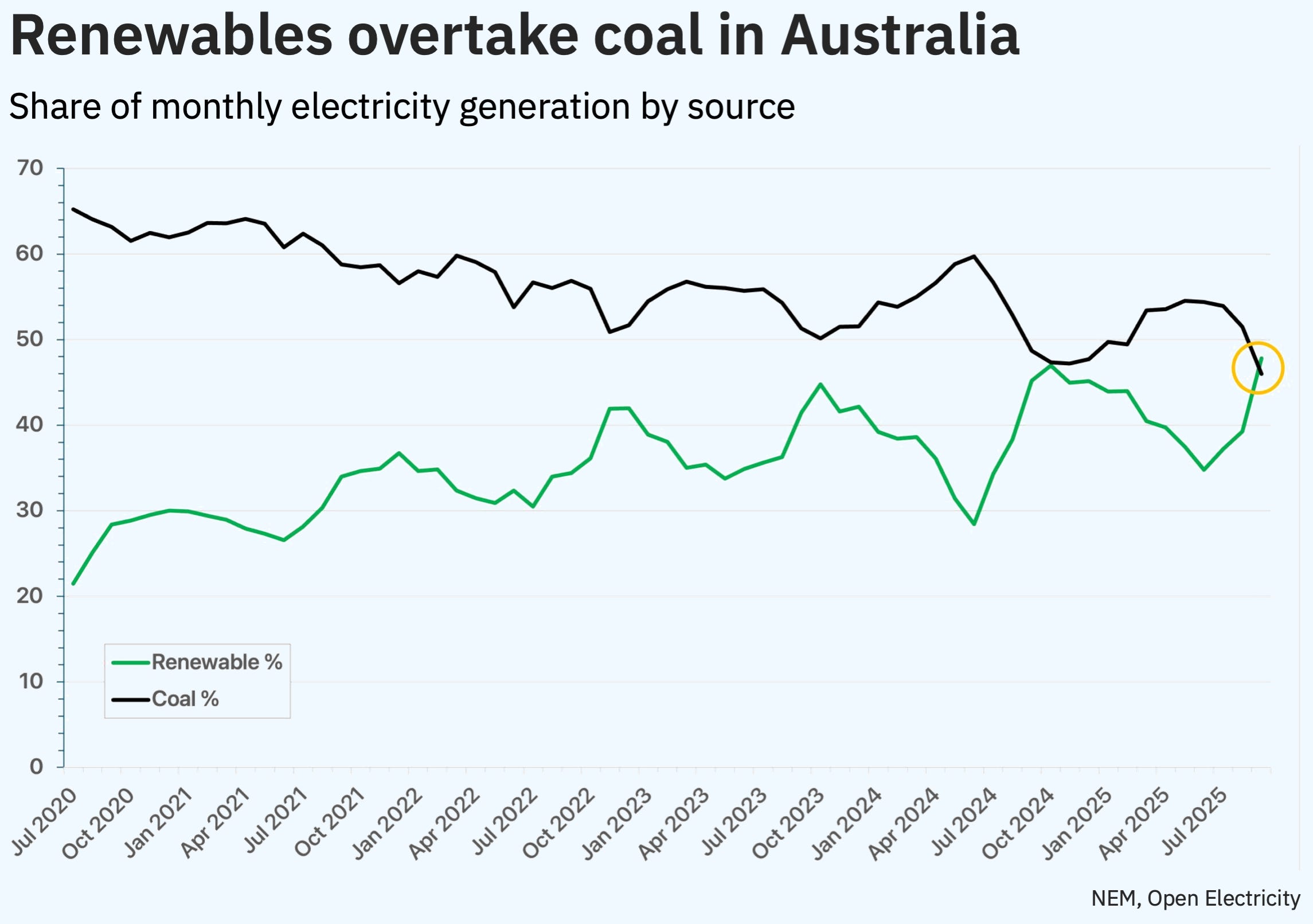
Renewables have finally surpassed coal on Australia’s main grid. Kind of an anticlimax since it was so inevitable, but in September 2025, renewables supplied 48.8% of electricity on Australia’s National Electricity Market, surpassing coal’s 47.6% share for the first time since records began (would have loved to be a fly on the wall when Matt Canavan heard this news). Renew Economy
Kazakhstan outlaws bride kidnapping and forced marriage. A new law makes forced marriage and bride abduction specific crimes, introducing penalties of up to 10 years’ imprisonment, and closes a loophole that had freed perpetrators. The reform, long urged by activists to end an abhorrent cultural practice, follows high-profile cases and presidential backing, marking a major advance for women’s rights in Central Asia. The Hindu
Cambridge team grows human blood from stem cells. Scientists at the University of Cambridge have created 3D “haematoids” that mimic how embryos form blood, producing red and immune cells in the lab. The self-organising structures, made from human stem cells, could help model leukaemia and generate transplant-ready blood. Researchers call it a major step toward understanding—and one day recreating—human blood formation. Interesting Engineering
On a tiny island near Tanzania, bats have revealed a stunning secret: a neural compass that points north no matter the moon, stars, or horizon - proving mammals can orient by memory and landmarks alone. On the other side of the planet, off the coast of New Zealand, giant manta rays glide through midnight seas, diving 1.2 km deep to “taste” Earth’s magnetic whispers and map the ocean’s invisible roads. The planet, it seems, has many ways to know itself.
Russia’s fossil-fuelled death machine is in trouble. Both the United States and the United Kingdom have just blacklisted Rosneft and Lukoil, Russia’s two largest oil companies, striking at the heart of war funding, while Taiwan will stop buying Russian naphtha after scrutiny of surging imports. Meanwhile, Russian coal miners posted massive losses in the first half of the year, with 23 companies shutting down and 53 at risk as prices slump and logistics bite, and in Europe, ministers have agreed to end Russian gas contracts by 2028, further cutting Moscow’s leverage.
Want to drill down into the specifics of how Russia’s being replaced? Take a look at Georgeta Carasiucenco and Peter Yeung’s excellent reporting of how Moldova turned the Russian gas crisis into a green energy revolution. When Russia’s invasion of Ukraine cut off supplies, Moldova’s villages raced to produce their own power…and now in Volintiri solar panels line schools and homes, and biomass has replaced gas, halving bills and boosting resilience. Nationally, renewables jumped from 3% to 25% of energy in just four years. Another win for green hero Vladimir Putin!
Despite Trump’s hostility, America’s wind industry is growing.
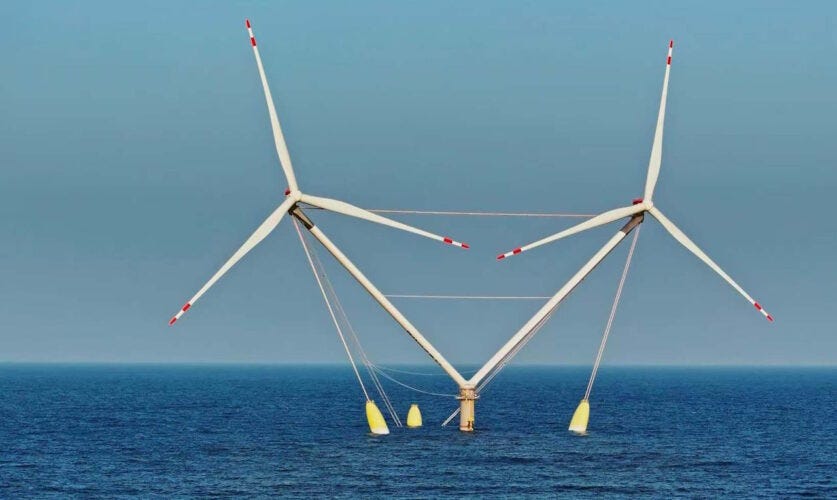
And China’s two-headed wind turbine might massively drop wind’s cost. In 2024, Chinese wind giant Ming Yang launched a prototype with two 8.3 MW turbines installed on 219-metre towers at an angle atop a floating platform. Now they’re planning a 50 MW monster, which would generate power at half to a third of the cost of the cheapest offshore wind in Europe and China. They’re hoping to begin mass production next year. Renew Economy
A surprise bonus from COVID-19 vaccines - they could help fight cancer. Cancer patients who received mRNA vaccines before immunotherapy lived dramatically longer—median survival nearly doubled for advanced lung cancer—according to data from over 1,000 patients at MD Anderson Cancer Center. The vaccines appear to trigger immune cascades that prime tumours for attack, revealing unexpected promise for mRNA technology beyond infection prevention. Science
China Academy of Sciences creates a record-setting magnet, advancing fusion. “Under the right conditions, superconducting magnets allow electricity to flow essentially undisturbed, producing intense magnetic fields for a variety of uses, including nuclear fusion experiments. Naturally, a larger magnetic field gives scientists more room to explore.” The magnet generated 700,000 times the strength of Earth’s magnetic field for half an hour. Gizmodo
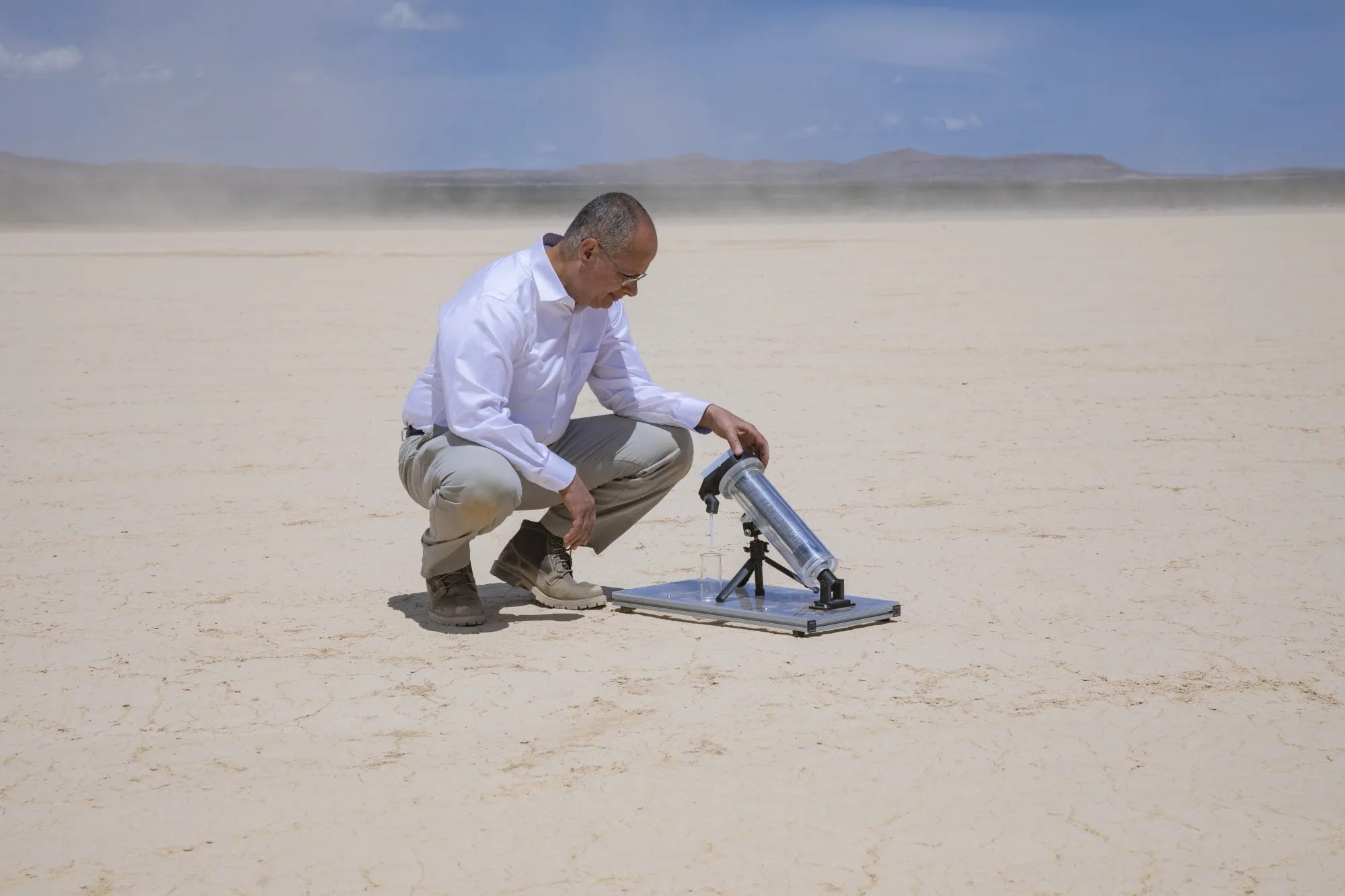
Nobel-winning chemistry turns air into water. A startup founded by new Nobel laureate Omar Yaghi plans to sell solar-powered “water-from-air” devices in 2026, able to make up to 1,000 litres a day without electricity. Using metal–organic frameworks to pull moisture from air, the California-based startup aims to supply drought-hit communities worldwide: proof that Nobel science can now quench real thirst. Bloomberg 🎁
Japan court rules sterilisation requirement for gender change unconstitutional.
In a landmark decision, Japan’s Supreme Court has struck down a law requiring transgender people to undergo sterilisation before legally changing gender, calling it a violation of constitutional rights. The unanimous ruling overturns a 2004 clause long criticised by rights advocates and aligns Japan with global human-rights standards. The Japan Times
Once choked by smog, Bogotá is cutting pollution through smart design and data-driven planning. Its Barrios Vitales initiative has transformed dense districts like San Felipe with new bike lanes, pedestrian zones, and greenery, boosting walking trips by 30% and slashing PM2.5 levels by 13%. With 33 neighbourhoods targeted by 2035, the city is hoping to become a model for clean, data-smart urban living. World Resources Institute
And newly released data from the World Bank shows that the global homicide rate has fallen by around a quarter in this century. Bet that wasn’t on your bingo card for the week. WDI