315: Shell-shocked. A new era of global health. GenZ ✊🏾 One Piece. Mega-batteries. School is cool.
Hidden stories of progress from around the world.
This week’s top stories
Humanity is entering a new era of global health.
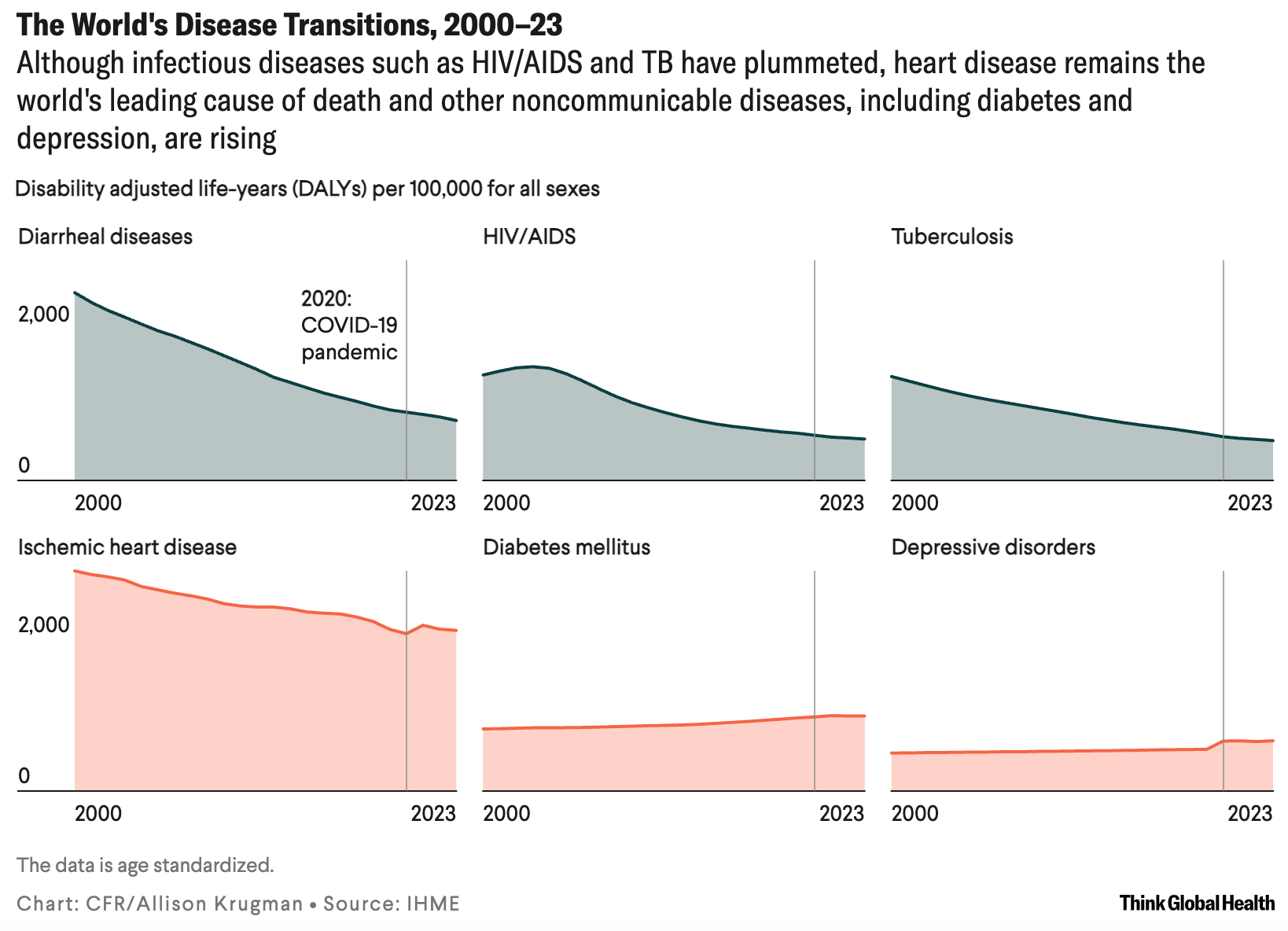
A sweeping new analysis in The Lancet of 204 countries shows that between 2021 and 2023, COVID-19 fell from the world’s leading cause of death to the 20th, and life expectancy rebounded beyond pre-pandemic levels in nearly two-thirds of nations. Since 2010, humanity’s overall burden of disease has dropped 12.6%, and deaths from the world’s deadliest infectious illnesses, such as tuberculosis, diarrhoea, HIV, malaria and pneumonia, have plunged by between 35% and 60%.
These extraordinary gains are the dividend of decades of work: mass vaccination, maternal and neonatal care, community health workers, and global institutions like the WHO, Gavi, and the Global Fund, which have made basic health infrastructure nearly universal. The result is an unprecedented baseline of human resilience. Even a once-in-a-century pandemic couldn’t derail it.
For the first time in our species’ history, infectious disease is not the dominant threat. Instead, non-communicable conditions (diabetes, heart disease, cancer, obesity) are now our biggest problem, and rising, especially in low- and middle-income countries, whose health systems have been designed for contagion, not chronic care. Climate change is adding new pressures, from heat-related illness to malnutrition and vector-borne diseases.
The lesson of The Lancet report is not that progress has stalled, but that it is being recalibrated. Humanity is healthier than it has ever been. The defining challenge of global health now is how to sustain and build upon that success.
There’s been a lot of talk about political violence in the United States. Did you know that it’s actually declining? After the assassination of Charlie Kirk, pundits warned of a return to 1960s-style bloodshed. Yet public demonstrations were down 40% in August and extremist group activity is now at a five-year low. The Southern Poverty Law Center also counted fewer hate groups for a second year running.
Oh, and gun deaths in the United States are at their lowest in a decade.
UNICEF reports that around 10 million fewer children are living in poverty in Eastern Europe and Central Asia than in 2021. Armenia, Georgia, and Uzbekistan saw the largest declines thanks to stronger social protection and rising wages. That’s not nothing!
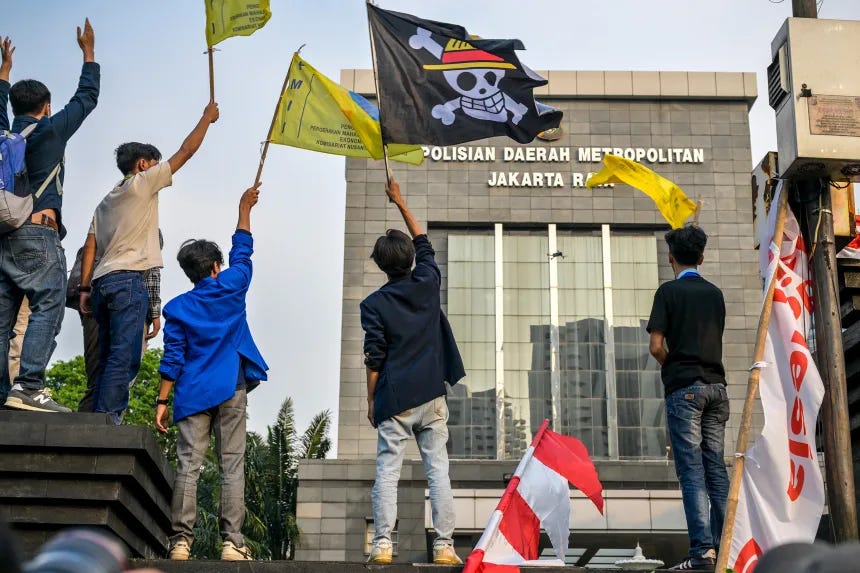
Gen Z turns street power into leadership change. In the last few years youth-led uprisings have reshaped politics from South Asia to Africa. Sri Lanka’s Aragalaya protests forced out Gotabaya Rajapaksa in 2022; Bangladesh’s students ousted Sheikh Hasina in 2024; and in 2025, GenZ demonstrators have driven Nepal’s former prime minister to resign, Madagascar’s leader to flee the country, and forced democratic concessions in Indonesia and the Philippines.
☝️ Best bit?
Nepal’s GenZ protestors uniting under the One Piece flag, and using the chat platform Discord to decide who they wanted as prime minister.
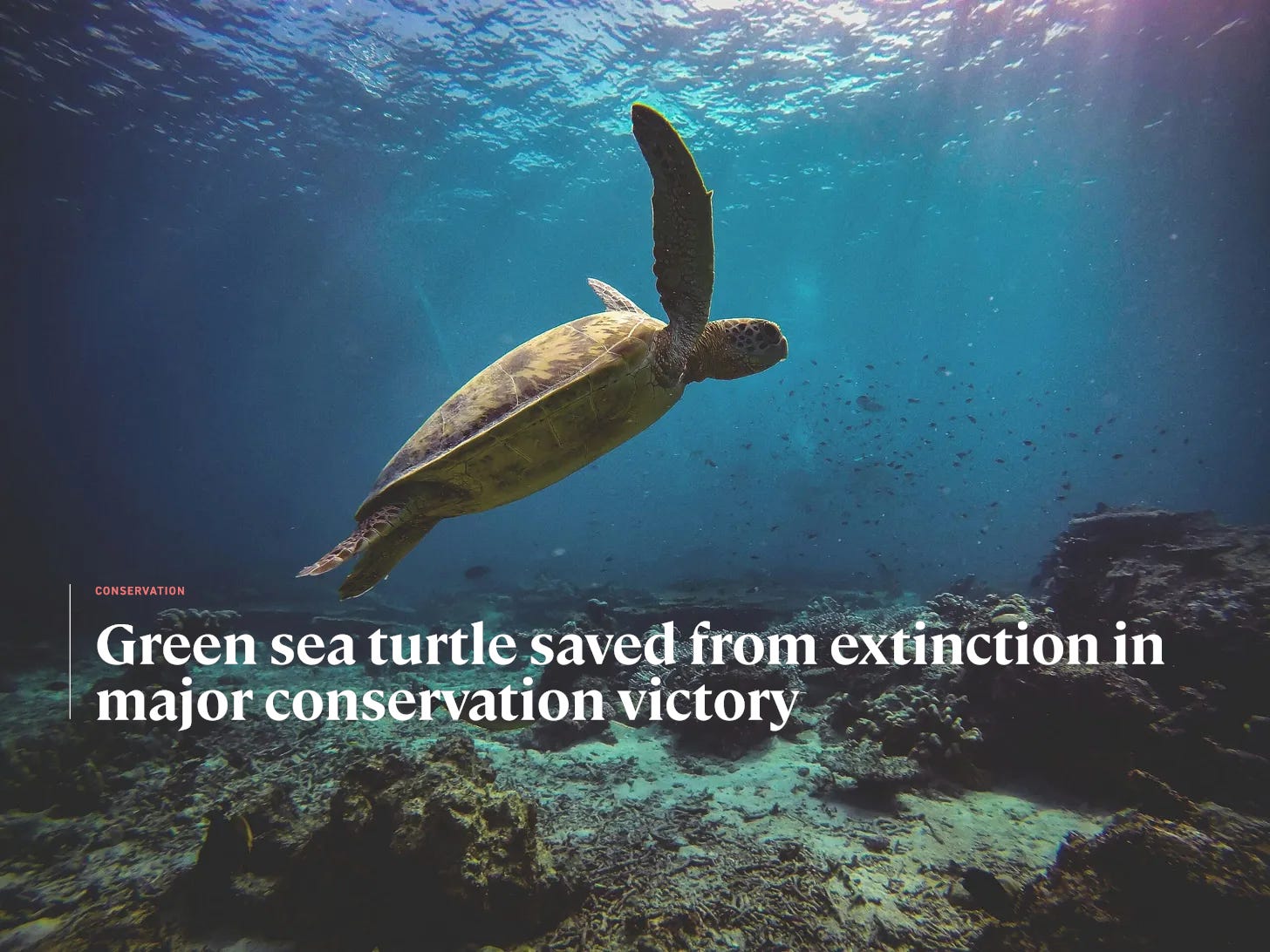
Once on the brink of extinction, green sea turtles are making a comeback in the Pacific: nest counts on Australia’s Heron Island have risen tenfold since the 1970s, and populations across the Pacific now meet IUCN recovery thresholds, thanks to decades of protection, turtle-safe fishing, and community-led conservation.
Meanwhile, in a recovery called a ‘near miracle’ Eastern Australia’s population of humpback whales now surpasses pre-whaling numbers. The population, rebuilt from just 150 survivors in the 1960s, may soon plateau as it reaches environmental limits.
Next up for the Pacific? A coalition of marine scientists and aquariums has unveiled the first global “de-extinction” programme for sharks, aimed at breeding and reintroducing functionally extinct species. Starting with the Pondicherry shark and Java stingaree, the initiative combines DNA banking, captive breeding, and habitat restoration to rebuild collapsed coastal ecosystems. If successful, it could reverse local extinctions across Asia and Oceania.
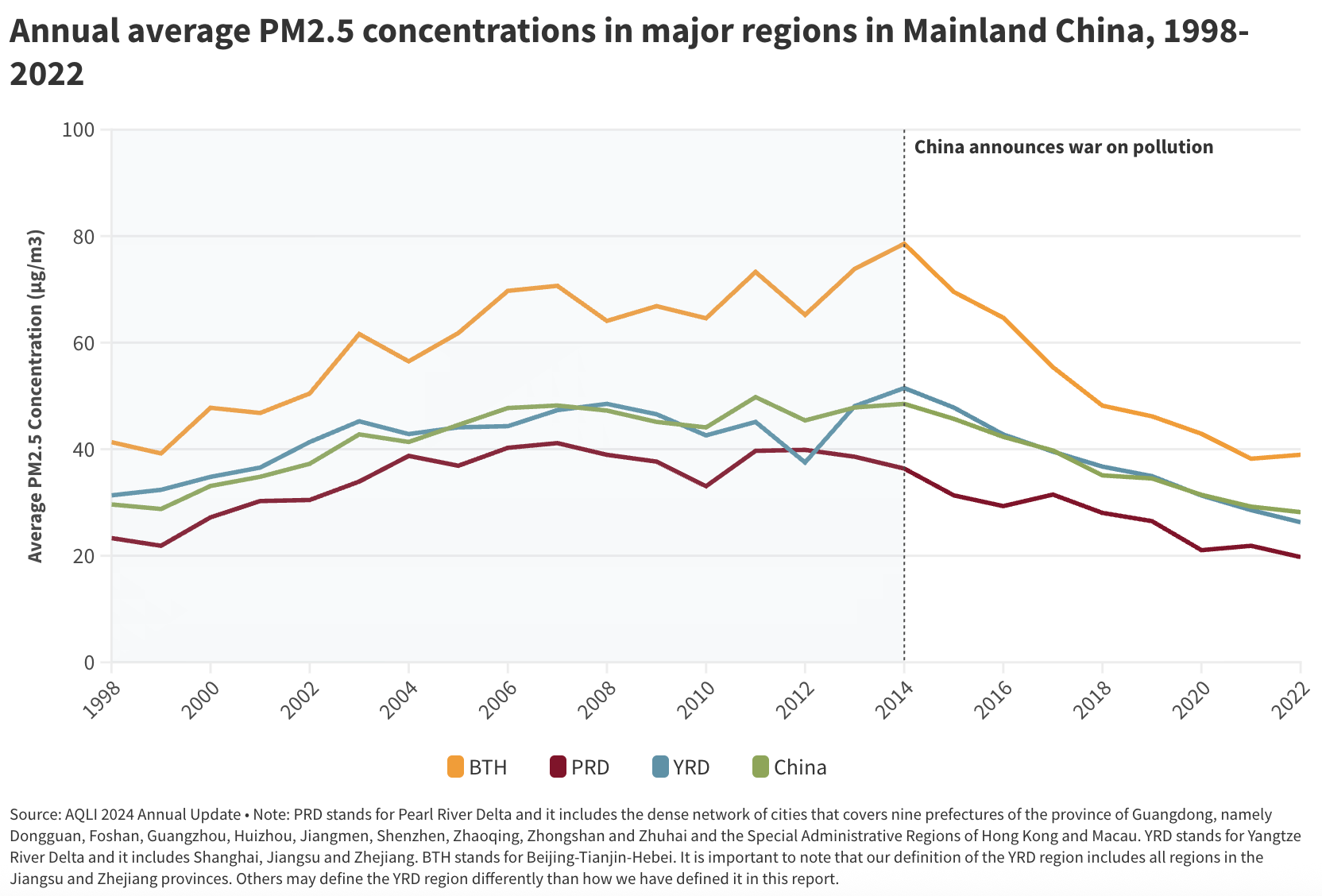
China’s clean-air drive adds years to life expectancy. Air-quality reforms in China have slashed concentrations of fine particulates by nearly half since 2013, preventing an estimated 2.2 million premature deaths annually. New analysis from the University of Chicago shows the average citizen now lives 2.9 years longer, with the clean-air gains rivalling those from decades of U.S. environmental policy — but achieved in just one decade. Energy Policy Institute at the University of Chicago
Former USAID chief says foreign aid is over, but Africa’s self-reliance is rising. Rajiv Shah, now President of the Rockefeller Foundation, argues that as donors slash billions in aid, developing nations are inventing a more durable model: one powered by domestic reform and private capital. At a January summit in Dar es Salaam, African leaders committed to self-funded health systems that would prioritise things like electricity access and school meal programmes, calling this shift “liberation through ownership.” New York Times
In a single week, the EU unveiled nearly $15 billion for Africa’s green energy transition, from village micro-grids to continental interconnectors. A $636 million pledge at the United Nations (7th October) was followed by a $670 million “Team Europe” package in Brussels (9th October) and $13.3 billion for South Africa (13th October). The investments target universal access, regional power trade and green industrialisation. Mongabay / EC / Reuters
Plus, the World Bank’s scorecard for July 2024 to July 2025:
244 million people reached by social safety nets.
325 million students supported.
Electricity access extended to 215 million people.
Another 136 million helped to become more resilient to climate shocks.
Broadband access nearly doubled to 217 million people.
That’s not nothing either…
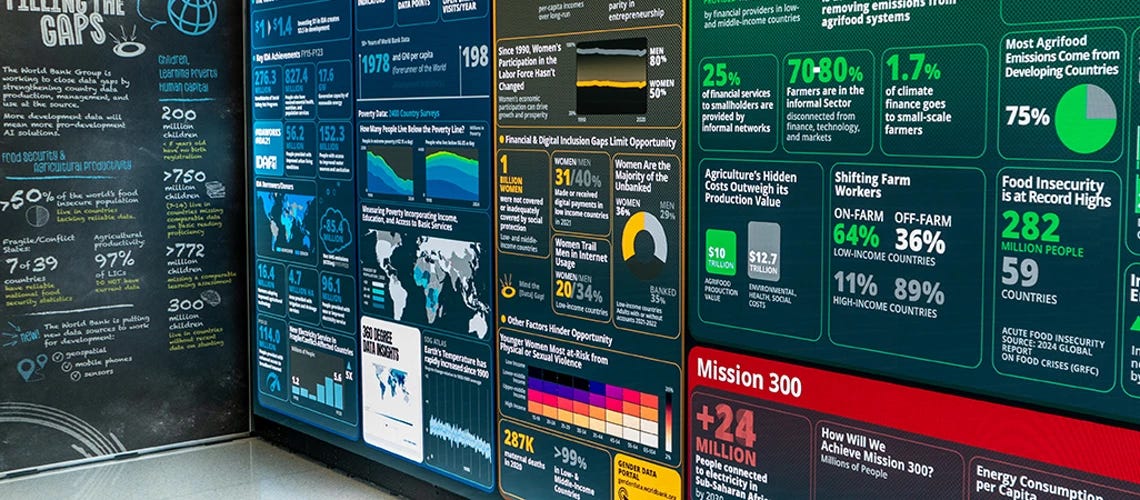
Let’s zoom in on that “325 million students” statistic. The big picture here is that going to school is a macroeconomic engine. New cross-country research from World Bank economist Amory Gethin finds that education has driven about 45% of global income growth since 1980, and a whopping 60% of gains for the poorest 20%. The mechanism isn’t only “more skills = higher pay”; expanding schooling also swells the supply of skilled workers, which narrows wage gaps, so the benefits spill over to low-skilled households too. VoxDev
Case in point: Vietnam, where the government cut extreme poverty from around 50% in the early ’90s to approximately 1% by 2022. The government’s playbook was education-centred: universalise primary education, push secondary, professionalise teachers, and pair schooling with rural electrification, roads, clinics and clean water (nearly 100% of households now have power). The outcomes include adult literacy reaching 96%, with youth literacy essentially universal, and Vietnamese teens outperforming peers in richer countries.
And starting early pays off: preschool attendance in Morocco has surged from 23% in 2018 to 73% in 2024 after a nationwide early-education reform. Investments in teacher training, rural infrastructure, and public–private partnerships have transformed access for millions of children, particularly in disadvantaged areas. The World Bank says the results show how targeted funding can rapidly improve learning equity.
Seems like a good time to call back to a story we featured in FTN 303 in July, “How did the Indian state of Kerala turn progress on health and literacy into wealth?” (Thank you, Aeon!)
Also while on the topic of “it’s cool to go to school” Canada has made its national school food programme a permanent part of the federal budget, committing to C$1 billion over five years and ongoing annual funding thereafter. The initiative will provide healthy meals to up to 400,000 additional children while supporting local producers, and marks a historic step from fragmented local efforts to a universal, rights-based approach to child nutrition.
India installed 29.5 GW of new solar capacity in the first nine months of 2025, more than the total ever installed by countries like France or South Korea. The surge, driven by record-low module prices and streamlined permitting, puts India on pace to exceed its 2030 renewable targets five years early. Solar now supplies over 10% of the country’s electricity. PV Magazine
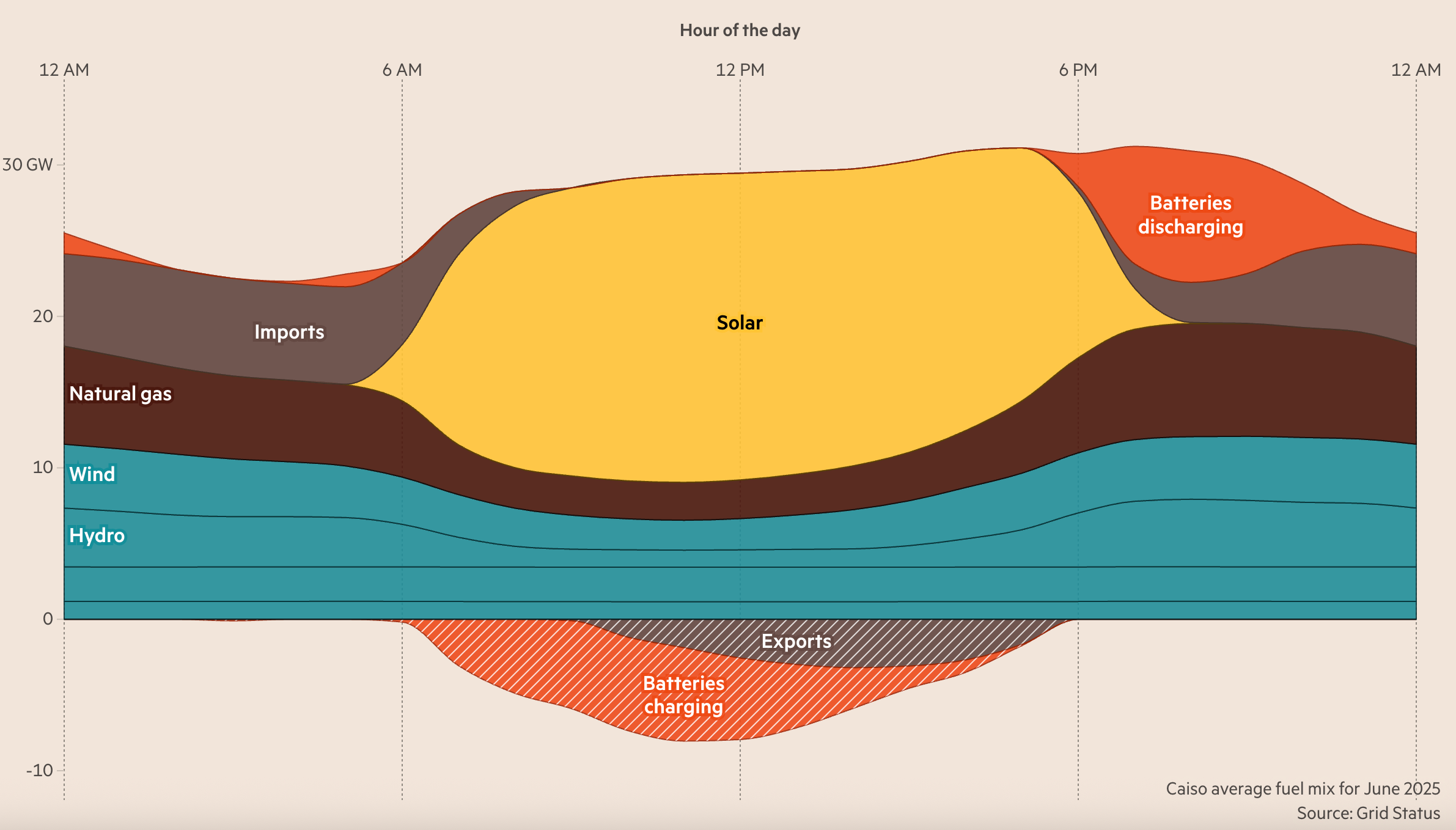
Around the world, mega-batteries are unlocking mega-energy. California is ground zero. Since 2020, the state has tripled grid batteries to 13GW, with 8.6 GW more due by 2027; this spring and summer, batteries supplied over a quarter of evening peaks. Across the United States, 50% more utility scale batteries were added over the last year than the year before despite Trump. Analysts keep forecasting a slowdown; builders keep proving them wrong.
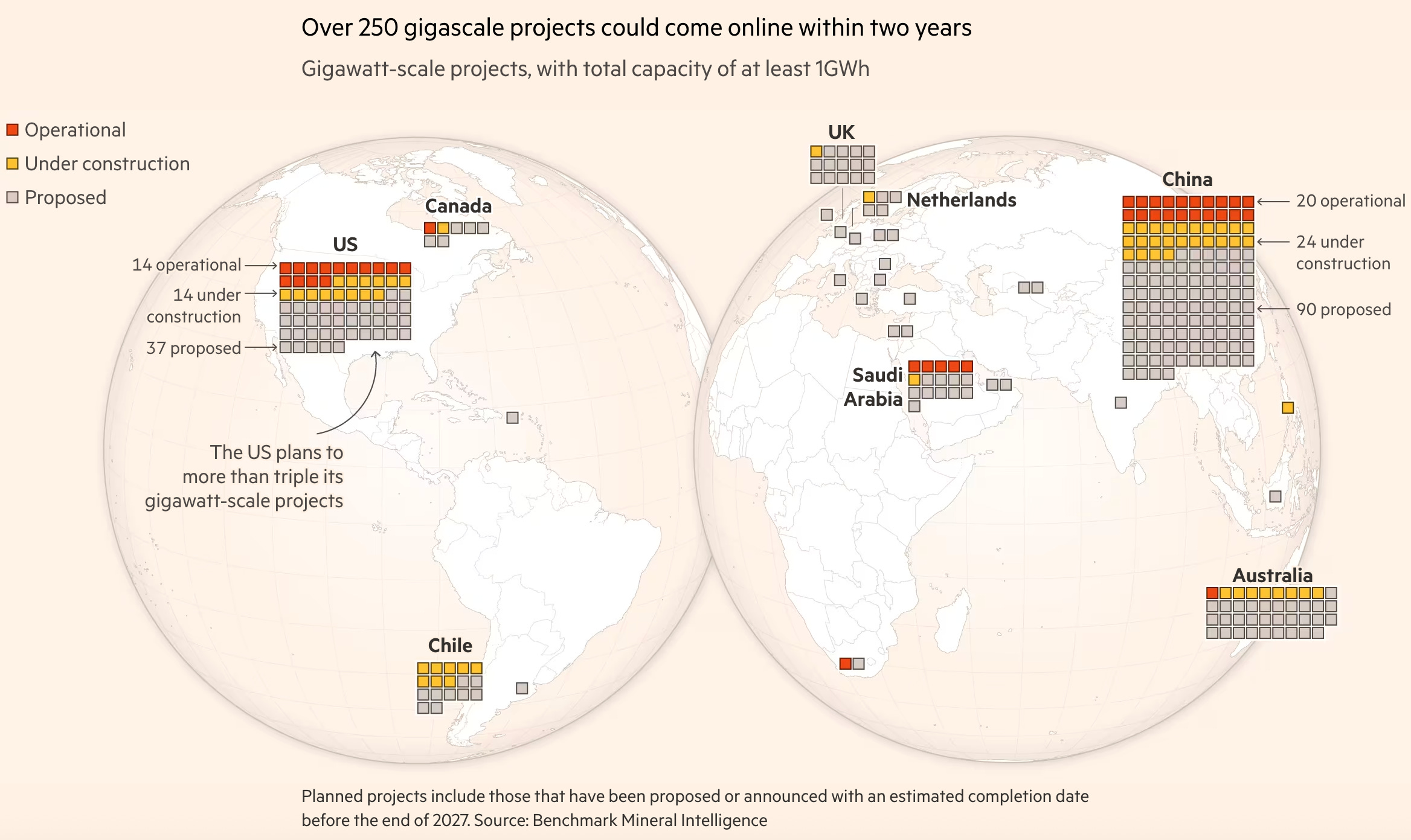
The boom is global: In 2022, there was only a single gigawatt-scale facility (defined as having a capacity of at least 1GWh, able to supply roughly 3 million UK households for an hour) in operation worldwide. Today there are 42 such sites, and five times as many set to come online in the next couple of years. The result? Excess midday solar becomes clean, usable electricity after dark, displacing fossil gas and stabilising grids. FT
Can’t wait for this to appear in science fiction… James Webb Space Telescope may have spotted the Universe’s first ‘dark stars.’ Astronomers have identified four ultra-distant objects that may be supermassive dark stars — theoretical giants powered not by fusion but by annihilating dark matter. If confirmed, they would mark the first evidence of stars sustained by dark matter energy and could explain the rapid emergence of early black holes and galaxies just 300 million years after the Big Bang. ScienceDaily
Two new cancer treatments are coming down the pipe. Researchers have developed a new therapy that uses naturally occurring enzymes to weaken cancer cell membranes, making them more vulnerable to the body’s immune defences. The method effectively “softens” tumour cells without harming healthy tissue and could enhance treatments like immunotherapy and chemotherapy. Medical Xpress
Meanwhile, MIT and Harvard researchers have re-engineered the immune system’s first responders, natural killer cells, so they can hunt tumours without being fought by the rest of the immune system. In mouse models, they wiped out most lymphoma cells within weeks, stayed active longer, and avoided the dangerous immune storms that plague some CAR-T therapies. MIT
And finally, we don’t usually do ‘dog on a surfboard’ stories, but this picture is just too good to resist. In Washington State, scientists are using drones and sniffer dogs on boats to monitor the Pacific Northwest’s endangered southern resident orcas. The canine-aided surveys detect stress hormones and pregnancies from whale scat, informing salmon-restoration plans vital to the orcas’ recovery. The Guardian