

312: The Age of Rewilding. Martians. Babelfish 🐡. Universal blood? Golden monkeys.
Hidden stories of progress from around the world.
You're reading Fix The News, a weekly roundup of stories of progress. We give away 30% of our subscriber fees to charity. Give someone a gift subscription. Get a group subscription for friends, family or your organisation. Listen to our podcast.
Episode Two of A Shot At History (our audio documentary about the rollout of the malaria vaccine) is out.
Available on Apple / Spotify / Amazon / iHeart / Pocket Casts
Hi everyone, this month’s charity partner is Tacugama, one of the world’s leading chimpanzee sanctuaries, with over 120 rescued chimps in their care. From regular medical checks to round-the-clock care for orphaned babies, their team goes to extraordinary lengths to ensure the wellbeing of every animal. But their mission doesn’t stop there. They run education programs and work with local communities to protect forests and create new sources of income.
Earlier this year, they won a years-long battle to have the 6,000 acres surrounding the sanctuary designated as protected area. However, without proper government enforcement, deforestation has continued to encroach, threatening the safety of the chimps and recently forcing Tacugama to close their doors to tourists, who are a major part of their revenue.
Thanks to the generosity of our paid subscribers we’re sending them US$10,000 to feed the chimps and help keep the lights on during an impossibly challenging time.
Here’s a video from Bala Amarasekaran, Tacugama’s founder, explaining the situation and thanking our paid subscribers for making this possible.
Before we get into this week’s top stories, a reminder:

This week’s top stories
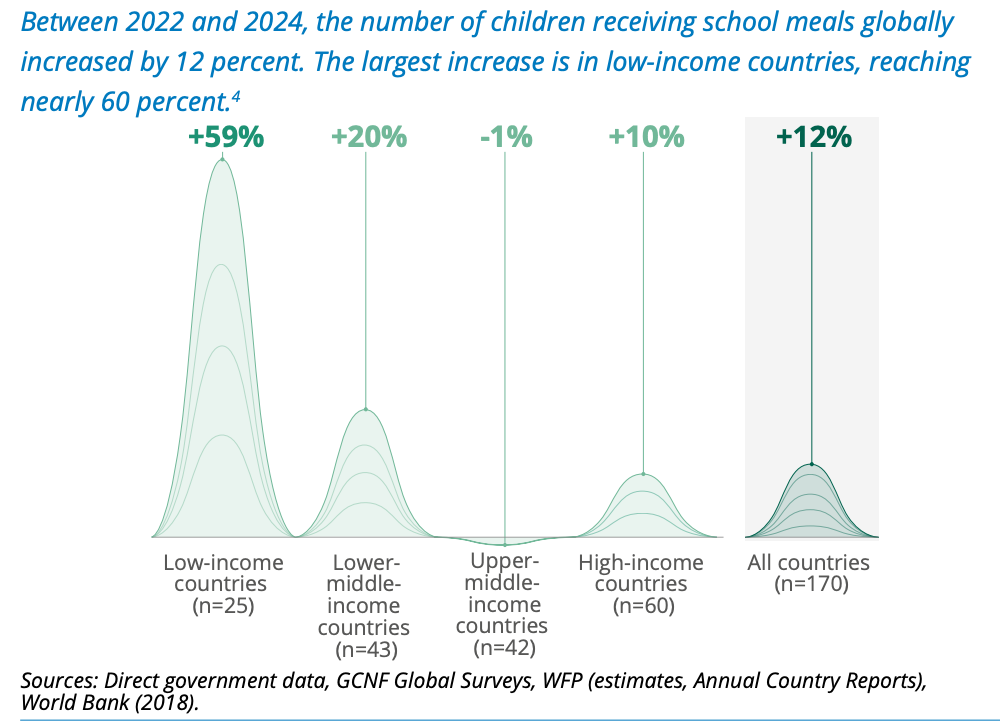
National school meal programmes now serve 466 million children worldwide, up 80 million since 2020 (yes, that’s 80 million more children in just four years). Low-income countries expanded access by 60%, while global funding for school meals has more than doubled, rising from US$43 billion in 2020 to US$84 billion in 2024. The most encouraging statistic of all? 99% of funding is now coming from national budgets. WFP
Humanity enters the age of rewilding. The world has already passed peak farmland: cropland and pasture have been contracting since the 2000s, outpacing deforestation losses. In Europe, North America, Australia and Central Asia, abandoned pastures are reverting to grasslands and forests. Productivity gains have spared 18 million km² from cultivation, while synthetic fibres, sweeteners and flavourings have freed another 1.1 million km², twice the area of Spain. Shifting diets are sparing land too: Europe’s move from beef and lamb, to poultry and pork, has saved 200,000 km². If these trends continue, the 21st century will mark the first time humanity leaves more nature behind than it inherited. BBC Future
See also: Humanity will shrink, far sooner than you think. The Economist
All this means that the world’s population is likely to peak much earlier than experts have been predicting. Rather than climbing until 2084, as the UN currently foresees, to 10.3 billion people, it may stop growing in the 2050s and never exceed 9 billion.
China’s green “Marshall Plan” is reshaping global energy. China has invested over $200 billion into green manufacturing projects in other countries since 2022, surpassing the amount (in 2024 dollars) invested by the United States over the four years of the Marshall Plan in the 1940s and 1950s, when America was the world’s dominant manufacturing power. This greenfield spending is building factories, ports and facilities that will cement the world’s commitment to clean technology, and generate jobs and investments for decades to come. Bloomberg 🎁
China’s solar exports last year alone were sufficient to cut long-run global carbon emissions by 4 billion metric tons, equivalent to about 40 days of emissions.
Apple unveils the Babelfish AirPods Pro 3. Hold the buds, ask Siri, and hear foreign languages converted in real time straight into your native tongue… assuming your native tongue is English, French, German, Spanish or Portuguese. It’s not seamless, there’s a lag, and the languages are limited, but it’s still an extraordinary, under-hyped technical miracle, worthy of Douglas Adams.
Our World in Data shows that worldwide maternal mortality rates per 100,000 live births fell by 57% between 1985 and 2023, resulting in around 365,000 fewer maternal deaths each year. Even seemingly simple innovations have had a huge impact…take e.g. this low-cost plastic drape that has resulted in a 60% reduction in severe blood loss from postpartum haemorrhage:
Non-communicable disease mortality has declined in four of every five countries in the world. An analysis of WHO data shows that, between 2010 and 2019, the probability of dying from a non-communicable disease before the age of 80 fell in 152 countries for women and in 147 for men, covering roughly 72% of the global population. Most gains came from reduced deaths from cardiovascular disease and cancer, with Russia, Egypt, and China seeing marked improvements. The Lancet
One of the great things about having a global economy is that places can learn from other places. Example: in Europe, decades of investment in reservoirs, dikes, and coastal defences means flood deaths have fallen sixfold since 1950 even as climate change makes weather wilder. Taking a leaf from Europe’s book, India is now scaling similar protections with an $850m coastal resilience programme in the works. The programme’s flagship project in Tamil Nadu and Karnataka will conserve 30,000 hectares of seascape, create 100,000 jobs, and incidentally, cut plastic pollution loads.
Budapest Pride 2025 drew a record crowd, with tens of thousands marching in open defiance of laws restricting LGBTQI+ gatherings and authorising facial recognition to track participants. Organisers also faced police bans and political threats, with Budapest’s mayor stepping in to host the event, despite the justice minister warning he could face prison for doing so. Human Rights Watch

Prairie for the people. Conservation nonprofit American Prairie in Montana has acquired land once held by two Texas billionaires who had blocked public access to the 1,619 km² Upper Missouri River Breaks National Monument. With holdings now spanning more than 2,428 km², the nonprofit aims to stitch together 12,950 km² of shortgrass prairie - the last habitat of its kind - home to bison, badgers, prairie dogs, ferrets, pronghorn, sage grouse and swift fox. Earth Hope
A mountain becomes a legal person in New Zealand. Taranaki Maunga on New Zealand’s North Island was granted legal personhood in January after a unanimous parliamentary vote, following years of advocacy by Māori iwi who regard the volcano as an ancestor. By treating the mountain as a living legal entity, it now holds rights to protection, preservation, and even the ability to initiate legal action, with guardianship shared equally between New Zealand’s government and the Māori. CNN
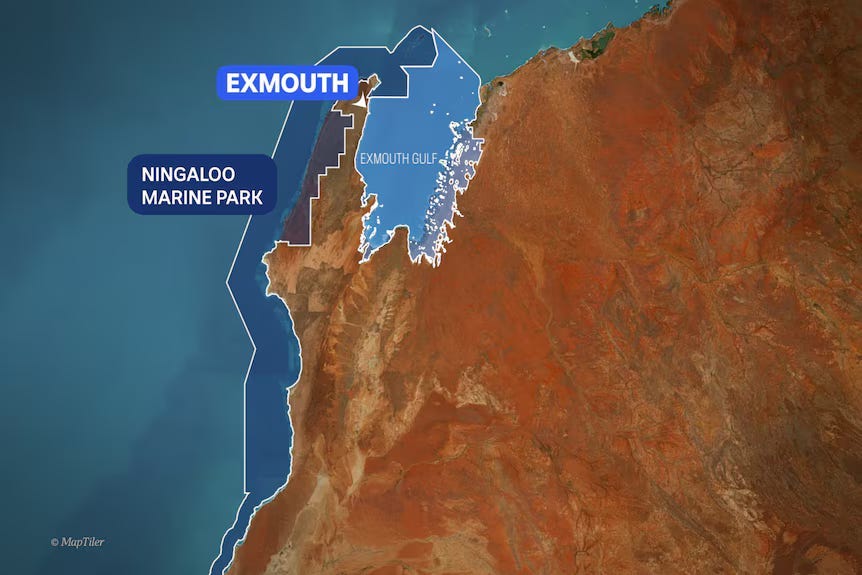
Western Australia has created a 3,200 km² protected area along the northwest coast, safeguarding nurseries for humpback whales, dugongs and turtles. The move follows years of community and conservationist opposition to industrial expansion in the Gulf, long seen as one of the nation’s richest marine habitats. The state government said it will work with traditional owners on a joint-management plan and consult with fishers over the next year. ABC News
Chiefs from Papua New Guinea, the Solomon Islands and Vanuatu have endorsed a proposal for the world’s first Indigenous-led ocean reserve, covering 286,000 km² across the Bismarck and Solomon seas. “Never before have countries united across entire exclusive economic zones to enshrine Indigenous governance, constitutional authority, and ancestral stewardship as the foundation of large-scale ocean protection,” said Solomon Islands Prime Minister Jeremiah Manele. The reserve, if it goes forward, would mark a “turning point in history.” Oceanographic Magazine
Some good news from China:
Authorities are launching a three-year nationwide bird protection drive that will intensify crackdowns on poaching and illegal trade, while expanding sanctuaries for species such as the crested ibis and black-faced spoonbill. China is home to more than 1,500 species of bird - 13% of the world’s total - including 800 migratory birds along four global flyways. China Daily
In Guizhou’s Zunyi prefecture, 88 small hydropower stations have been dismantled since 2018, restoring natural flows along 163 km of the Chishui River, the Yangtze’s only free-running tributary. Thanks to a 10-year fishing ban, endemic fish species rose from 90 to 98, with some tripling in size, giving local communities a river alive again with fish. China Daily
And China’s golden snub-nosed monkeys rebound. In Shennongjia, where numbers fell below 500 in the 1980s as forests were felled and monkeys killed for fur, decades of protection have lifted the population to over 1,600. Professor Yang Jingyuan, now the leading expert on this rare species, has spent more than 30 years helping shift local farmers from logging and hunting to forest guardianship. Today, forest cover has reached 96% and the monkeys’ family groups are flourishing. BBC
A Brazilian drug raises hopes of reversing spinal cord injury. After 25 years of research, scientists in São Paulo have developed a treatment based on laminin, a protein found in the human placenta. In animal trials, it reactivated dormant nerve pathways, restoring movement and sensation after paralysis. Early-stage human testing is now planned, raising the prospect of a breakthrough for millions living with spinal cord damage worldwide. Folha de S.Paulo
Israeli researchers have engineered enzymes that strip away the sugars on red blood cells, effectively converting all donated blood into universal type O. In lab tests, the enzyme-treated cells flowed safely with all blood types, opening the door to solving chronic shortages and making blood transfusions faster in emergencies. Feels like this story should be a bigger deal than it is? Ynet
This too! We have the strongest evidence yet that life once existed on Mars. NASA’s Perseverance Rover drilled into Mars’s Jezero crater and pulled up a piece of mudstone covered in markings that resemble those left behind by metabolizing microbes on Earth. Obviously more investigation is needed before “bio-signatures of microbes” becomes “there was life on Mars, definitely,” but still, the finds are incredibly exciting. TIME

