

310: Bipedalism. Rice. US prisons empty out. Fires in the Amazon ⬇️🔥. A very cute marsupial.
Hidden stories of progress from around the world.


You're reading the premium version of Fix The News, a weekly roundup of stories of progress. We give away 30% of your subscription fee to charity. Give someone a gift subscription. Get a group subscription for friends, family or your organisation. Listen to Episode 1 of A Shot At History, our audio documentary about the malaria vaccine.
One of our readers is Professor Jennifer Mercieca, who teaches communication and journalism at Texas A&M. She recently ran an experiment with her students that we think you'll find fascinating.
Like many of us, Jen’s students are chronic doomscrollers, turning their phones into what she calls ‘misery machines.’ But instead of just accepting this as the way things are, she decided to try something: what if her students spent time ‘hopescrolling’ instead?
She had them create social media accounts devoted entirely to sharing solutions journalism, about problems being solved, diseases being eradicated, renewable energy advances, that kind of thing. None of their posts went viral or got much engagement (no surprise there) but what happened to the students themselves was remarkable.
Many of my students reported that the experience was both illuminating and healing. “Before our Hopescroll project,” one wrote, “I really didn’t realize the amount of negative content I consume daily. I see scary news articles, I see people being mean to one another on social media, and I spend hours scrolling through posts that have no meaningful purpose.” Some students even noticed that their social media algorithms began to change, as they started to see more positive content on their feeds instead of quite so much doom.
One student reported that shifting their attention away from “institutions that benefit from people’s fear” and toward “those who aim to heal” made them feel more resilient. Several students noted that they saw a shift in their moods that surprised them: “Honestly, I did not expect that much would change, however, after reading about communities working together for a large cause, individuals trying to make a difference in their own way, and new innovations being made in hopes of creating a better future, it readjusted my perspective that not all is bad and/or lost in the world.”
What Jen’s experiment shows is that we’re not passive victims of algorithmic manipulation. We have more power than we think. Every time we share outrage bait or doom-laden headlines, we're feeding a machine that makes everyone more miserable. But we also have the ability to choose differently. The algorithms will follow us wherever we lead them. We just have to decide where we want to go.
Thanks to Jen for this. You can read more about her experiment over here.
This week’s top stories
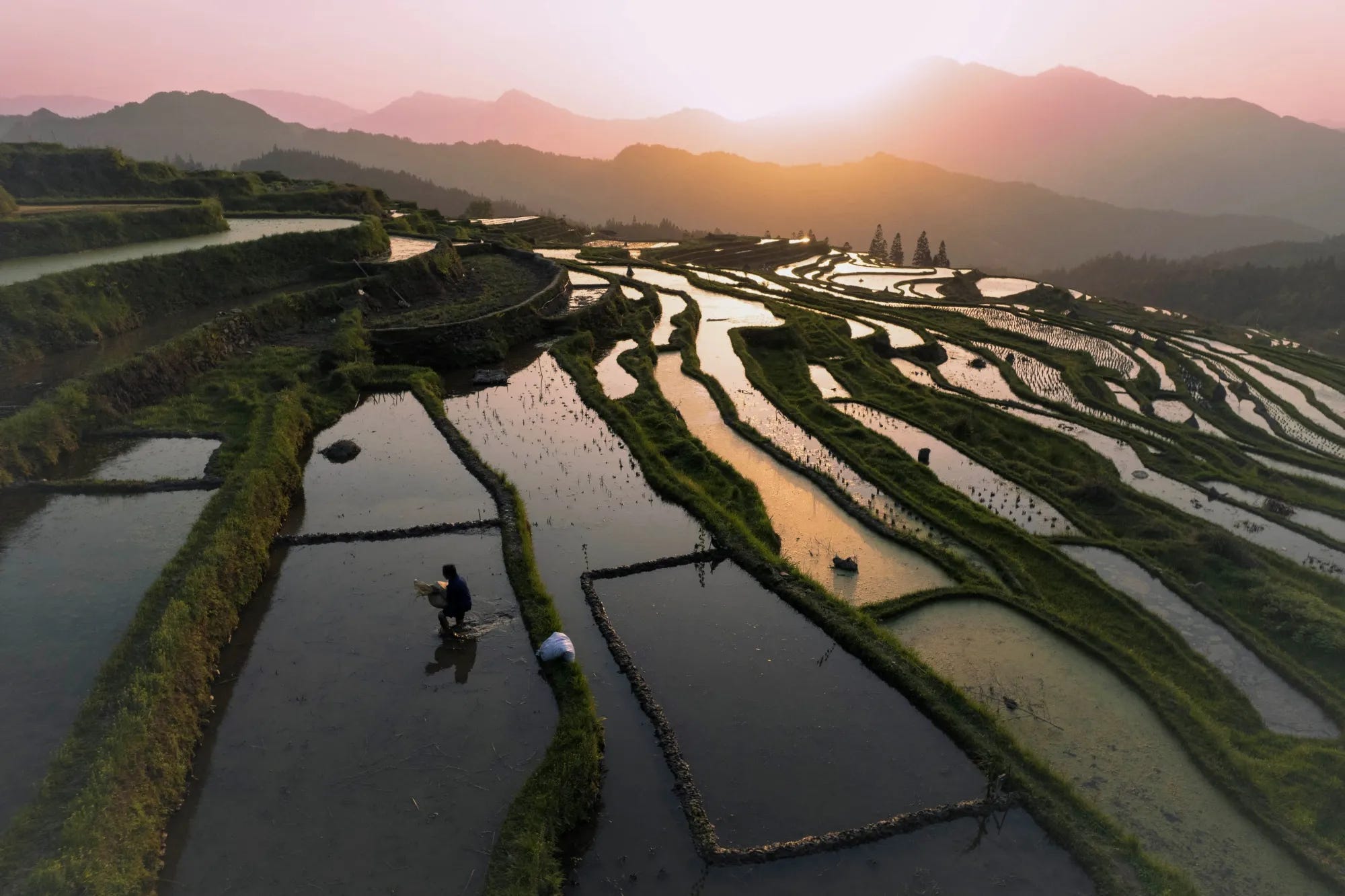
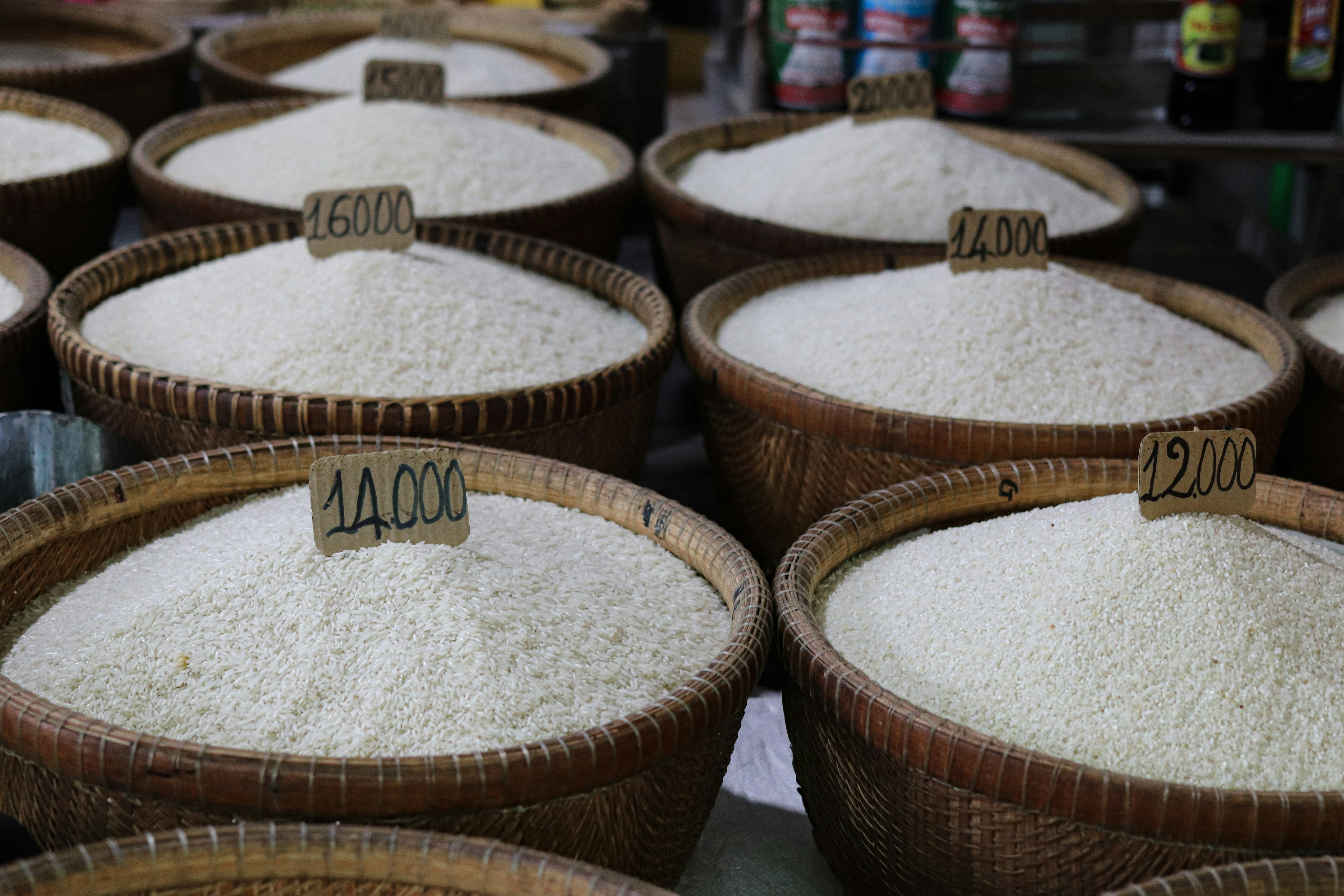
Rice prices fall, and a record harvest looms. Favourable weather and decades of farming improvements mean the world is on track for its biggest rice crop in nearly two decades. Global production for 2025–26 is forecast at about 541 million tonnes, helping to push prices down to their lowest in 18 years, and easing food costs for billions of people. Bloomberg
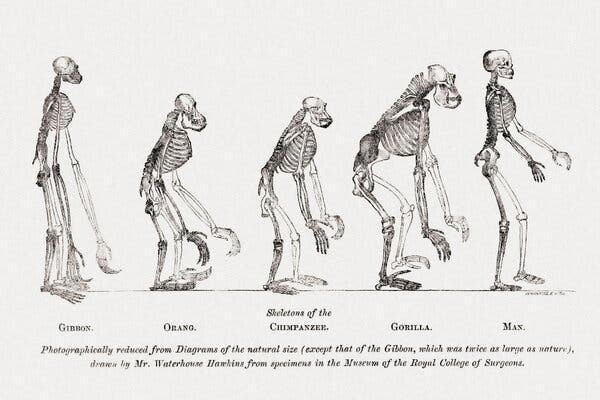
Fossil and genetic clues show how humans stood upright. A major study has traced how the human pelvis evolved for bipedalism. By comparing fossils with embryonic samples from humans and primates, scientists found that hip bones began growing in a new orientation about seven million years ago. Genetic analysis showed existing genes switched on in new patterns, reshaping muscles for balance. Science / New York Times
World’s largest fusion project approaches moment of truth. In southern France, 35 nations are collaborating to build the world's largest tokamak, a magnetic fusion device designed to sustain burning plasma - and US engineers just started the final assembly of the reactor core. The project has been plagued by delays, so we’re glad to hear it’s back on track. Evidence Network
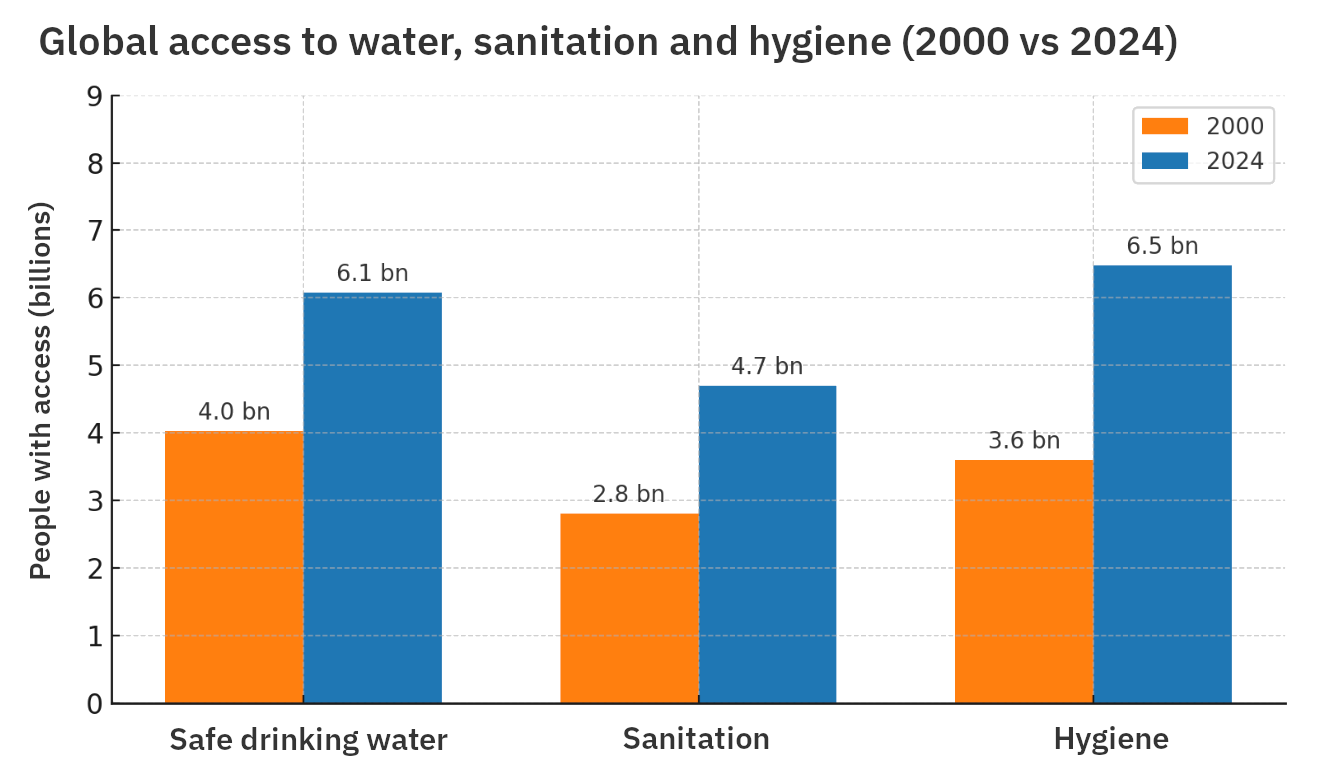
We know it was our top story last week, but we want to revisit the recent WHO/UNICEF report on water, sanitation and hygiene. The change since 2000 is staggering. Back then, only two-thirds of humanity could drink safe water; today it’s three-quarters, despite the world’s population growing by two billion. During the same time, sanitation has gone from being accessible to less than half of the world to nearly 60%, and basic handwashing has gone from 59% to 80% of the global population.
The scale of this is almost impossible to get your head around. We are talking about billions of lives altered in the most tangible of ways: homes with taps, schools with toilets, clinics where soap and water are always available. Progress like this slips past unnoticed, hidden by the news cycle, but in the grand sweep of history it’s as big as anything gets. Those numbers represent real children playing in the streets instead of dying from some shitty disease, hundreds of millions of mothers spared the daily burden of carrying water, and countless communities freed to focus on more than just survival.
👆 Our species has done something genuinely remarkable here, and it’s worth stopping for a moment to appreciate it.
Africa emerges from a decade of debt crises. For the first time in ten years, no African country is officially in debt distress. Mozambique was the last to exit after its borrowing costs eased. Debt burdens remain high and still weigh on growth, but the pressure is easing thanks to IMF-backed restructurings, falling inflation and renewed investor appetite. Bloomberg
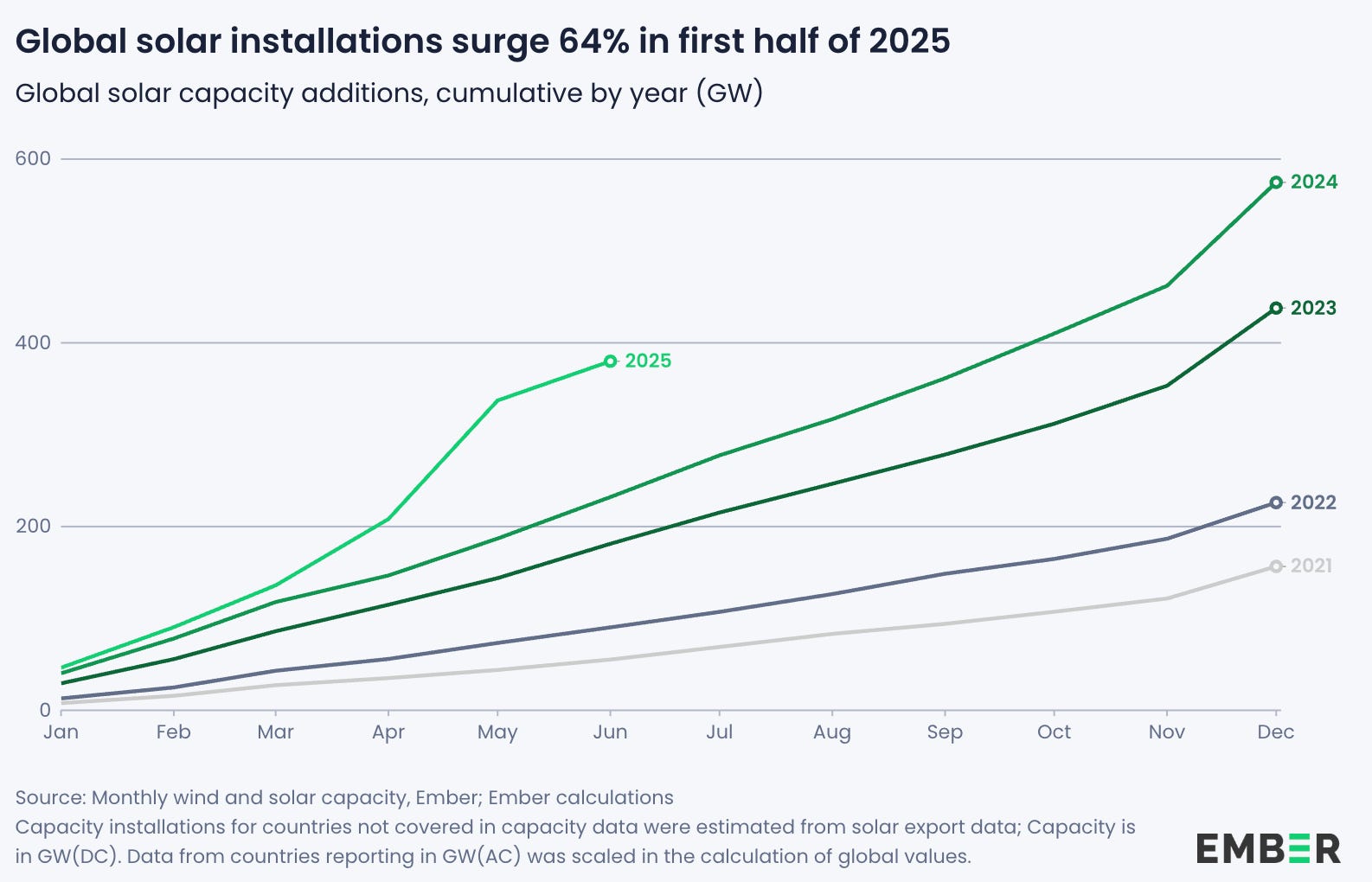
Global solar installations surge. In the first half of the year, the world added 380 GW of new solar capacity, a 64% jump from the first six months of 2024. It took until September last year to surpass 350 GW; in 2025 we crossed that threshold in June. Ember
US power growth now almost entirely clean
Trendlines vs headlines. In July 2025, 99.7% of power capacity that came online was clean. Solar and batteries made up 94% of additions, with large storage projects in Texas, Oregon and Arizona anchoring the buildout. California added a bunch of solar-plus-storage projects, while new solar farms were built across 20 states. Cleanview
Totally unrelated. ConocoPhillips, the third largest oil producer in the United States, is cutting its workforce by 20-25%. Reuters
After more than a century of industrial abuse, the Chicago River is now seeing fish populations return, recreational use expand and pollution decline. Multi-billion-dollar investments in sewage treatment and stormwater infrastructure have transformed what was once an open sewer into a recovering urban waterway. Inside Climate News
Solar electric plane soars to new heights. The SolarStratos aircraft, powered entirely by solar energy, has set a new altitude record for solar-electric planes by flying over the Alps, at over 8,000 metres, in a five-hour flight. The flight demonstrates the potential of lightweight photovoltaics and batteries for high-altitude aviation. New Atlas

In Brazil, Amazon fires drop by nearly two-thirds. Area burned fell 65% in July 2025 vs July 2024 - the smallest monthly area burned since satellite mapping of fire damage began in 2019. Over the first six months of the year, fires are down by 59%, the sharpest reduction in more than a decade. Officials attribute the decline to tighter enforcement, anti-deforestation policies and community fire prevention programmes. France24
Plus: Brazil has secured further support from the EU, US, UK and other partners for a $125 billion global fund to protect the Amazon. Bloomberg
And Brazil has passed a law banning the sale of cosmetics developed through animal testing. As the world’s fourth-largest beauty market, this means products like shampoo, perfume and makeup must now rely on cruelty-free safety methods. Brazil joins more than 45 countries with similar bans, shifting global standards. Humane World
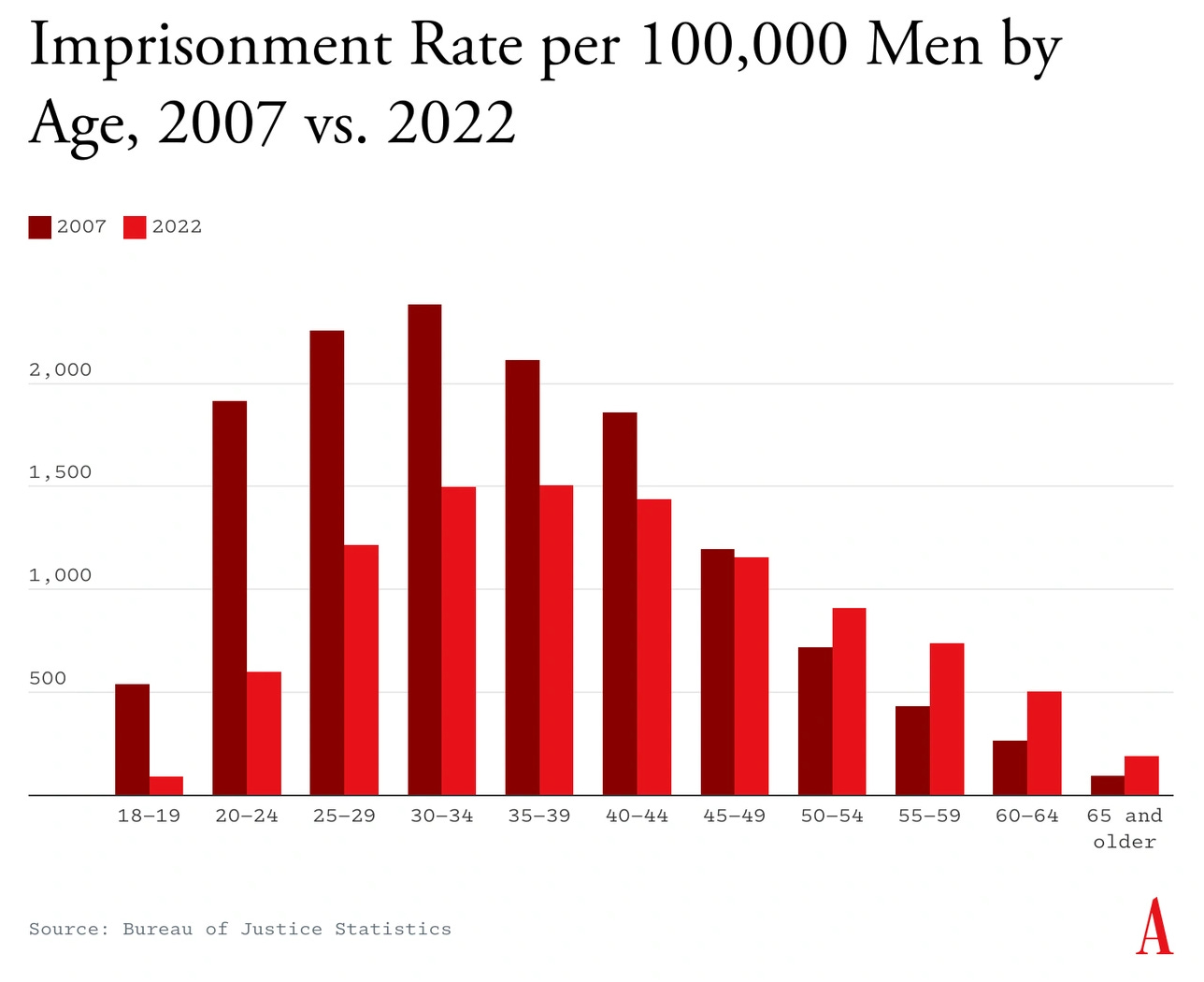
US prison population falls to its lowest in decades. America’s prison population has declined to its lowest level since 1992, with around 1.2 million people behind bars, down from a 2009 peak of 1.6 million. The shift reflects sentencing reforms, drug decriminalisation, diversion to treatment, and falling violent crime. The Atlantic
As the snake digests the pig year after year, the American prison system is simply not going to have enough inmates to justify its continued size or staggering costs.
Global bans on corporal punishment multiply. The WHO’s first global report shows the number of countries banning corporal punishment of children has jumped from 11 in 2000 to 67 in 2024. The shift represents a generational change in recognising children’s rights, though billions remain unprotected. UN News, End Corporal Punishment
Two new breakthroughs are reshaping oncology. Novartis’s radioligand therapy, which delivers radioactive isotopes directly to tumours, has completely cleared metastatic cancers in trial patients - an unprecedented result. And, US researchers found that blocking an immune protein (IL-23) makes HPV vaccines effective against existing tumours, raising hopes for therapeutic vaccines. Financial Times / Gavi
Humans harness AI to produce strange, successful physics experiments. Physicists gave an AI system freedom to propose experiments, and it devised unconventional setups, including some involving mirrors and magnets, that nonetheless produced valid results. The approach hints at a much-anticipated possibility that ‘machine creativity’ could drive new discoveries. Quanta
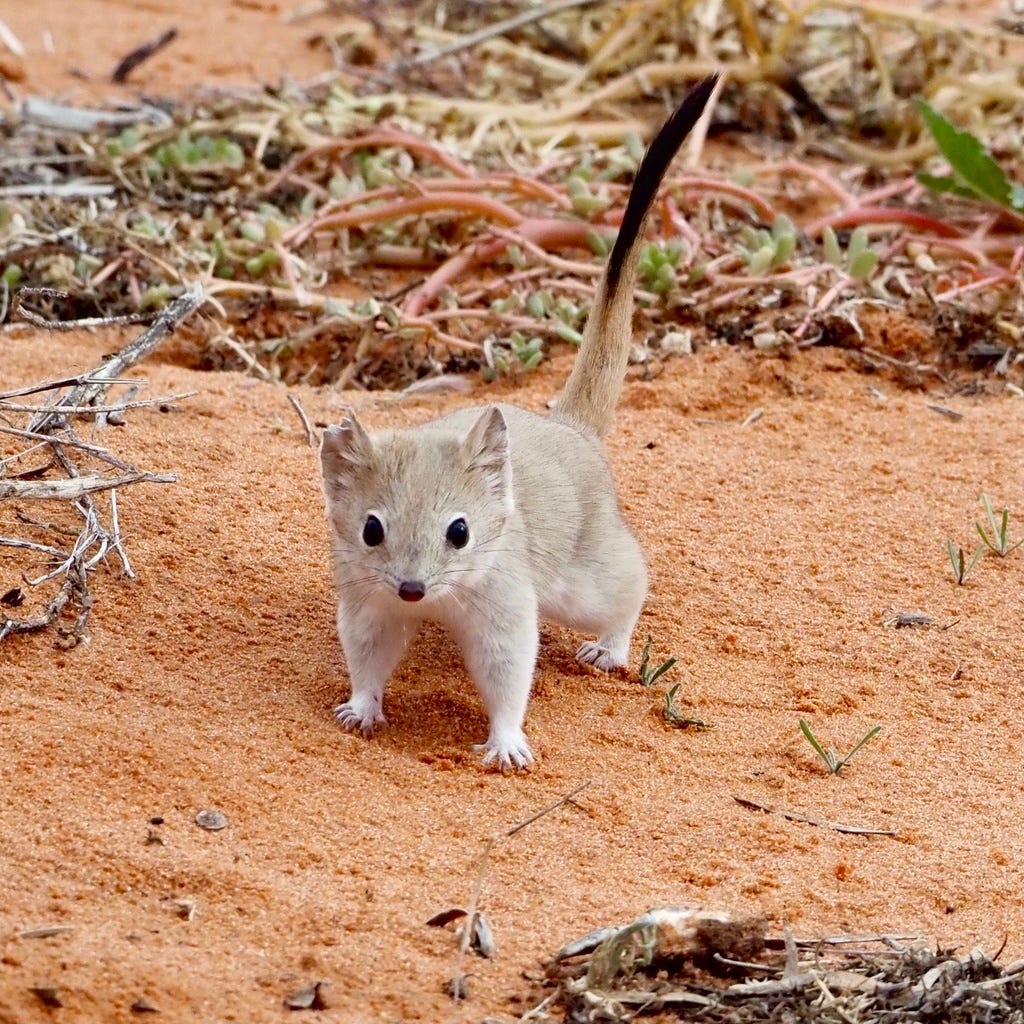
Good news from Australia! The crest-tailed mulgara has roared back to life. The mini marsupial predator, once listed as Endangered, expanded its range by more than 48,000 km² between 2015 and 2021, lifting its status to Least Concern. Researchers credit biocontrol, plus the species’ drought-hardy physiology, for a rare continent-scale mammal recovery. Biological Conservation
Human Progress
Australia recognises Millewa-Mallee native title. After decades in court, the Millewa-Mallee people of north-west Victoria have won legal recognition of their native title over 800 km² of land. The ruling secures their rights to care for and use the country, and is part of a wider movement that’s returned millions of square kilometres of land to Aboriginal and Torres Strait Islander peoples since the 1990s. The Guardian
Banning lethal pesticides saves lives. Sri Lanka’s decision to phase out deadly pesticides helped cut suicide rates by nearly two-thirds since the late 1990s. Because many attempts involved swallowing farm chemicals, replacing the most toxic ones with less deadly alternatives meant far fewer deaths. Similar declines have been recorded in other Asian countries, showing how regulation can quietly prevent thousands of needless tragedies. Our World in Data
Child stunting halved in Viet Nam and Ghana. Stunting has dropped from 36% to 19% in Viet Nam since 2000, and from 35% to 18% in Ghana since the 1990s. Gains stem from poverty reduction, maternal education and stronger health systems. Vietnam News, International Journal for Equity in Health
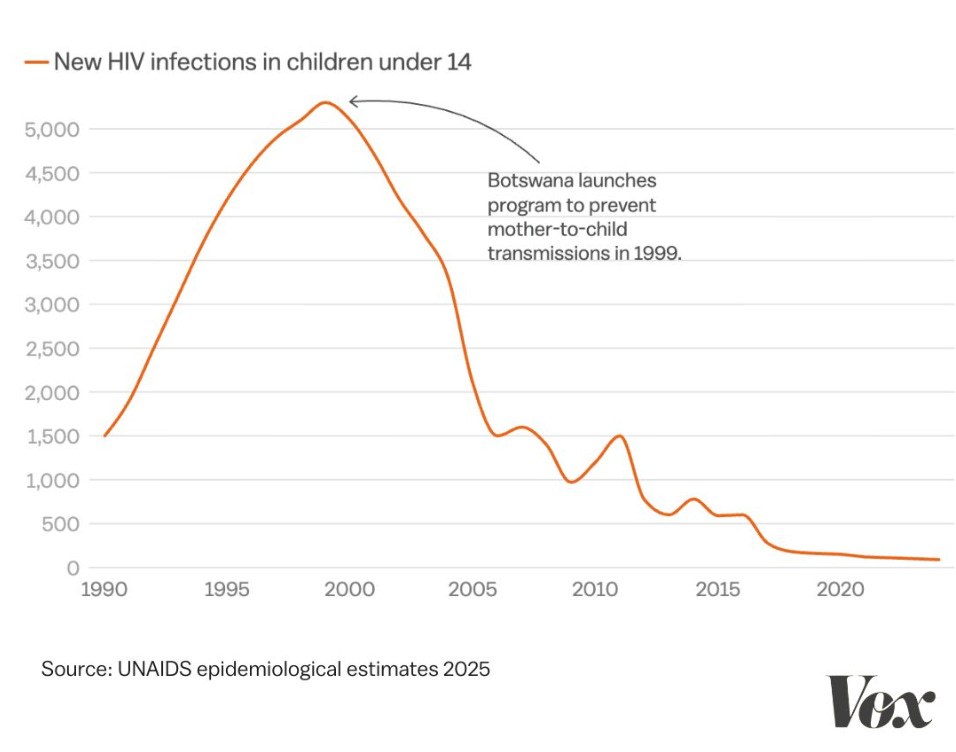
Botswana cuts childhood HIV to under 1%. We also reported this story last week, but Vox really brings it home with this graph. At the turn of the century, one in eight infants in Botswana were born HIV-positive. Today, thanks to early testing, treatment and prevention, mother-to-child transmission has dropped below 1%.
Czech schools to provide free menstrual products. From 2026, all Czech public schools will distribute free menstrual products, benefiting an estimated 1.5 million girls and young women. The measure tackles period poverty, improves school attendance and normalises menstrual health in education policy, and comes off the back of similar moves in Scotland, France and New Zealand. Prague Daily News
The World Bank has approved education projects reaching nearly 4.5 million children. In Cambodia, 450,000 young learners will benefit from expanded preschool access, teacher training and rural support. In Pakistan’s Punjab province, over four million students will see improvements in infrastructure, teaching quality and assessments, tackling pandemic learning losses and persistent gender gaps. World Bank (Cambodia), World Bank (Pakistan)
Since 2022, UN-managed funds have channelled over $500 million to Ukrainian civil society, enabling local NGOs to evacuate six million people, deliver food and shelter, and sustain frontline services. This is impressive both in and of itself and because it’s really hard to coordinate multiple donors and NGOs in a protracted crisis, and in Ukraine it’s actually gone very well. This means we (“we” being “humanity”) now have a new template for future humanitarian responses. ReliefWeb
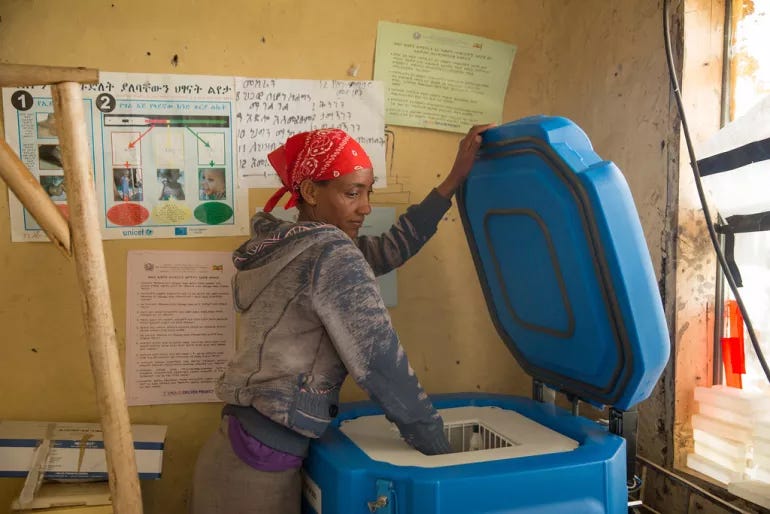
Gavi is equipping thousands of clinics in Zambia, Ethiopia, Pakistan and Uganda with solar power and cold chain systems.
In places where one in four health facilities have no electricity, solarisation is more than a technical fix, it is a lifeline. With $28 million in Gavi support, we’re powering 1,277 clinics across four countries, starting with Zambia. This means vaccines stay at the right temperature, babies are born safely and health workers can care for patients day and night.
Dr Sania Nishtar, CEO of Gavi
Environment & Conservation
High Seas Treaty count is now at 54. Cabo Verde and Saint Kitts and Nevis have just ratified the United Nations Convention on the Law of the Sea on the Conservation and Sustainable Use of Marine Biological Diversity of Areas beyond National Jurisdiction (phew, rolls right off the tongue), meaning only six more countries must ratify the treaty before it becomes international law. Down to Earth + High Seas Alliance
Paris air quality improves dramatically in a decade. Nitrogen dioxide and fine particle levels in Paris have dropped by around 40% since 2014. Cleaner vehicles, restricted traffic and EU directives have driven the decline, leaving the French capital with its lowest pollution readings in decades. Le Monde
Jaguar cubs signal return in Argentina’s Gran Chaco. Conservationists have confirmed the birth of a wild jaguar cub in Argentina’s Gran Chaco, where the species was once locally extinct. Decades of habitat protection and reintroduction efforts are restoring top predators to this dry forest region. Discover Wildlife
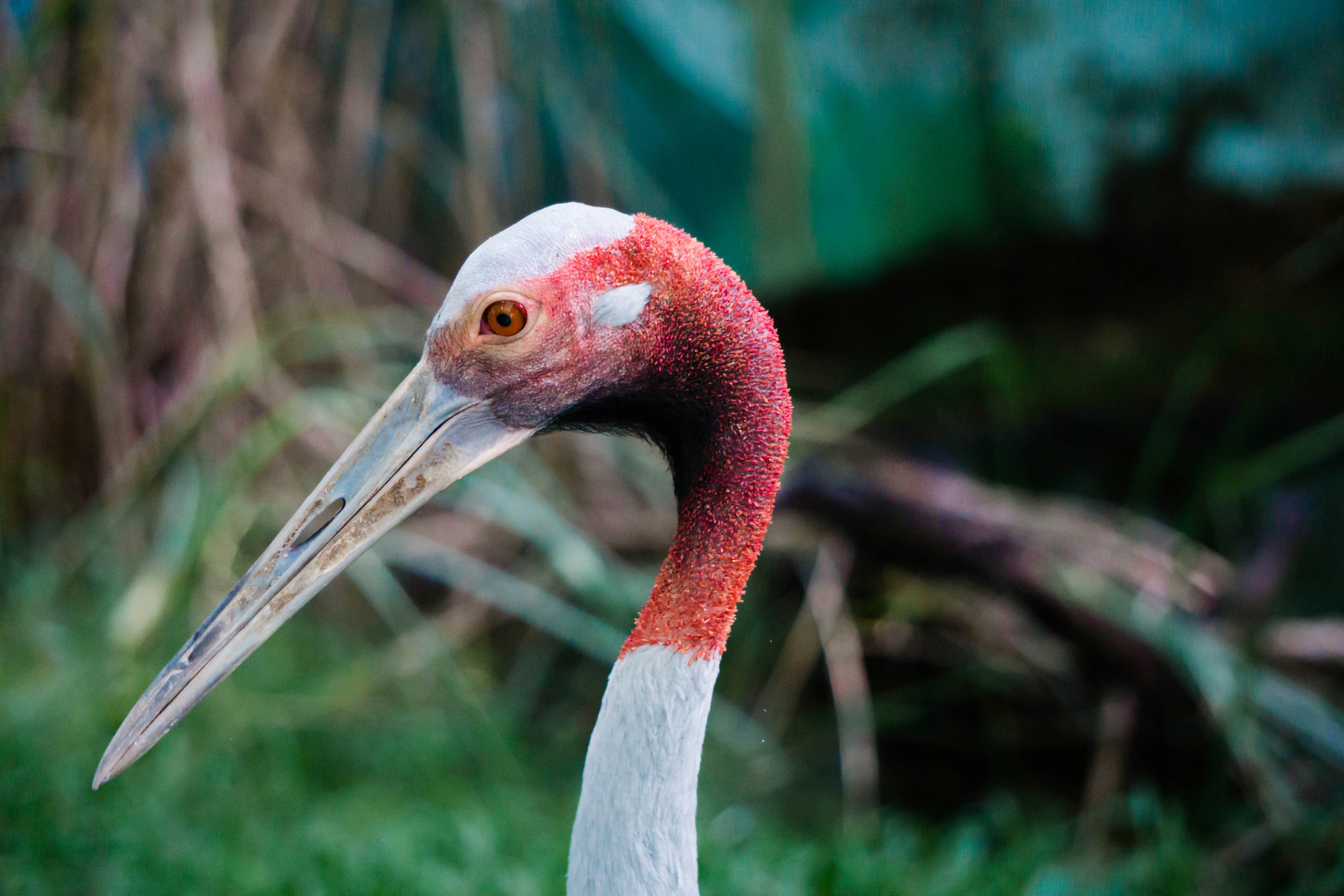
Cambodia’s sarus cranes rebound after a decade of decline. Cambodia counted 214 eastern sarus cranes in 2025, which is 37% higher than 2022, hinting at a recovery from a precipitous decline in the last decade (869 in 2011 to 156 in 2022). Phnom Penh Post
Vermont plastic bag use drops 91% after ban. The 2020 plastic bag ban virtually eliminated their use. Paper bag use rose only slightly, while many shoppers switched to reusables. About 70% of residents support the law, which researchers credit to strong public backing and clear communication. Phys.org
China has successfully cleaned 90% of its rivers, and is now rebuilding its wetlands and fisheries. A decade-long water drive has lifted the share of surface waters fit for human use from 63% in 2014 to 90% in 2024, underpinned by a sixfold expansion of monitoring stations and interventions at polluted waterways. With rivers visibly cleaner, policy is pivoting to ecological repair: reviving wetlands, safeguarding flows, and restoring fisheries, including a ten-year ban on fishing in the Yangtze. Dialogue Earth
Bluefin tuna surge back to Cornish waters. After decades of absence, bluefin tuna are again common off Cornwall. Warmer seas, improved fishery management and EU-UK quotas have allowed populations to rebound, drawing scientists, anglers and eco-tourism operators. ITV
A US bill could end gambling on greyhound racing. A bipartisan proposal in Congress would outlaw online betting on greyhound racing nationwide, effectively ending the practice in its few remaining strongholds. Once a national pastime, the industry has collapsed amid welfare scandals, leaving just a handful of tracks still operating. World Animal News

Energy & Climate
Global clean energy investment hits record high. Investors poured a record $590 billion into renewables in the first half of 2025, the largest six-month total ever tracked. Solar accounted for nearly half, with wind, batteries and grids also surging. Analysts say capital is shifting as investors increasingly see fossil fuels as high-risk. Semafor / BNEF
Renewables now beat fossil gas on price almost everywhere, and it’s not going to get any easier for carbonists. US fossil gas prices are set to double between 2024 and 2026, while the costs of wind and solar have fallen around three-fold in a decade, and are only going to keep falling. In nearly half the world, solar-plus-storage is already cheaper than coal or gas. RMI
Coal is retreating everywhere except for India and China. Those two countries accounted for 87% of new capacity added in the first half of 2025, but everywhere else, the exit is accelerating: Ireland recently became the fifth EU country to complete a coal phase-out, nine more are slated by 2029, and Latin America has zero proposed plants. Oh, and the United States is on track to retire more coal in 2025 than last year despite the madness. Carbon Brief
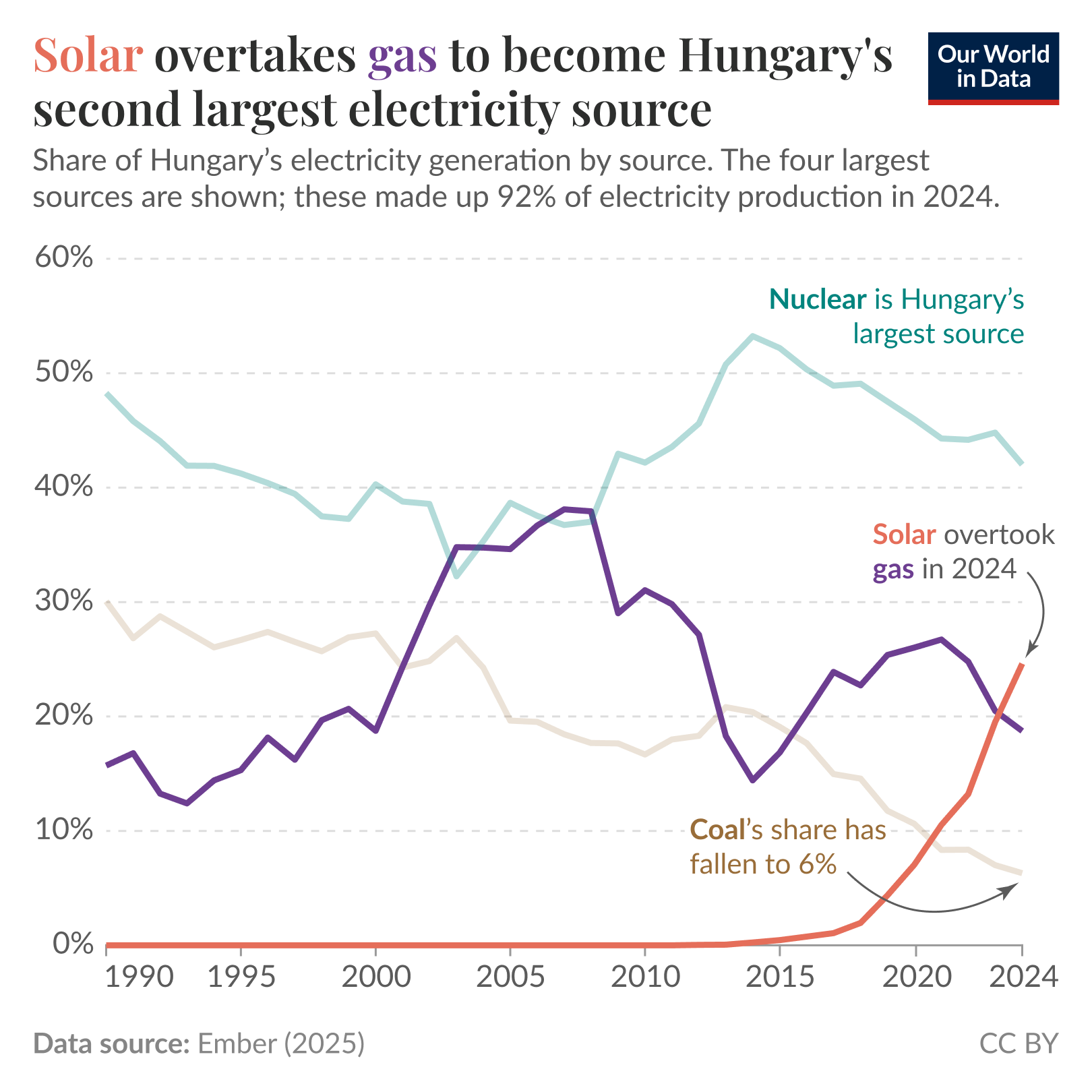
Solar has overtaken fossil gas in Hungary’s power mix. Our World in Data
Coal-fired power in the Philippines fell 5% in early 2025, the first drop since 2008. Contrary to claims, fossil gas is not displacing coal: renewables, especially solar, are growing faster and auctions are steering utilities to the cheapest supply. IEEFA
Solar’s glaring weakness is that it can’t create power at night. However, batteries solve that - and now they’re being scaled up in Australia faster than even the most optimistic analysts predicted, with discharge rates more than doubling in 2025. Large batteries already supply up to 30% of South Australia’s electricity during evening peaks, and nearly 20% in Western Australia. RenewEconomy
China installs world’s largest turbine, starts construction on world’s largest solar farm. Dongfang Electric Corporation’s new offshore wind turbine is nearly 200 metres tall (around the height of London’s Gherkin), typhoon resistant, and each sweep of the blade is capable of powering the average US home for a day. Meanwhile, on the Tibetan plateau, construction is well underway on the planet’s largest solar farm, covering 610 km². Electrek; AP News
China’s oil signals: weak demand, rising stockpiles. China has filled its storage tanks with a record 1.2 billion barrels of oil, a sign that demand is slipping as electric cars cut petrol and diesel use. Futures prices in Shanghai are trailing global benchmarks, reflecting the shift, and analysts now expect no growth in Asia’s oil demand this year, with China likely to decline. Bloomberg; Oilprice.com
Also in China: sales of battery-powered heavy trucks quadrupled in the first half of 2025. IEEFA
Despite federal pushback, major US automakers are doubling down on EVs. Hyundai has lifted its US investment to $26 billion through 2027, Ford and GM have announced new models, and suppliers are retooling for electric components. Charging networks are also expanding, with Ford adding fast chargers at 320 dealerships. CleanTechnica

Science & Technology
Chemists recreate life’s early steps. Researchers have replicated a key prebiotic reaction thought to underpin the origin of life: the self-assembly of simple molecules into peptides without enzymes. The lab result strengthens theories that Earth’s first proteins could have formed spontaneously in primordial conditions, bridging the gap between chemistry and biology. Science Alert
Newly found cells breathe in two ways. Scientists have identified mammalian cells that can use both mitochondria and an alternative pathway to generate energy. This ‘dual respiration’ mode, previously unseen in complex animals, suggests a hidden resilience in cellular metabolism and may reshape our understanding of disease and aging. Wired
Most of Earth’s species sprang from evolutionary ‘explosions.’ A groundbreaking study finds that the vast majority of known species can be traced back to just a few rapid bursts of evolution, often spurred by key innovations like flowers or flight. Rather than steady, even diversification, life’s biodiversity appears to be shaped by sporadic bursts that give rise to rich clades - like flowering plants or birds - accounting for most of Earth's species. Science Daily
New tools in the UK boost stroke recovery chances and spot hidden heart conditions. A national rollout of an AI triage system across stroke centres in the UK is set to double the proportion of patients receiving clot-removing treatment (from 25% to 50%) within minutes of hospital arrival, likely preventing thousands of deaths and disabilities annually. Additionally, a new AI-powered stethoscope is to debut in GP practices in England and Wales. Those with heart failure were 2.33 times more likely to have it detected versus standard listening when examined with the AI stethoscope, while heart valve disease was 1.9 times more detectable and abnormal heartbeat patterns were 3.5 times more detectable. The Guardian / BBC
Chemists create a better, lighter rocket fuel. Scientists have synthesised a new nitrogen-rich compound with energy density surpassing today’s fuels. The molecule stores huge amounts of chemical energy in stable bonds, releasing it only under controlled ignition. While still experimental, the breakthrough could lead to safer, lighter fuels for aviation and spaceflight. Phys.org
Enzyme-modified vinyls break down in months. Designers have created a vinyl material embedded with biodegradable enzymes that can decompose within months after disposal. Conventional PVC takes centuries to break down, but the new material retains durability in use while rapidly degrading at end-of-life. Dezeen
And finally... a simple trick to talk to your cat. Sorry, we couldn’t resist. Behavioural scientists have shown that slow eye-narrowing, known as a ‘cat smile’ elicits friendly responses from domestic cats. In experiments, animals were more likely to approach and purr when humans used the gesture, suggesting an easy technique for becoming better friends with your feline companions. ScienceAlert
That’s it for this week!
Thanks for reading. Give your kitty a cuddle for us. We’ll see you next week.
With love,
The FTN team
Always so enlightening and heartwarming to see so much progress in the world!
I used to feel despair reading news but this is so wonderful with data to support the content that is actually brings tears to my eyes! I feel more confident that there will be an improved world for my grandchildren. 🌈👍
Thank you for the stand-out piece at the start of the newsletter this week about Professor Jennifer Mercieca and hopescrolling.
I feel that one reason exposure to real, positive news stories happening all the time all around us has this awesome healing power that studies like this are showing they do is because they challenge - and change - negative preconceptions of human nature.
These negative preconceptions are that humanity is merely the product of forces beyond our control blindly operating on us. That we are on a long march through the night, surrounded by invisible foes. That we are inevitably doomed and incorrigibly selfish, born as wretches and
incapable of rescuing ourselves from our own oblivion. That the only reasonable action left to us is to burn and rave at the close of the day before the dying of the light.
The beauty of this healing when exposed to so many of these real and positive news stories occurs I feel because we begin to appreciate how instead our natural actions are to reach out, connect, and help others. To find common cause; to act to resolve local, regional and global issues; to contribute selflessly to the well-being of others. To find, hold and appreciate our innate power of agency. To build a world together guided by motivations of unconditional love, where the richness of the diversity of the human race becomes its powerful unifying attractor.
Maybe these kinds of carefully planned systematic educational settings work as well as they do because they awaken within us an awareness of the power and agency of the human spirit.