

300: Phew, It's A Girl
Without fanfare, something remarkable has happened. Plus, the largest marine protected area in history, a major breakthrough on HIV, good news for animals in Italy, and artificial intelligence versus black holes.

Hi everyone, Gus here. This is the 300th edition of this newsletter (it's been going since 2016). In case you're curious, here's one of the earliest editions, where we included a dedicated good news section for the first time. I'm less sanguine about social media these days, and a lot more worried about the manatees, but if you squint you can still see the original, animating idea.
Were you around back then? If so, hit reply, we'd love to hear from you. Thanks to everyone who's been along for the ride, old and new subscribers alike. We hope you are still finding this project interesting, useful and eye-opening.
This week's top stories
Worldwide poverty is falling—even under the new, higher thresholds announced by the World Bank.
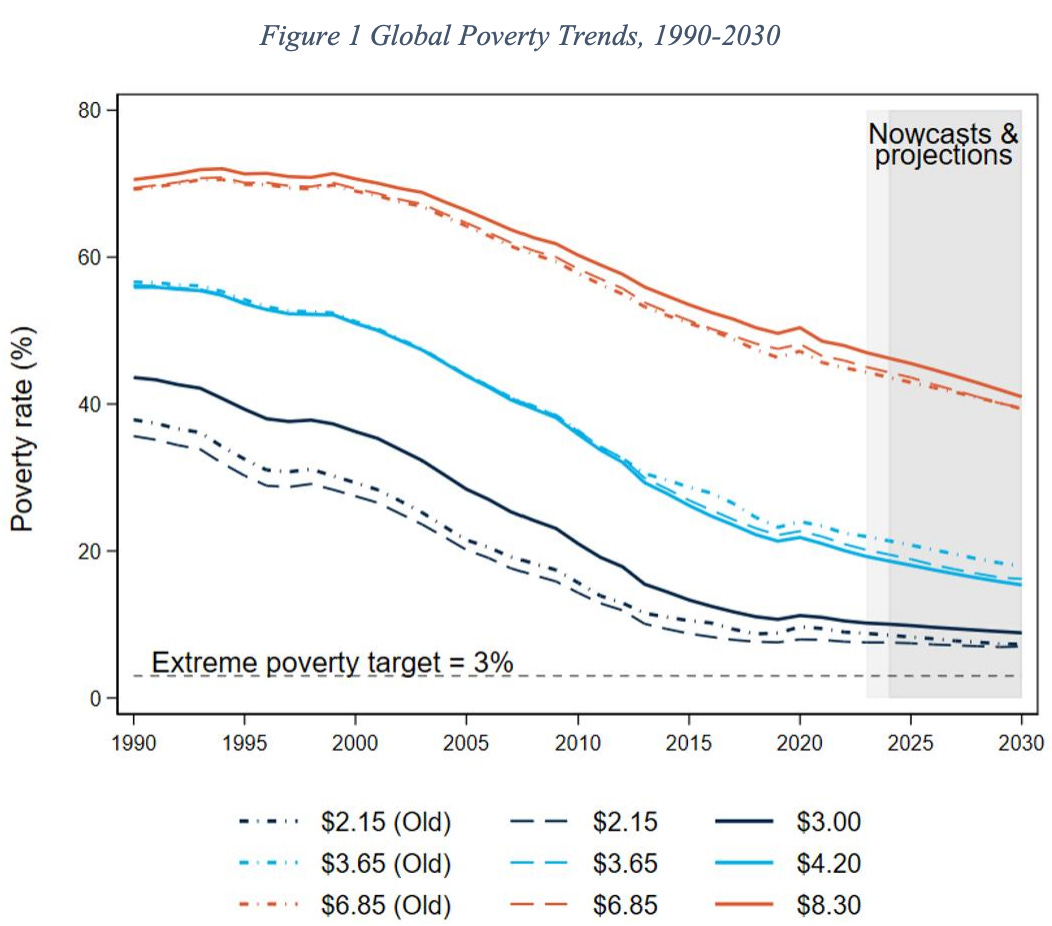
Much of this decline is being led by India, which now accounts for more than one in three people globally having escaped extreme poverty over the past decade. Under the revised $3/day threshold, India’s extreme poverty rate has dropped from 27.1% in 2012 to 5.3% in 2023—that’s nearly 270 million people lifted out of extreme poverty in just over a decade. ToI
Researchers in Melbourne may have cracked one of the biggest obstacles in curing HIV: getting the virus to show itself. A new technique, using mRNA and lipid nanoparticles, induces dormant HIV out of hiding inside immune cells. Further research will be needed to determine whether revealing the virus is enough to allow the body’s immune system to fight it, or whether the technology will need to be combined with other therapies - but it's one of the most promising leads in years. The Guardian
We were overwhelmed by how [much of a] night and day difference it was – from not working before, and then all of a sudden it was working. And all of us were just sitting gasping like, ‘wow’.
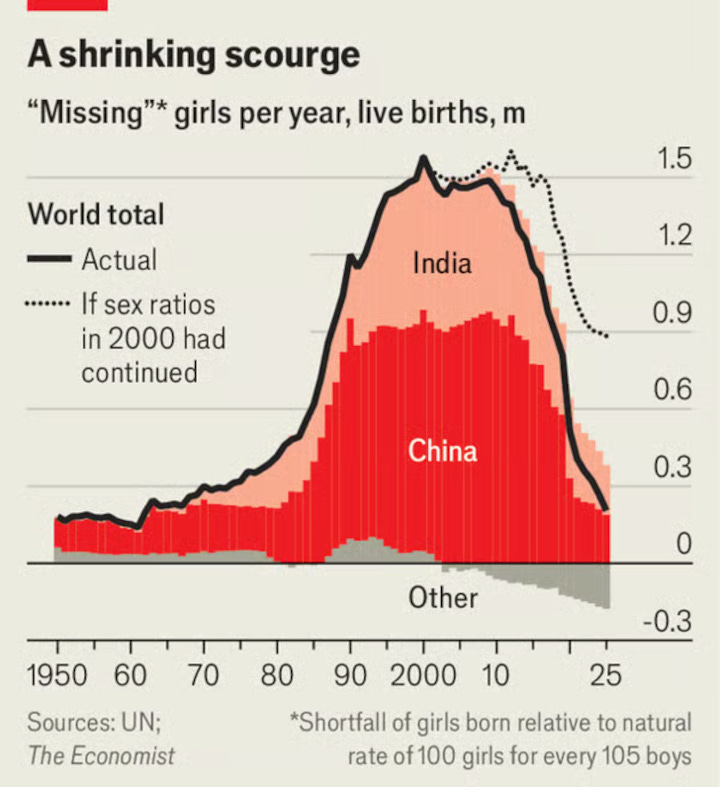
The global gap between sons and daughters is closing. In 2001, an estimated 1.7 million girls were ‘missing’ from birth registries each year due to sex-selective abortions, mainly in South and East Asia. Today, that number has fallen to around 200,000. Sex ratios at birth have normalised in most of the 12 countries where a preference for sons was strongest—including India and China, where social norms around gender are shifting faster than many predicted. The Economist
In many developing countries, to the extent that people express any preference about the sex of their children, they now seem to want a mix of boys and girls. Bangladeshi women who have not yet had children, for instance, report an almost identical desire for sons and daughters. Among those with one or two children, having a son increases the desire for daughters and having a daughter increases the desire for sons. Researchers have also observed a similar yen for balance in most of sub-Saharan Africa.
In the long run, the shrinking of the preference for boys should return those countries with the most skewed populations to something approaching a normal sex distribution. That means eventual deliverance from a host of social problems associated with a deficit of girls, from increased crime to human-trafficking of foreign brides—although it will take decades for the legacy of past bias to disappear.
Scientists in Japan have created a biodegradable plastic that completely dissolves in seawater within hours. Unlike existing bioplastics, it leaves no microplastics or toxins behind. The innovation could revolutionise marine packaging and fishing gear—two major contributors to ocean waste—and is already being tested for real-world use. Reuters
Speaking of the sea, at this year’s UN Ocean Conference the UK government announced plans to extend its ban on bottom trawling to all 41 marine protected areas in English waters, following encouragement from the likes of David Attenborough and Prince William.
And, Samoa and French Polynesia just made two of the largest ocean conservation commitments in history.
Samoa has legally adopted a plan that designates 30% of its 120,000 km² ocean territory as fully protected. The nine new MPAs are the first Samoa has created beyond its reefs, and ban activities that could harm marine life or damage marine habitat. Those fishing illegally could face fines of up to $361,400 or imprisonment. Mongabay
French Polynesia has announced the creation of the world’s largest marine protected area. The MPA will cover the entirety of the country's exclusive economic zone, almost 5 million km², and will restrict extractive practices like deep-sea mining and bottom-trawling. Of that, 1.1 million km² will be designated as a highly or fully protected area, where only traditional coastal fishing, ecotourism, and scientific exploration will be allowed. Time
Guess which legendary wave will be part of French Polynesia's new MPA?
Lab-grown salmon cleared for sale in the United States. Want to eat some tasty salmon, but don’t like the idea of killing fish? Wildtype’s 'cultured' salmon is made in a lab from a few cells, meaning no farmed or wild salmon need die to fill out your sashimi. In May 2025, the FDA approved Wildtype’s salmon for commercial sale, paving the way for the world’s first commercial sales of cell-based seafood. The company says its sushi-grade product will debut in restaurants this year. AgFunder
Italy strengthens animal cruelty laws with harsher penalties
Italy has enacted new legislation imposing stricter penalties for animal cruelty, including fines up to €60,000 and prison terms of up to four years. The law redefines animals as sentient beings with rights, aiming to combat practices like dogfighting and the dissemination of animal abuse content online. World Animal News
“A new Age of Electricity is drawing nearer.” Despite geopolitical uncertainty, the IEA reports energy spending will reach $3.3 trillion this year—$2.2 trillion of which is going into low-carbon solutions, and double what’s being invested in oil, gas and coal. In advanced economies, renewable power to fossil fuel power investment is now almost a rounding error, a 12:1 ratio. In China it is a lower but still very robust 6:1. IEA
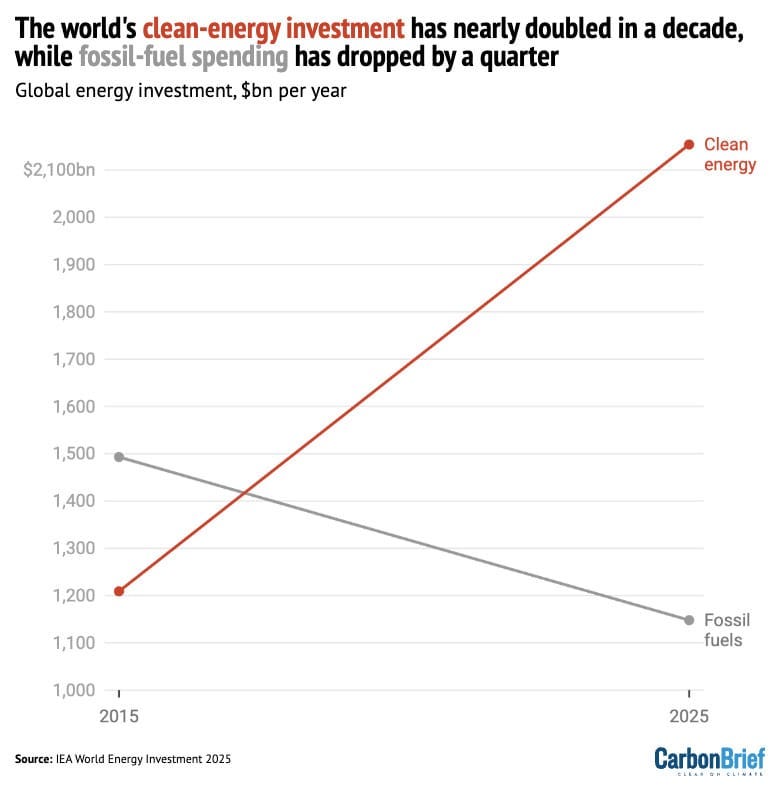
For some more context, here’s a really good bird's eye view from two of our favourite energy analysts, Kingsmill Bond and Sam Butler-Sloss:
To make sense of what’s happening in energy today, we need a new lens. We propose a third way: the electrotech revolution. This sees the transition not as swapping dirty fuels for cleaner ones, but as building a fundamentally better and more efficient energy system organized around electricity. This is being realized through the deployment of electrotech—a new wave of electricity-based technologies including solar, wind, batteries, electric vehicles, heat pumps, smart grids, and digital controls. On the supply side, solar and wind are replacing fossil generation. On the demand side, transport, buildings, and industry are electrifying. And in between, batteries and digital systems tie it all together, enabling real-time coordination, flexibility, and control.
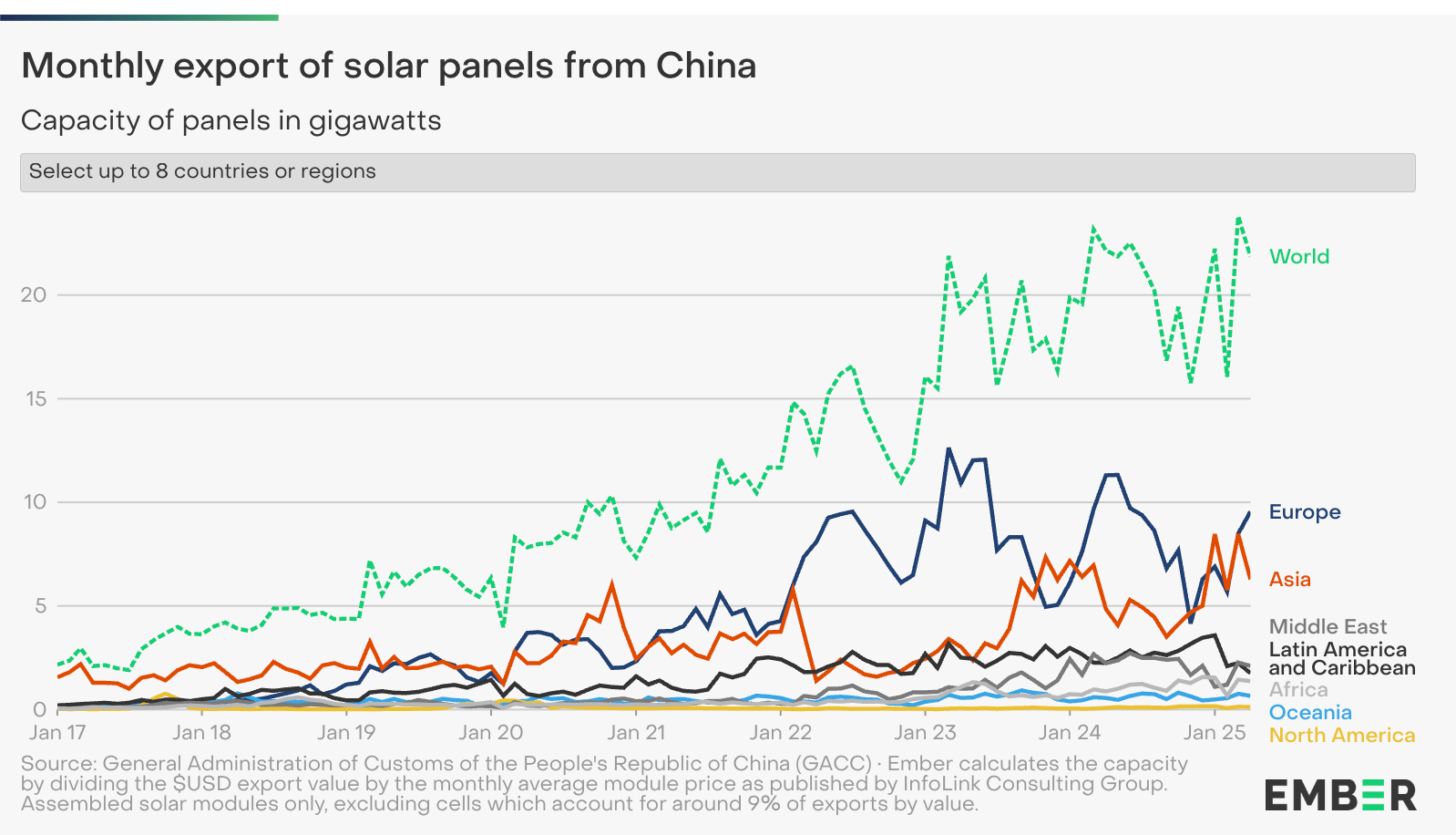
In reading the tea leaves for this new age of electricity, look to China, long the world’s largest greenhouse gas emitter and designated climate boogeyman, which is now leagues ahead of any other country on wind, solar and batteries. To quote an earlier FTN edition, “China sees investing in clean energy as a key pillar of its efforts to surpass the EU and US technologically…and while this progress may be couched in terms of great power competition, it’s a huge net good for the world as a whole.”
Of course there are grumblers, including Western critics who now say China is producing too much capacity and flooding the market. But clapping back at critics, former head of UN Environment Erik Solheim argues that, rather than a trade problem, this surge in supply is a de facto global climate subsidy, especially for countries in the Global South that can’t afford pricier alternatives (remember Niger's streetside solar panels?)
Meanwhile, Trump may accidentally be accelerating the clean energy transition. The administration's 'energy dominance' agenda, aimed at boosting fossil fuel exports, is having an unexpected effect: making other countries nervous about oil dependency and pushing them faster toward renewables. In trying to stall the energy transition, he may be speeding it up. Bloomberg 🎁
Climate change-induced food insecurity is a real threat — but scientists are figuring out ways to protect against that. Recently, researchers in China discovered a gene in a hardy Indian rice variety that dramatically improves heat tolerance. When they inserted it into common strains and exposed the plants to high temperatures, yields soared by up to 20%. This breakthrough is already being shared with seed banks and researchers across Asia and Africa and the researchers hope to see heat-resilient rice in farmers’ fields within a few years. Washington Post 🎁
For a deeper dive on seed banks, climate change and crop diversity, check out this old Atlas Obscura piece about how smallholder farmers in Ethiopia are breeding cultivars now catalogued for the first time thanks to the Ethiopian Biodiversity Institute and its networks of local community seed banks.
From cancer to COVID, mucus (yes, mucus) could transform medicine. Researchers are uncovering the surprising power of mucus to neutralise viruses, block bacteria, and reduce inflammation. Its unique structure helps prevent infections by keeping microbes from sticking to cells. Synthetic versions are already being developed for treating cancer, healing wounds, and protecting against viruses. New Scientist 🗄️
A new neural network trained on real telescope data has recreated images of black holes, including M87 and Sagittarius A* Phys.org

Good news on the fight against big tobacco: Effective 1st July, France will ban smoking in all outdoor places frequented by children (beaches, parks, public gardens, outside schools, bus stops, sports venues), Spain is moving forward with plans to ban smoking and vaping in bar and restaurant terraces, and in Thailand, the smoking rate has dropped from 32% in 1991 to 16% in 2024.
Colombia reports 33% decrease in deforestation in early 2025. The decline is attributed to improved community coordination and stricter enforcement against environmental crimes. AP
In Yorkshire, England, a re-wilding initiative has planted 300,000 native trees, restoring 'ghost woodlands' lost to extensive grazing. The project, a collaboration between farmers, the Woodland Trust, and ecologists, has led to increased biodiversity, including a rise in breeding bird species. Funded through government agri-environment payments, it demonstrates the potential for farming and conservation to coexist. Guardian
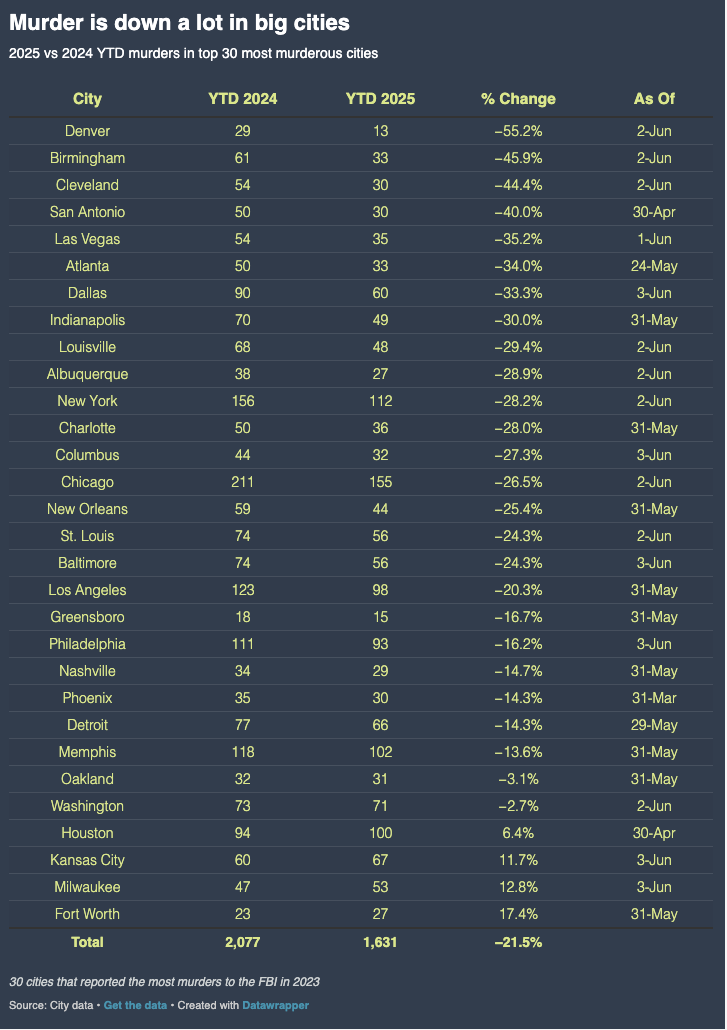
And finally, crime in the United States has plummeted. So why don’t Americans feel safe? In city after city, violent crime has declined so much that the murder rate in the United States in 2025 may drop to the lowest level since records began in 1960. If those were the good ol' days, then so are these. NYT
Everyone's obviously obsessing about Los Angeles right now, but for what it's worth, here are this year's murder rates in big US cities as of May 2025.
Progress
I know that people are sick and tired of the whining and the complaining and the doom and gloom. The only way we win hearts and minds is by showing them action that makes their lives better.
Arnold Schwarzenegger
3rd June 2025
U.K. cancer survival has doubled since the 1970s: Back then, just one in four people diagnosed with cancer in Britain could expect to live for another decade. Today, it’s one in two. Mortality rates have fallen by 23 % during this time, from 328 to 252 deaths per 100,000. Years of research in screening, diagnosis and treatment have slowly but unmistakably reshaped survival odds, making this one of the most significant ever improvements in British public health. The Guardian
Botswana eliminates mother-to-child HIV transmission: Botswana has become the first high-burden country to earn the WHO’s “Gold Tier” certification for eliminating vertical HIV transmission, a real hope for the future moment for the global HIV response. Just 1.2% of babies born to HIV-positive mothers are now infected—well below the WHO’s 5% threshold, thanks to a long-term national strategy that combined routine antenatal testing, universal treatment and integrated maternal care. WHO AFRO
England will expand free school meals to 500,000 more children. By 2026, all children in households receiving Universal Credit will be eligible for free school meals in England. The policy will cover an additional 500,000 students and is projected to lift 100,000 children out of poverty while saving families £490 per child each year. Worth every penny. The Independent
More than 375,000 children in Papua New Guinea are set to benefit from one of the largest educational investments in the country’s history. The Learning Enhancement and Access Project will bring PNG closer to its goal of providing basic education for all children, through improving classrooms, training teachers, and directly addressing fragile service delivery in underserved communities. World Bank
Maternal mortality in Kazakhstan has dropped from 76.8 deaths per 100,000 live births in 1992 to 10.1 in 2024—among the lowest in Central Asia. Three regions recorded zero maternal deaths last year, and nearly 100% of births nationwide were attended by trained medical staff. Times CA
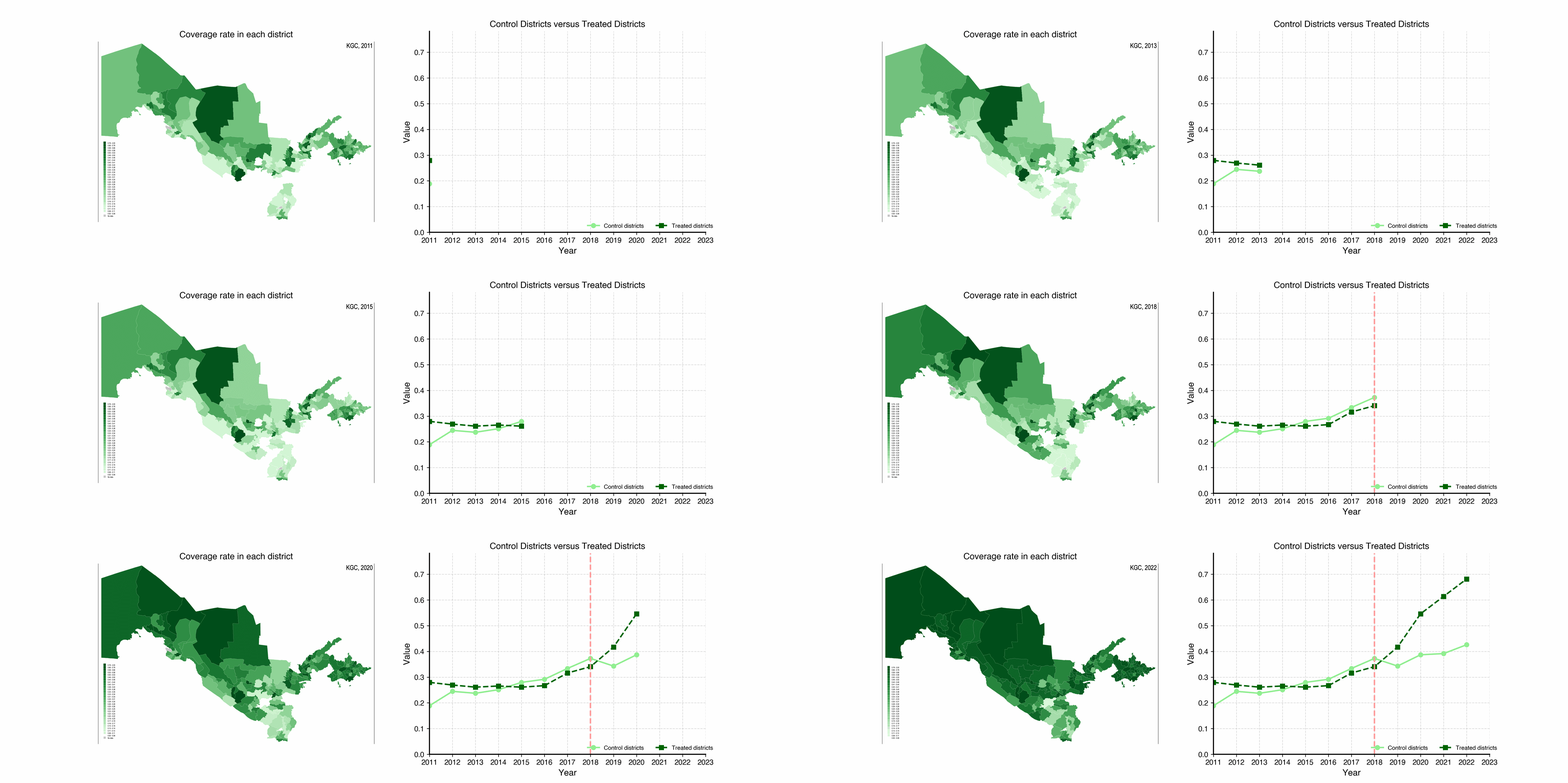
Preschool attendance in Uzbekistan has nearly tripled since 2016, rising from 27% to 75%. A World Bank impact study shows the gains go beyond education: access to childcare has also boosted women’s labour force participation by 3.3 percentage points, representing a 12% jump. Childcare policy and gender-equality lever? We’re sold. World Bank
Spain now requires all companies with more than 50 employees to adopt workplace protections against LGBTQ+ discrimination. The new legislation, which came into effect last month, is the first in the world to spell out requirements for the private sector, and mandates anti-discrimination clauses in collective bargaining agreements, compulsory training for staff on LGBTQ+ issues and anti-harassment protocols.
Environment & Conservation
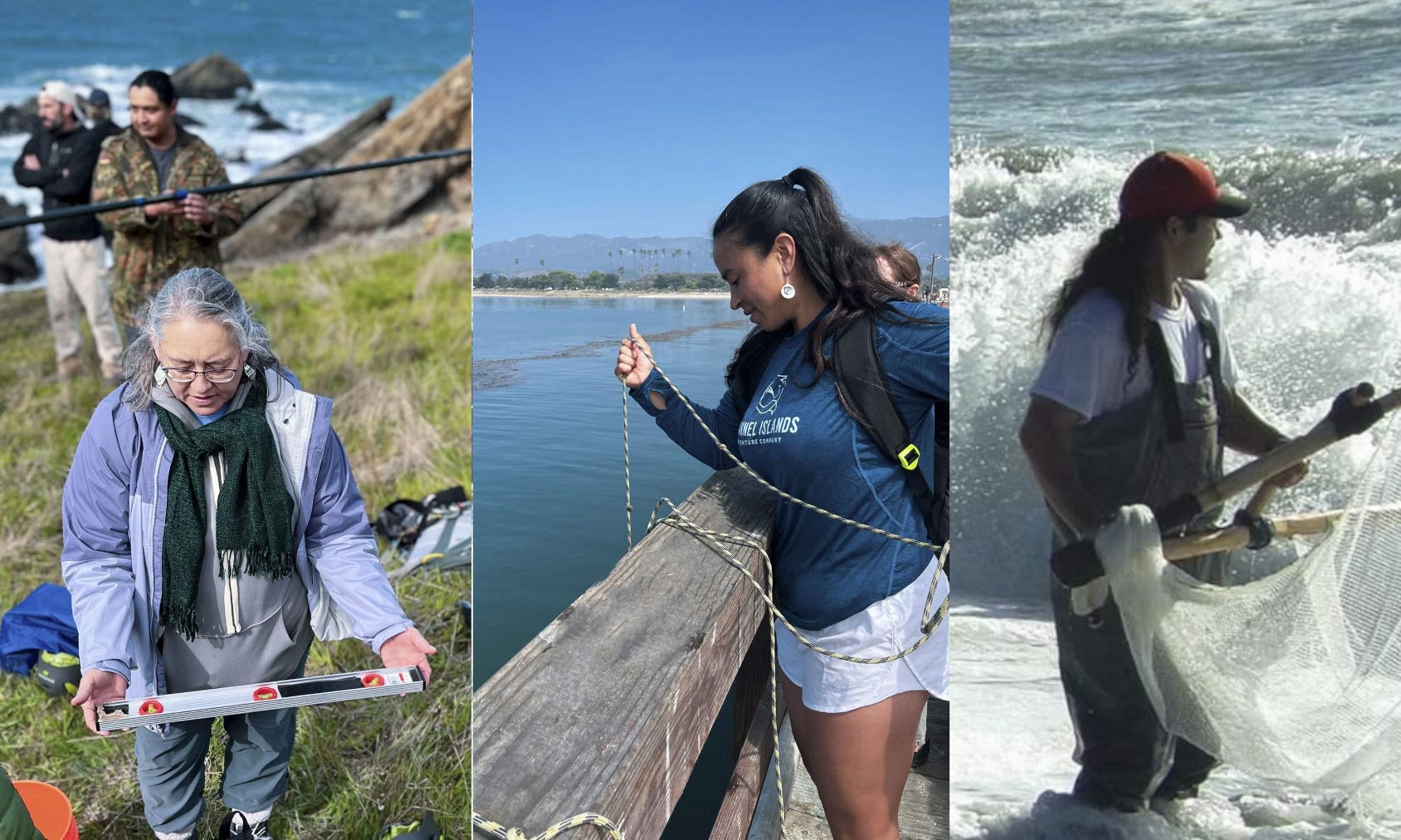
California tribes expand marine stewardship across coastal waters
In a growing model of Indigenous-led conservation, 18 California tribes now manage marine and coastal areas through Tribal Marine Stewards Networks. Spanning 5,800 km², the initiative combines traditional ecological knowledge with modern science to monitor ecosystems, restore habitats, and engage communities, marking a systemic shift in coastal stewardship. Pew
Peru designates 2,835 km² conservation area to protect Amazon biodiversity. The new Medio Putumayo-Algodón Regional Conservation Area will safeguard 283,595 hectares of Amazonian rainforest, protecting habitats for species such as jaguars and pink dolphins, as well as supporting 16 Indigenous communities. Andes Amazon Fund
California’s Wildlife Conservation Board has allocated $59.5 million to protect 93 km² of habitat across 21 counties, benefiting at least 20 endangered or threatened species, such as the California red-legged frog and Southern California steelhead. The initiative also collaborates with Indigenous communities to safeguard cultural access and land use. SFGATE
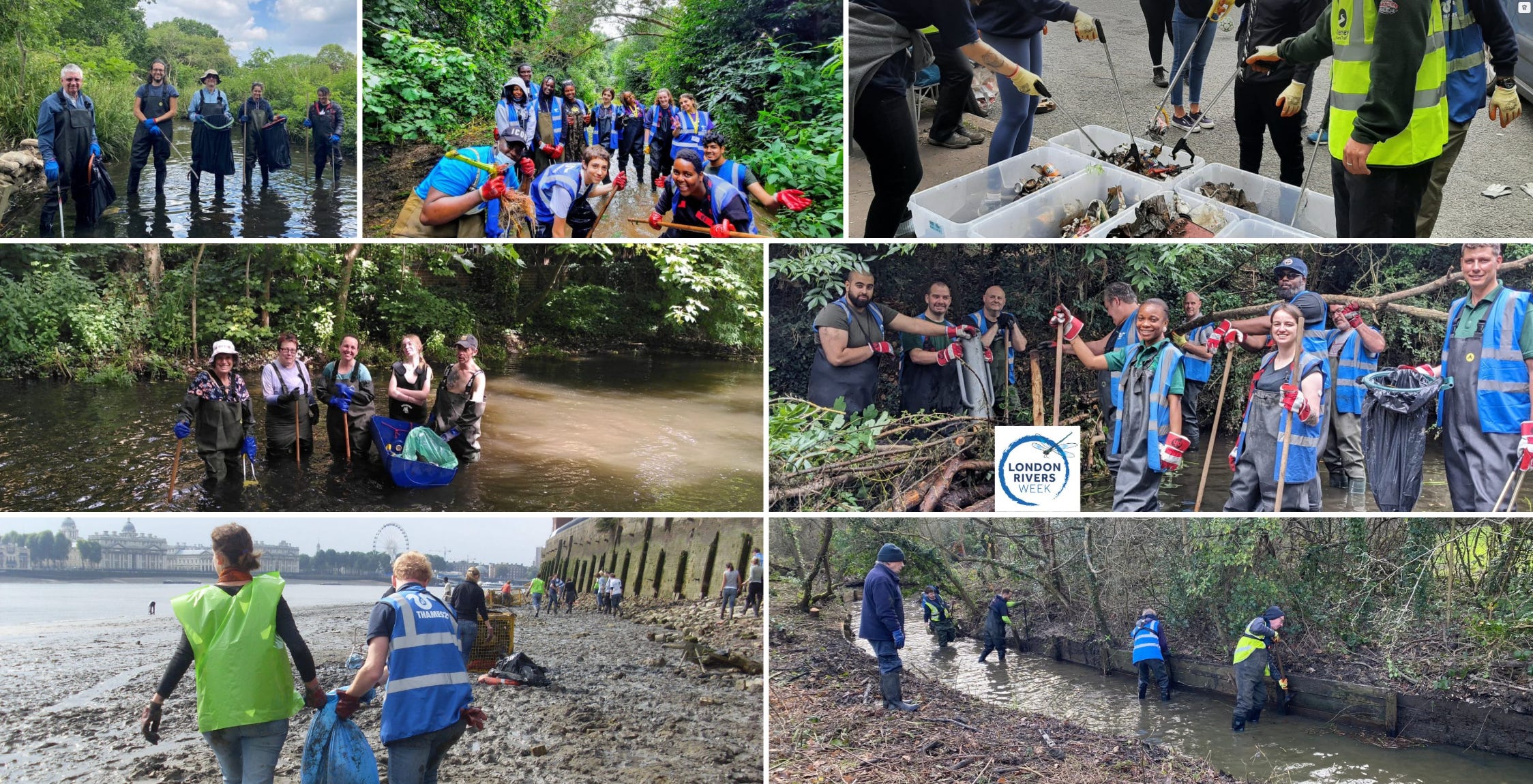
Over the past 25 years, community groups in London have restored 62 km of rivers, transforming culverted and canalised waterways into natural corridors. Projects across the Thames Basin have re-wilded stretches long buried under concrete, reconnected floodplains, and reintroduced fish and wetland species. The effort boosts biodiversity, mitigates flooding, and marks a structural shift in urban river management. London Post
Wales passes new law mandating nature-positive development
The Welsh Senedd has approved legislation requiring all new developments to deliver net biodiversity gain, aiming to reverse decades of ecological decline. The law enshrines nature recovery in planning policy, making Wales the first UK nation to embed this standard in law. BBC
Scotland has restored more than 14,000 hectares of degraded peatlands in the past year, contributing to carbon emission reductions and biodiversity restoration. Forestry and Land Scotland exceeded its annual target by restoring 1,744 hectares, highlighting the country's commitment to addressing climate and nature emergencies. The National
From June 2025, China requires all delivery companies to use biodegradable or reusable packaging, targeting the environmental impact of 175 billion parcels annually.The regulations aim to reduce excessive packaging waste, promoting sustainable practices in the rapidly growing industry. China Daily
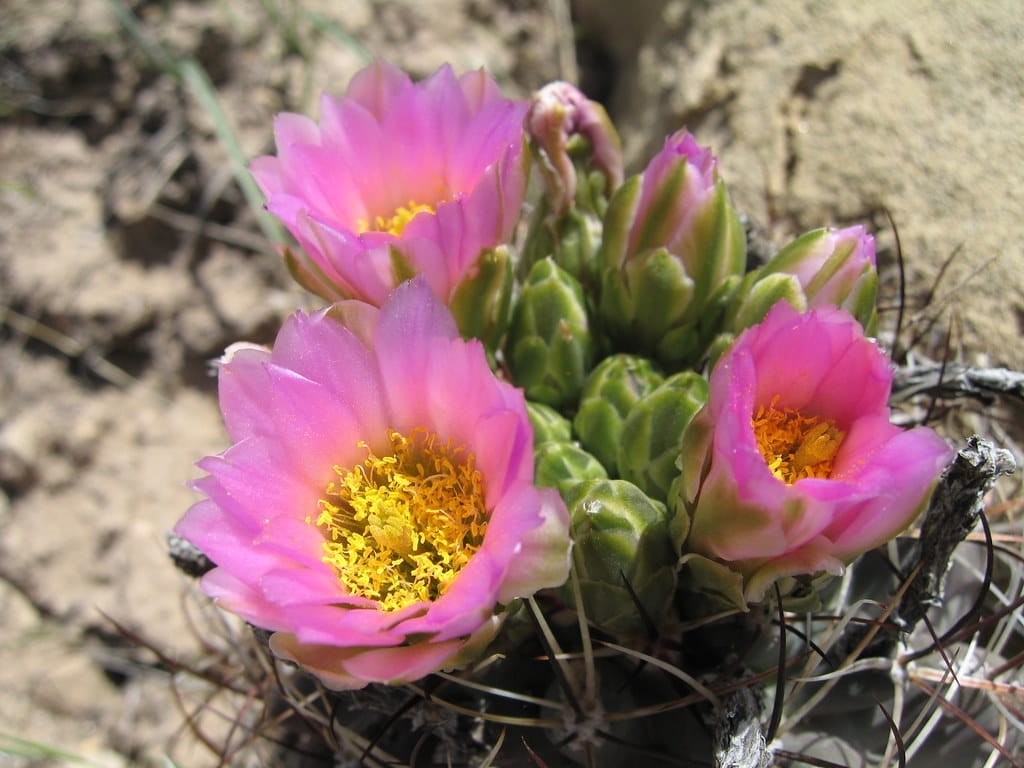
The Colorado hookless cactus is no longer endangered. Once down to fewer than 5,000, the Colorado hookless cactus population now exceeds 500,000, prompting its removal from the endangered list after nearly five decades. Collaborative efforts by the Bureau of Land Management, Denver Botanic Gardens, and other partners were instrumental in this success. 9News
Energy & Climate
In the first four months of 2025, renewables generated over a quarter of all electricity in the United States, overtaking both coal (15.8%) and nuclear (17.5%). Solar is leading the charge, up nearly 23% compared to the same period last year. Green Energy Times
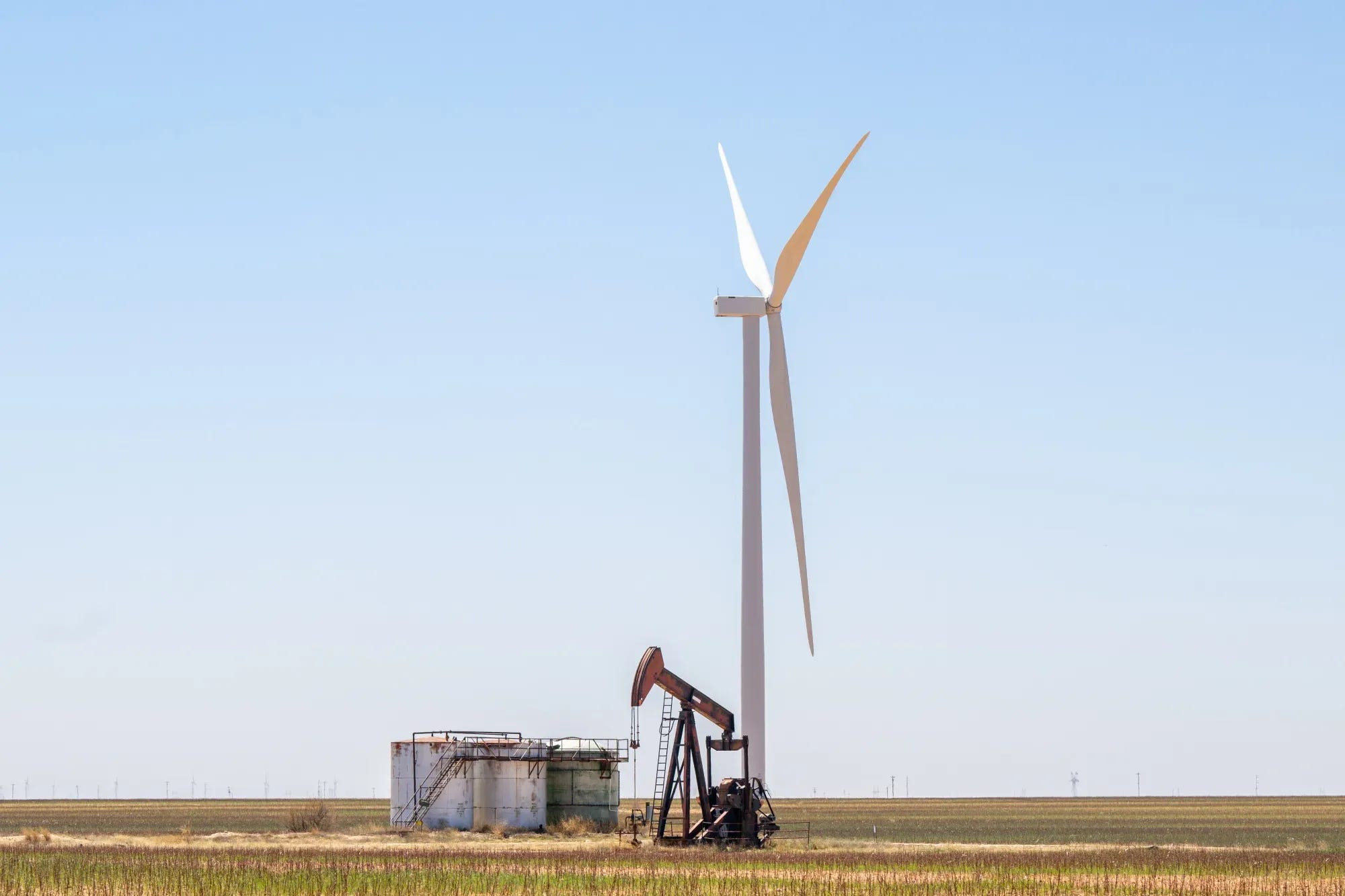
California’s grid runs on batteries for the first time. In May 2025, California hit a new energy milestone: for the first time ever, batteries became the biggest source of electricity on the state’s grid. Just before 8pm—when solar power was dropping and demand was still high—batteries delivered more than 10 GW of electricity, even more than solar. PV Magazine
While we're on the subject of batteries - the IEA projects that global investment in battery storage in 2025 will be three times higher than in 2022, reaching parity with fossil gas capacity investment for the first time.
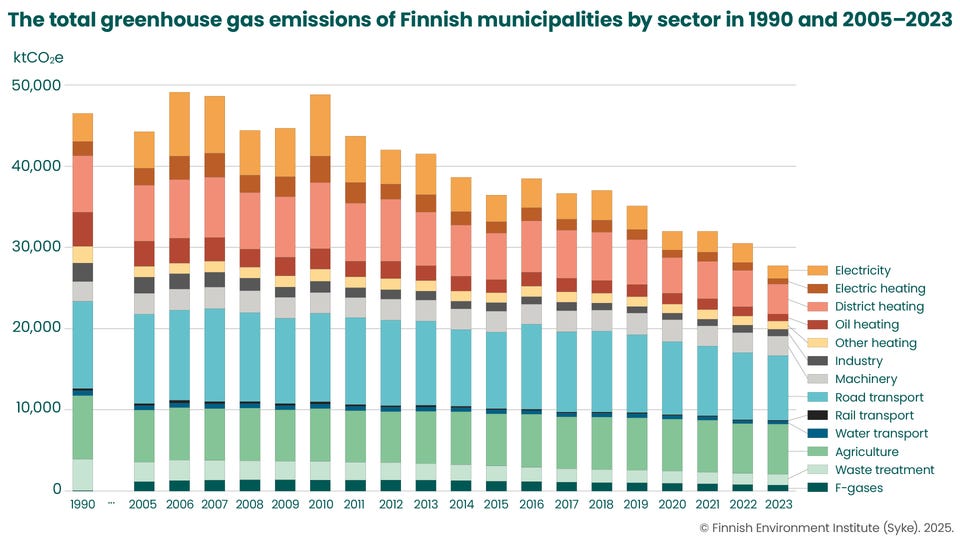
Finnish municipalities have sharply reduced emissions by phasing out peat and fossil fuels in district heating systems. STT Info
India’s coal-fired power dropped 9.5% in May 2025—the fastest decline in five years — as renewable output surged and electricity demand eased. It’s the steepest drop since the 2020 lockdowns, and a clear sign of shifting energy dynamics. And in more good news from the world's 3rd largest emitter: Indian Railways is set to reach net-zero emissions by the end of this year, well ahead of its original 2030 target. It's an incredible achievement - their network includes over 68,000 km of tracks, and serve 23 million passengers a day. Electrification is the backbone, with over 76% of freight routes now powered by electricity.
New research from Germany shows that birds are nesting and raising chicks more successfully inside solar farms than in the fields around them. The panels provide shelter and space, turning these clean energy sites into unexpected refuges for wildlife. To be clear, this probably isn't some fundamental property of solar panels, and more of a 'life finds a way' thing, in that the solar fields aren't being constantly mowed or ploughed or drenched in pesticides. Still, it's encouraging. PV Magazine
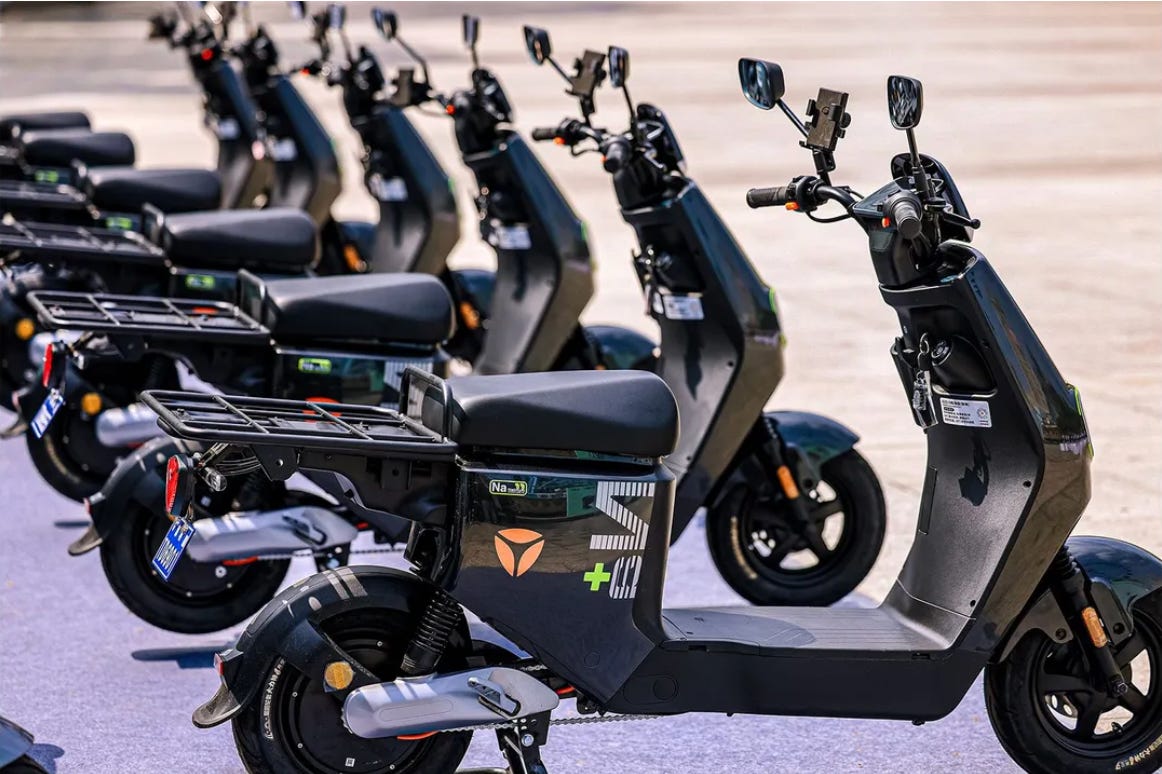
And following up this week's top story about China busting down the doors with green tech, take note, Western world: China has started rolling out electric vehicles with ranges of over 1,600 km (1,000 miles) on a single charge, more than double what most Western EVs have to offer. And as if that's not enough, China’s also started powering millions of scooters with batteries made of sodium (mmm, salt!), which are cheaper, safer, and easier to produce then batteries made from lithium.
Science & Technology
Ancient boat from Southeast Asia quietly rewrites history. 7,000-year-old canoe fragments found in the Philippines reveal unexpectedly advanced maritime engineering, suggesting early seafarers navigated vast distances across island chains long before previously thought Phys.org
Snail venom inspires a new kind of painkiller. A synthetic drug based on cone snail venom could block pain as effectively as opioids—without the risk of addiction. It’s the first in a new class of non-opioid painkillers showing promise in early trials. New Yorker
China plans the world’s largest optical telescope. It's preparing to build a colossal 30-metre optical telescope in Tibet, an instrument that would rival or surpass the world’s most powerful observatories. The project has been quietly gaining momentum, with land purchased, blueprints drafted, and funding likely to be included in China’s next Five-Year Plan. Science
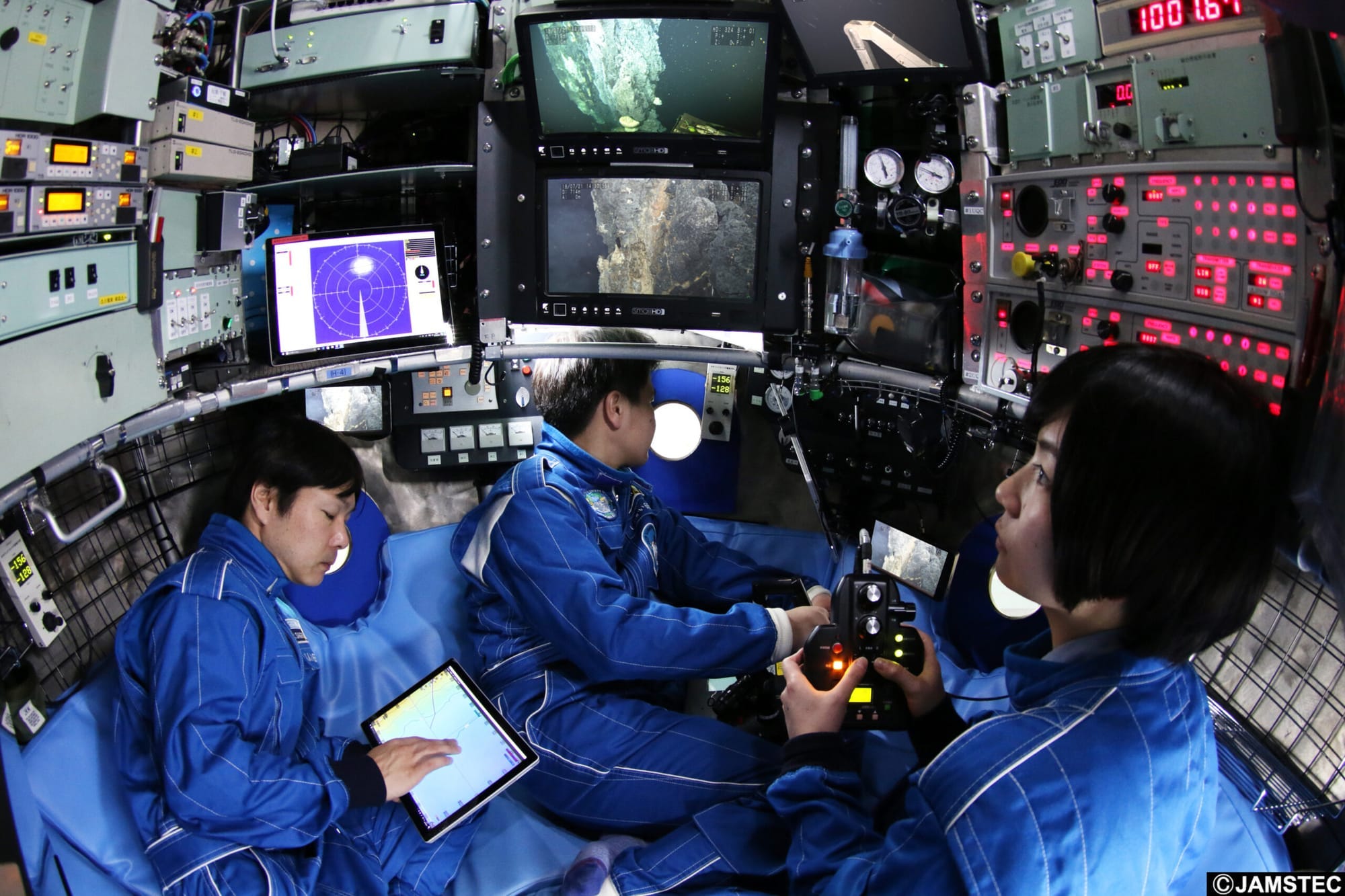
A Japanese-led expedition has ventured 7,500 metres below sea level into the Ryukyu Trench. Using a custom-built submersible and autonomous sensors, the team captured footage of rarely seen marine creatures, discovered new microbial life, and recorded signs of volcanic activity on the seafloor. The mission was part of Japan’s push to better understand seismic risks and biodiversity in its underwater territory. Voice for the Blue
P-wave magnetism detected for the first time. Physicists have finally observed elusive ‘p-wave’ magnetism, a phenomenon long theorised but never seen. The breakthrough opens up possibilities in quantum materials and topological superconductors. Phys.org
Scientists can now extract environmental DNA from air to detect nearby species, from invasive insects to elusive mammals. The approach could transform biodiversity monitoring and forensic science alike (yes, this can also be used to track humans). Science
A Stanford team has adapted a heart-clot removal technique to treat strokes, using a device that rapidly extracts brain clots. In early trials, it restored blood flow more precisely than standard methods and led to better recovery outcomes. Researchers are calling it a “paradigm shift” for acute stroke care.
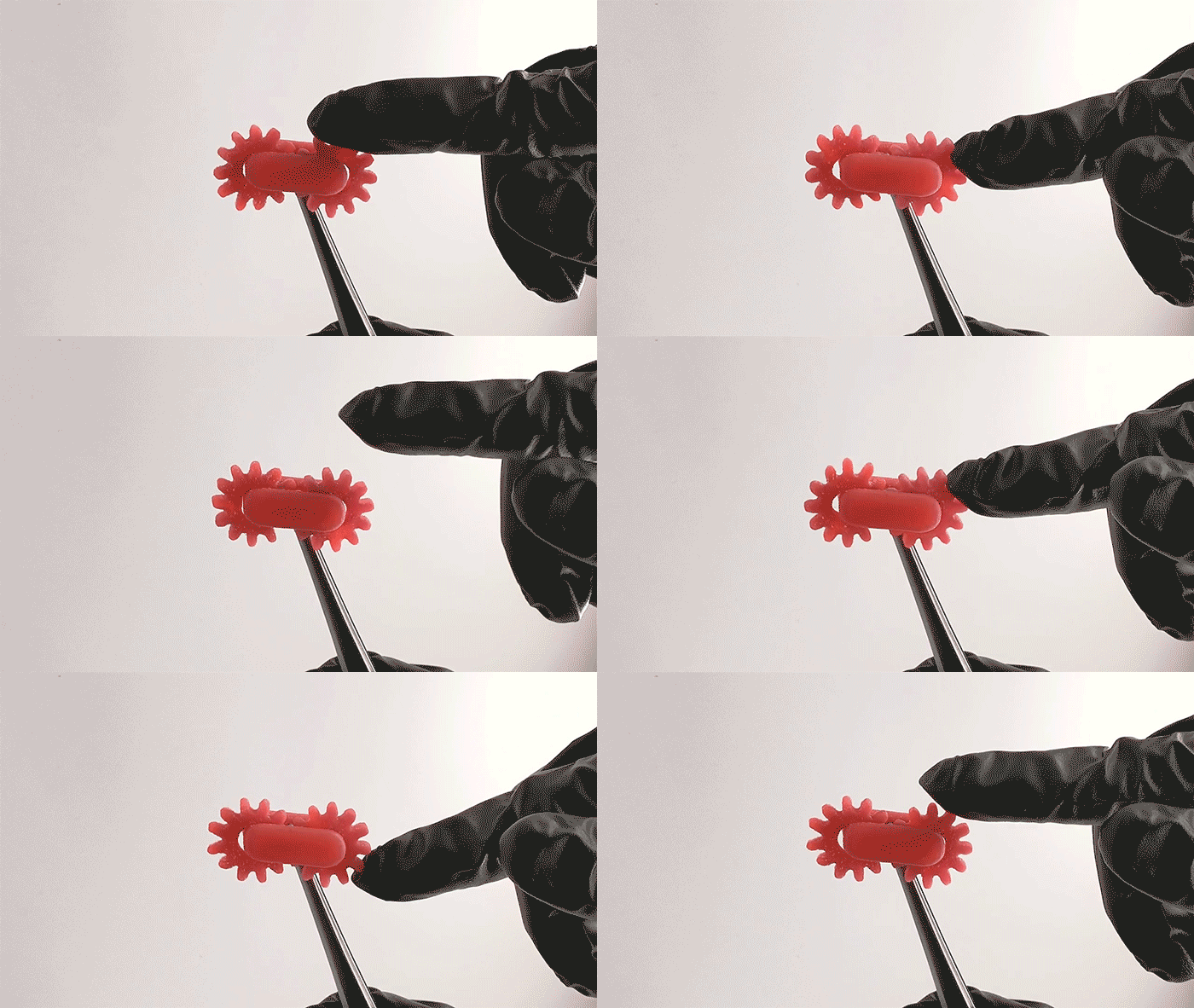
Intricate 3D-printed designs often involve simultaneously-printed structural supports to keep the object in place – which, when the print is finished, are thrown out as waste. Now a new resin-curing technique developed by researchers at MIT allows said supports to be printed in such a way that they can later be "washed away" by solvents, and the resin used to print them re-extracted and re-used. This approach could cut costs and carbon across architecture, aerospace, and prosthetics, and allows for beautiful hot-off-the-printer complexity, as seen by these interlocking gears. MIT
That's it for this week, thanks for reading! We hope you enjoyed this edition.
Same place, same time next week?
With love,
The FTN team