

305: Climate Justice
Some fights are worth having. Plus, trachoma in retreat, Toronto restores its river, two wonderful re-wilding stories from Europe, and how Ozzy's farewell show became the highest grossing charity conc

Hi everyone, our podcast is back, and it’s louder than ever. We’re delighted to kick off Season 4 of Hope Is A Verb with a new series of conversations amplifying the voices of some truly incredible humans changing the world. This season we’re diving into cleaner oceans, school meals, AI and medicine, moral ambition, and the rollout of the malaria vaccine, amongst others. First episode drops next week, subscribe to make sure you don't miss it. Here’s a taste of what’s coming up.
This week's top stories
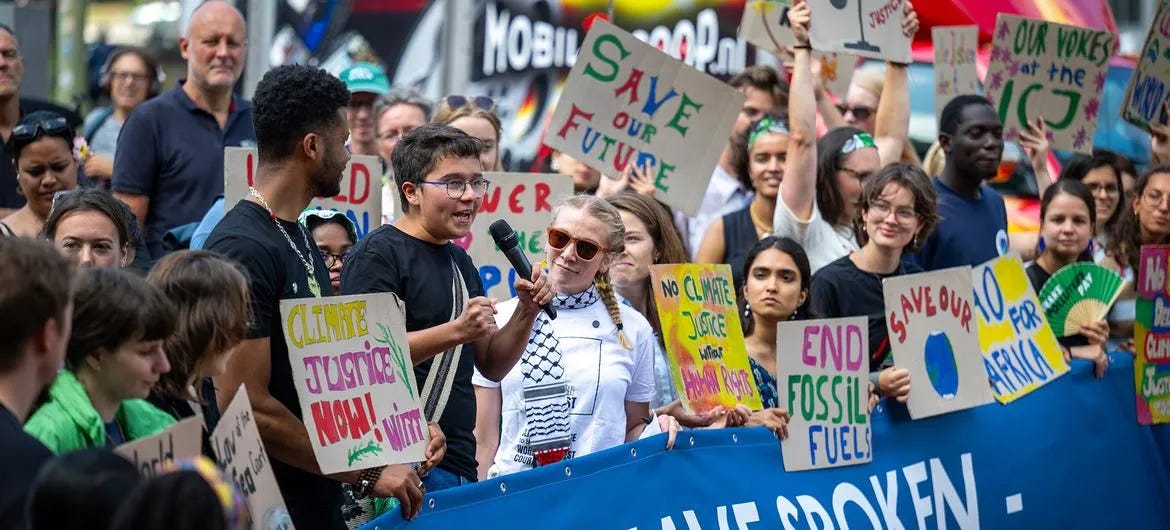
For the first time, the International Court of Justice has declared that a safe climate is a human right and a legal duty. In a landmark advisory opinion supported by 130 nations, the court said every state must curb domestic and corporate emissions, aid vulnerable countries and hit the 1.5°C target or face legal breaches and damages. The world’s top court resoundingly rejected arguments made by Australia (😠) the United States, China and Saudi Arabia who all sought to justify continued fossil fuel extraction. Instead, the ICJ assigned “heightened responsibility” to historical polluters, arming lawyers worldwide with potent ammunition for future climate cases. Sparked by Pacific Island students, it's the most significant climate decision ever issued by a court. Guardian
Tonight I’ll sleep easier. For the first time, it feels like Justice is not just a dream but a direction. The ICJ has recognised what we have lived through – our suffering, our resilience and our right to our future. This is a victory not just for us but for every frontline community fighting to be heard. Now, the world must act.
Flora Vano, Country Manager, ActionAid Vanuatu (check out our 2023 interview with her)
Senegal wipes out trachoma, lifting century-old scourge. Last week it was Burundi, now the WHO has also validated Senegal as the 9th African nation to eliminate trachoma, once its leading infectious cause of blindness. A 25-year drive combining surgery, mass antibiotic doses and water-sanitation upgrades has spared 2.8 million people. Next up for elimination? Sleeping sickness and river blindness.
💊
Global progress on trachoma elimination is one of the best things you've never heard about. The number of people afflicted worldwide has fallen from 2.8 million in 2016 to 1.2 million in 2025. The pool of those at risk is shrinking fast too, falling from 192 million in 2015 to 102 million in 2025. In the last 12 months alone, seven countries have eliminated the disease altogether. It's one of the most amazing global health stories on Earth, and you will not find it anywhere except deep inside technical WHO reports.
Some excellent vaccine news:
First: thanks to 'ring vaccination' techniques (famously used to eradicate smallpox in the late 1970s), we’ve slashed deaths from disease outbreaks by nearly 60% in this century. This information comes from a review of 210 cholera, Ebola, measles, meningitis and yellow-fever outbreaks across 49 low-income nations between 2000 and 2023 - thanks for looking at the data, Gavi.
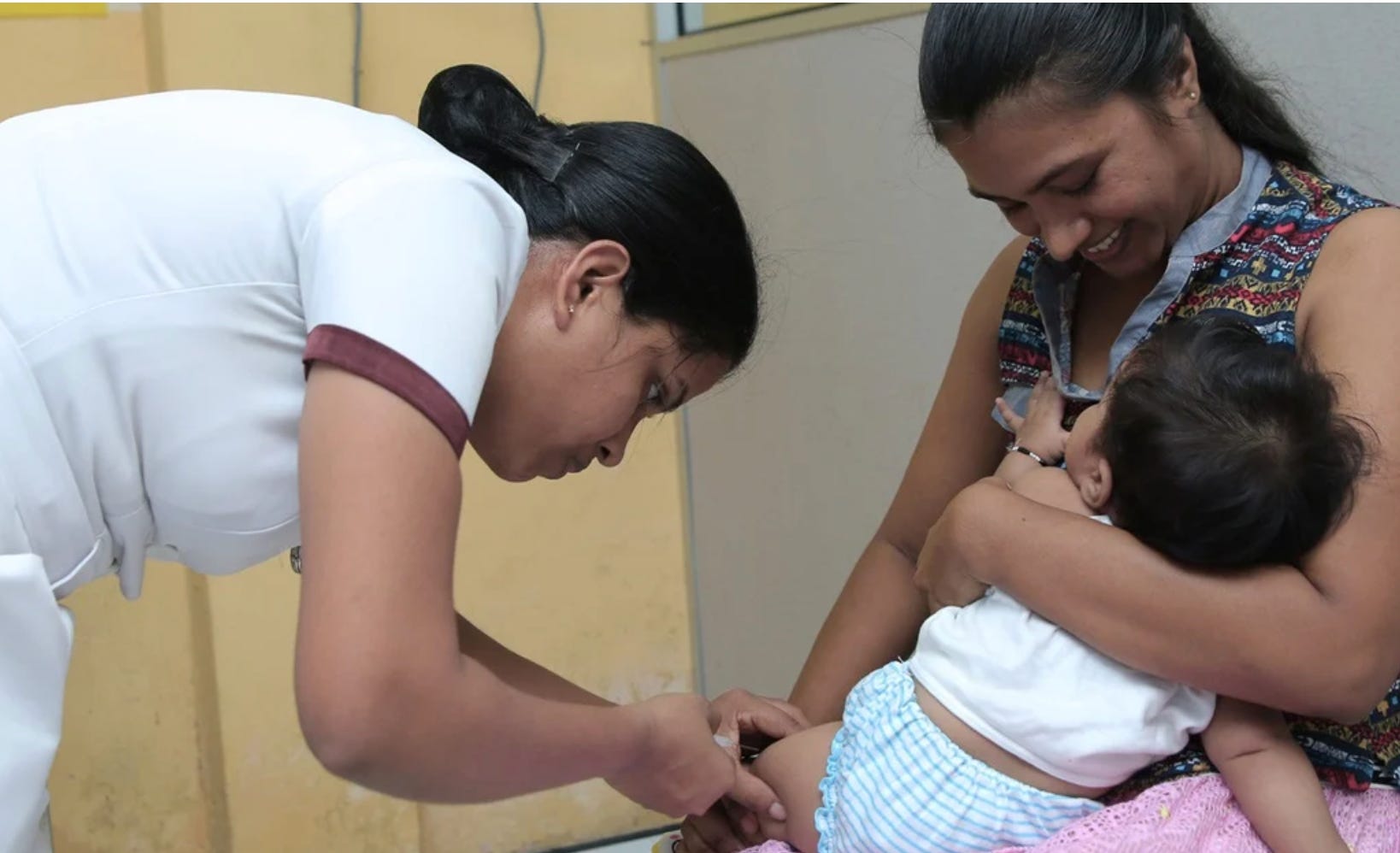
Second: A new six-in-one vaccine protecting against diphtheria, tetanus, pertussis (whooping cough), hepatitis B, Haemophilus influenzae type B (Hib), and polio has just debuted in Senegal and Mauritania. The same protection in fewer vaccine doses means being able to maximise the impact of every dollar spent on immunisation, promising fewer clinic visits, simpler logistics and higher overall coverage in low income settings. Gavi
Third, South Asia just posted its best-ever year for childhood immunisation. 92% of babies received all three DTP shots in 2024, up two percentage points on 2023, and the number of 'zero-dose' children fell by 700,000 to 1.8 million. WHO
With vaccines and better public health, we’re saving lives in poorer countries, but what about wealthy countries, where such advances are already par for the course? Well, the world's second leading cause of death is cancer, and quietly but steadily, we are winning the war. According to this week's leader in The Economist, falling smoking, HPV and hepatitis-B vaccines, better screening and precision therapies are driving the death drop, and cancer death rates are now roughly one-third lower than their early-1990s peak.
Scientists have figured out how to turn Earth’s most abundant mineral into zero-waste battery metals. The most abundant mineral in earth’s crust is something called olivine: pretty in the gemstone peridot, but otherwise pretty useless. Now, New Zealand engineers have figured out how to dissolve olivine to yield silica (50%), magnesium (40%) and nickel-manganese-cobalt hydroxide (10%) for lithium-ion cathodes, leaving only brine. IEEE Spectrum
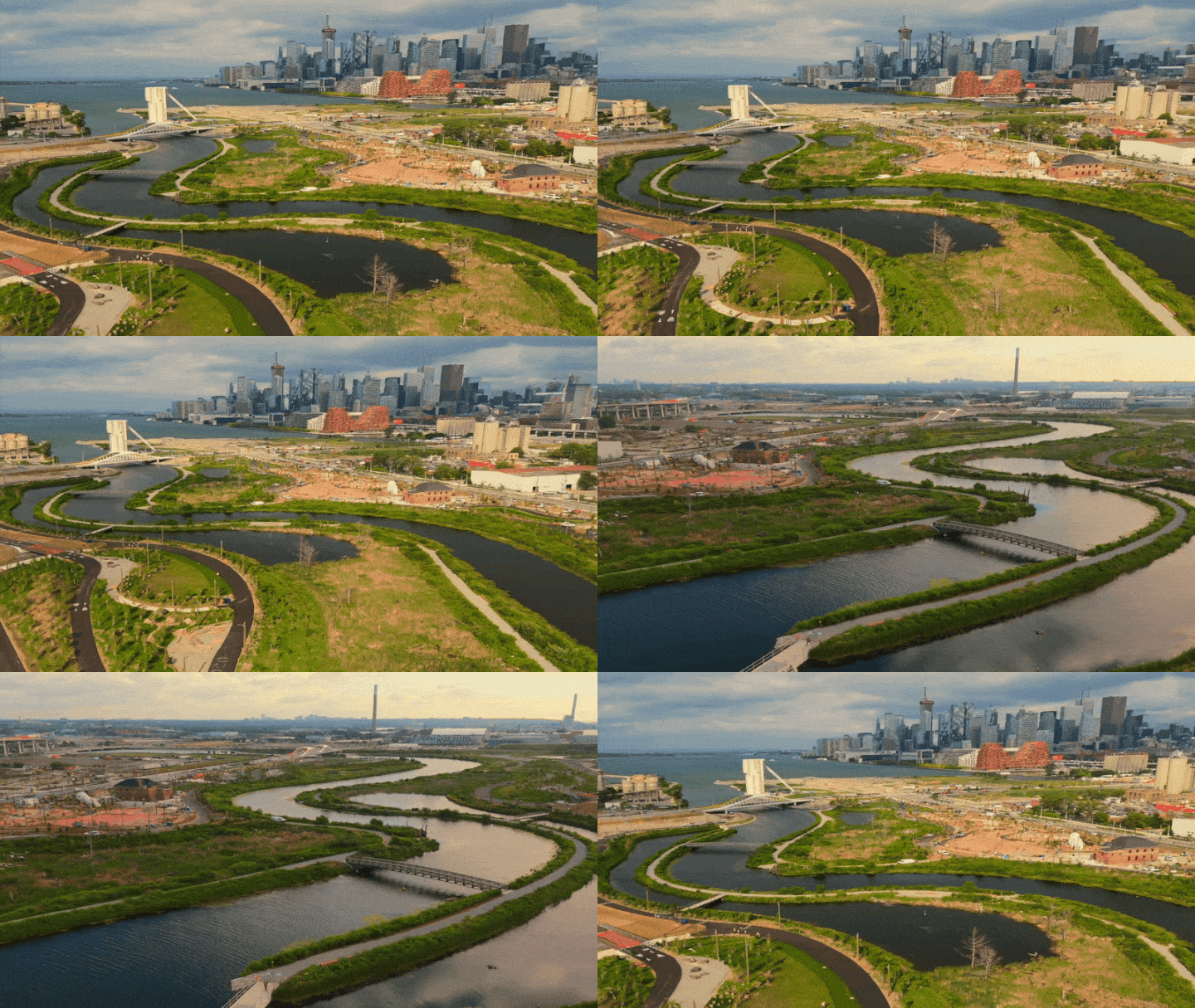
In Canada's largest city, a river returns to its roots. For over a century, the mouth of Toronto's Don River has been a wasteland of industrial and port facilities. That changed last week, with the opening of a $1.4 billion restoration project. Biidaasige Park, (meaning "sunlight shining towards us" in Anishinaabemowin), covers about 60 acres on Ookwemin Minising (meaning "place of the black cherry trees"), an island created by carving out a more naturally meandering outlet for the Don River at the city's waterfront. Globe & Mail 🗄️
It's really something to celebrate because the river has for so long been in a concrete box. And it's now free again and flowing through the kind of environment that it had flowed through for thousands of years before industrialization changed it.
David O'Hara, City of Toronto
Spain now protects around 25% of its waters after adding five new marine reserves. The new reserves are: the submarine mountains of the Mallorca Channel, the Seco de Palos seamounts, the Capbreton canyons, the Alborán Sea banks, and the Central Catalan Coast marine space. The expansion also includes plans for the Mar de las Calmas National Park and the sperm whale breeding area north of Menorca. Euro Weekly
The Oder Delta becomes Europe’s wetland classroom, thanks to ten years of cross-border rewilding. Poland and Germany have re-flooded polders, removed dams and restored landscapes, two-thirds of which is now under protection. Wildlife tourism is soaring as elk, wolf, grey seal, and beaver recolonise the area, while European bison and Eurasian lynx are gradually moving westwards towards the delta from Poland. Rewilding Europe
And take a look at how people and nature are thriving together in Italy’s Central Apennine mountains. A new, beautiful documentary by award-winning French filmmaker Emmanuel Rondeau tells the story of how humans, bears and wolves are learning to co-exist, as rewilding projects revive rivers, install electric fences, and spark ecotourism in depopulated mountain towns.
With this film I tried to show how rewilding is enhancing co-existence between the human and non-human world, step by step, day after day.
Emmanuel Rondeau
Global coal cargoes shrank by 6% in the first half of 2025. Doesn’t sound like much, but that drop erased 46 million tons of trade, kicking the chair out from underneath a trade that has long kept bulk carriers busy across the Pacific. Plus, sanctions are squeezing Russia’s coal sector toward bankruptcy with the government warning that 30 companies risk insolvency after devastating losses in 2024, and in the United States, coal-burning utilities have retired six times more capacity than they’ve built this century: with coal generation down 65% from its 2010 peak, analysts say cheaper renewables and batteries should keep the doors firmly shut on new plants.
A trove of one billion MRI images is now open to researchers worldwide. UK Biobank just finished a decade-long whole-body imaging project, capturing 12,000 scans from 100,000 volunteers across organs, vessels and bones. Early studies show the scans can flag dozens of diseases years before symptoms; scientists say the data set will transform preventive medicine by revealing how ageing and pathology evolve in unprecedented detail. The Guardian
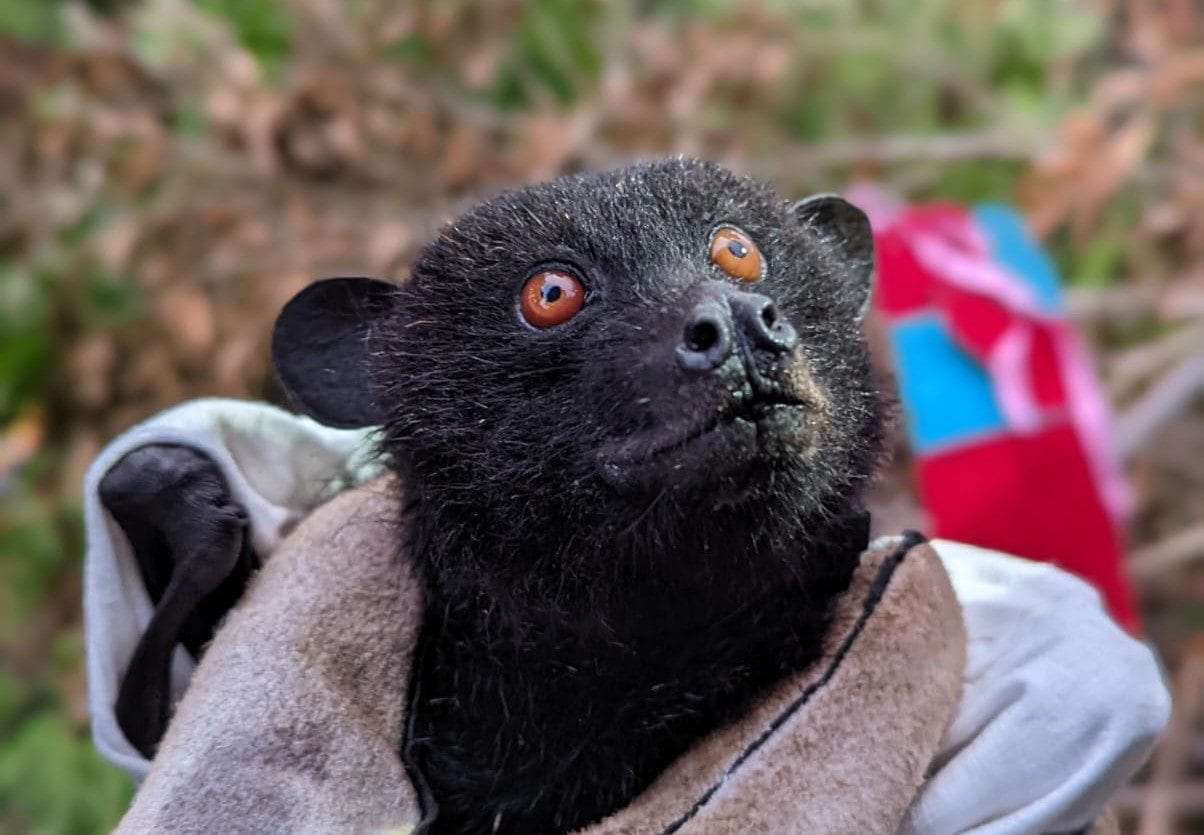
Bat signal received, extinction averted! “Big, fluffy, and dopey-looking,” the Livingstone's Fruit Bat is a zoo favourite... but endemic to only two islands in the world, they've long been critically endangered in the wild, except, thanks to the work of a local NGO, that's not a thing anymore. Conservation Optimism credits GPS tracking, rainforest restoration and community forestry and notes that the recovery opens funding for expanding habitat corridors.
Colombia’s highest court throws a lifeline to 30 Indigenous nations, freezing new mining permits in the 18,000 km² Yuruparí macro-territory until rivers contaminated with mercury are cleaned up and jointly monitored. The ruling, prompted by fish carrying toxin levels 17 times the safety limit, orders government agencies to craft Indigenous-led remediation plans and biennial progress hearings. Mongabay
Single gene reboot lets adult mice regrow damaged organs. Chinese researchers flipped a long-silenced vitamin-A-metabolism switch in rodents, fully repairing ear tissue within 30 days - something mammals typically cannot do. The experiment shows that reactivating this biological pathway reawakens ancient regenerative programmes conserved across 300 million years. CGTN
And finally, in arguably the most metal way to go, Ozzy Osbourne has passed away weeks after his farewell show became the highest-grossing charity concert of all time. Performed in front of 40,000 fans live, and 5.8 million online, it surpassed every other benefit concert in history (including Live Aid), bringing in over $190 million for Birmingham Children’s Hospital, Acorns Children’s Hospice and Cure Parkinson’s. Billboard
