

304: Superprogressive
Reclaiming the value of immersion in an era of compression. Plus, the most hopeful statistic in four decades of writing about the climate, Burundi eliminates trachoma, Sweden goes cage-free, and wild sturgeon spawning again in the Yangtze.

This week's top stories
The single most hopeful statistic I’ve seen in four decades of writing about the climate crisis.
~ Bill McKibben
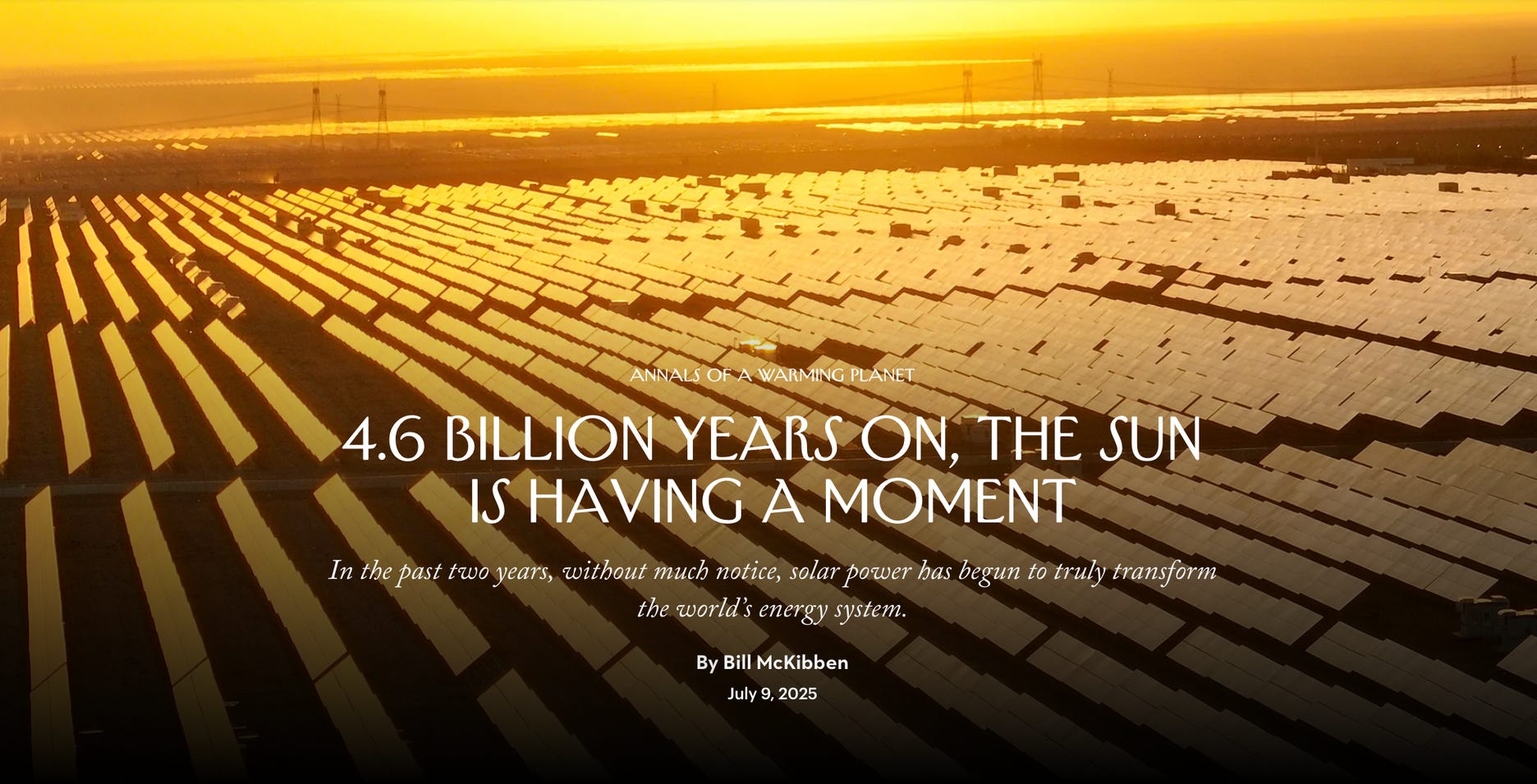
In an essay that should be required reading for anyone worried about our climate future, one of the world's most influential environmental journalists describes solar power as a 'deep re-ordering' of the world’s energy system. Globally, roughly a third more power is being generated from the sun this spring than last, and our species is now putting up a gigawatt’s worth of solar panels, roughly the same as one coal-fired plant, every 15 hours. The New Yorker 🗄️
Burundi becomes the 7th country to eliminate a disease this year. In 2010, trachoma (the same disease that Helen Keller's teacher, Annie Sullivan, suffered from) affected 2.5 million people across the small, central African country. Fast forward 15 years, and that number is zero. Amazing news right? Well, you won't see this story in any mainstream news publication, anywhere, and we can confidently say that because no publications have reported any of the other six disease elimination stories in 2025. WHO
From ICC arrest warrants to Sámi self-rule: 29 human-rights victories in six months. Amnesty International's mid-year roundup documents breakthroughs powered by grassroots pressure: an ICC arrest-warrant request for Afghanistan’s Taliban leaders, Cameroon prisoner releases, Algeria’s 24/7 helpline for abused women, Serbia curbing spyware, and Finland passing a stronger Sámi Parliament Act. The breadth shows how relentless advocacy can convert outrage into concrete reforms worldwide.
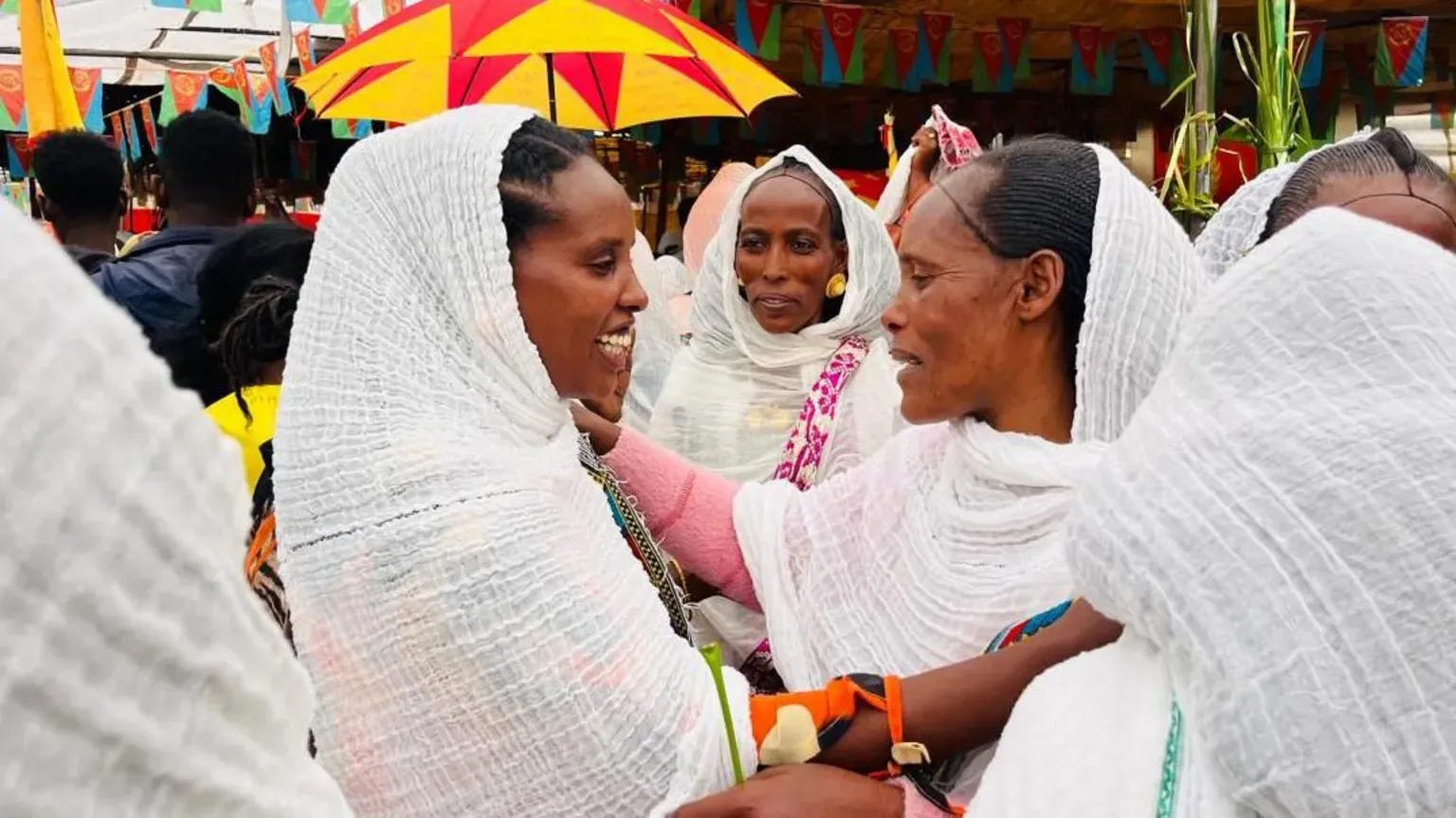
Joy at the Ethiopia-Eritrea frontier as the Zalambessa crossing is reopened for the first time in five years, letting families and friends reunite after the 2020 Tigray war sealed the border. The temporary re-opening of a section of the border was organised by local activists and community figures without the official backing of authorities, but those behind it indicated that they had the blessing from officials in Tigray and Eritrea. "Enough of the past, let's sit at the table of peace and build a better future". BBC
Since 2016, three state-level projects have brought reliable power to 140 million in India, laying out more than 4,300 km of power lines and rolling out smart meters and digitised billing. What's even more impressive is that this has happened even as India has reached its target of 50% clean power capacity way ahead of schedule: half of the country's 438 GW of installed electricity capacity now comes from renewables, hydro and nuclear, fulfilling its 2030 Paris pledge five years early.
Sweden is now entirely cage-free for laying hens, a feat achieved not with legislation but via consumer pressure and retailer pledges. Campaign group Project 1882 confirmed in June 2025 that the last 'enriched' cages were empty, freeing some 17 million birds. Goodgoodgood
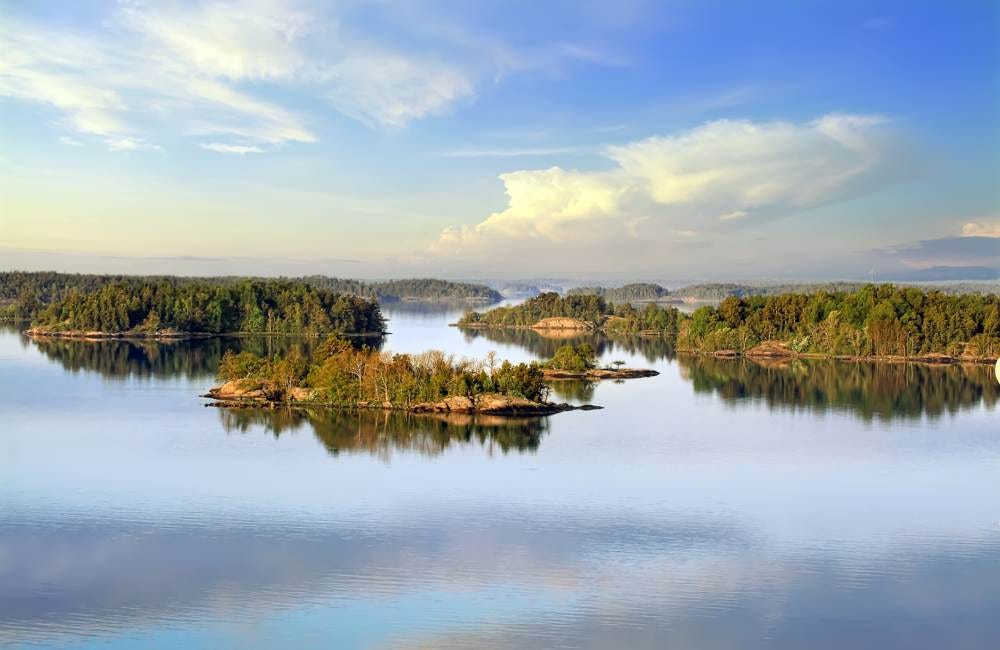
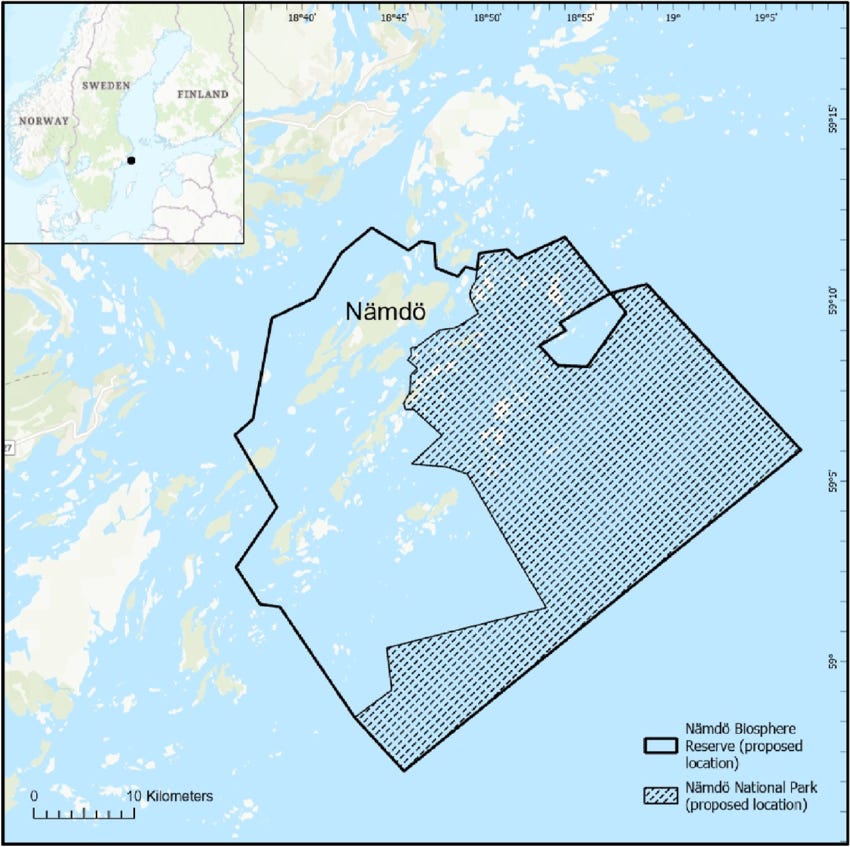
Sweden has also banned bottom-trawling in all their marine protected areas. In June, new legislation came into force prohibiting the use of bottom trawling fishing gear in all marine protected areas, including marine parks, nature reserves, biotope protection areas and Natura 2000 sites. And the country deserves congratulations for opening Nämdö Archipelago National Park, the country’s first marine park (an enormous one) on the Baltic Sea. We Are Aquaculture
China has demolished 300 dams on the Chishui River 赤水河, a major tributary of the upper Yangtze, restoring 400 km of river and luring the once-vanished Yangtze sturgeon back to spawn. Begun in 2020, the cleanup has reopened migration routes and cut small-hydro output by 90%, surpassing the Klamath as the world’s largest river-habitat revival. It's working. Scientists observed the first hatching of wild sturgeon in April 2025. SCMP 🗄️
Sub-Saharan Africa is getting banked without banks, thanks to mobile money: in 2010 about 10 million people in the region had accounts, today it's 640 million, more than half the mobile money accounts in the world. All this banking-without-banking-but-with-phones may seem boring until you get into the weeds about how being able to move money with accounts like these massively reduces poverty: think 'students can now go to school' and 'migrants can move to wealthier places and send back remittances to their families.' Our World In Data
☝️ The remittances bit is especially important: the money migrants send back to their home countries (or in some cases, home villages, from their country’s wealthier cities) is more than three times the amount that comes from all the world’s international aid. Read more about how mobile money reduces poverty here, and how remittances in particular act as a particularly effective form of wealth redistribution here.
Meet the self-effacing lawyer who helped the Yurok pull off the ‘tribal victory of the century’ on the Klamath River. By invoking seldom-used 1986 amendments to the Federal Power Act, attorney Scott Williams convinced a judge that $350 million fish ladder upgrades were needed for dam relicensing - costlier than demolition - forcing owner PacifiCorp to accept the four-dam teardown finished last October. Low key lawyering ➡️ high impact river restoration. BC Law

Operation Green Shield hits Amazon crime. Hard. In a two week sweep, 1,500 officers across Brazil, Colombia, Ecuador and Peru arrested 94 suspects, rescued 2,100 live animals and seized assets worth €55 million from illegal miners, loggers and wildlife traffickers. Countries worked closely to develop shared priorities for action, before conducting a meticulously-synchronised campaign that used satellite-based geolocation tools to share intel and data in real time. Along with the obvious hero countries (Brazil, Colombia, Ecuador and Peru) credit goes to the UAE (!??) for coordinating this whole save-the-rainforest shebang. Euronews
In June, The Lancet published an evaluation of 20 years of USAID funding by a team of global researchers from Brazil, Spain, Mozambique, and the United States. They calculated that US global health and development spending has spared about 90 million deaths in low-income countries, including:
25 million lives saved from HIV/AIDS
11 million from diarrheal disease
9 million from lower respiratory infections
9 million from "neglected" tropical diseases, such as dengue and river blindness
8 million from malaria
5 million from tuberculosis
2 million from nutritional deficiencies
All this was achieved with a program that accounts for about 0.8% of the federal budget and about 1/400th of America’s total national spending. This is a staggering return on moral investment.
Derek Thompson
Stereo Montreal, April 2025, by Dave Seaman & Anthony Pappa
A ten hour set by two of the godfathers of progressive house, who helped define the genre when it was still a slow-burning, underground form built on patience, subtlety, and sonic architecture. A stunning showcase of musical prowess, traversing the full emotional and rhythmic range of the genre, and reclaiming the value of immersion in an era of compression. Put on a good pair of headphones, and strap in for the day. Superprogressive Part 1/Part 2/Part 3
