

303: Superwood
Bulletproof, fire-resistant, stronger than steel. Plus, malaria vaccines get cheaper, global electricity access up, European air pollution down, genuine hope for coral reefs, and giant river otters return to Argentina.

Hi everyone, we did it!
We asked, and you responded. Thanks to your generosity, we're sending donations of US$10,000 to both Glia in Palestine, and MiracleFeet in Pakistan. We are so grateful to everyone who contributed (you know who you are). 100% of this money will go straight to the source. This is going to make a real difference, you're all bloody amazing.

This week's top stories
Price of malaria vaccines to be slashed. At Gavi's recent pledging summit the manufacturers of both the RTS/S and R21 malaria vaccines committed to drastically reducing their prices over the next five years. The cuts will free up an extra US$130 million for malaria immunisation efforts and allow Gavi reach 50 million more African children by 2030.
These commitments bring us closer to reaching half a billion children and expanding access to lifesaving vaccines. As the largest vaccine delivery and procurement agency, UNICEF brings the reach, experience, and determination to help turn this ambition into reality. But the work is far from over. Continued commitment and investment will be essential. Let us seize this moment – together – to make it real.
Catherine Russell, UNICEF Executive Director
If you've been reading non-fix-the-news news, you're probably aware of the Trump administration loudly pulling funding for lots of good things. That's not the full story though. The UN's climate budget will climb by 10% next year, a hike agreed to by nearly 200 states: Bloomberg Philanthropies will cover the absent U.S. share (22%), while China will pay 20%, up from 15%. Meanwhile, despite the rhetoric, the U.S. National Institutes of Health has quietly lifted its freeze on HIV and TB research, salvaging trials worth about US$400 million. Not only that, but the NIH has also unveiled a work-around for other funding freezes; an "administrative lift" that allows continued funding for crucial global health research.
Tobacco control measures now shield three-quarters of humanity and have averted an estimated 300 million additional smokers since 2007. Graphic pack warnings have led the charge: only nine countries required them in 2007, today it's 110, covering 62% of the world’s population. Closing the policy gap in the 40 holdouts, turbo-charging tax hikes and regulating vaping is now essential to extend these life-saving gains. WHO
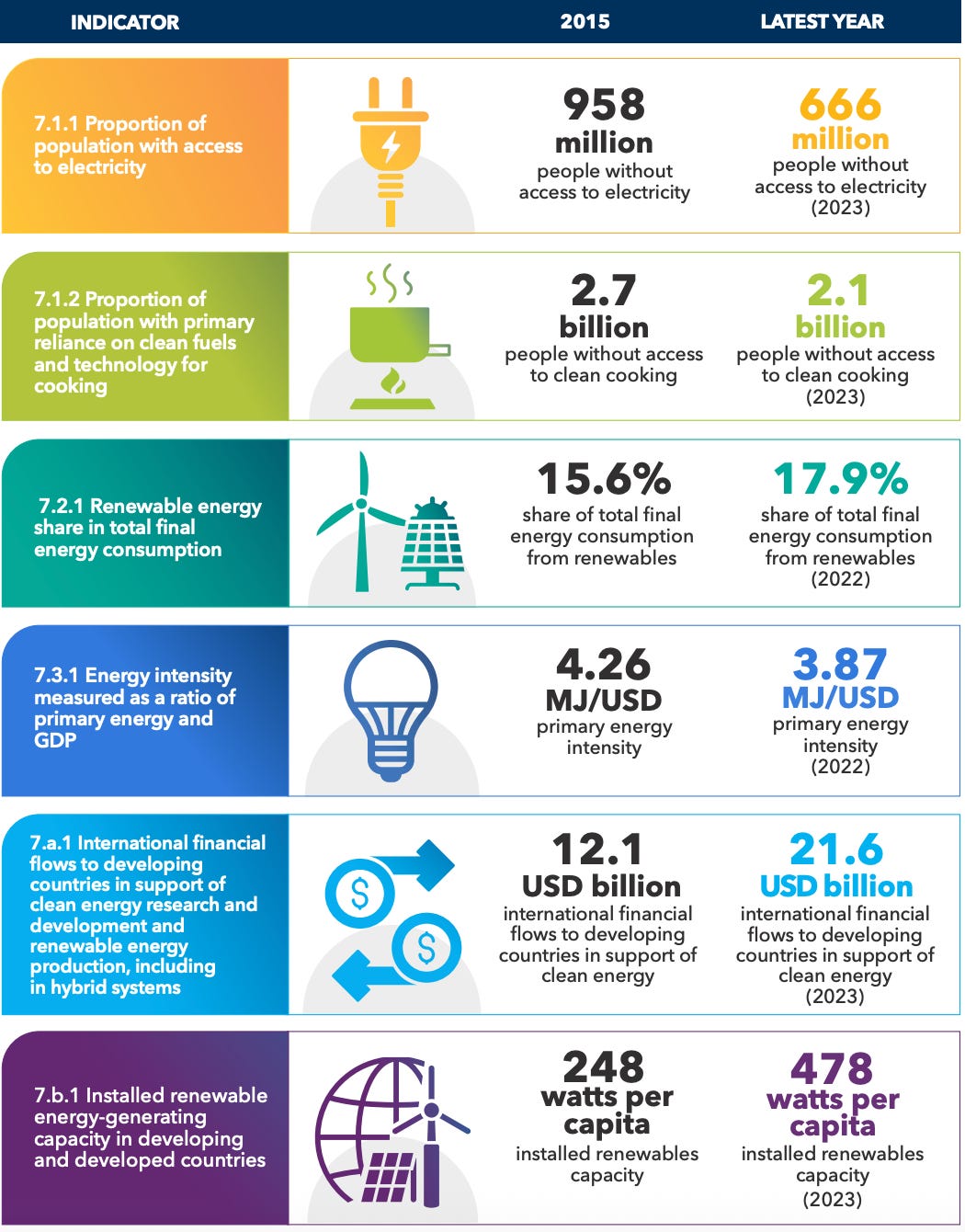
The number of people without access to electricity has been cut by 292 million in the last decade - despite the global population increasing by around 760 million during the same period. That means 92% of humanity now has electricity, up from 87% in 2010. Increasingly, that electrification is being driven by renewables, and hundreds of millions more people are no longer cooking over open stoves. SDG 7 Progress Report
A Kyiv court has, for the first time, recognised a same-sex couple as a family, marking the first legal precedent of its kind in Ukraine. The ruling, which treats a 2021 U.S. marriage as a de facto union, cites European Court precedents and has intensified pressure on parliament to pass a stalled civil-partnership bill. Kyiv Independent
‘Superwood’ factory will press pine into steel-strong panels next month. A startup in Maryland has built a chemical-compression line that turns softwood into bullet-resistant boards that are lighter than titanium, yet stronger than steel, with one-third the embodied carbon of concrete. Backed by US$50 million, including an Energy Department grant, the company is targeting façade and door markets before seeking structural certification. WSJ 🎁
EU air pollution plummets, smashing clean-air pledges early. A new report shows that since 1990, the EU-27 has slashed sulphur dioxide by 95%, nitrogen oxides by 66%, ammonia by 36%, and fine-particle pollution by 41%, overshooting all targets agreed in 2016, and already 16% ahead on the tougher 2030 SO₂ target. The remaining frontier: cutting farm ammonia and smoke from wood-burning heaters. EEA
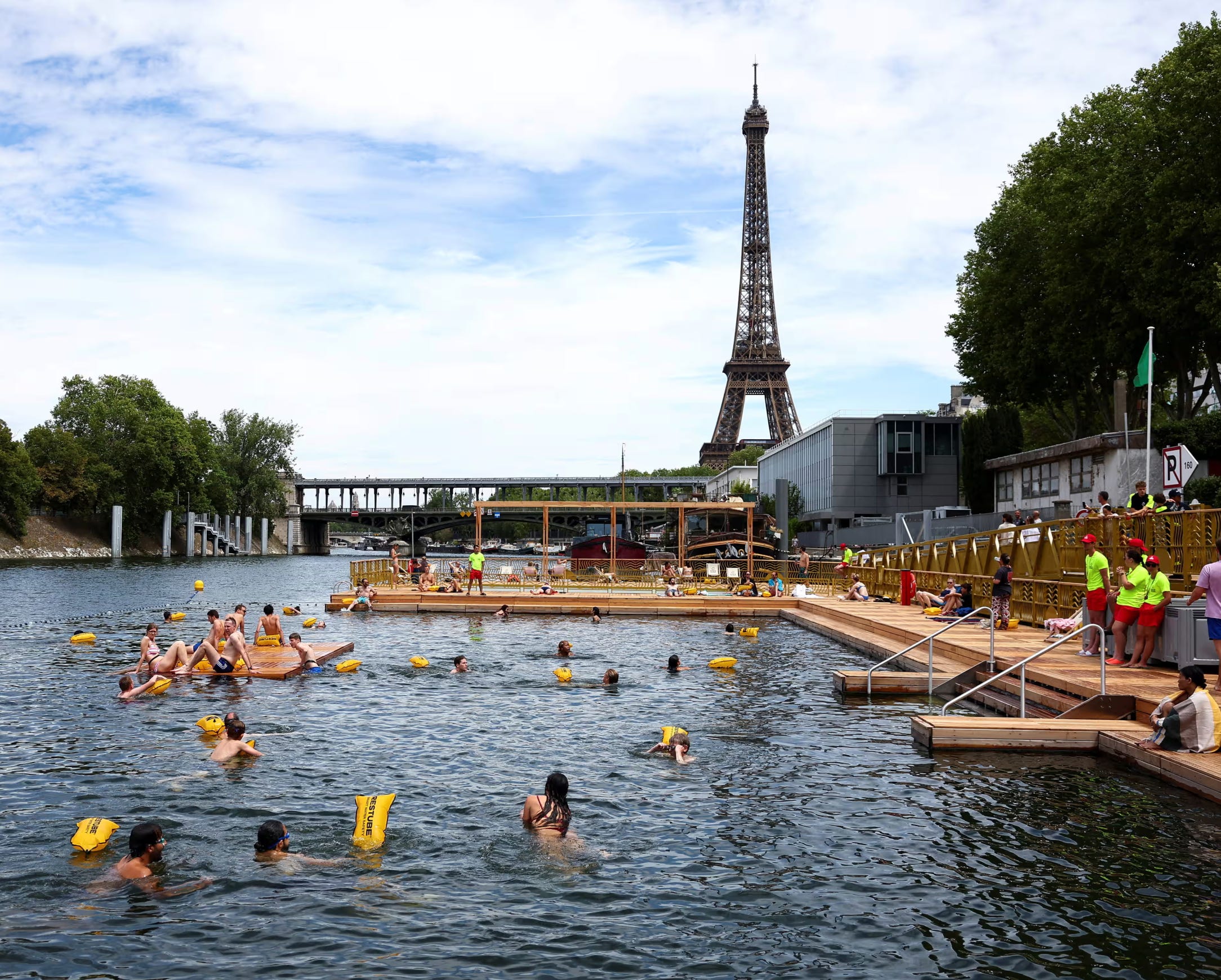
Paris reopens the Seine for swimming after a €1.4 billion clean-up. Three free bathing spots now admit up to 1,000 swimmers a day, ending a 102-year ban thanks to new sewers, rain-storage reservoirs, and daily water-quality tests installed for last year’s Olympics. 14 more sites on the Seine and Marne are planned, with President Macron pledging to take a dip when it was possible to do so. Guardian
Across the pond, New York's six month old congestion pricing scheme has produced perhaps the fastest ever environmental improvement of any policy in US history... and it's also making money. Congestion pricing revenue is on track to reach $500 million this year, "allowing upgrades to the subway, the purchase of several hundred new electric buses and improvements to regional rail." Guardian
Nine Eastern European states (Poland, Hungary, Romania, Czech Republic, Bulgaria, Lithuania, Estonia, Slovakia and Latvia) have multiplied solar capacity five-fold in five years. The solar boom, a direct response to Russia’s 2022 invasion, is seeing countries like Lithuania and Estonia nearing 50% solar in their electricity mix on midsummer days. Cheap panels and energy-security politics are turning the region from a fossil-fuel outpost to an export-ready power pool. The Reengineer
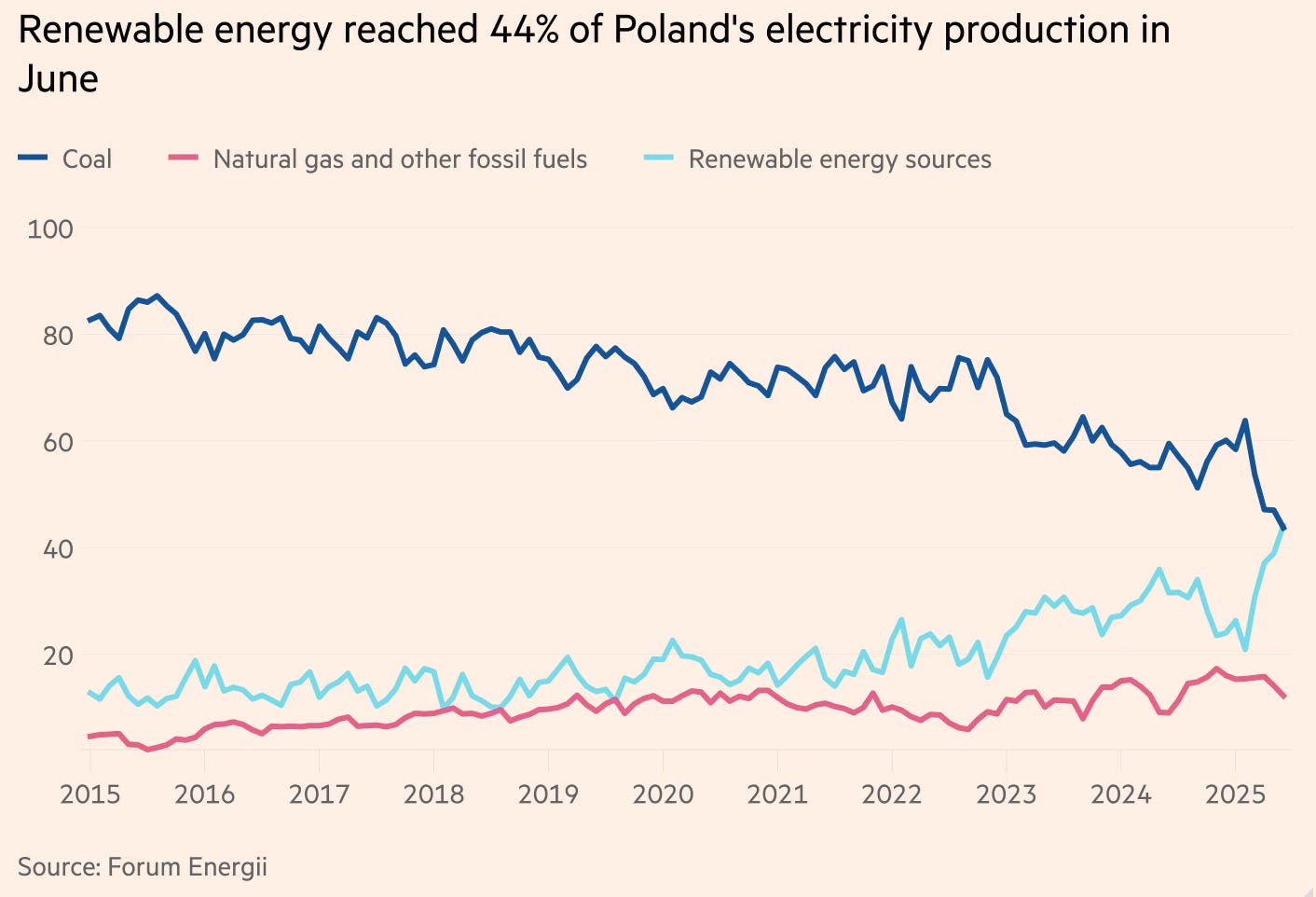
Plus, special props to Poland, one of Europe's last coal strongholds. A decade ago, coal accounted for 83% of its electricity - now for the first time in the country's history, coal has been overtaken: in June, renewable energy sources accounted for 44.1% of electricity while coal accounted for 43.7% (the rest was fossil gas, in case you wondered). FT
Maldives pioneers portable coral hatchery in major reef restoration breakthrough. Scientists in Australia and the Maldives have successfully reared more than three million larvae and deployed more than 10,000 juvenile corals on 720 seeding devices at nine different reef locations - marking a major leap forward for coral restoration. They're now working on a plan to share the system with Pacific nations. Oceanographic
☝️
One of the scientists involved in this project, Theresa Fyffe, was at TED this year. We highly recommend her talk. It's an extraordinary initiative, representing genuine hope for the world's coral reefs.
Biomass satellite’s first images unlock a living global carbon map.
ESA’s new Biomass satellite has returned radar snapshots of forests from the Amazon to the Arctic, inaugurating a five-year mission to weigh every tree above the soil. Mapping biomass fluxes to within about 20 Mg ha⁻¹ lets scientists track carbon losses and gains in near-real time—crucial for emissions accounting and REDD+ finance. Its cloud-piercing P-band radar will revisit 9 million km² of previously uncertain forest each year. Phys.org
Also - engineers are planning on painting satellites with Vantablack to see if it could stop the glare from ever-growing satellite swarms. Live Science
Atmospheric water harvesters can draw up to 20 litres of water out of thin air every day – and they're leaving the lab and hitting production lines next year. Made possible by breakthroughs in metal-organic frameworks and biomass hydrogels, the units are intended for communities without reliable water access and are currently undergoing certification for household use. Science
Remote robotics let a surgeon in the United States operate in Angola, 11,300 km away. From Orlando, Florida, urologist Vip Patel removed a prostate tumour in Luanda, Angola, via a robotic console, completing the world’s longest-distance telesurgery and Africa’s first. The trial kept latency below 200 microseconds, showing high-bandwidth links can deliver specialist cancer care to undersupplied regions (Angola has one of the continent’s highest prostate cancer death rates). Deutsche Welle
Some good news for animals in South America:
Jaguars in the Brazil-Argentina Green Corridor have climbed from about 40 in 2010 to at least 105, thanks to projects that pay neighbours to protect, not shoot, them. After a 13% forest loss in Paraná drove cats to prey on cattle, women “Jaguar Crocheteers” turned big-cat crafts into new income, biologists built predator-proof corrals, and joint ranger-rancher patrols spread coexistence training, all of which have been instrumental in restoring local populations. Mongabay
Patagonia’s population of El Rincón stream frogs - teensy, two-inch critters confined to a 10 km² habitat - is up 15% after biologists purged invasive trout, fenced cattle and released captive-bred tadpoles. Researcher Federico Kacoliris, who mobilised the conservation movement around the species, recently received a “Green Oscar” for his work, which will help his foundation expand protections in the area. Mongabay
Harpy eagles are nesting in southern Brazil and northern Argentina for the first time in decades, according to researchers monitoring the rainforest canopy. The sightings include breeding pairs near former logging zones, signalling a slow return to historic range. It’s an encouraging sign for one of the world’s largest and most elusive raptors. Bird Guides
Giant river otters Coco and Nima return to Argentina’s Iberá wetlands after 40 years. Rewilding Argentina has released the pair and their two pups into the 8,100 km² Iberá Park, restoring a keystone predator once hunted to national extinction. The otter family’s comeback is the first modern reintroduction of the species anywhere. Miami Herald
The video is great... click on it to watch.
And finally, British scientists are building a brain-computer hybrid, formed of 800,000 neurons grown across a silicon chip. The neuron-silicon 'computer' is ultra-low-energy (a rack of them uses only 1,000 watts of power) and can outperform artificial neural networks. The computers can now be rented out, and while the technology is still in its infancy (it recognises shapes, plays Pong), we're put in mind of Benjamin Franklin's famous bon mot when watching the first manned balloon flight:
Someone asked me “what’s the use of a balloon?” I replied—'what’s the use of a newborn baby?'
