

297: Brontë Country
"Every leaf speaks bliss to me, fluttering from the autumn tree." Plus, the end of one of the world's oldest conflicts, a turning point for China's emissions, some surprising news on mass shootings in the US, Colombia leads the way for indigenous rights,

This week's top stories
The Kurdistan Workers’ Party has announced it is renouncing armed conflict as part of a new peace initiative with Turkey, ending four decades of warfare. The militant group said that that the struggle had “brought the Kurdish issue to the point of resolution through democratic politics, thus completing its historical mission.” AP
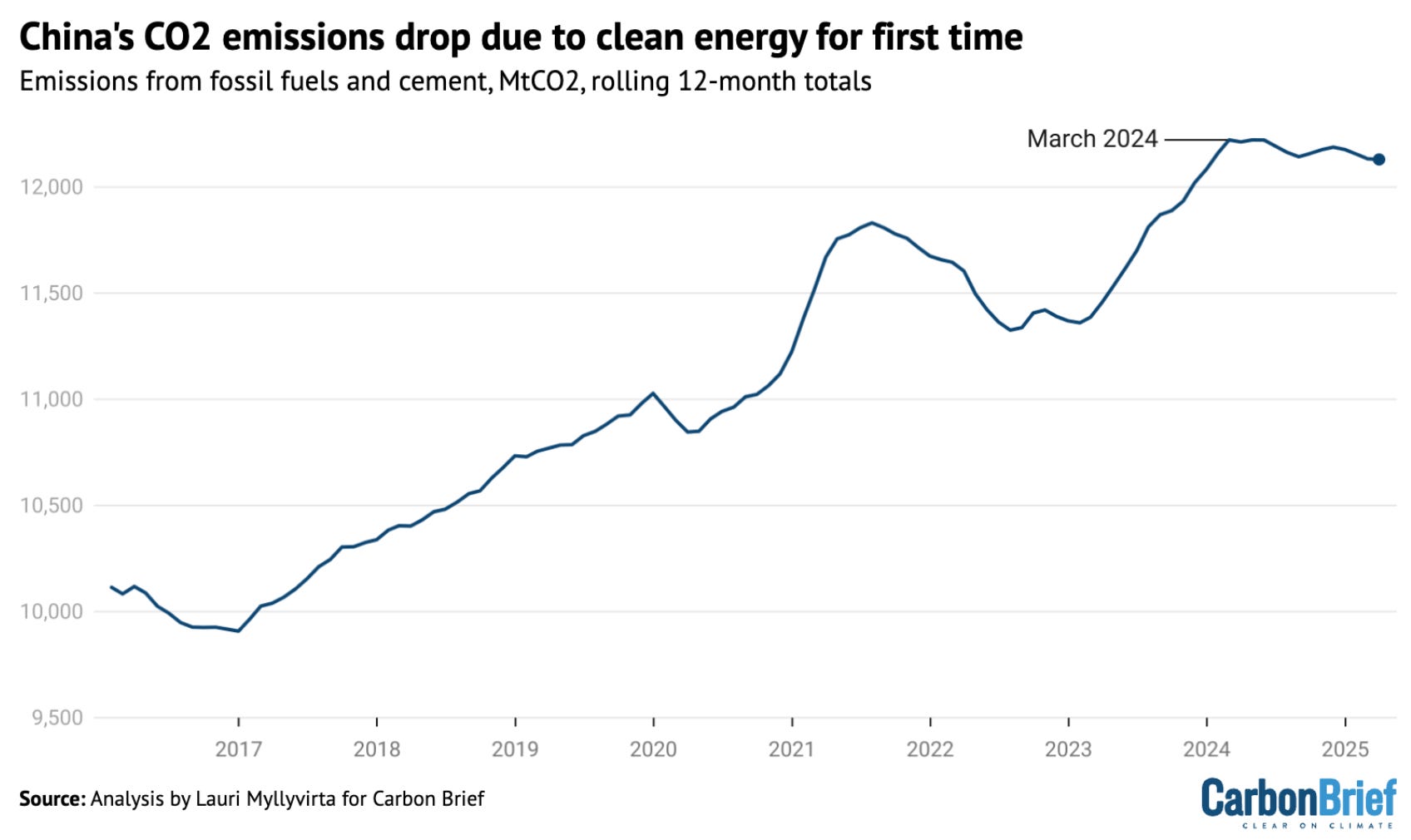
Clean energy pushes China's CO2 emissions into historic reversal. For the first time ever, China's carbon emissions are falling even as power demand grows, marking a major potential turning point in climate action. Wind, solar and nuclear are now reducing the use of coal even as electricity needs soar, with emissions declining 1.6% in the first quarter of 2025 and by 1% over the last 12 months. This is a crucial structural shift, differing from previous declines, which were caused by economic downturns or COVID lockdowns.
It's probably a little early for serious celebration - a looming drought could threaten hydropower, and of course nobody knows what's going to happen with tariffs. Long term, a continued downward trend will depend heavily on China's upcoming five-year plan targets and sustained renewable expansion. Make no mistake though, this is very, very good news. Carbon Brief
Colombia has established a pioneering legal framework giving Indigenous communities full self-governing authority—including public budgets and administrative power—across vast Amazon territories. The new presidential decree culminates a 30-year struggle for autonomy, positioning Colombia ahead of other Latin American nations that typically only grant land titles without governance rights. AP
Since 2015, the African Development Bank has facilitated access to drinking water and sanitation for 96.2 million people, largely through the African Water Facility accelerator fund. The fund has improved access to sanitation for 11.3 million people, provided drinking water for 23.2 million, equipped two million hectares for irrigation, and will undertake at least 14 new projects in 2025. AfDB
Engineers revive 'dead' thrusters on Voyager spacecraft 24 billion kilometres from Earth. NASA engineers successfully reactivated Voyager 1's primary roll thrusters, dormant since 2004, by solving a power supply circuit mystery. The creative fix extends the 47-year-old interstellar mission, coming just before a nine-month communications pause while our planet's only dish powerful enough to contact Voyager undergoes upgrades. Phys.org
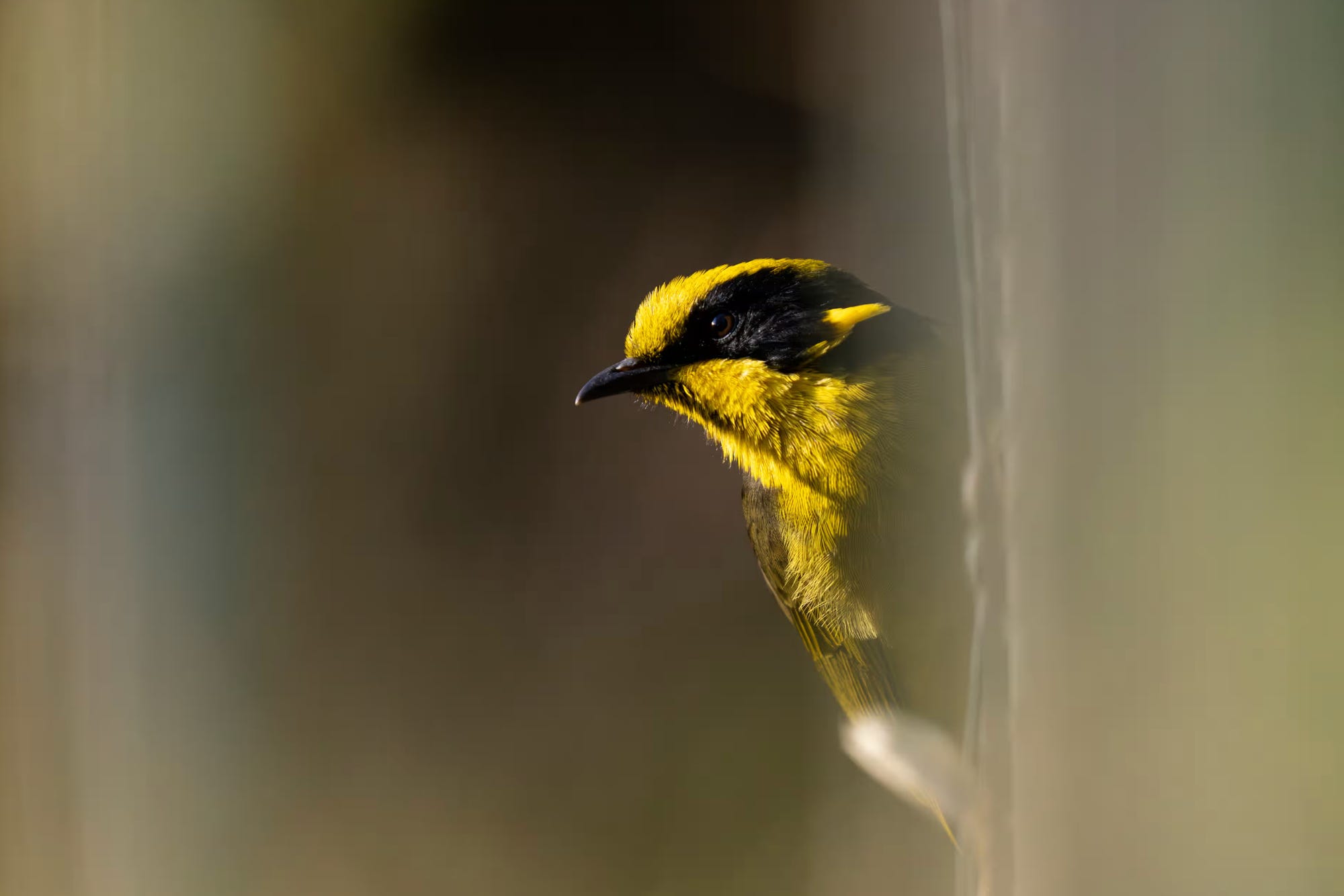
One of Australia's rarest birds returns to fire-ravaged habitat after 42 years. Captive-bred helmeted honeyeaters have been released into Cardinia Forest, near Melbourne, where they disappeared after the 1983 Ash Wednesday fires. The charismatic gold-and-black birds now have three potential wild populations, with conservationists monitoring sites for breeding success. The Guardian
CRISPR treatments are ready for prime time: The Children’s Hospital of Philadelphia has created the first custom CRISPR therapy to save an infant named KJ with a rare metabolic disease, while in Cambridge, Massachusetts, a biotech startup has used a flexible form of CRISPR editing called prime editing to restore the immune functions of an immunocompromised teenager suffering from chronic granulomatous disease.
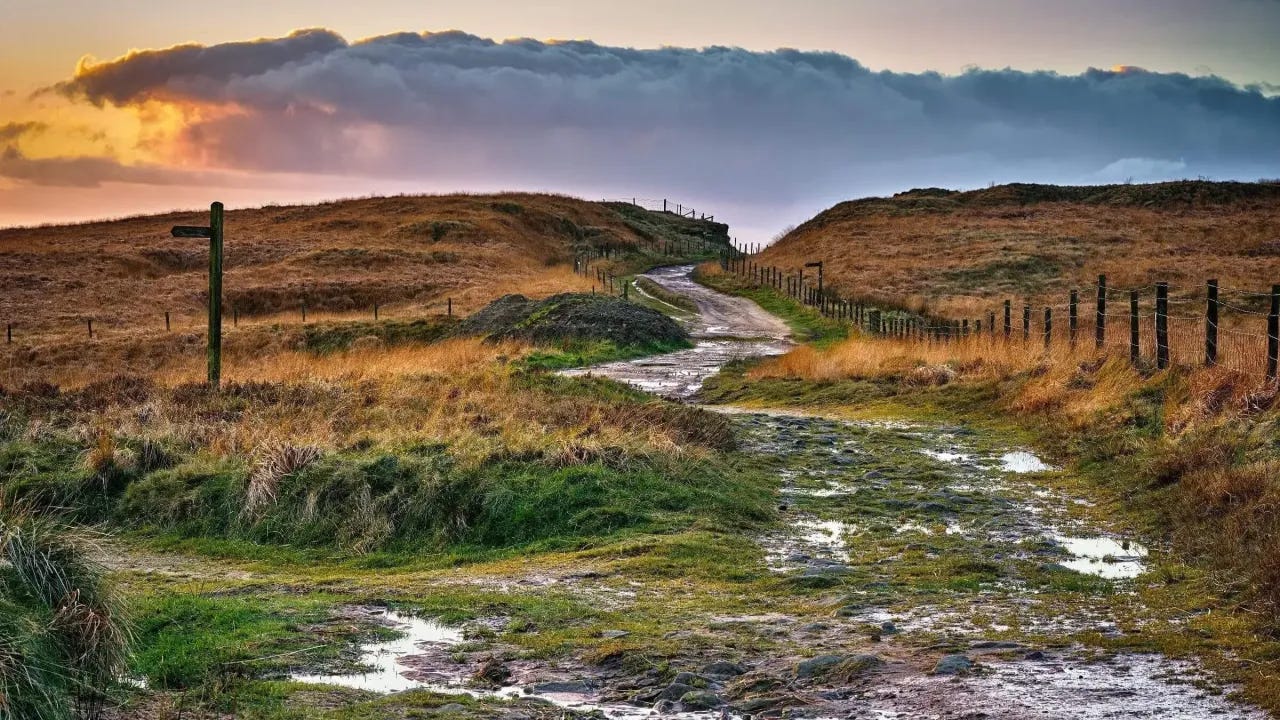
England has protected the sweeping Pennine landscapes (the inspiration for the Brontë sisters) by creating the Bradford Pennine Gateway, connecting eight nature sites across 1,274 hectares. The reserve safeguards the literary sisters' creative inspiration while providing green space access for one of Britain's most nature-deprived cities. The protected area preserves rare wildlife, peat bogs, heathlands and wetlands. Guardian
Solar and wind provide 98% of new US power capacity in record-breaking quarter. March 2025 marked the 19th consecutive month that solar was the leading new energy source. Combined, renewables are now 31.5% of total US utility-scale capacity, with projections showing solar will likely surpass coal and wind within two years to become the second-largest source behind fossil gas. Oh, and the Federal Energy Regulatory Commission says there's as much as 223GW of solar in the current three-year pipeline. Electrek
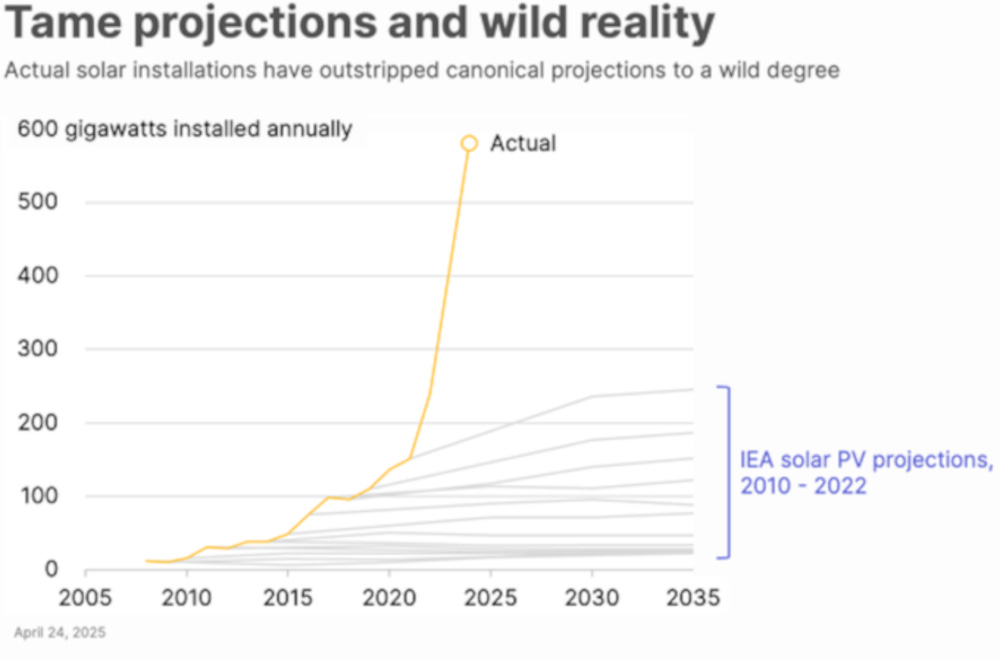
Tame predictions versus wild reality: the rollout of solar is consistently underestimated. Actual global solar installations have smashed past all projections. From Nat Bullard: "Not much more to say than this technology, consistently underestimated, now adds more capacity to the global grid than anything ever and will soon add more power in any given year than anything ever as well."
This may be a good time to remind everyone of some of the previous stories of solar's rollicking progress, including Europe's record-breaking solar output and Pakistan's solar shock. In some places, all government has had to do is get out of the way, as they've done in with balcony solar in Germany and Spain, and in Utah, where a bipartisan bill passed back in March allows portable solar systems to plug directly into 120V outlets.
Oh, and don't forget the big new push to electrify Africa, where mini-grids are rocking it in Nigeria and solar panels are being sold on the side of the streets in Niger.
Plus... there's plenty more solar panels coming. Solar cell production in China in the first four months of this year totalled 239 GW, an 18.8% increase from the same period in 2024.
India's Supreme Court has declared inclusive digital access a fundamental right to life and liberty, ordering 20 improvements to make identity verification accessible for marginalised groups. The ruling, stemming from a petition by acid attack survivors, establishes that bridging the digital divide is now a constitutional imperative—not merely policy discretion—particularly benefiting rural populations and persons with disabilities. Economic Times
Even more stories about wiring the world --
In Niger, the World Bank is bringing broadband to millions in conflict-affected villages, allowing vulnerable populations to access services and receive alerts that help them avoid high-risk areas and situations.
In Nigeria, the number of people with digital IDs has hit 117.3 million, up from 36.9 million in 2020, enabling access to services like voter registration and bank account verification for the previously underserved including IDPs, refugees, and persons with disabilities.
And as far as digital access is concerned, India is putting its money where its mouth is: this year's budget promises broadband for all rural schools and primary healthcare centres. And India's free telemedicine service, eSanjeevani, now provides 300,000 telehealth consultations a day, and has served 330 million patients.
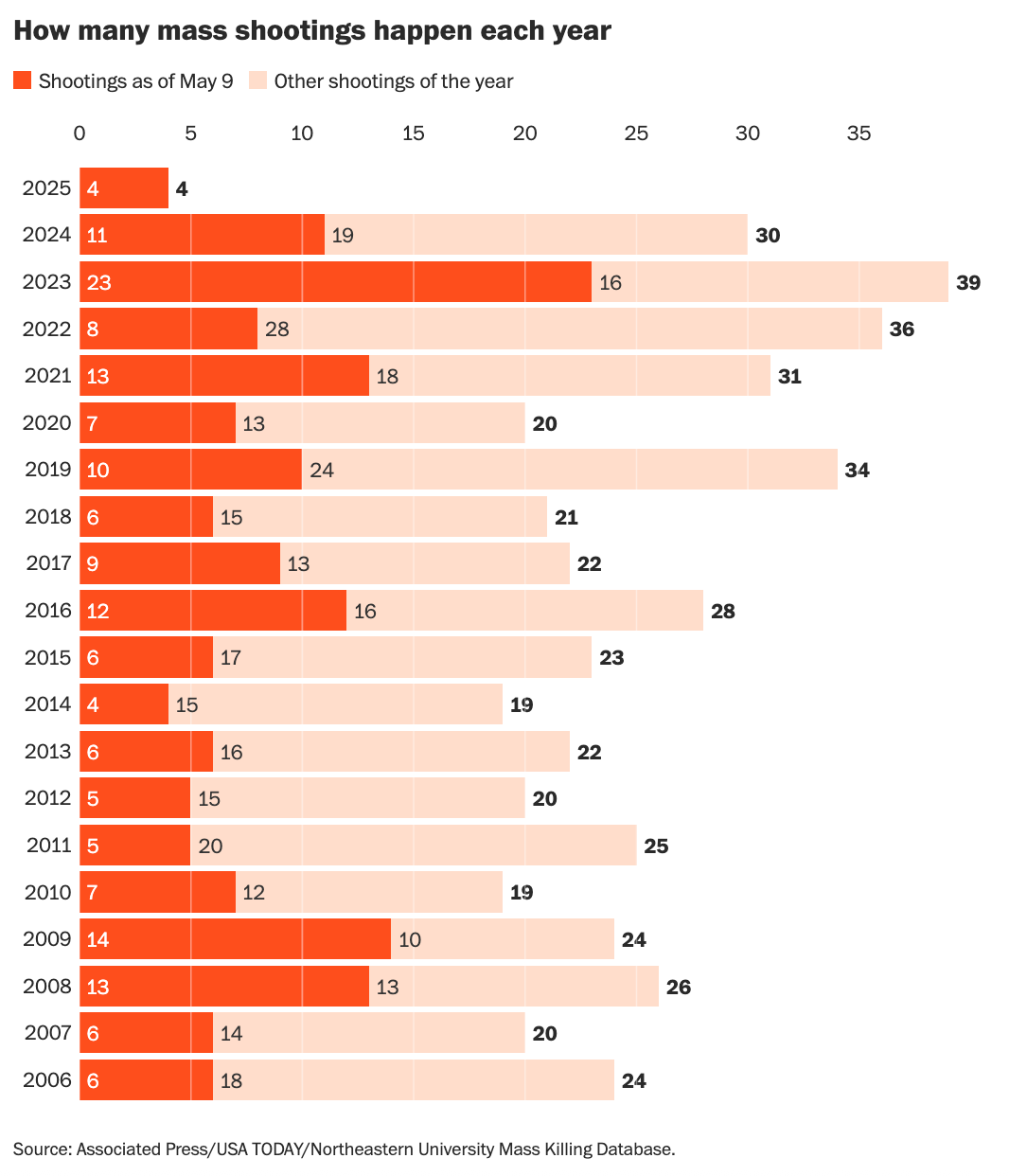
Mass shootings in the United States are at a 16-year low. There have been only four incidents causing four or more deaths in the first four months of 2025—the lowest count since tracking began in 2006. Public mass shootings have disappeared entirely, following a 24% overall decline from 2023 to 2024. The Washington Post 🎁
An ultra-thin brain implant that could enable thought-to-command (and eventually shut down paralysis) has received FDA clearance. The hair-thin device slides through an incision without damaging brain tissue, unlike similar prototypes which require removing pieces of the skull to be implanted. Oh, uh, and there's another brain-computer implant in the works that doesn't require surgery at all but instead gets to your brain via your bloodstream. Which is great! Because it's been used to help patients with ALS and other forms of paralysis communicate!
Cape vulture rebounds across southern Africa after 50-year conservation effort. Southern Africa's largest endemic vulture species is now vulnerable but not endangered; the population has stabilised after declining by 70% between 1992-2007, with birds returning to historical areas abandoned for decades. This recovery stems from decades of work changing landowner practices, reducing poisoning, and mitigating power line collisions. Mongabay
The Indian Ocean Tuna Commission has enacted landmark shark conservation measures, including rules to curb finning, expanded bycatch bans, and restricted harmful fishing gear. The agreement establishes a management system for blue sharks, extends retention bans to whale sharks by 2026, and requires sharks be landed with fins attached. Mongabay
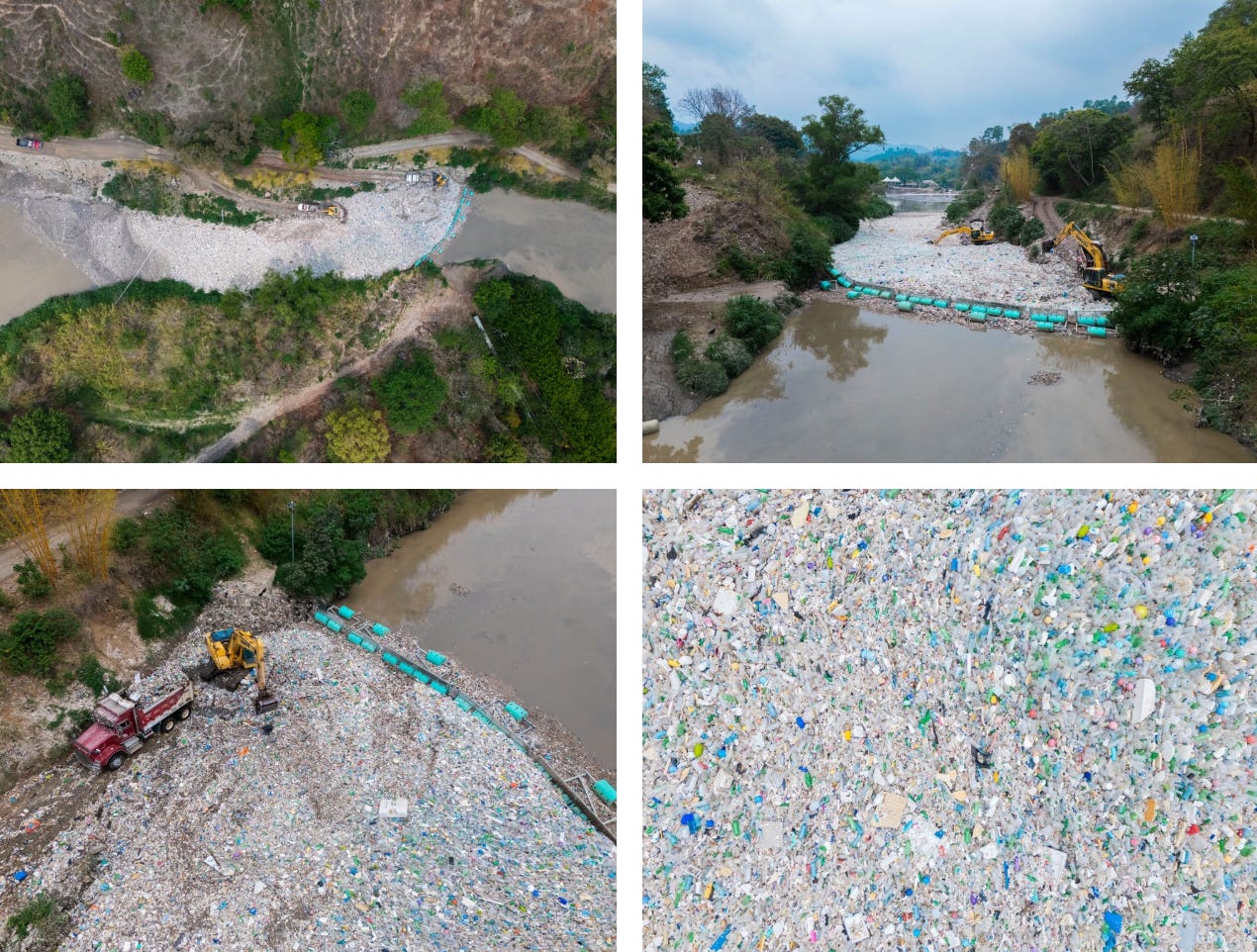
And finally, The Ocean Cleanup just brought in its biggest haul of the year - 1,079 tons of trash in Rio las Vacas, Guatemala. Here's what it looks like:
Progress
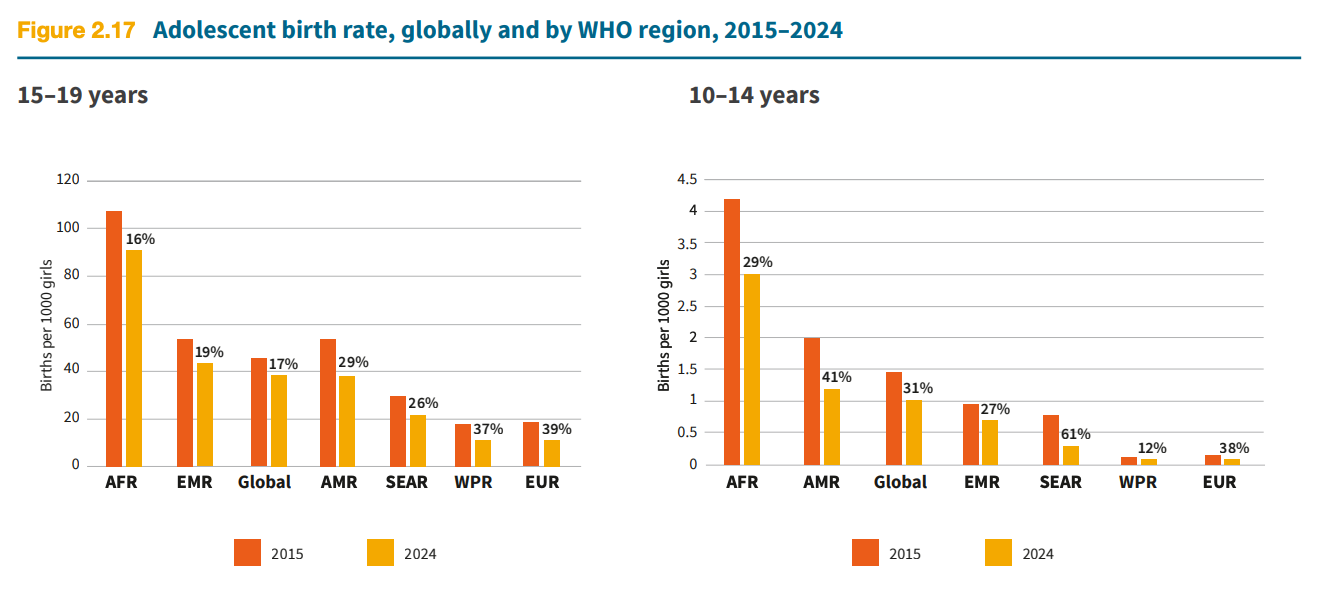
There are some really amazing stats buried within the WHO’s latest World Health Statistics Report. These include 1.4 billion more people were living healthier lives at the end of 2024 compared to 2017, driven by less tobacco and alcohol use, improved air quality and WASH services; 431 million more people gained access to essential health services without financial hardship; and significant drops in HIV, TB and the global teenage birth rate.
In 2024, heavy flooding in Guinea affected 45,000 people and severely compromised water and sanitation access. With support from international partners, UNICEF has been able to restore access to WASH services in affected regions, installing solar-powered water points, repairing contaminated wells, and rehabilitating sanitation facilities in schools, health centers, and residential areas.
Just a year after Zambia experienced one of its worst ever cholera outbreaks, there’s been a marked decline in cholera incidence compared not only to 2024, but to the average annual incidence for the past decade. The Centre for Infectious Disease Research in Zambia credits the country’s rapid oral cholera vaccination campaign. Gavi
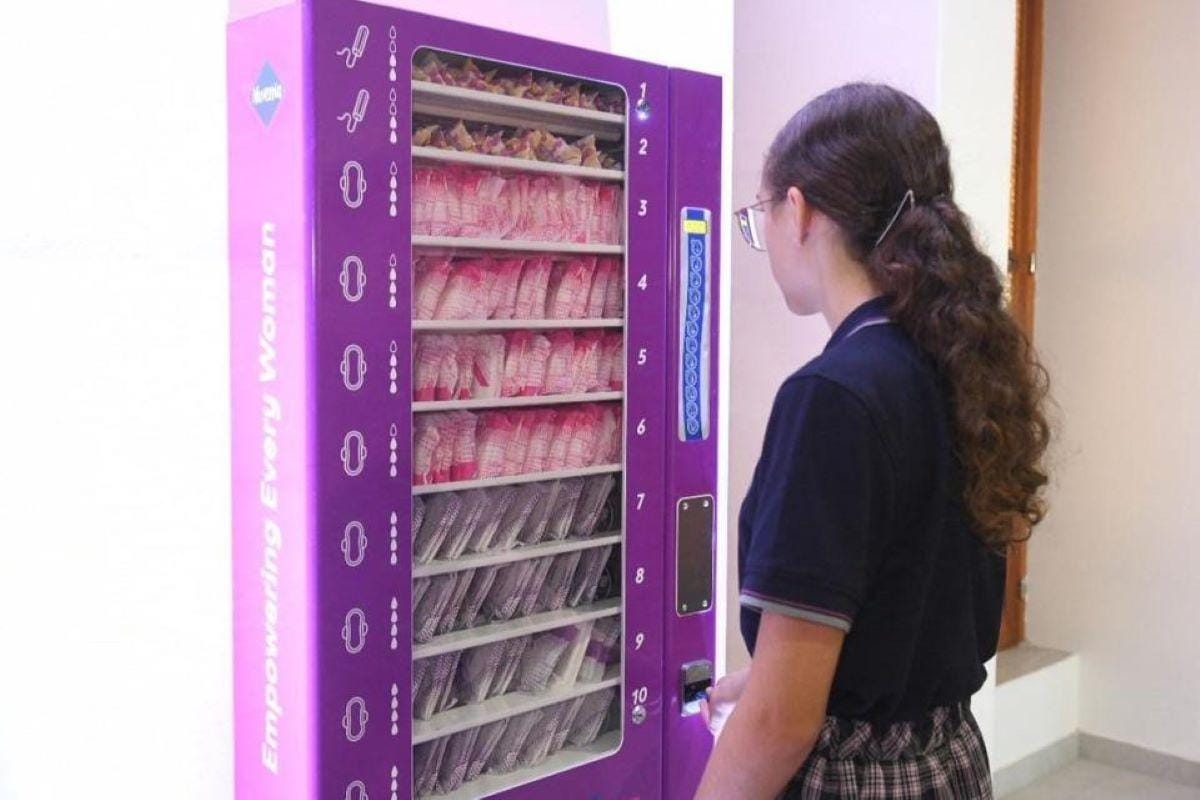
Following a successful pilot project, Malta will provide free period products for students in all middle and secondary schools. The initiative aims to eliminate stigma, ensure educational access, and promote inclusivity, and fulfils a government pledge within a broader five-year gender equality strategy. Times of Malta
27,000 fewer Americans died of a drug overdose in 2024 than in 2023 - the steepest single-year decline since the CDC first began keeping track of overdose deaths 45 years ago. That’s three lives saved every hour, for an entire year. This seems to be a nationwide trend as 45 states recorded a drop in deaths. A major factor behind this decline is greater naloxone access, which is close to 99% effective post-overdose.
Hi everyone, Betsy here, I have a major soft spot for Uganda, due to the country's kind refugee policies, which means it gives me joy to report that Uganda has recorded significant health and education gains. New data from Uganda’s latest National Household Survey reveals that the national poverty rate declined from 20.3% in 2019/20 to 16.1% in 2023/24. Also, primary school enrolment has shot up, gender gaps in primary education have nearly closed, and access to healthcare has improved, with 82% of those ill able to seek medical attention.
And across the border, Kenya's recorded steady growths in education enrolment in 2024: pre-primary school enrolment rose from 2.88 million in 2023 to 2.91 million in 2024, secondary school enrolment rose by 5%, reaching 4.32 million, and university enrolment grew by 9%, to 631,300, with a notable 13.8% rise among female students. The Eastleigh Voice
Los Angeles county is eliminating the medical debt of 134,820 residents, with no strings attached. There’s no application process — those chosen will simply receive a letter confirming that their debt has been taken care of. LAist
This kind of debt often gets bundled and sold to debt collectors for pennies on the dollar who then go after families aggressively for the payment. But we asked ourselves, what if instead of collection agencies buying that debt, Los Angeles county bought that and what if instead of collecting it, we forgave it? And that's exactly what we've done. So keep an eye on your mailbox.

Environment & Conservation
Away from the headlines, a handful of US states are pioneering transformative environmental policies that are spreading rapidly across the country. Minnesota and California have successfully reduced traffic while saving households thousands of dollars annually, and Colorado's ground-breaking landfill methane regulations build on earlier efforts in other states to tackle a potent greenhouse gas. As these models prove successful, other states are quickly introducing similar legislation, creating a quiet, yet powerful domino effect.
Plus, the US Fish and Wildlife Service just distributed $55 million to state agencies through the State Wildlife Grant Program. Since 2000, it's invested over $1.34 billion in state-led conservation, helping rebound lake sturgeon populations across the Great Lakes region, contributing to the red-cockaded woodpecker's down-listing from endangered to threatened, and establishing vital monitoring for California's bumblebee species. FWS
Delhi has created seven biodiversity parks spanning 820 hectares by rehabilitating severely degraded lands, including abandoned mining pits now transformed into orchid and butterfly conservatories. These parks function as essential green infrastructure, providing carbon sequestration and flood mitigation, and reducing pollution. The model has proven so successful that India's Environment Ministry has launched a nationwide program to replicate it in other cities. Mongabay
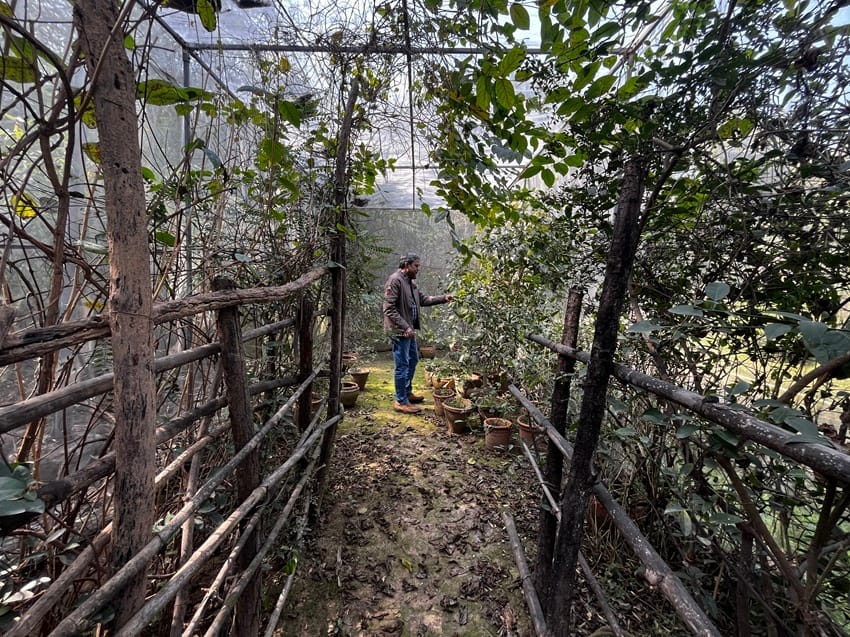
Genetic testing of elephant dung in northern Cambodia has identified both more elephants than expected and greater-than-expected genetic diversity among them. AP
Brussels and Antwerp's low-emission zones have significantly reduced air pollution, with benefits extending 5 kilometers beyond boundaries. Health researchers found particle pollution and nitrogen-dioxide levels declined more rapidly inside low-emission zones (LEZs) than elsewhere, while antidiabetic medication use increased more slowly among nearby residents, indicating health improvements. Phys.org
Foresters and conservationists have restored over 10,000 hectares of native vegetation in Brazil's Cerrado, in what may be the largest-ever restoration initiative in the region. The project creates nearly 40,000 hectares of connected habitat in one of world's most biodiverse seasonally dry ecosystems. Lesprom
Peru has created the Inter-Andean Dry Forests of Cutervo Regional Conservation Area, protecting 184 km² of crucial habitat for the critically endangered Marañón spinetail bird. The newly established reserve safeguards 475 species of flora and fauna, including numerous endemic species threatened by agricultural expansion and wildfires. Andes Amazon Fund
Energy & Climate
As of April 2025, the global green economy, if considered as a standalone sector, accounts for 8.6% of listed equities with a combined market capitalisation of US$7.9 trillion. This makes it the world's fourth largest sector by market capitalisation, after technology, industrial goods and services, and healthcare. Not bad for a bunch of hippies. LSEG
Maybe before it was tie-dye T-shirts and hugging trees, but today we are a mature energy sector. Yes, we love the environment, but don’t look at us like the environmentalists.
Constantino Nicolaou, Chief Executive of PanelClaw, a Massachusetts-based solar company that supplies mounting systems for rooftop solar projects.
Electric vehicles will make up more than one-quarter of global car sales in 2025, according to the IEA. China dominates with 14 million sales, which alone surpasses total global EV sales from 2023. The first three months of this year have seen 35% year-over-year growth, signalling accelerating adoption despite regional policy variations. Emerging markets like Southeast Asia, Brazil, and India are now seeing growth rates of between 30-45%.
One for all the circular economy nerds... the world's first large-scale facility for recycling polyester-cotton blends will be built in Saint-Avold, France, processing 70,000 tons annually by 2028. The company chose France over dozens of global sites, citing EU green industry support, financing incentives, and regulatory backing amid US clean-tech funding cuts under Trump. The plant will separate difficult-to-recycle fast fashion materials into reusable fibres, helping brands meet waste responsibilities. Bloomberg 🎁
We see within the EU an incredible appetite for green-industry solutions and an ecosystem in the finance world that’s very supportive of industrial solutions like this that can scale.
Conor Hartman, Chief Operating Officer, Circ
The USDA has agreed to restore climate change information that was removed from government websites, following a lawsuit by farming and environmental groups. The purged data included crucial resources on forest conservation, rural clean energy projects, and climate risk maps that farmers relied on for business planning amid increasing heat waves, droughts, floods, and wildfires. The government expects to complete the restoration within approximately two weeks. NYT 🎁
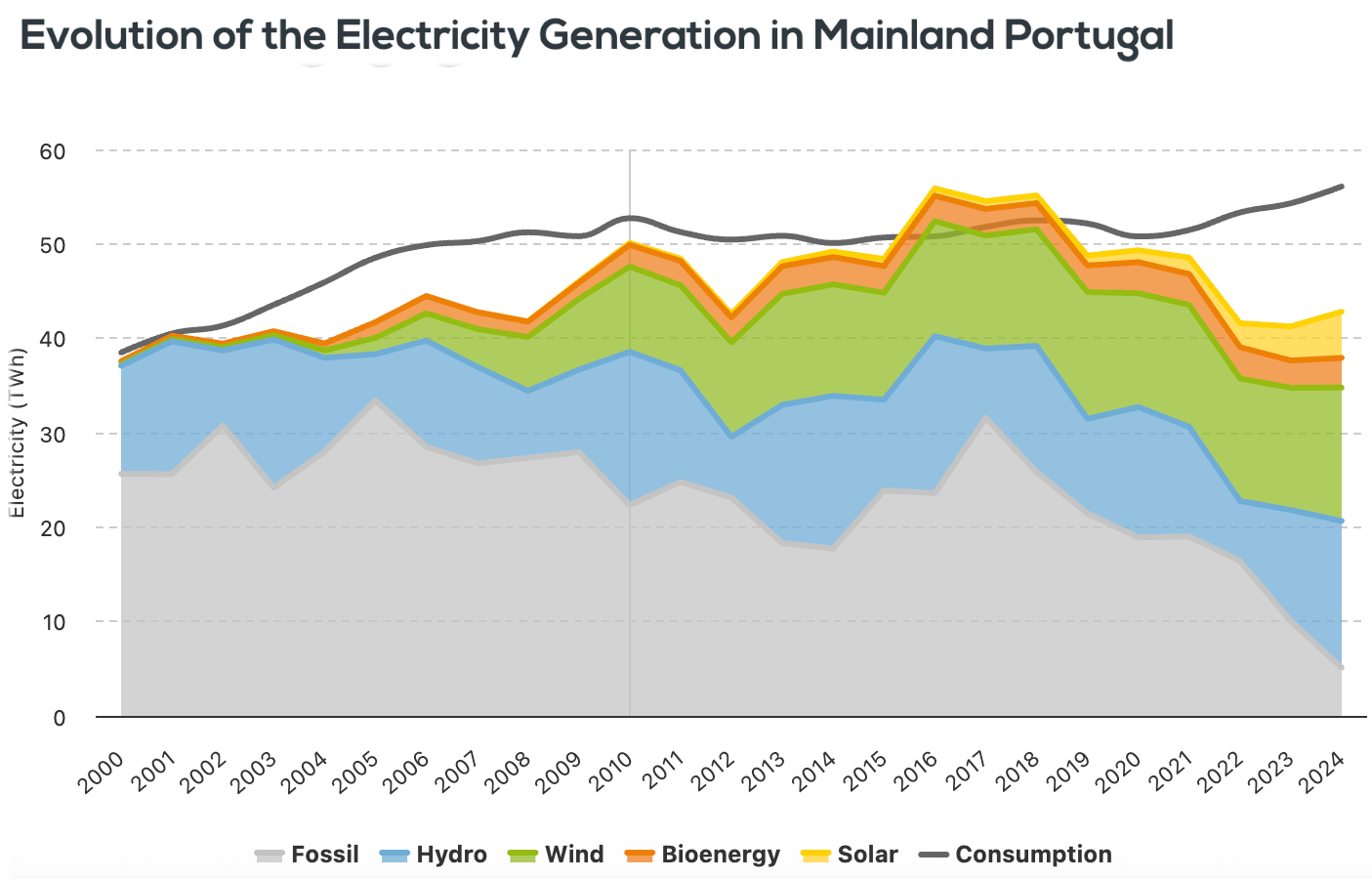
Portugal achieves 83% renewable electricity generation in record-breaking quarter. Portugal's renewable energy domination continues with 82.2% of electricity generated from clean sources between January and April 2025. April saw an even higher 83.3% renewable incorporation, leaving fossil fuels to provide just 7.9% of electricity. This remarkable transformation is driven primarily by wind and water, and a growing share of solar. APREN
Coal produced less than half of Poland's electricity for the first time in April 2025. A decade ago coal accounted for nearly 80% of the energy mix (yes, Poland is a coal-heavy country). Last year, Poland produced a record 29% of its electricity from renewables, up from less than 10% in 2015. There is now a growing consensus that Poland's electricity supply could be coal-free within the next decade. Notes From Poland
Hungary has emerged as a global leader in solar, which provided 25% of its 2024 electricity, more than any other country at any time in history. The solar surge has cannibalised coal power, which dropped from 15% to 6%, while helping Hungary achieve 74% low-carbon electricity generation with a 90% target by 2030. Progress Playbook
And finally, the UK has established an £8.3 billion public energy company to accelerate the clean energy transition. "Great British Energy comes from a simple idea: British people should own and benefit from our own natural resources. We are giving people a stake in clean energy and delivering profits for the British people." Sustainability Magazine
Science & Technology
Scientists have developed an AI system that can predict the location of virtually any protein in a human cell with unprecedented precision, even for proteins and cell lines never before tested. This computational technique analyses protein structures and cell images to pinpoint locations at the single-cell level—potentially saving months of laboratory work and revolutionising disease diagnosis. MIT
In other good AI news, Nigerian students using AI for English language tutoring achieved learning gains equivalent to 1.5-2 years of regular schooling in just six weeks. The randomised controlled trials involving first-year high school students showed significant improvements across English and digital skills. Female students and those with stronger baseline performance benefited most. World Bank
Discovered on the Tiangong space station: a novel bacterial strain adapted to life in space. The bacterium, now named Niallia tiangongensis, is related to common soil-dwelling bacteria Niallia circulans, but has novel radiation resistance, and is also unusually good at breaking down gelatin (you know – the stuff in Jell-O). The latter ability may allow it to feed on biological residue or nutrient-limited waste, useful in a space station, while the former may be key if humans ever want to learn to resist interstellar radiation. ZMEScience

In other fun bacterial discoveries, scientists have discovered a bacterial species that functions as a living electrical wire. Found on an Oregon beach, Candidatus Electrothrix yaqonensis demonstrates "exceptional conductivity and environmental adaptability" potentially enabling future biodegradable electronic devices, biosensors, and environmental remediation of heavy metals and pollutants. Whee! Wired
Precisely tuned electrical pulses can disrupt cancer cell division, extending survival in brain cancer patients by almost five months. This approach targets the electrical properties of diseased cells while sparing healthy ones, with researchers now expanding trials to multiple cancer types, rheumatoid arthritis, and autoimmune conditions. Wall Street Journal 🎁
A Chinese star chart has just been confirmed as the world's oldest celestial map. Advanced imaging techniques have revealed that the "Star Manual of Master Shi" dates to the 4th century BCE—over 200 years earlier than previously believed. The meticulously documented catalog of 120 stars predates the Western world's oldest known map by two centuries. IE
Astronaut photographer captures Earth's beauty from 220-day space mission. During his fourth space mission, 70-year-old astronaut Don Pettit documented breathtaking celestial phenomena using innovative photography techniques, such as his homemade "orbital sidereal tracker" which counteracts the space station's motion, allowing crystal-clear images of auroras, lightning, city lights, and cosmic features while traveling five miles per second. NYT 🎁
I think these are a blend of both science and art. There is so much techno-geek stuff to see, or you can simply sit back and think ‘How cool.’

That's all for this edition, thanks for reading!
With love,
The FTN team